Introduction
The 2026 Greater Bay Area International Maker Summit & Maker Faire Shenzhen takes OPC as its rallying call, creating an annual “hyper-evolution” stage for Makers around the world.
Makers are no longer just hobbyists. They are super individuals who fuse AI, hardware, and real-world scenarios into one powerful creative force.
That is why we are launching “OPC Pioneer Stories”, a series dedicated to the key players on this year’s hyper-evolution stage, capturing the pioneering moments of individuals who build like an entire team.
We are not only telling stories about making — we are documenting the hard-core journeys of those who weld technology and reality together.
The OPC movement has sounded its call, and the stories of pioneers begin now.
If you want to capture and share your own OPC moment, we welcome you to submit your story.

Scan the QR code to share your journey.
Without further ado, let’s welcome the first OPC Pioneer.

“One person can be an entire team — a prototype in one weekend, and an idea reaching production within one month.”
This is the true reflection of the creativity behind today’s OPC movement.
Lu Zhirong from Guiyang, China, may not perfectly match the fast-paced rhythm of “building a prototype over a weekend.”
But he represents another form of OPC-style hyper-evolution:
From a quiet observer who once stood among the crowds at Maker Faire Shenzhen, hesitant to speak up, he has evolved into someone who independently runs a laboratory in Guiyang and has planted the seeds of maker education across seven or eight schools.
01 Shenzhen: Witnessing What “Hyper-Evolution” Looks Like
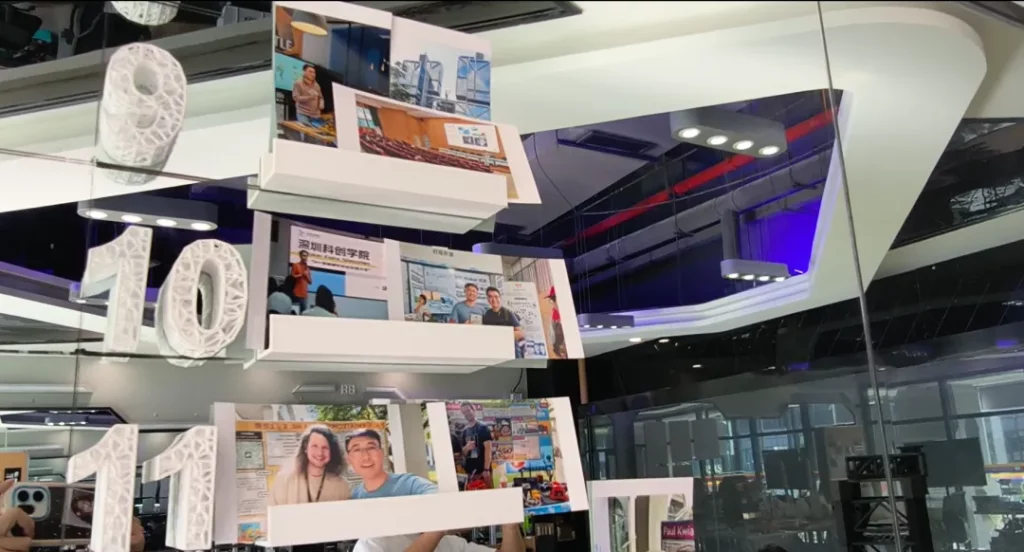
A photo of Lu Zhirong at Maker Faire Shenzhen.
When Lu Zhirong attended Maker Faire Shenzhen for the first time, he found himself surrounded by AI hardware, robot prototypes, and engineers debugging embedded code by hand.
He was overwhelmed.
“Everyone there was an expert or an industry leader. I barely dared to start a conversation.”
Born in Liupanshui, Guizhou, Lu studied physics and communications at Nanjing University of Posts and Telecommunications. He worked in the communications industry and moved between Nanjing, Guiyang, and Shenzhen throughout his career.
In 2016, as China’s entrepreneurship movement and STEM education began gaining momentum, he truly fell in love with “making things” in Shenzhen.
Circuit boards could be prototyped within three days. Robot concepts could be connected with manufacturers within a single day. Sketches could become working prototypes within two weeks.
“Things move incredibly fast there,” he said.
What he witnessed that year was exactly the future envisioned by the theme of Maker Faire Shenzhen 2026:
Edge AI making decisions at the end of robotic arms; open-source hardware combined with large models putting the power of server clusters into a backpack; and one person becoming capable of doing the work of an entire team.
He eventually left Shenzhen, but he carried the blueprint of “hyper-evolution” with him.
02 Returning to Guiyang: Building His Own OPC Foundation
After 2020, Lu returned to Guiyang.
It was not an exit — it was a change of battlefield.
He joined UBTECH’s K12 education programs, supported competitions, worked on robotics technologies, and stepped into numerous school laboratories.
The more schools he visited, the more problems he discovered:
Equipment was delivered to schools but left without maintenance. Courses were launched but lacked people to guide students through real projects. Once competitions ended, student creations were often locked away in cabinets.
“Some laboratory equipment is brand new, but students are simply afraid to touch it.”
In 2025, he founded WEBB LAB in Guiyang, providing maker education services to seven or eight middle schools and vocational colleges across Guanshanhu, Baiyun, Wudang, and the old urban districts.
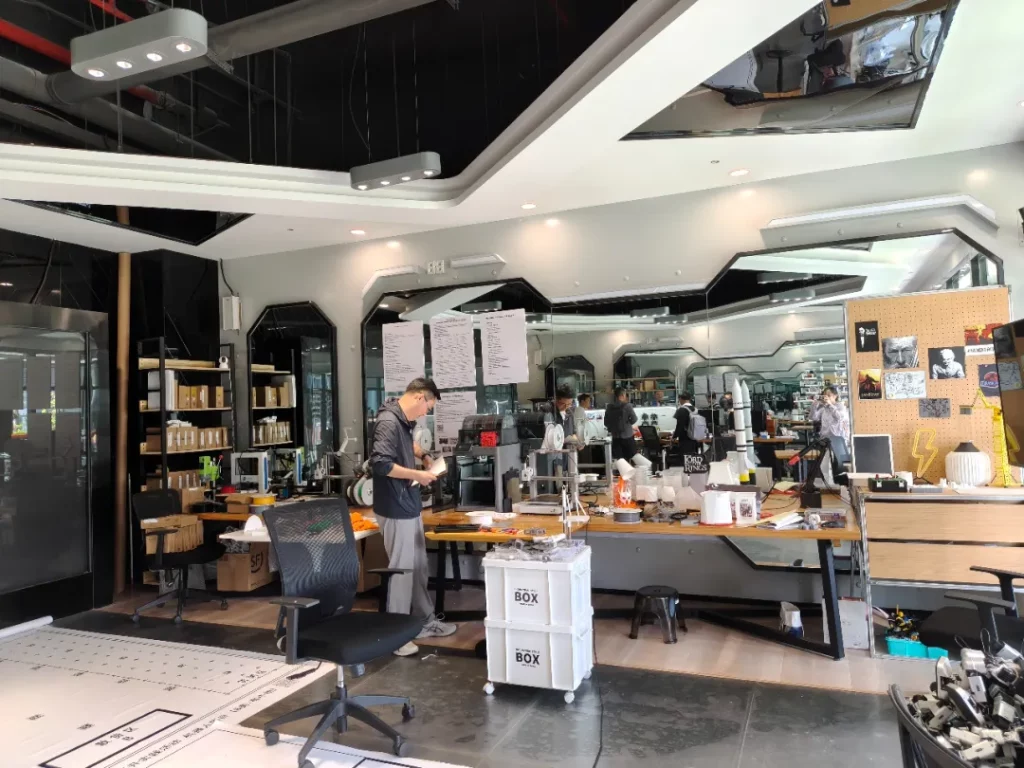
Lu Zhirong and WEBB LAB
The laboratory’s name was inspired by the James Webb Space Telescope, reflecting his slightly romantic belief:
“Space may be beyond our imagination, but one day, humans will still need to go out there and explore.”
On the laboratory desks are motors, cameras, and circuit boards.
In the corners sit rocket models built by fifth-grade students, alongside smart hardware projects created by university students.
One of his “Mars Rover” courses breaks down the core technologies behind NASA’s Mars rover — autonomous movement, obstacle navigation, data collection, and transmission — into modules covering mechanics, electronics, embedded systems, sensors, and kinematics.
Students start from zero and build an engineering-level robot themselves.
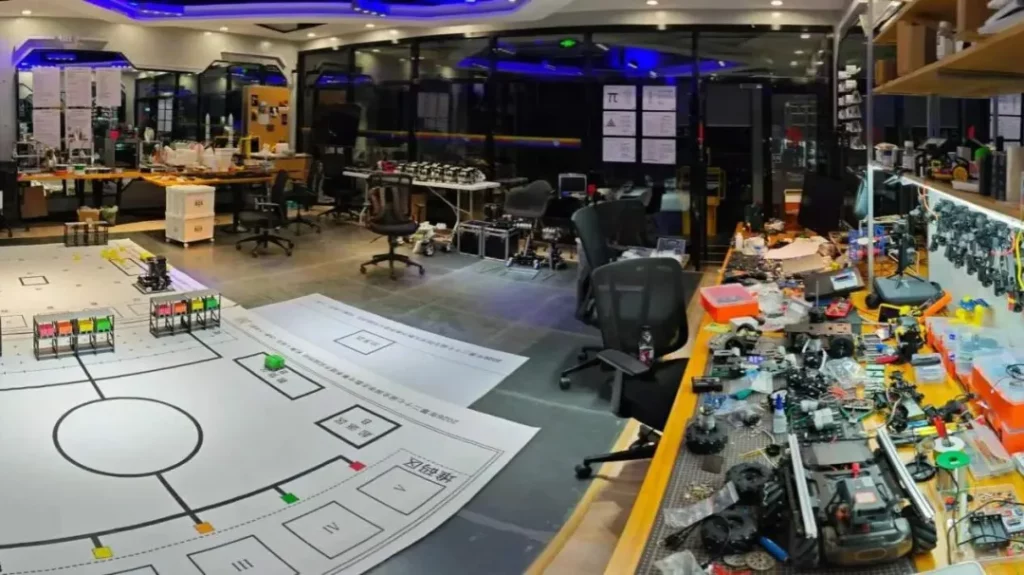
During the day, he travels between schools to configure equipment, provide training, and discuss partnerships.
At night, he returns to the lab to debug code, tune motors, and refine mechanical structures.
During competition seasons, this high-intensity schedule can continue for weeks or even months.
This is Lu Zhirong’s version of OPC hyper-evolution:
Not creating a product with AI in Shenzhen within one week, but spending five years in Guiyang strengthening a grassroots innovation node from the ground up.
03 OPC Is Not a Slogan — It Is a Method
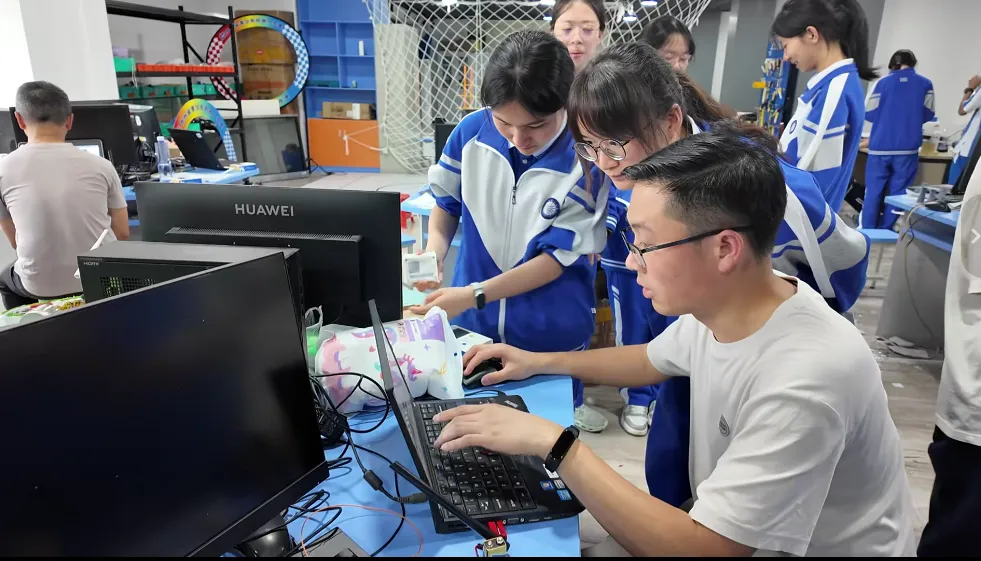
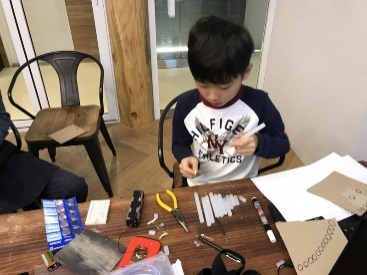
Lu Zhirong Training Students
OPC means:“Pulling AI out of the screen, welding it into hardware, and throwing it into the real world.”
Lu Zhirong has not built a large AI model, but his approach follows the same logic:
He refuses to let maker projects stop at demonstration videos. Instead, he pushes technology into real classrooms, real failures, and the hands of real students.
Several students he mentored started projects in high school and continued improving them after entering university:
A shared community garden connected with local farms, a Braille reading device, and systems that analyze eye conditions and emotional states.
He has also registered a company with the same name in Shenzhen, hoping to build a bridge:
The Guiyang side focuses on schools and real-world classrooms, while the Shenzhen side connects with supply chains and product commercialization.
His current desktop robotics experimental platform brings “near-real robot motion control” into middle and high school education.
It is not simply about making servo motors rotate by a certain angle.
Students must deal with real engineering challenges: vibration, inertia, and mechanical structures that may not fit together perfectly.
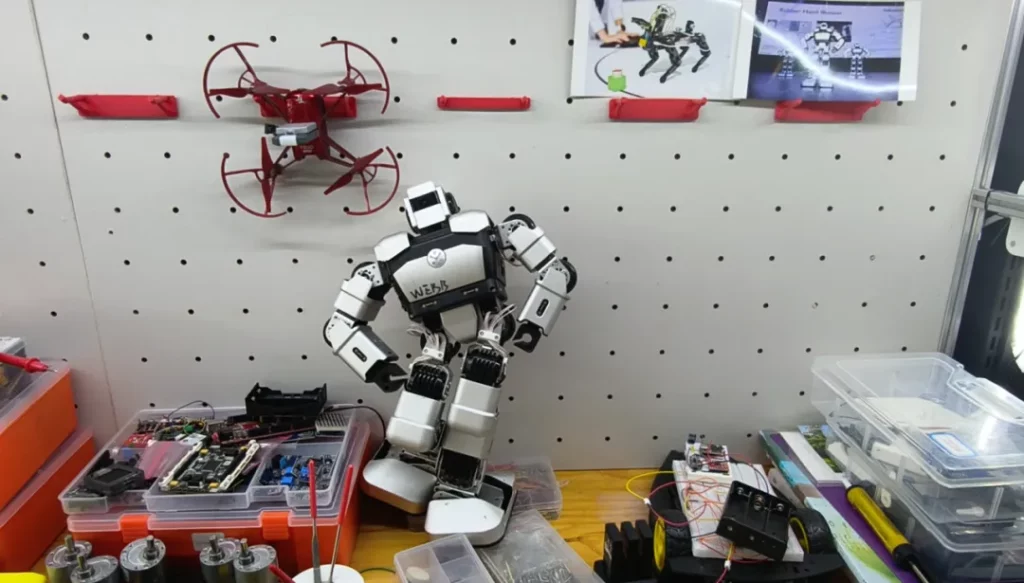
A corner of WEBB LAB
“Pure programming problems usually have clear answers. Engineering problems do not.
A wheel hub may break, a sensor may drift, or a casing may be three millimeters too large.
Students have to repeatedly adjust and solve problems under real-world constraints.”
He does not necessarily expect every child to become an engineer.
But he hopes each of them can experience this kind of hyper-evolution at least once.
Perhaps the maker ecosystem grows slowly over time.
It does not begin with a complete ecosystem that people later join.
Instead, it starts with individuals who keep building technology, mentoring others, repairing equipment, completing projects, and pushing creations forward.
Only then will more people who build and innovate gradually emerge.
In Guiyang, WEBB LAB hopes to become such a place — a space that keeps building, experimenting, and moving forward.
Conclusion
Lu Zhirong may not be a typical “one-person AI company” in the traditional sense.
But he represents a complete manifestation of the OPC spirit in a non-central city.
Hyper-evolution does not only happen in technology hubs where products are built within 72-hour sprints.
It can also happen inside a school laboratory in Guiyang, after the final bell rings and students leave for the day.

So, what are the key focuses of this year’s Call for Makers?
As the interface and bridge between technological innovation and real-world applications, Maker Faire Shenzhen continues, as in previous years, to focus on four types of projects: New Technology Solutions; Industry Application Solutions; Tech Education & Interactive Art; Technology Services.
We warmly invite OPC creators to take the stage—not only to showcase your work, but to demonstrate how it enters real scenarios and solves real problems. From an idea, to a development board, to a deployable product or a sustainable business, let more people see the true value of AI and hardware innovation.
If you want to showcase your innovative ideas and the impact they have on industry innovation, meet like-minded makers, and explore the specific applications of cutting-edge technologies in various industries at one of the largest maker innovation events in the world, we invite you to sign up by scanning the QR code below or clicking here. We look forward to seeing you there and sharing your journey of continuous innovation!
Call for Makers
Scan to Register

Registration Period: June 30th, 2026 – October 30th, 2026
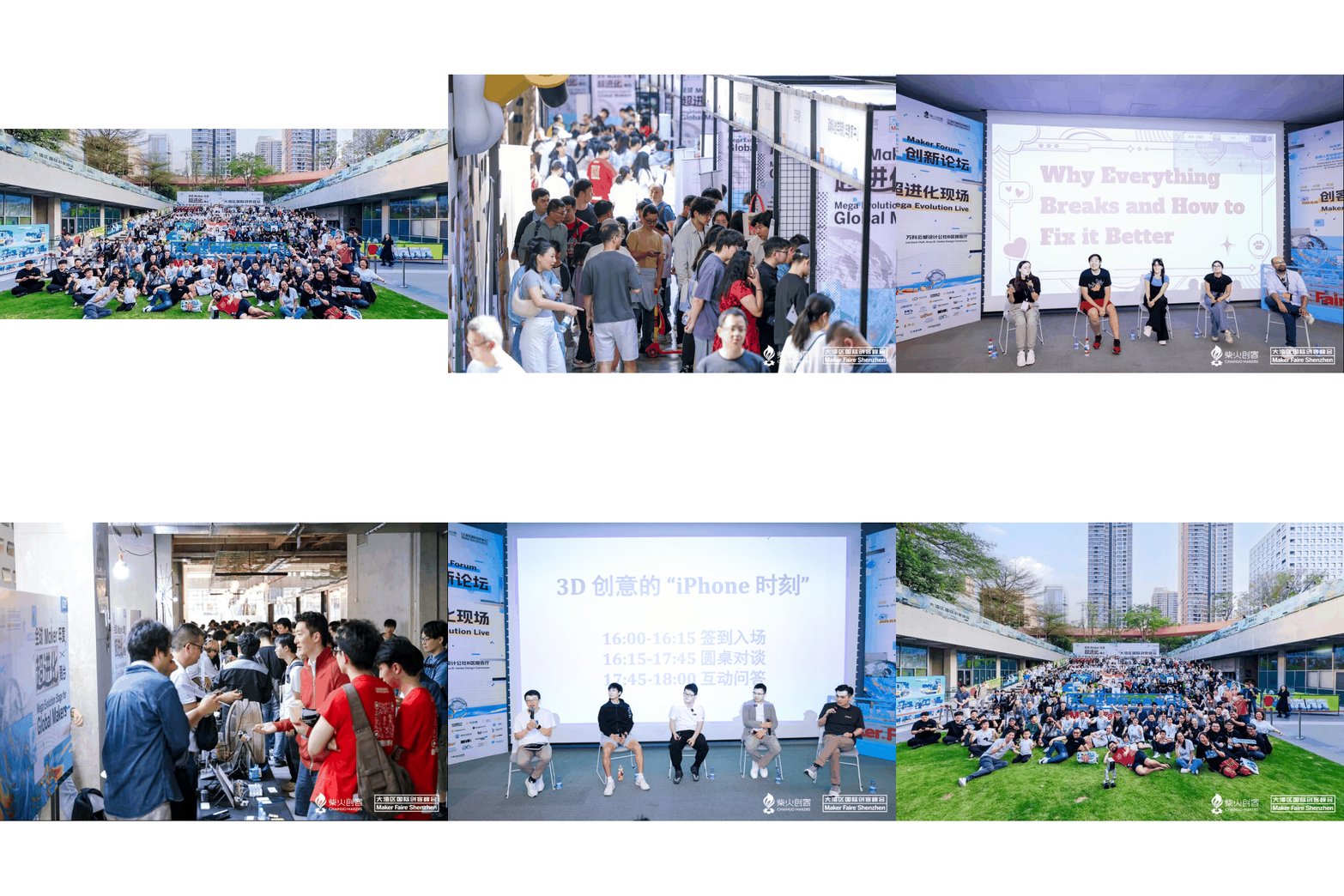
Over the past 12 years, the development trajectory of Maker Faire Shenzhen can be seen as a microcosm of the development of maker culture in China.
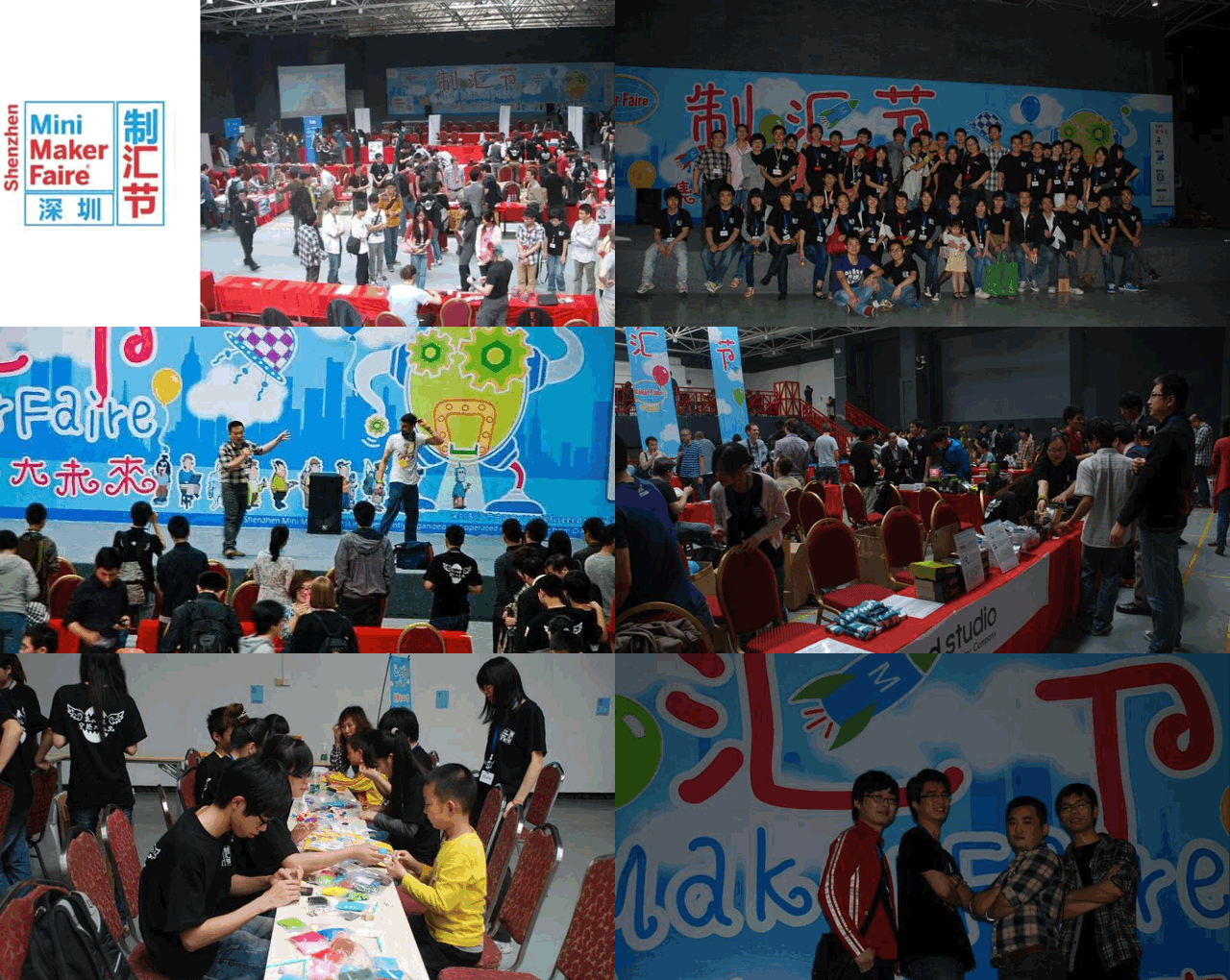
- 2012: “Gathering Small Wisdom, Journeying through the Great Future” – This was the first Mini Maker Faire in China, with less than 1000 attendees, and was more like a gathering within a small circle. But we saw the infinite possibilities emerging from the maker community.
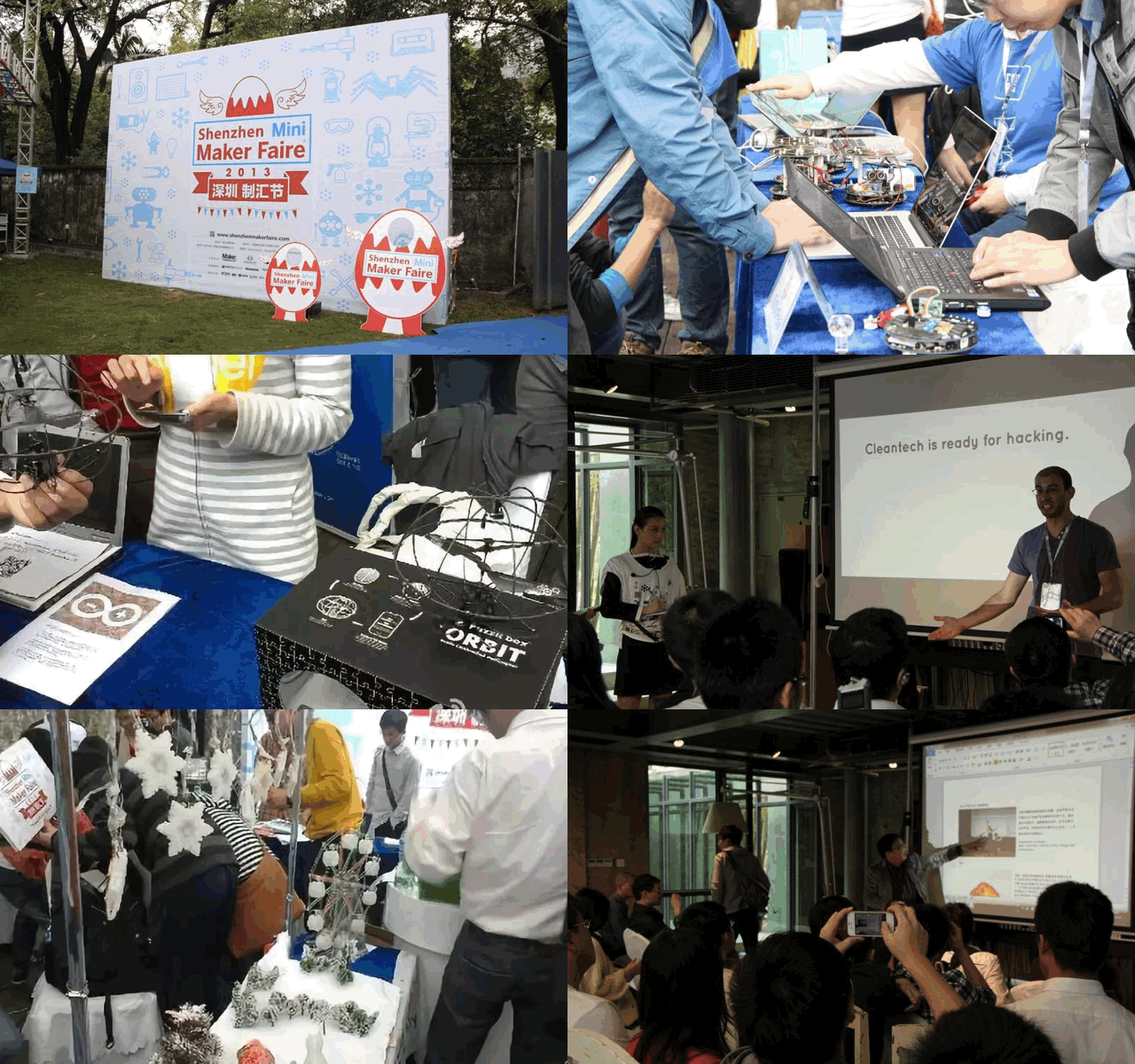
- 2013: The slogan was absent, and the maker community was still small. In the OCT Creative Park, there were cross-disciplinary exchanges among different creative communities, silently laying the foundation for cultural output.
- 2014: “Innovate with China” – the event was upgraded to the Featured level for the first time, with a significant increase in scale compared to previous years, and the beginning of professional independent forums. This year, makers began to enter the public’s view.
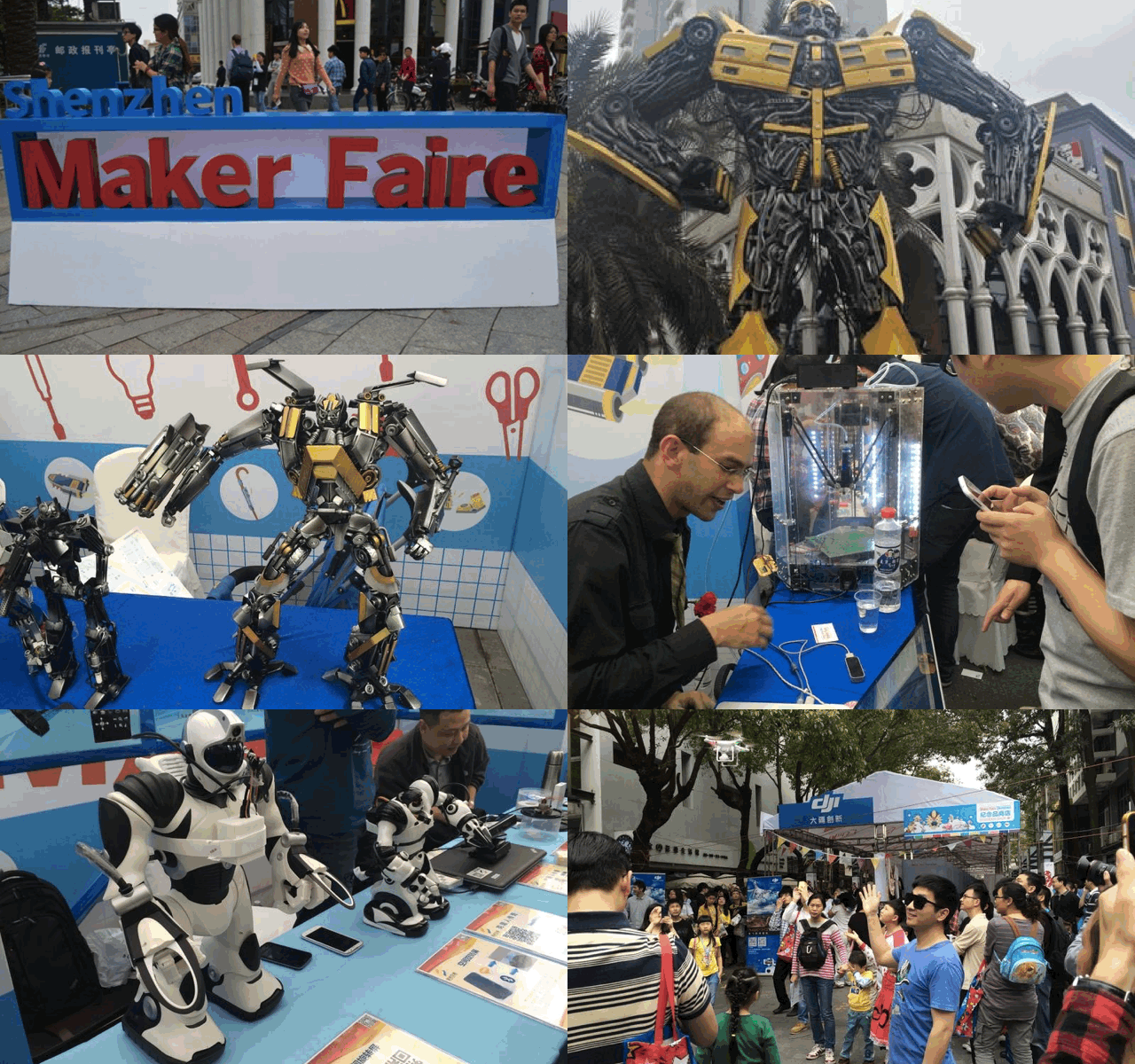
- 2015: “Everyone is a Maker, what are you waiting for?” – This year’s Shenzhen International Maker Week became one of the largest Maker Faires in the world. This year, the concept of “maker” was elevated to a national level, and the trend of “mass innovation, mass entrepreneurship” swept across the country.
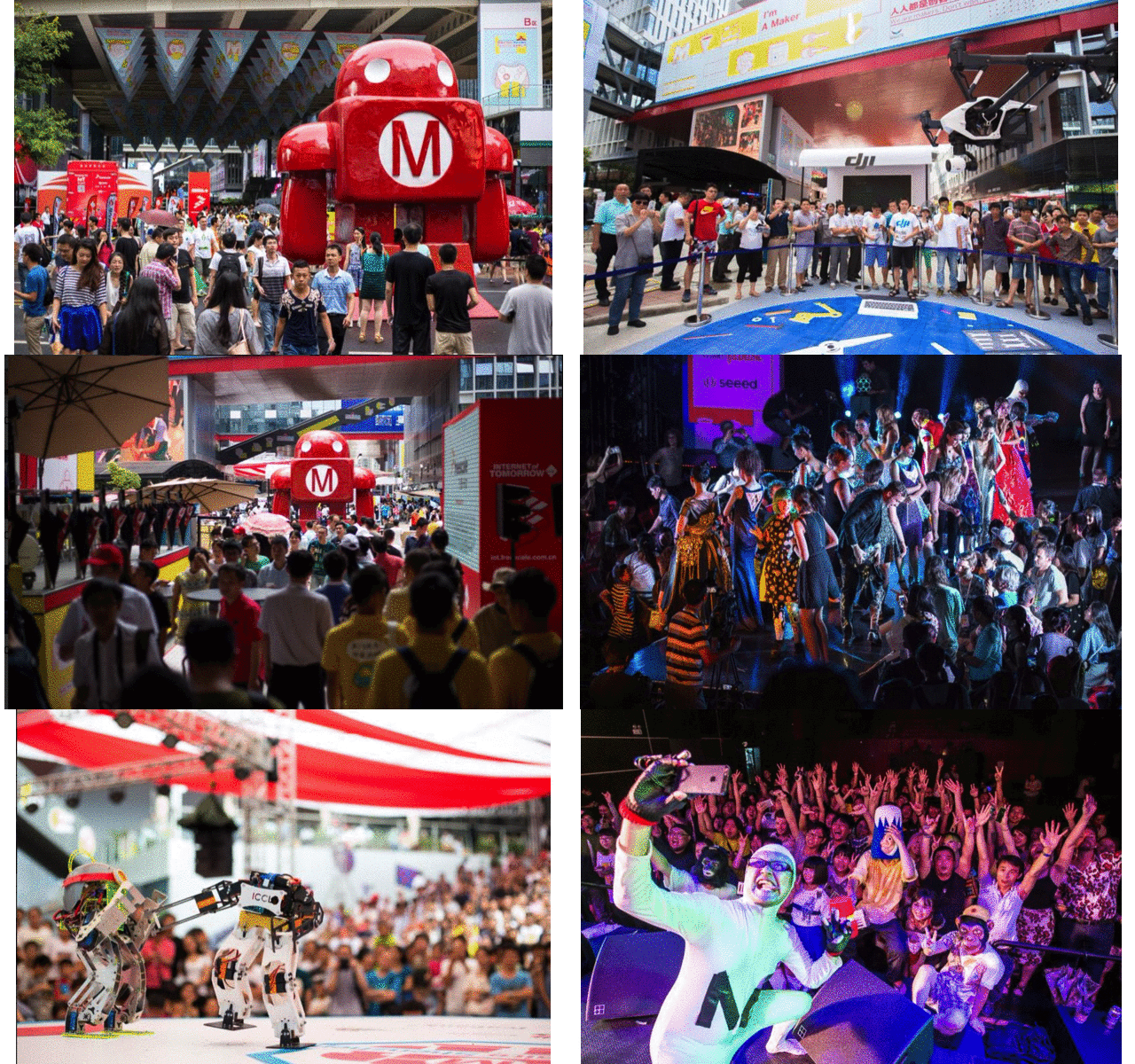
- 2016: “My World, My Creation” – As the sub-venue of the National Innovation and Entrepreneurship Week, the event was held for the first time in the commercial center area, experiencing unpredictable weather from typhoons to scorching heat. Many makers succeeded in your entrepreneurial endeavors this year, but it seemed like there were even more failures. The hype around entrepreneurship shifted towards rationality.
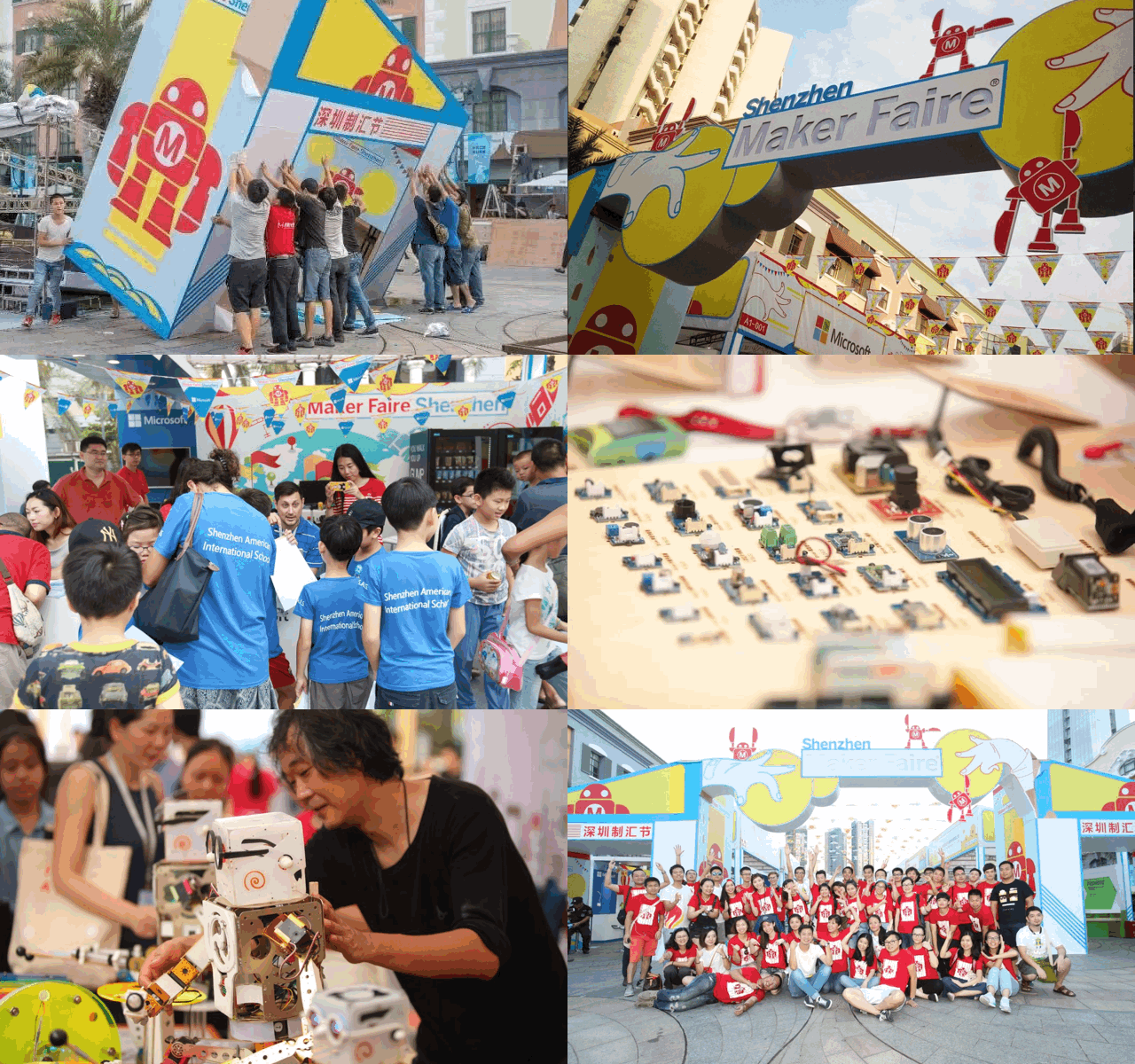
- 2017: “Makers, Go Pro” – The event took place at the university campus for the first time, focusing on Maker Pros and providing a platform for diverse innovators and makers to showcase themselves, presenting more possibilities for the growth path of makers to the entire community.
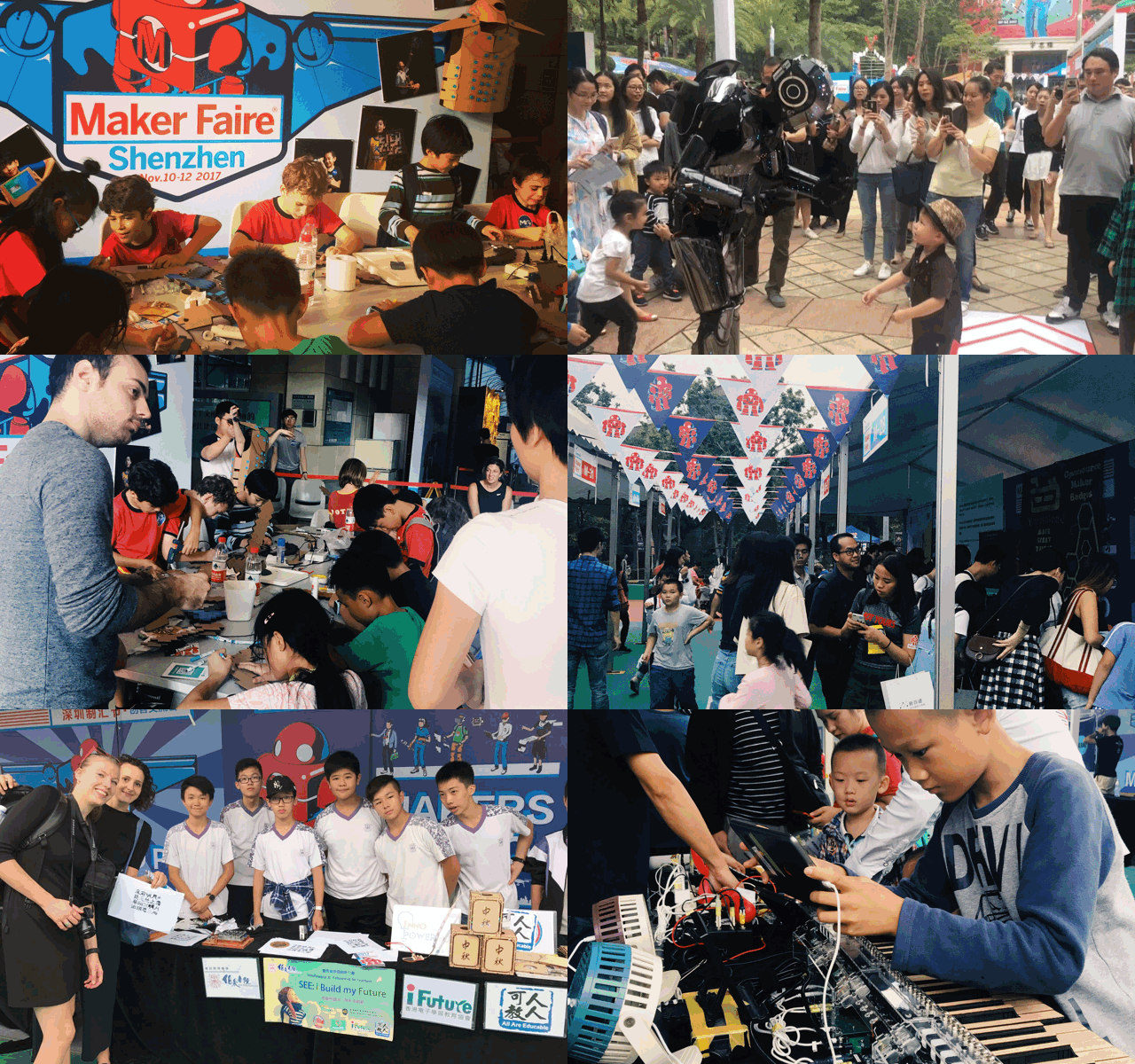
- 2018: “Co-making in the City” – The main venue of Shenzhen International Maker Week, where individuals and groups with shared visions and values gathered to showcase stories, projects, and explorations of collaboration among different communities and people.
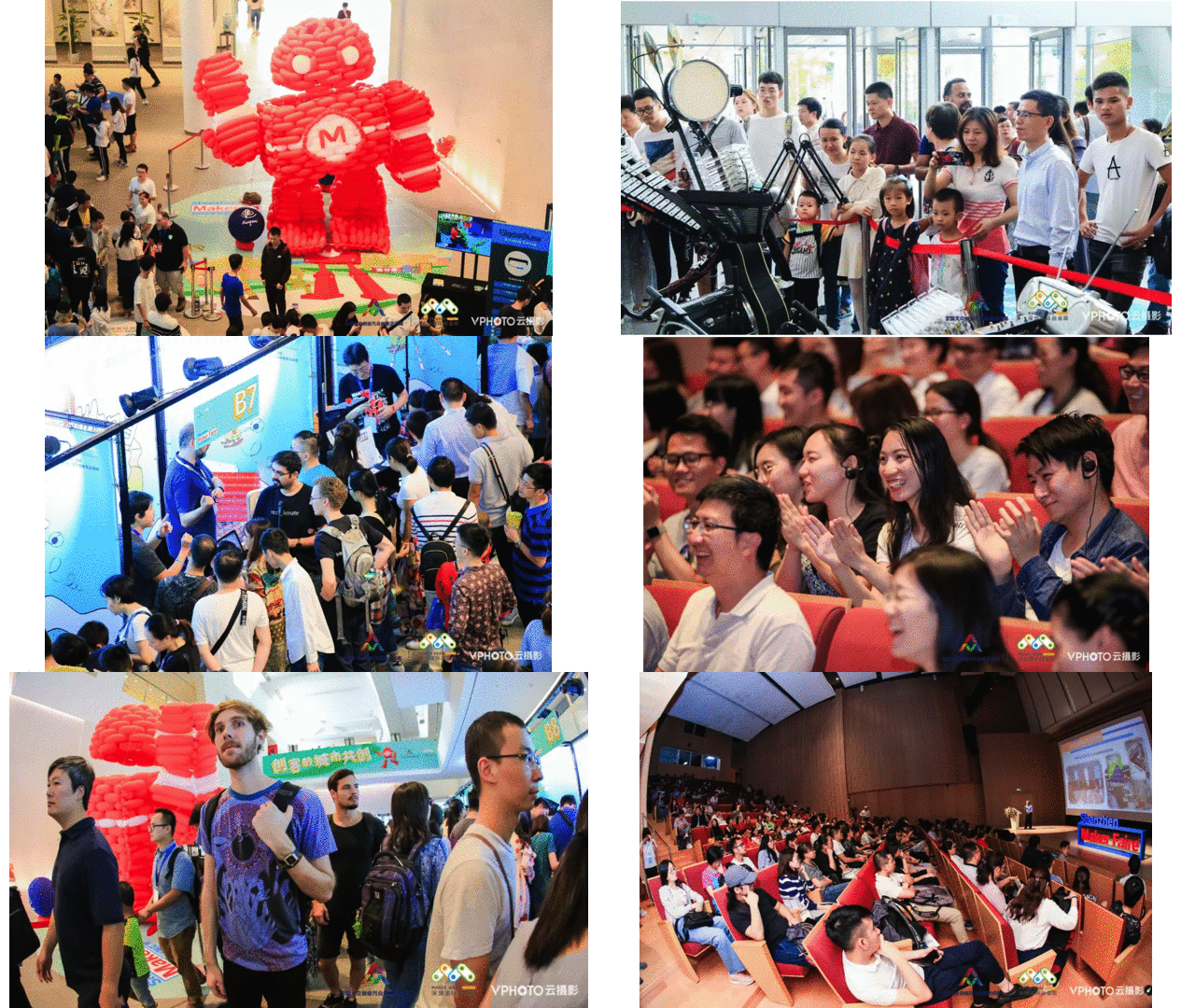
- 2019: ” To the Heart of Community, To the Cluster of Industry” – The event was upgraded to the Maker Faire Shenzhen, attempting to attract professional audiences and focusing on pragmatic aspects such as solving the needs of industrial upgrading and co-developin. It aims to build a platform for innovation and industry dialogue and collaboration.
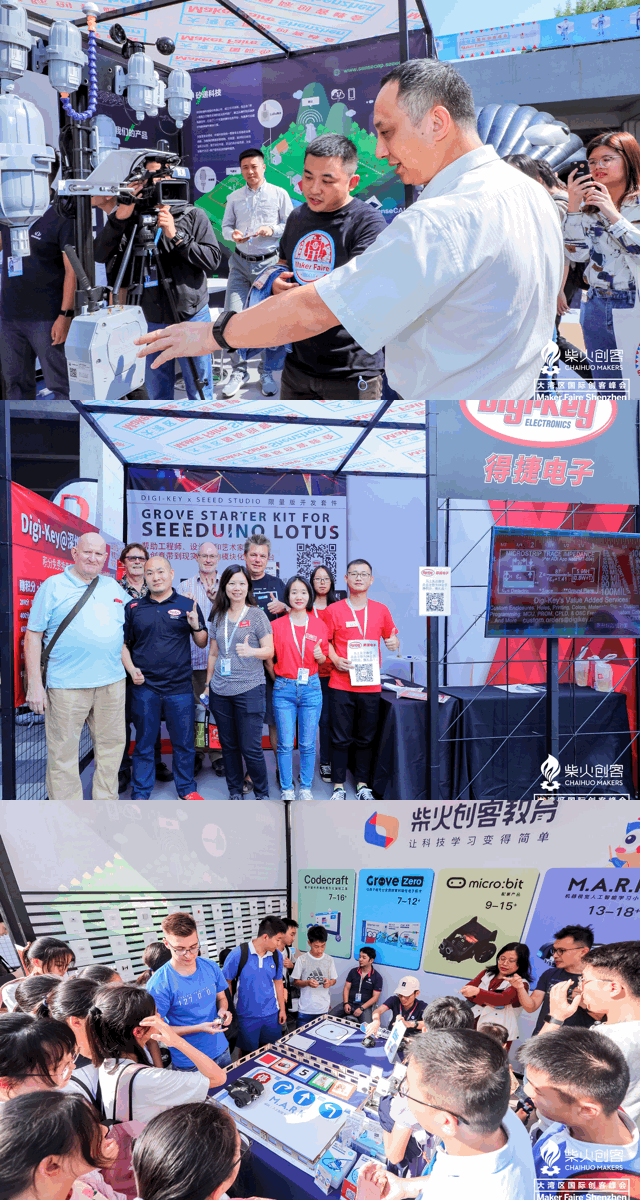
- 2023: “Where Are The Makers?”Starting from our own mission and values, we aim to explore the future direction of makers and the possibilities for commercialization. Though this question does not have a definitive answer, we do hope that through this event, we can communicate and share with every one of you, finding more ideas and directions together.
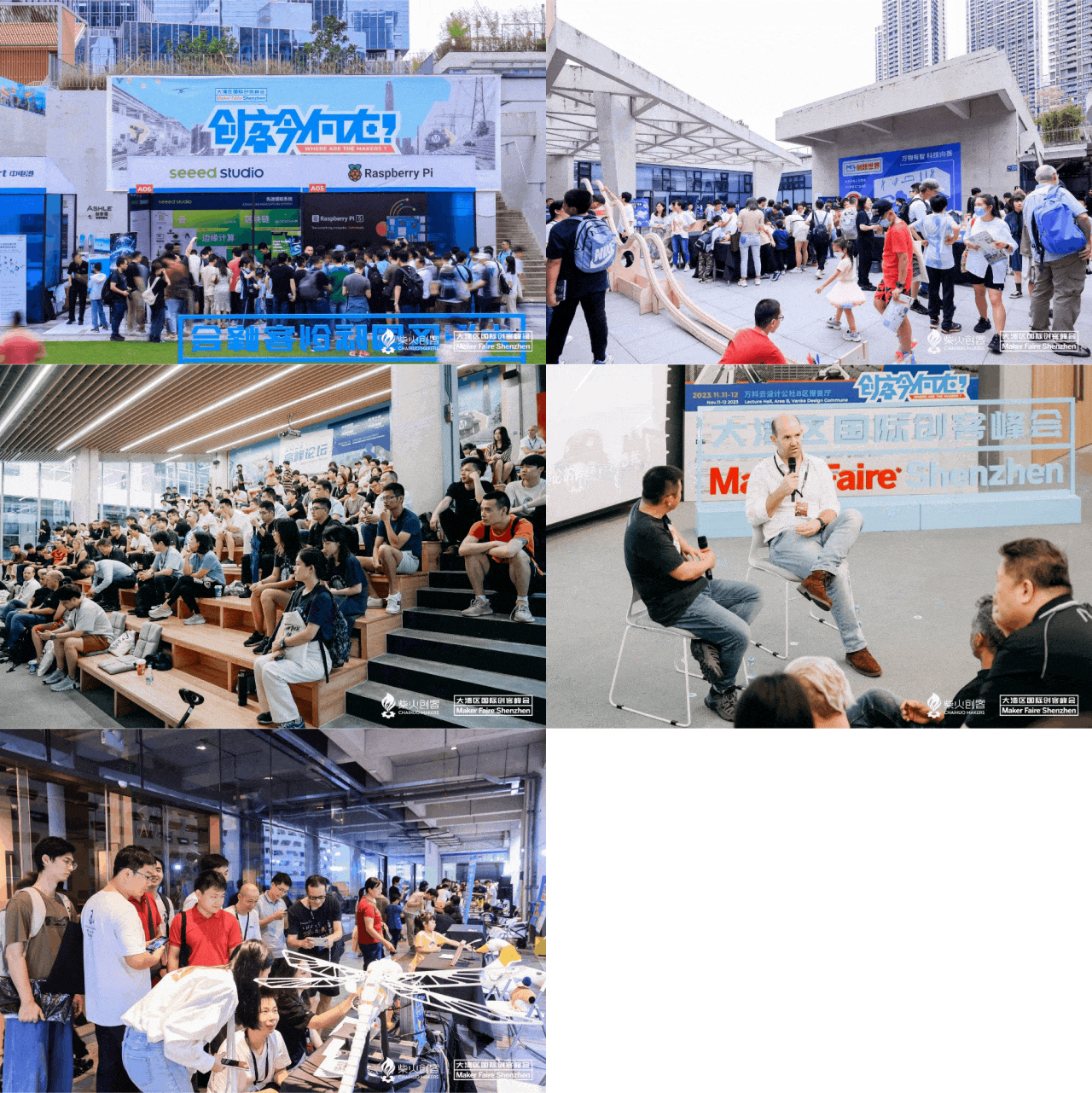
- 2024 —:“Everything Can Be AI” The summit brought together over 120 exhibitors from China and abroad, drawing over 1,500 professional visitors from nearly 20 countries and more than 20 Chinese provinces. The exhibition showcased numerous AI application projects and hosted 10 AI hardware events and workshops.
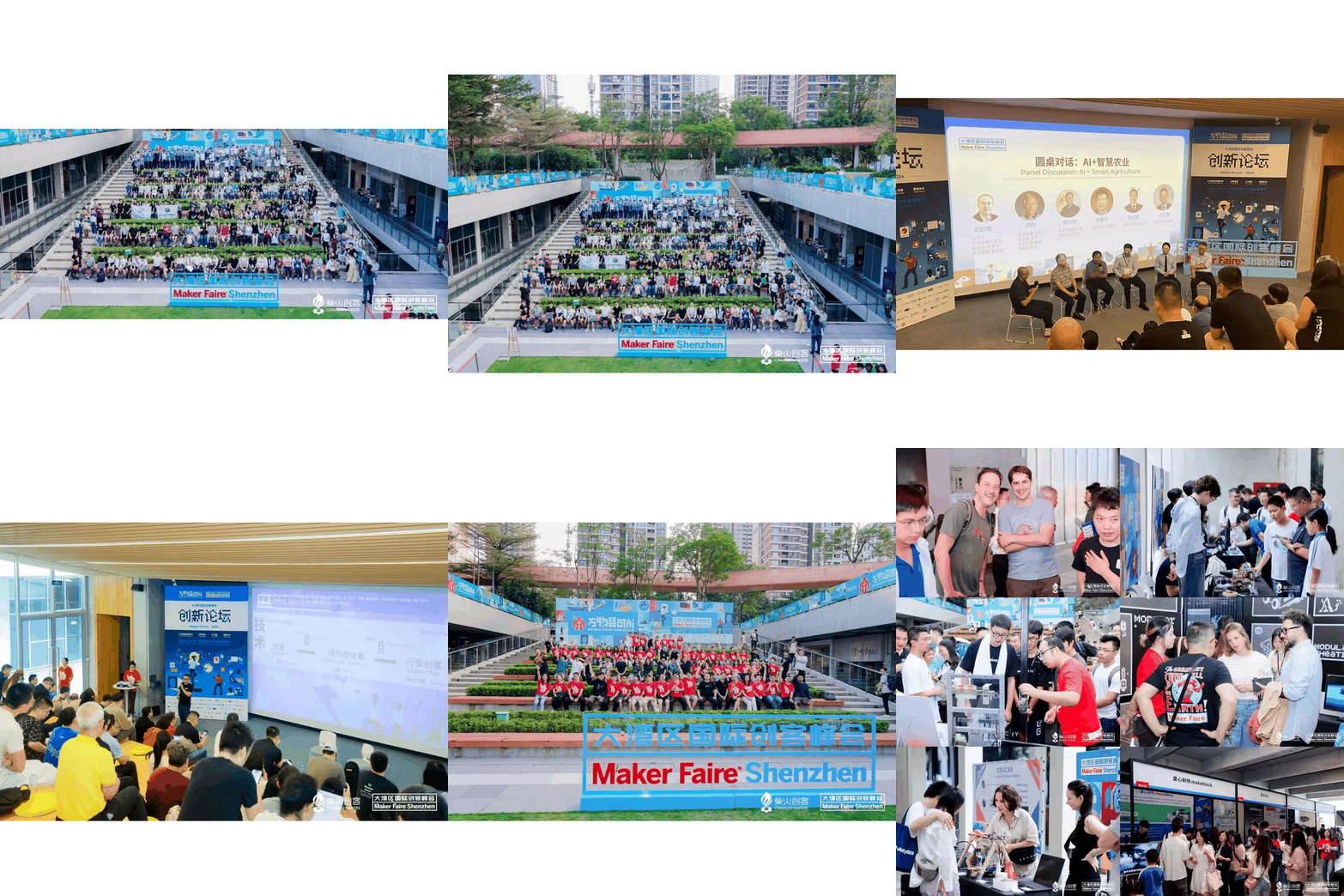
- 2025 — “AI and more things” The summit gathered nearly 100 international innovation ambassadors and showcased nearly 1,000 AI hardware projects. Participants included technology leaders, makers, industry experts, and university teams from over 30 countries, forming a global innovation platform integrating cutting-edge ideas, technical exchange, and cross-disciplinary collaboration.