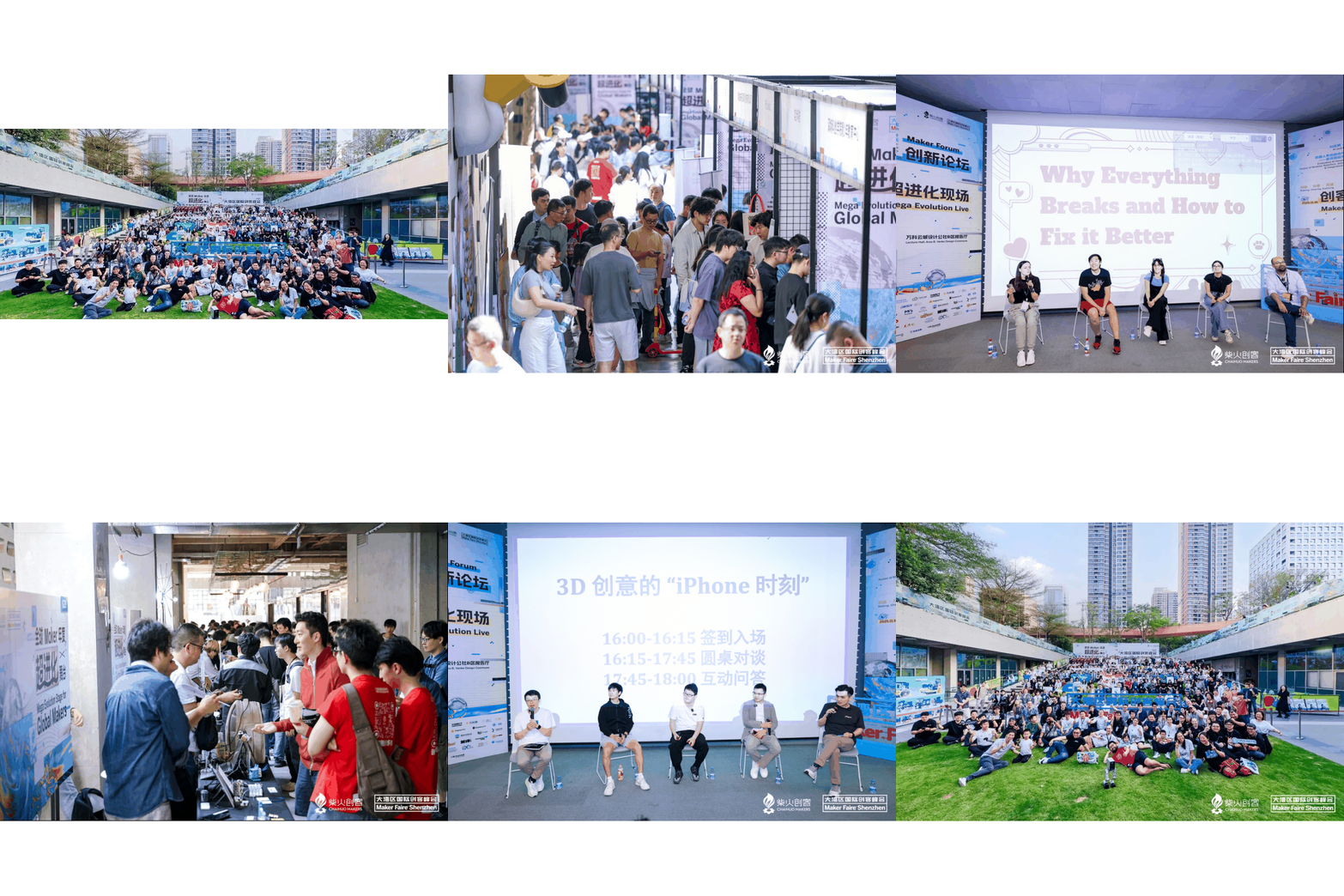
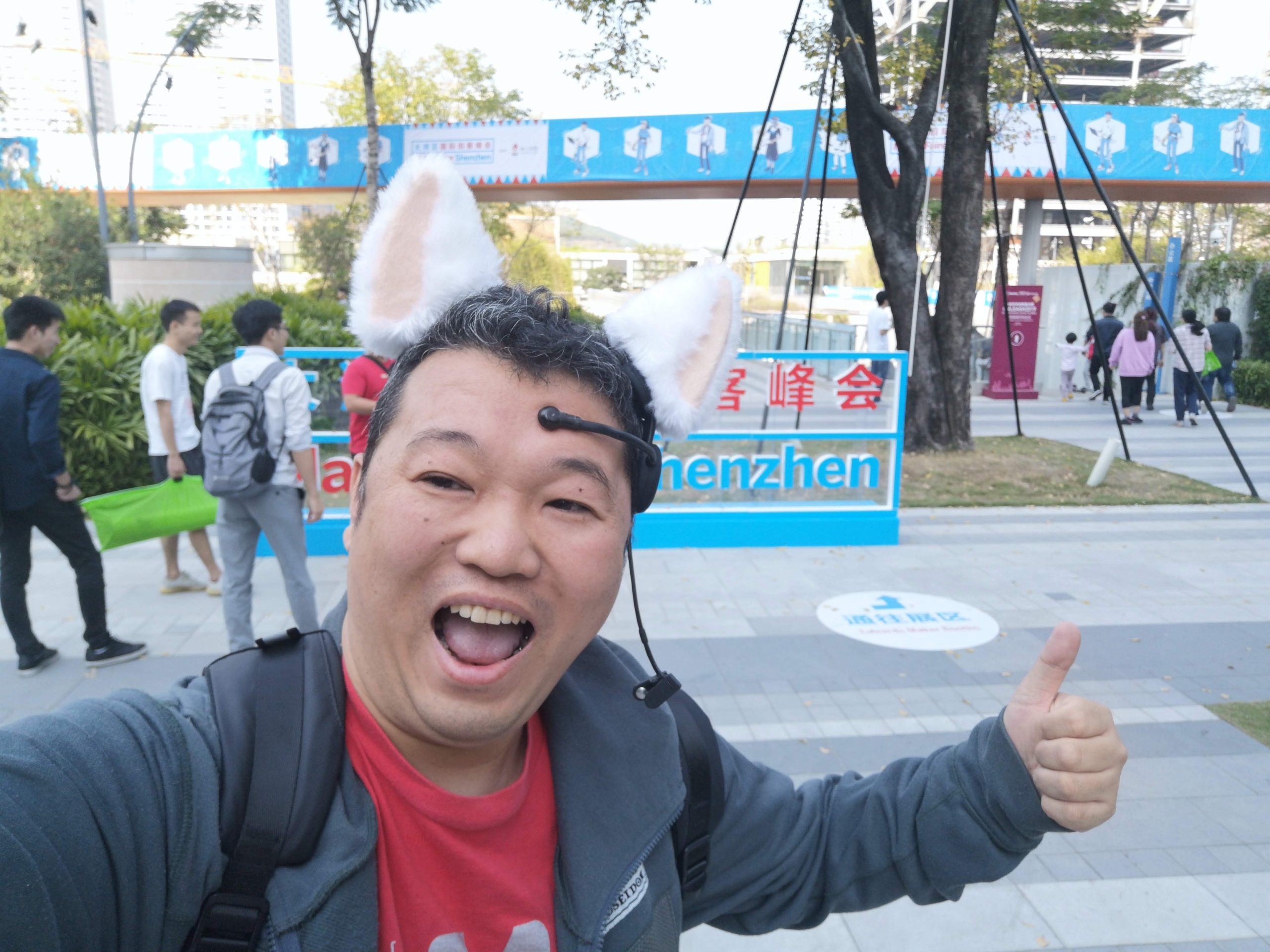
If previous editions of Maker Faire Shenzhen were testing grounds where inspiration sparked, this year we will see how creative ideas take root and become reality.
This time, we are putting OPC creators and full-industry-chain service providers center stage, working together to build a “Mega Evolution Stage for Global Makers.”
Long-time friends of Maker Faire Shenzhen know that it consistently ranks among the season’s most popular offline events. In addition to offering an in-depth look at cutting-edge technologies and industry trends, its wide range of on-site activities attracts professionals and visitors from many different communities.
This year’s event is officially scheduled for December 12–13.
In today’s “Startup Spotlight,” we introduce one of this year’s innovative exhibitors: Shenzhen JLC Technology Group Co., Ltd., located at Booth B14.

JLC3DP

Company Profile
Powered by digital intelligent manufacturing and a fully online operating model, JLC3DP specializes in additive manufacturing services for rapid prototyping and customized industrial production.
The platform has established a comprehensive matrix covering eight manufacturing processes and four major material categories. Orders can start from just one piece and RMB 2, with shipments available in as little as five hours. Its on-time delivery rate consistently exceeds 95%.
From appearance validation to complex functional testing, and from one-off prototypes and hundred-unit pilot runs to production volumes in the thousands or tens of thousands, JLC3DP delivers precise and efficient 3D-printing solutions. Its key industries include electronics, automotive, robotics, drones, cultural and creative products, education, and security.
Exhibit Highlights
Selected 3D-Printed Exhibits
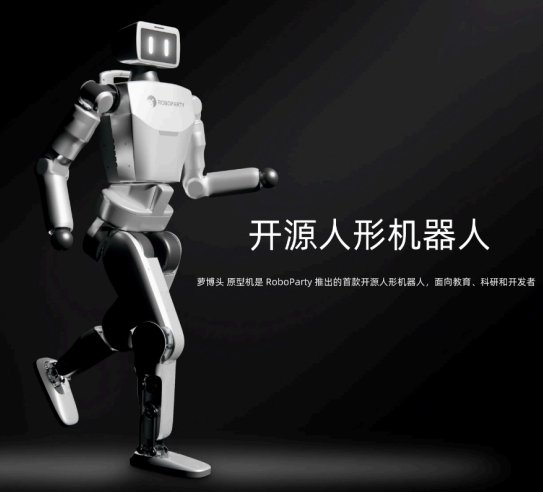
1、Roboto Robot
- Product Overview
The Roboto_Origin prototype is a full-stack, open-source bipedal humanoid robot. It stands 1.2 meters tall and can run at speeds of up to 3 m/s.
- How JLC3DP Contributed
Accelerating R&D iteration: Rapidly validating robot components, enclosures for control and vision systems, and related assemblies without the need for tooling.
Rapid production of complex structures: Using industrial-grade 3D printing to quickly manufacture enclosures with irregular shapes and curved surfaces, overcoming the limitations of conventional manufacturing and reducing the cost of trial and error during R&D.
2、100 N Miniature Regeneratively Cooled Rocket Engine
- Manufacturing Process: SLM (Selective Laser Melting)
- Printing Material: 316L stainless steel
- Application: Design validation and rapid iterative production of combustion chambers for miniature liquid rocket engines.
- Product Overview:
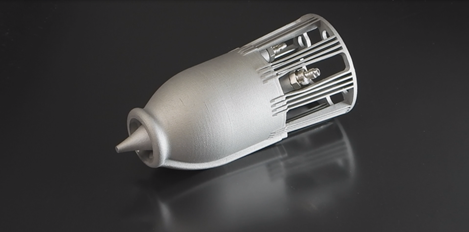
This compact liquid rocket engine has a rated thrust of 100 N. It uses gaseous oxygen and alcohol as propellants, with regenerative cooling and a pintle injector.
Faced with the complex cooling-channel geometry and tight R&D schedule of a miniature engine, Bilibili creator “Yitai LYBing” chose JLC3DP’s metal SLM technology to overcome the limitations of conventional manufacturing. The process enabled the combustion chamber to be produced quickly and reliably, significantly accelerated development, and reduced costs compared with traditional processes—providing strong support for efficient iteration.
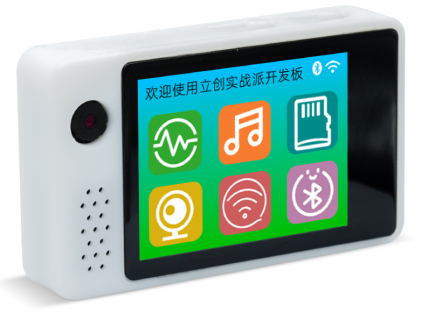
3、Enclosure for the Lichuang Practical Series ESP32-S3 Development Board
- Manufacturing Process: SLA (Stereolithography)
- Printing Materials: White Resin 9600, JLC Black resin, and other materials
- Application: A custom 3D-printed enclosure designed for the Lichuang Practical Series ESP32-S3 development board, with support for rapid prototyping.
- Product Overview:
As open-source embedded systems and AI projects continue to gain popularity, the Lichuang Practical Series ESP32-S3 development board has become a widely used platform among makers, students, and hardware engineers, thanks to its native AI capabilities for speech and image recognition.
Its dedicated 3D-printed enclosure provides an integrated packaging solution precisely tailored to the board. The screw-free, removable sliding-cover design can be opened and closed by hand, making debugging, maintenance, classroom instruction, and demonstrations convenient and straightforward.
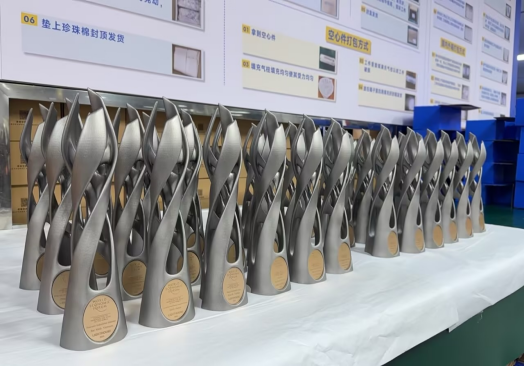
5、Nameplate Trophy
- Manufacturing Process: SLM (Selective Laser Melting)
- Printing Material: TC4 titanium alloy
- Applications: Corporate awards, commemorative recognition, and premium personalized gifts
- Product Overview:
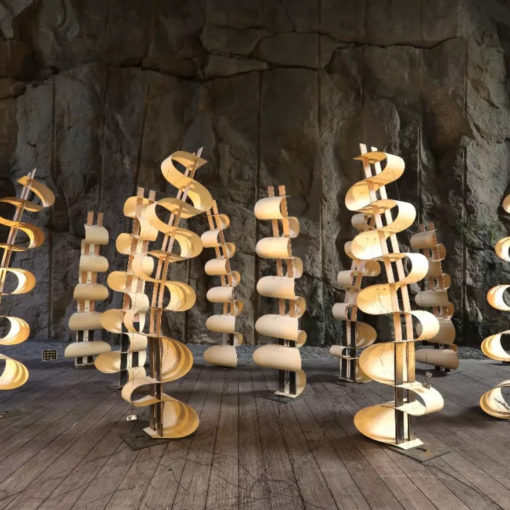
The trophy’s hollow, twisting, streamlined artistic form would be difficult to produce using conventional manufacturing methods. Metal 3D printing removes these design constraints.
The main trophy body is formed as a single piece, with no joints or welds, creating smooth and distinctive lines together with a refined metallic finish. The accompanying aluminum-alloy nameplate is first laser-marked with custom text and graphics, then finished with glossy gold anodizing. This creates a bright, clearly defined identification plate and a visually layered color scheme.
Both the appearance and wording can be customized to meet the needs of premium awards and commemorative pieces for a wide variety of occasions.
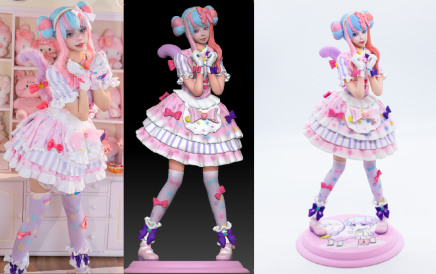
6、Personalized Figurine Based on a Real Person
- Manufacturing Process: WJP (White Jet Process)
- Printing Material: JLC full-color resin
- Application: Personalized figurines based on real people, suitable as commemorative gifts or display pieces
- Product Overview:
A 3D model is generated from a single photograph, then produced using JLC3DP’s full-color WJP technology. The process faithfully reproduces surface details, color accuracy, and the subject’s distinctive features.
By moving beyond the limitations of traditional two-dimensional images, it transforms a captured moment into a tangible 3D figurine. This offers a more vivid and immersive way to preserve memories while creating a new experience in personalized customization.
We welcome inquiries and collaboration opportunities from individuals, companies, and trading businesses.
Contact Information
- Website:https://www.jlc-3dp.cn/
- Email:xuchenxin@sz-jlc.com
- Address:19th Floor, Olympic Building, No. 2 Shangbao Road, Futian District, Shenzhen, China

If you would like to share your OPC ideas and experiences at China’s largest maker innovation celebration—and demonstrate how AI can truly become part of our work and everyday lives while solving real-world problems—this is your opportunity.
Let your project be seen by more peers, developers, partners, and potential customers, and allow new ideas to meet and grow here.
Scan the QR code below or click “Read the Original Article” at the end of the post to apply. Together, let us step into the era of OPC creators and unlock the infinite possibilities of the future!

Greater Bay Area International Maker Summit & Maker Faire Shenzhen 2026
Global Call for Makers Now Open
Application period: June 30–October 30, 2026
Event dates: December 12–13, 2026
P.S. Companies that reserved a booth last year do not need to submit another application. More participation opportunities will be announced soon—stay tuned!

Over the past 13 years, the development trajectory of Maker Faire Shenzhen can be seen as a microcosm of the development of maker culture in China.
- 2012: “Gathering Small Wisdom, Journeying through the Great Future” – This was the first Mini Maker Faire in China, with less than 1000 attendees, and was more like a gathering within a small circle. But we saw the infinite possibilities emerging from the maker community.
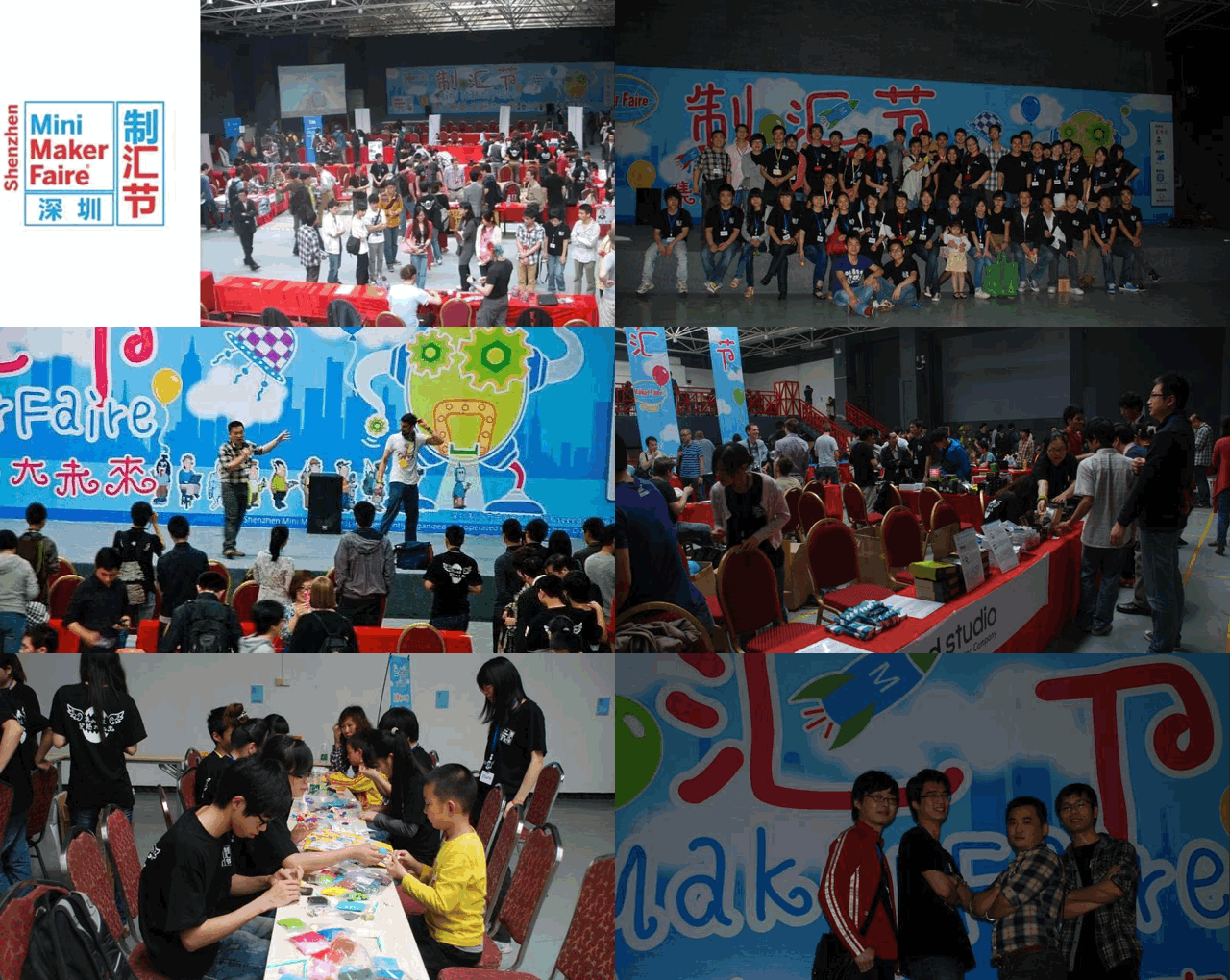
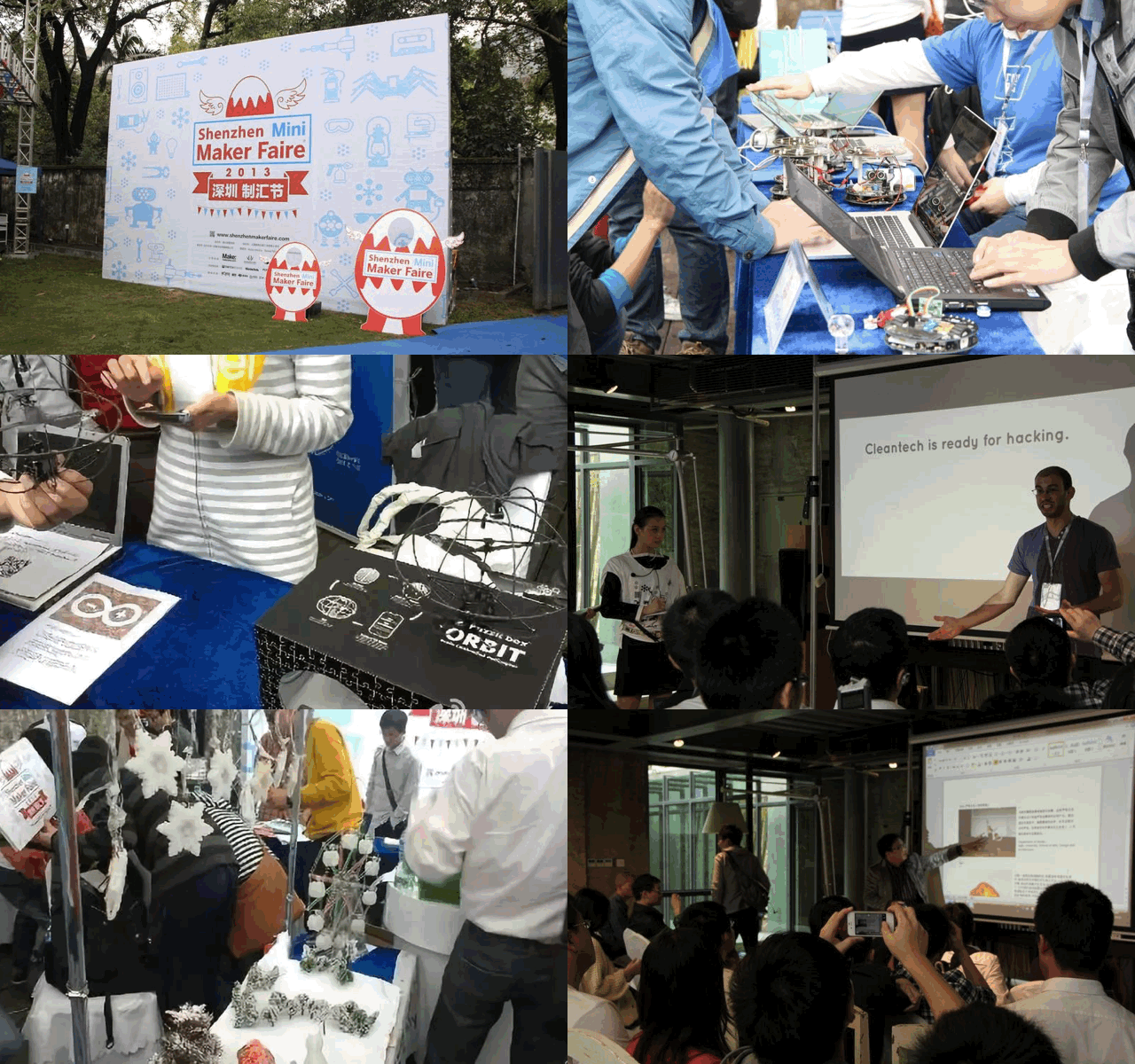
- 2013: The slogan was absent, and the maker community was still small. – In the OCT Creative Park, there were cross-disciplinary exchanges among different creative communities, silently laying the foundation for cultural output.
- 2014: “Innovate with China” – the event was upgraded to the Featured level for the first time, with a significant increase in scale compared to previous years, and the beginning of professional independent forums. This year, makers began to enter the public’s view.
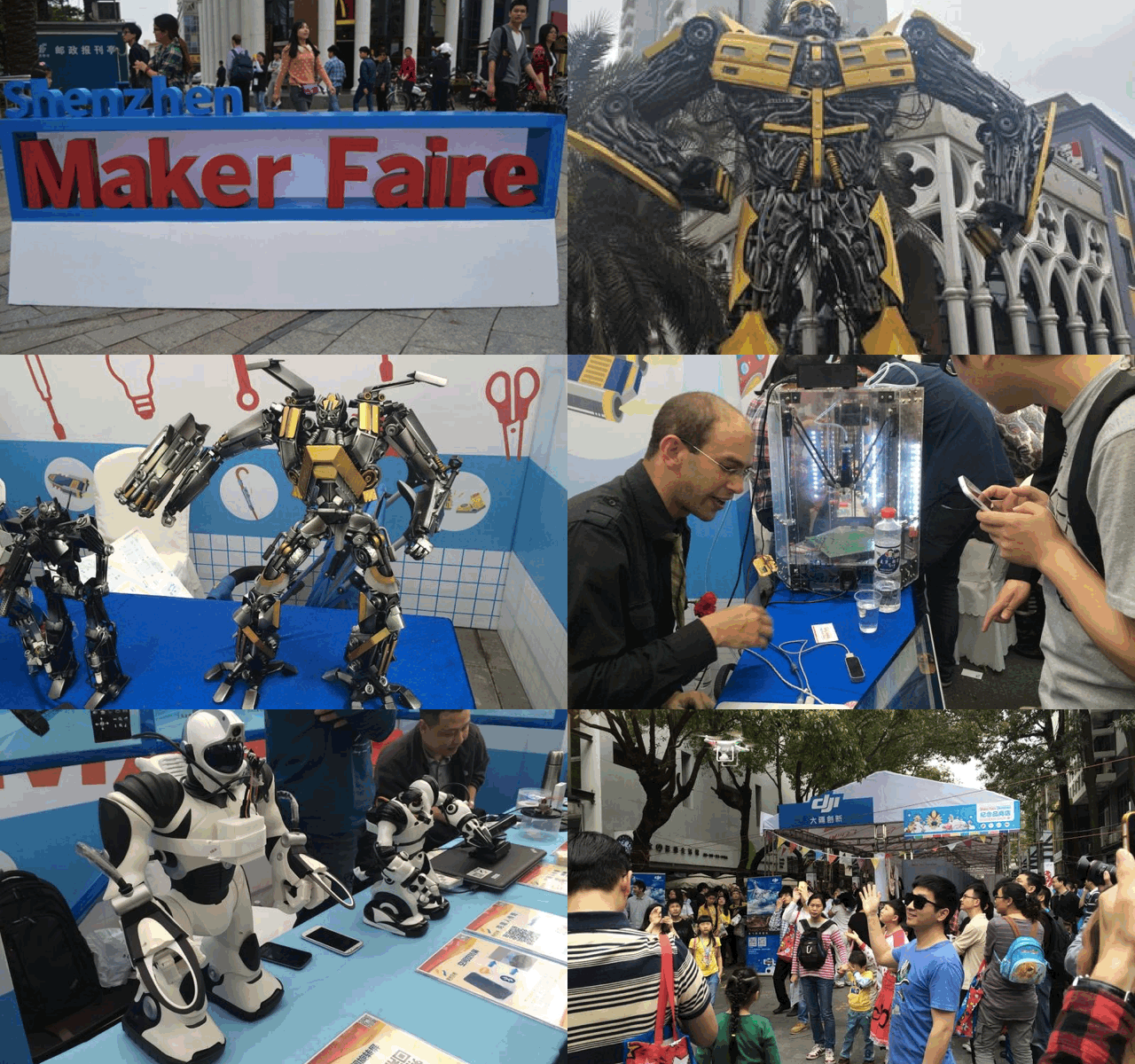
- 2015: “Everyone is a Maker, what are you waiting for?” – This year’s Shenzhen International Maker Week became one of the largest Maker Faires in the world. This year, the concept of “maker” was elevated to a national level, and the trend of “mass innovation, mass entrepreneurship” swept across the country.
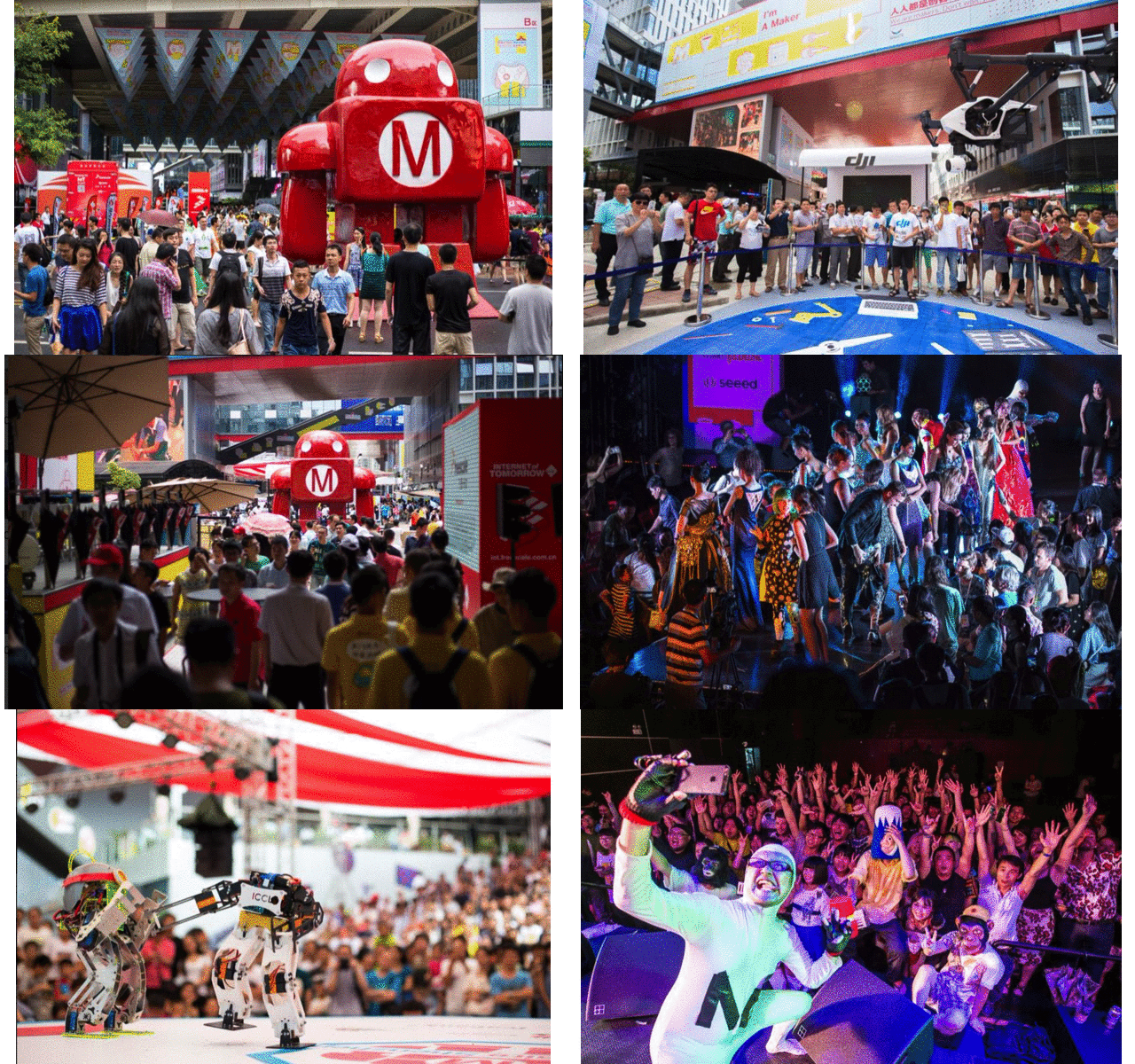
- 2016: “My World, My Creation” – As the sub-venue of the National Innovation and Entrepreneurship Week, the event was held for the first time in the commercial center area, experiencing unpredictable weather from typhoons to scorching heat. Many makers succeeded in your entrepreneurial endeavors this year, but it seemed like there were even more failures. The hype around entrepreneurship shifted towards rationality.
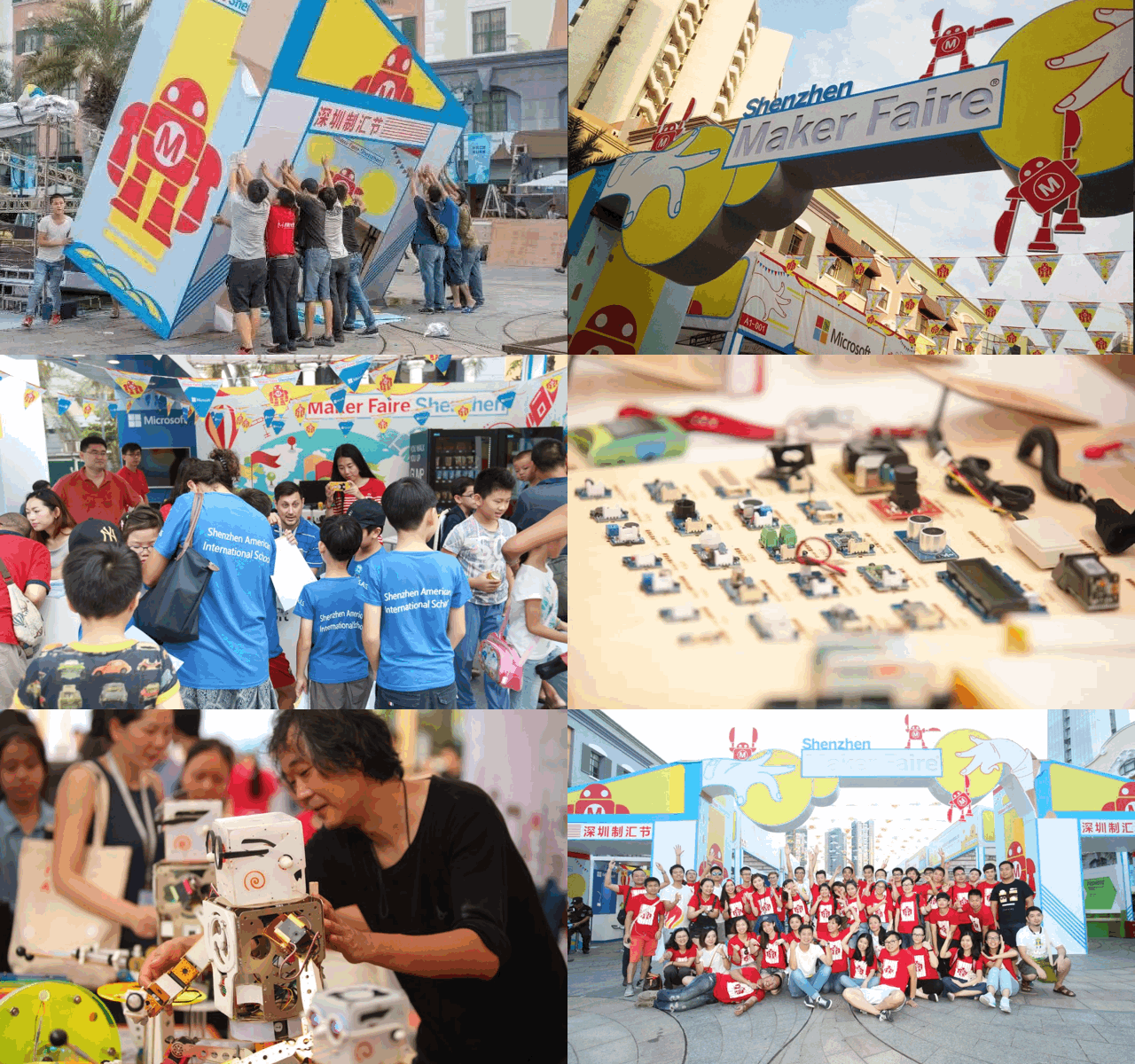
- 2017: “Makers, Go Pro” – The event took place at the university campus for the first time, focusing on Maker Pros and providing a platform for diverse innovators and makers to showcase themselves, presenting more possibilities for the growth path of makers to the entire community.
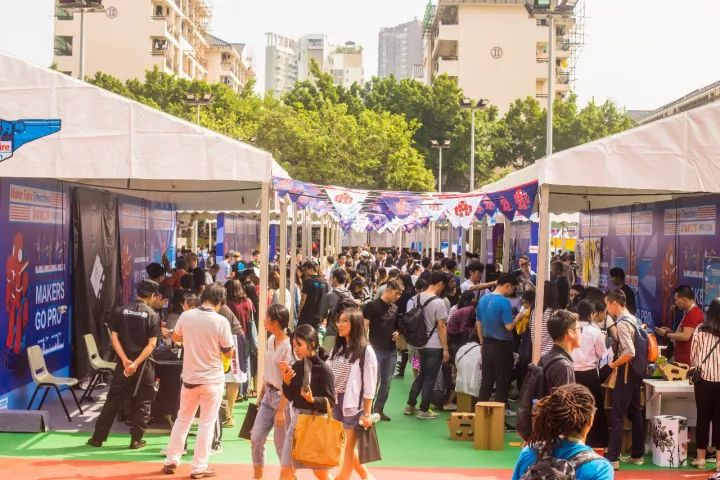
- 2018: “Co-making in the City” – The main venue of Shenzhen International Maker Week, where individuals and groups with shared visions and values gathered to showcase stories, projects, and explorations of collaboration among different communities and people.
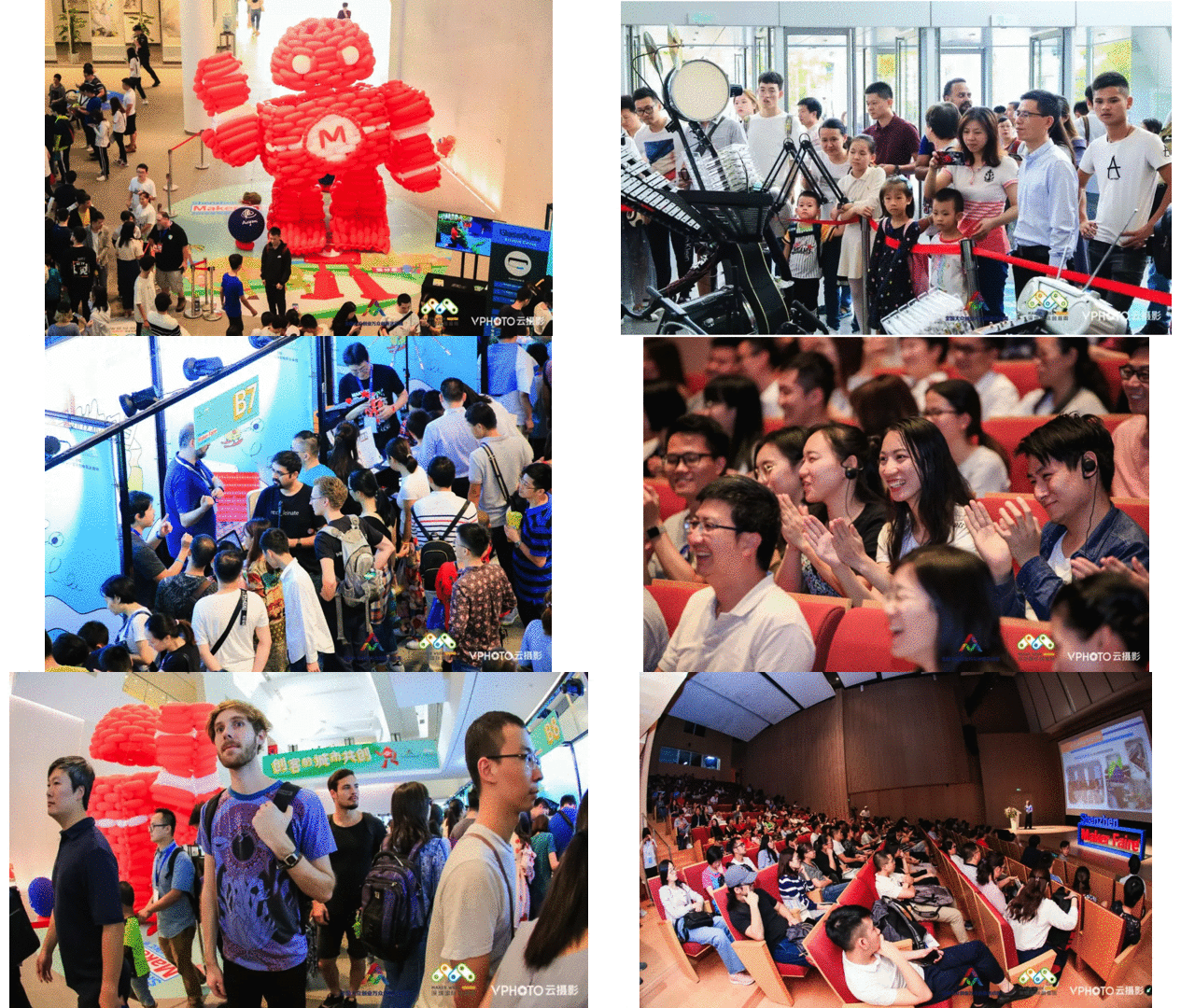
- 2019: ” To the Heart of Community, To the Cluster of Industry” – The event was upgraded to the Maker Faire Shenzhen, attempting to attract professional audiences and focusing on pragmatic aspects such as solving the needs of industrial upgrading and co-developin. It aims to build a platform for innovation and industry dialogue and collaboration.

- 2023: “Where Are The Makers?”– Starting from our own mission and values, we aim to explore the future direction of makers and theapossibilities for commercialization. Though this question does not have a definitive answer, we do hope that through this event, we can communicate and share with every one of you, finding more ideas and directions together.

- 2024: “Everything is AI” – This year, we brought together over 120 exhibitors from around the world, attracting nearly 1,500 professional attendees from nearly 20 countries and over 20 provinces across China. The exhibition showcased a wide range of AI application projects and hosted 10 AI hardware-themed satellite events, alongside various workshops.
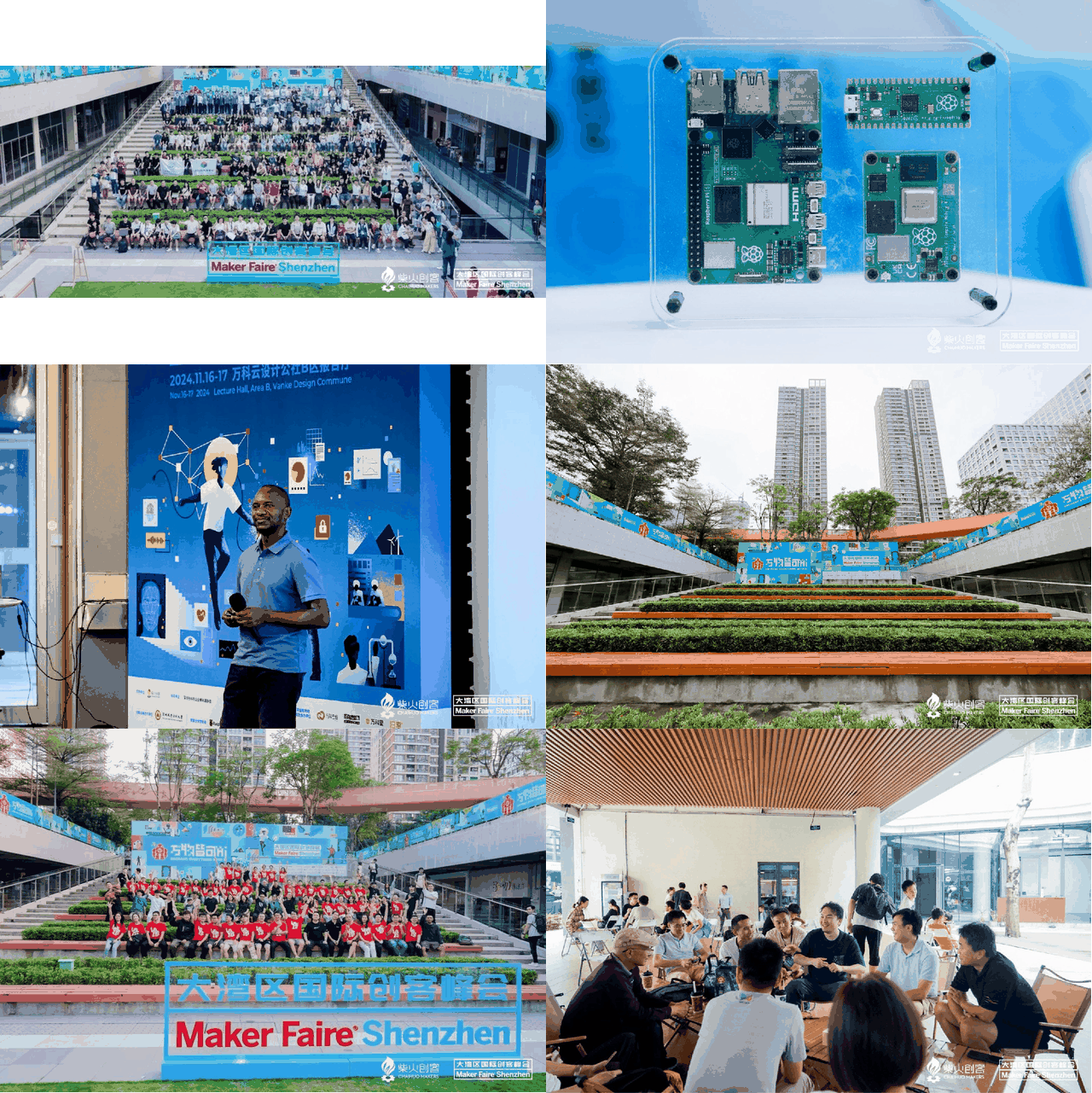
- 2025: “AI Without Boundaries, Everything Reimagined”The summit brought together nearly 100 international innovation ambassadors and showcased almost 1,000 AI hardware projects.Technology leaders, pioneering makers, industry experts, and university teams from more than 30 countries gathered to create an international innovation event combining frontier thinking, technical exchange, and cross-disciplinary collaboration.