Introduction
The 2026 Greater Bay Area International Maker Summit & Maker Faire Shenzhenembraces OPC as its core theme, creating an annual stage of accelerated evolution for makers worldwide.
Makers are no longer just hobbyists. They are super individuals who connect AI, hardware, and real-world scenarios into one integrated system.
Therefore, we are launching “OPC Pioneer Stories”, a series focusing on the key innovators on this year’s stage — capturing the pioneering moments of individuals who build like a complete team.
We are not only telling stories about making. We are documenting the hard-core journeys of people who “weld” technology into reality.
The OPC call has been sounded.
The stories of pioneers are now live.

If you also want to record and share your OPC journey, we welcome you to submit your story.
👇

Scan the QR code and share your story.
Without further ado, let’s welcome our OPC pioneer of this episode:
One person, one team — pulling AI out of the screen, welding it into hardware, and bringing it into the real world.
Makers are no longer simply enthusiasts. They are super individuals who transform code into circuits and digital intelligence into physical systems.
Wang Jin did not continue building “standard-answer robots” in Shenzhen.
Instead, he traveled to Aksu, Xinjiang, and settled in Lao Qin’s apple orchard in the Sixth Regiment of the Xinjiang Production and Construction Corps.
There, he attempted to embed decades-old repetitive farming tasks — fruit thinning, bagging, and pruning — into a lightweight handheld agricultural terminal.
Shenzhen Selection: Using the S-Curve to Find the Opportunities Large Companies Avoid
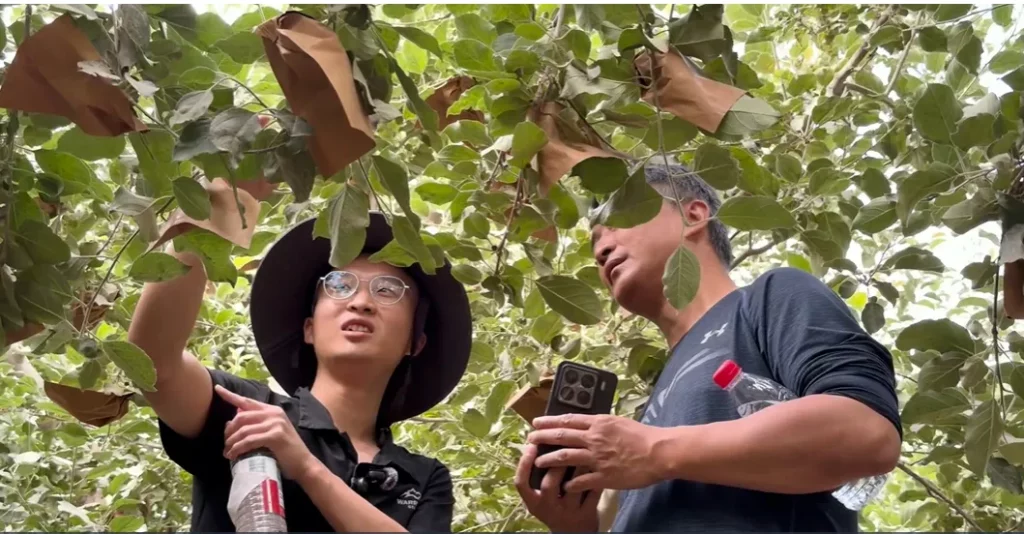
Wang Jin in the orchard
With a mechanical engineering background, Wang Jin explored different directions in Shenzhen.
He looked into elderly care, factory automation, and consumer electronics one by one — and eventually ruled them out.
His decision-making framework was based on the S-curve theory:
Industries such as smartphones and automobiles are already mature markets, where innovation often means improving existing systems.
Agriculture’s first S-curve was represented by machines such as tractors and cotton harvesters.
The second S-curve is the broader vision of smart agriculture.
In 2023, Wang Jin attended the agricultural-themed forum at Maker Faire Shenzhen.
After discussions and exchanges with other makers, he reached a conclusion:
Precision operations in orchards — including fruit thinning, bagging, single-branch pruning, and maturity sorting — represented a market gap that was often ignored.
Large companies considered the scale too small, while small teams found the tasks too fragmented.
One year later, he founded Shenzhen Huifeng Agricultural Technology and chose Aksu, Xinjiang as his first field deployment site.
With concentrated farmland, a single major variety (Fuji apples), and a clearly defined production window, Aksu provided the ideal environment for collecting real-world data.
Aksu Field Test: Bringing Human Touch into Machines
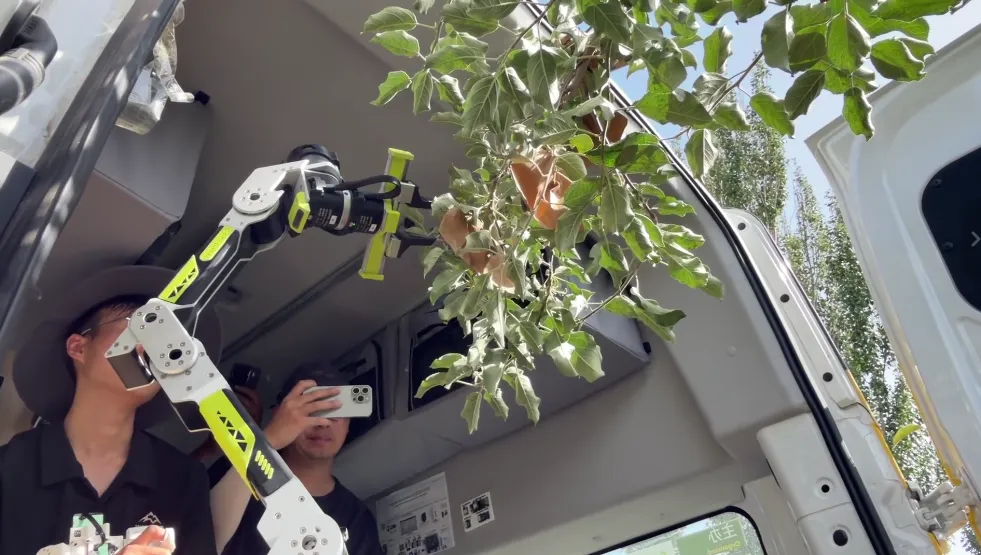
At the end of May, apples in Aksu had not yet developed into the famous “honey-sweet” variety known as Bingtangxin apples, but the orchards had already entered a critical period for intensive manual labor.
Fruit thinning, bagging, climbing ladders, and reaching between branches and young fruits — workers repeatedly searched for the right position and timing.
A single tree may contain hundreds of fruits.
For a 100-mu orchard, fruit thinning and bagging require more than 20 temporary workers and can take nearly a month to complete.
This was the moment when Wang Jin from Shenzhen Huifeng Agricultural Technology brought his equipment into the orchard for field testing.
What he developed was not a fully autonomous robot, but a human-machine collaborative handheld terminal.
The machine does not replace farmers’ decisions.
Instead, it takes over the most repetitive and physically demanding tasks.
· Fruit Thinning:
The camera identifies densely clustered young fruits on branches.
Based on the “single-tree load” calculation, the algorithm marks unnecessary fruits for removal, while the end-effector scissors perform obstacle-avoiding cutting operations.
· Fruit Bagging:
Picking up the bag, opening it, placing it over the fruit, sealing it, and checking the result — the process combines:
- flexible paper handling,
- spatial obstacle avoidance,
- micro-force control,
- and visual positioning.
Together, these technologies attempt to replicate the subtle human motion of a “gentle push + wrist rotation.”
· Efficiency Benchmark:
Manual operation currently reaches approximately 4,000 bags per person per day.
After the terminal becomes stable, the target is to achieve 7,000–8,000 bags per person per day.
Wang Jin believes that you cannot experience the feeling beneath your feet by typing code on a computer.
The orchard environment is extremely real:
branches hitting your face, unstable ladders, intense heat exposure.
Meanwhile, decisions such as how many fruits to thin and when to perform bagging often rely on the orchard owner’s experience.
Some farmers optimize for quantity, while others prioritize quality.
It is a continuous dynamic game of balancing different factors.
“I originally thought that the hardest parts of building something would be advanced technologies, such as structural design and coding.
But after working on-site, I realized that what challenges people the most are often the small and seemingly trivial details.
They constantly test and reshape your mindset.”
Wang Jin said.
OPC Insights: Technology Does Not Search for Scenarios — Real Needs Drive Technology Forward
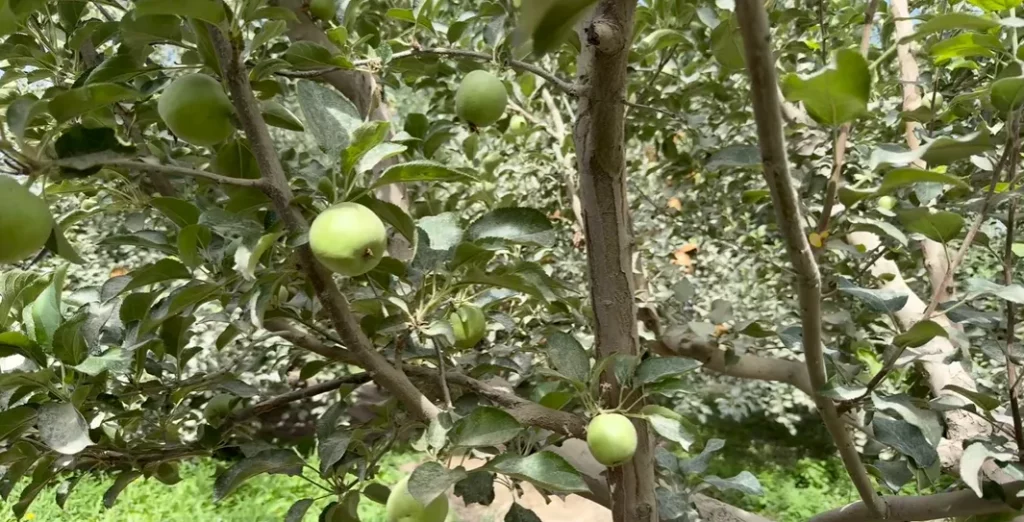
A Corner of an Apple Orchard in Aksu
During this period, Wang Jin realized that applying AI technology in Xinjiang is not fundamentally an AI problem.
During the bagging season, most workers are temporary laborers from nearby areas, and few young people are willing to participate.
Labor costs account for approximately one-third of the total production cost.
Beyond labor, there are also expenses related to bags, bag removal, and other processes.
The human cost required to grow an apple from the orchard to the consumer is much higher than many people imagine.
“The key now is figuring out how to apply our existing workflows and labor processes to the areas where technology can create the highest value.
AI can help organize information, but it is still difficult for it to create a complete decision-making and control loop in an orchard.”
Wang Jin said.
For example:
When planning bagging operations for an orchard of more than 100 mu:
How many workers are needed?
How should shifts be arranged?
Which areas should be completed on which days?
Who is responsible for each section?
How should progress be recorded and quality evaluated?
AI can certainly assist with these tasks.
However, at its core, this is first a problem of labor organization.
AI can organize information, support decision-making, and gradually participate in more tasks.
But it cannot directly replace the understanding of land, crops, and people.
Wang Jin summarizes this difference as a matter of “information density.”
“Information density determines what problems AI can solve.
When AI addresses high-information-density problems, it may create general efficiency improvements, such as in Shenzhen.
But in places like Xinjiang, where information density is lower and interaction with the environment is much higher, it leads to completely different business models and ways of working.”
In other words, this is a market completely driven by real needs.
The lesson for OPCs is that, in many cases, technology does not need to search for scenarios first.
Instead, real-world demands push technology to evolve.
Wang Jin does not represent the typical OPC image of the “Shenzhen speed” style — building a prototype over a weekend and launching within a month.
But he has achieved something equally meaningful:
- Pulling AI out of the screen:
Instead of building another chatbot powered by large language models, he integrates perception, decision-making, and execution directly into the apple trees.
- Putting AI into the real world:
The apple orchards of Aksu are not simulation environments — they are real production scenarios.
- One person, one team:
From selecting the direction in Shenzhen, to deploying equipment in Xinjiang, to collecting data and improving hardware himself.
Evolution does not always happen under the spotlight.
It can also happen in the winds of Aksu at the end of May.
It can happen in the moment when Wang Jin crouches on a ladder, holding his terminal toward a cluster of young apples and saying:
“Keep this one. Cut this one.”
So, what are the key focuses of this year’s Call for Makers?
As the interface and bridge between technological innovation and real-world applications, Maker Faire Shenzhen continues, as in previous years, to focus on four types of projects: New Technology Solutions; Industry Application Solutions; Tech Education & Interactive Art; Technology Services.
We warmly invite OPC creators to take the stage—not only to showcase your work, but to demonstrate how it enters real scenarios and solves real problems. From an idea, to a development board, to a deployable product or a sustainable business, let more people see the true value of AI and hardware innovation.
If you want to showcase your innovative ideas and the impact they have on industry innovation, meet like-minded makers, and explore the specific applications of cutting-edge technologies in various industries at one of the largest maker innovation events in the world, we invite you to sign up by scanning the QR code below or clicking here. We look forward to seeing you there and sharing your journey of continuous innovation!
Call for Makers
Scan to Register

Registration Period: June 30th, 2026 – October 30th, 2026
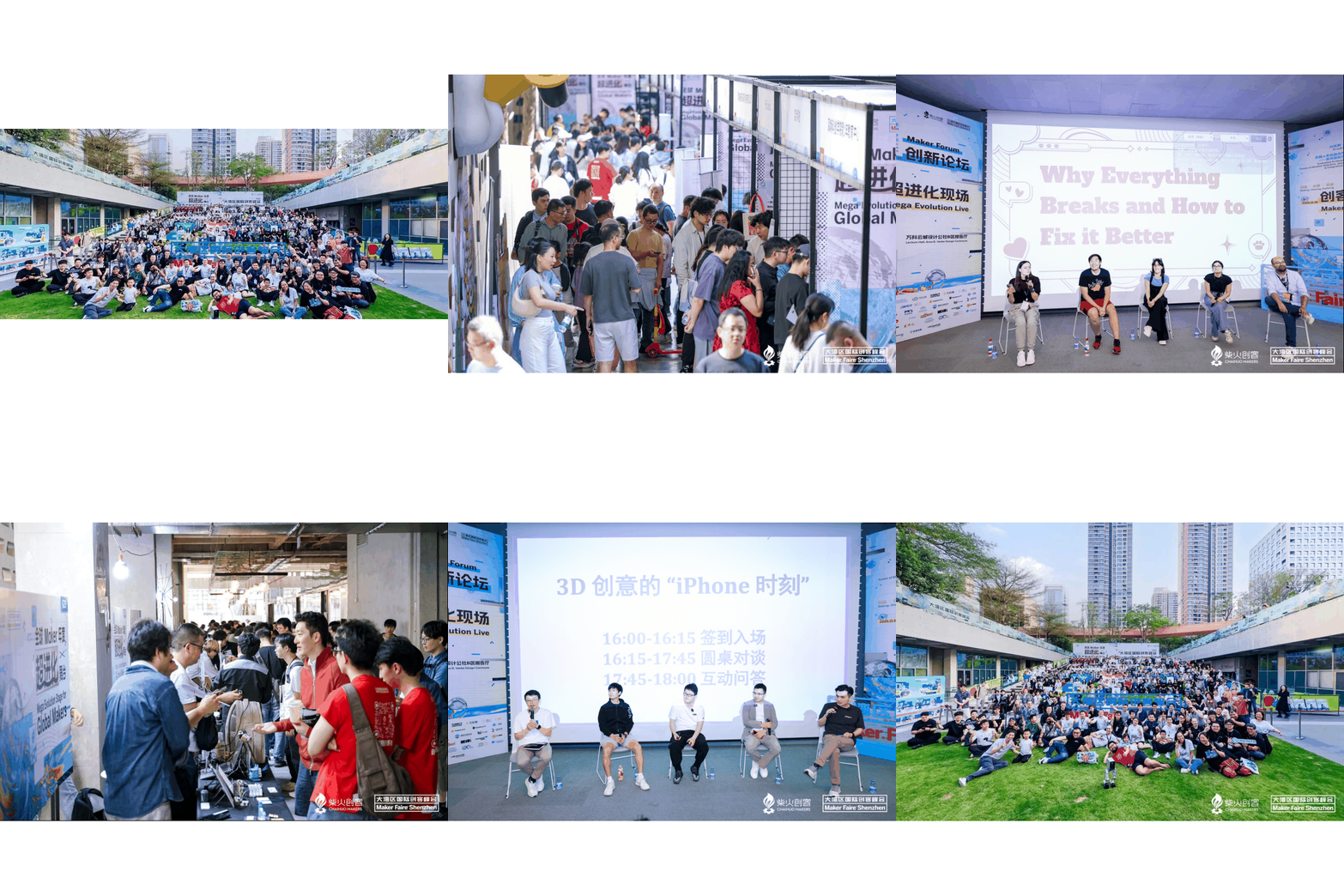
Over the past 12 years, the development trajectory of Maker Faire Shenzhen can be seen as a microcosm of the development of maker culture in China.
- 2012: “Gathering Small Wisdom, Journeying through the Great Future” – This was the first Mini Maker Faire in China, with less than 1000 attendees, and was more like a gathering within a small circle. But we saw the infinite possibilities emerging from the maker community.
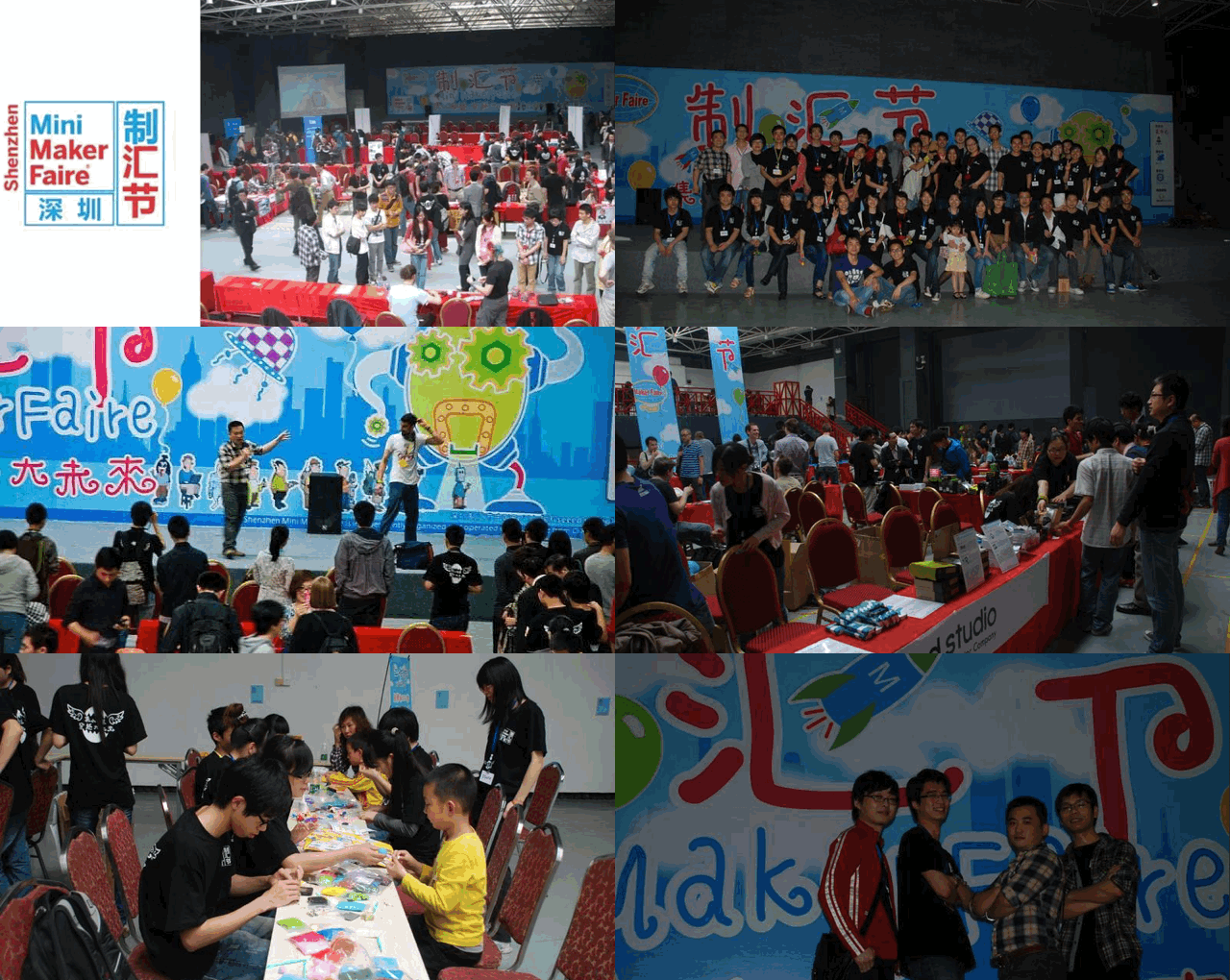
- 2013: The slogan was absent, and the maker community was still small. In the OCT Creative Park, there were cross-disciplinary exchanges among different creative communities, silently laying the foundation for cultural output.
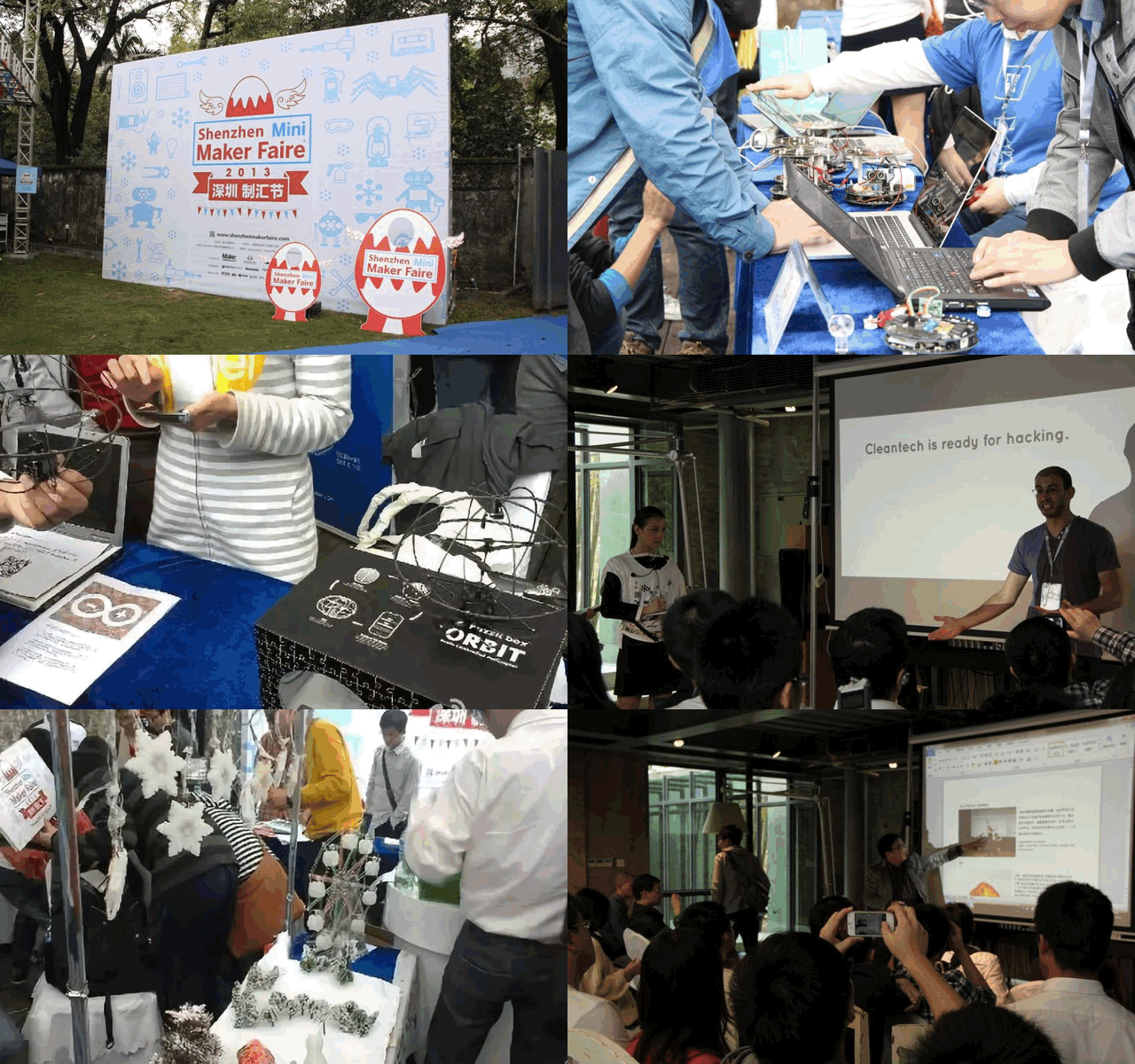
- 2014: “Innovate with China” – the event was upgraded to the Featured level for the first time, with a significant increase in scale compared to previous years, and the beginning of professional independent forums. This year, makers began to enter the public’s view.
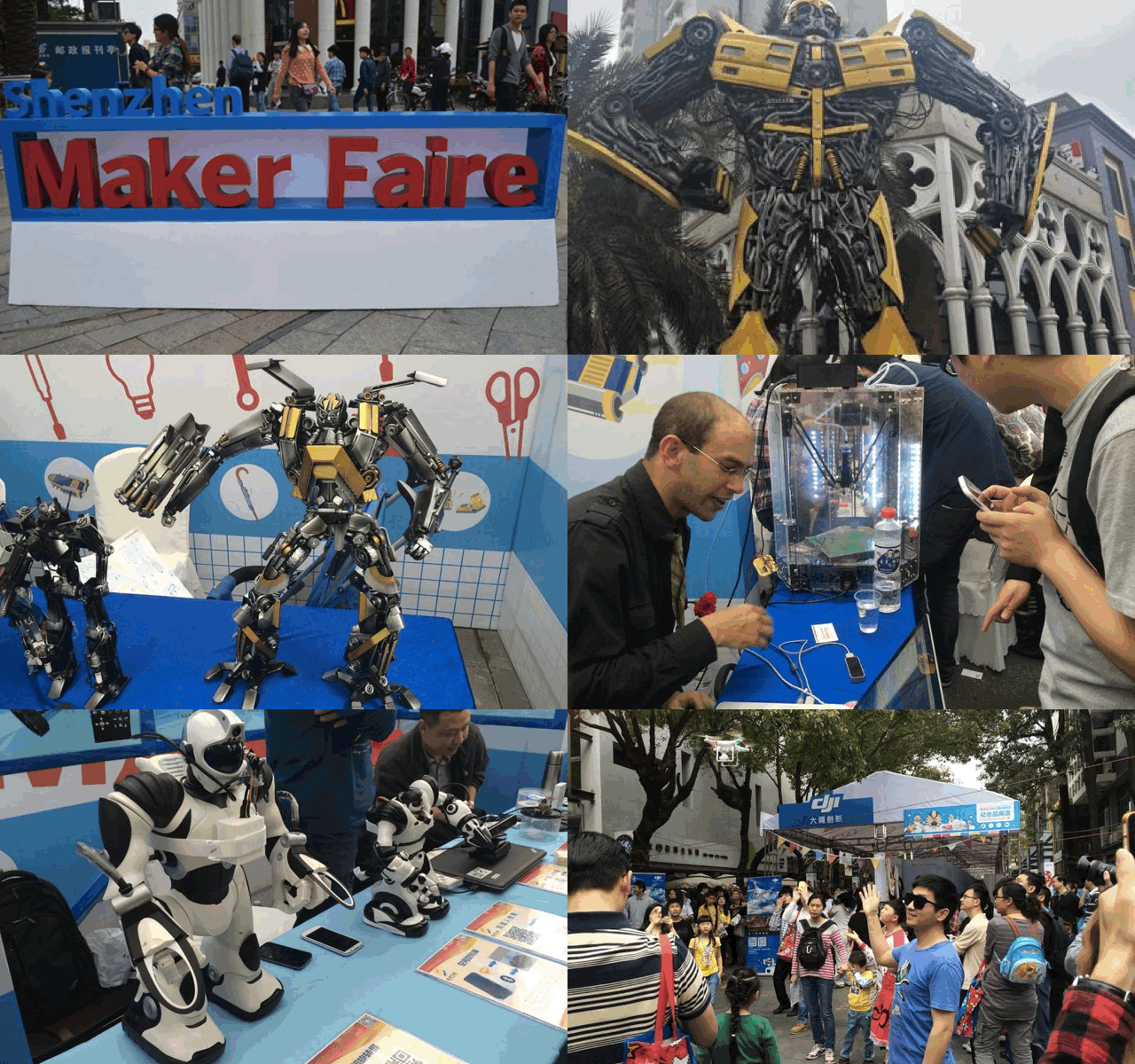
- 2015: “Everyone is a Maker, what are you waiting for?” – This year’s Shenzhen International Maker Week became one of the largest Maker Faires in the world. This year, the concept of “maker” was elevated to a national level, and the trend of “mass innovation, mass entrepreneurship” swept across the country.
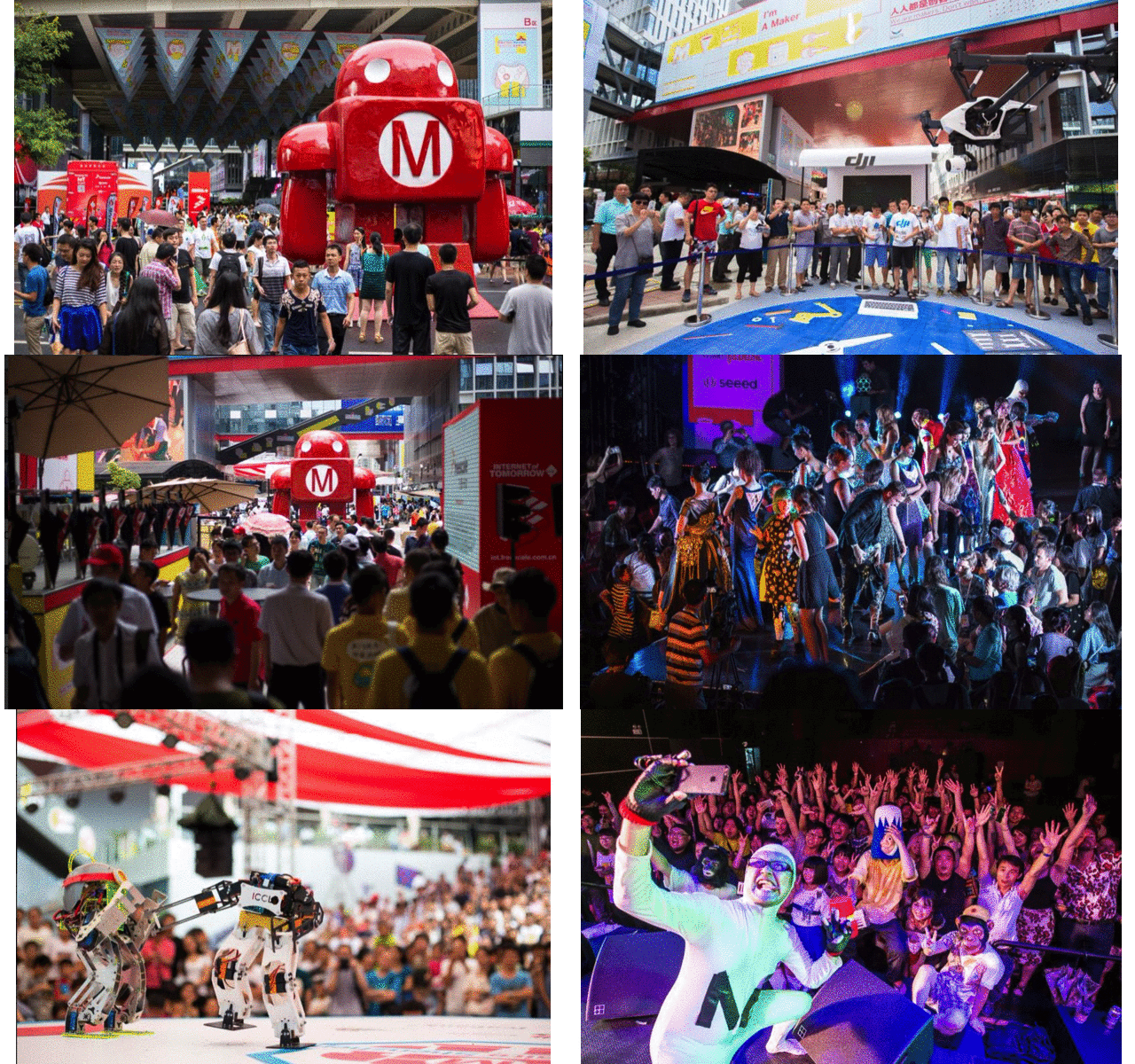
- 2016: “My World, My Creation” – As the sub-venue of the National Innovation and Entrepreneurship Week, the event was held for the first time in the commercial center area, experiencing unpredictable weather from typhoons to scorching heat. Many makers succeeded in your entrepreneurial endeavors this year, but it seemed like there were even more failures. The hype around entrepreneurship shifted towards rationality.
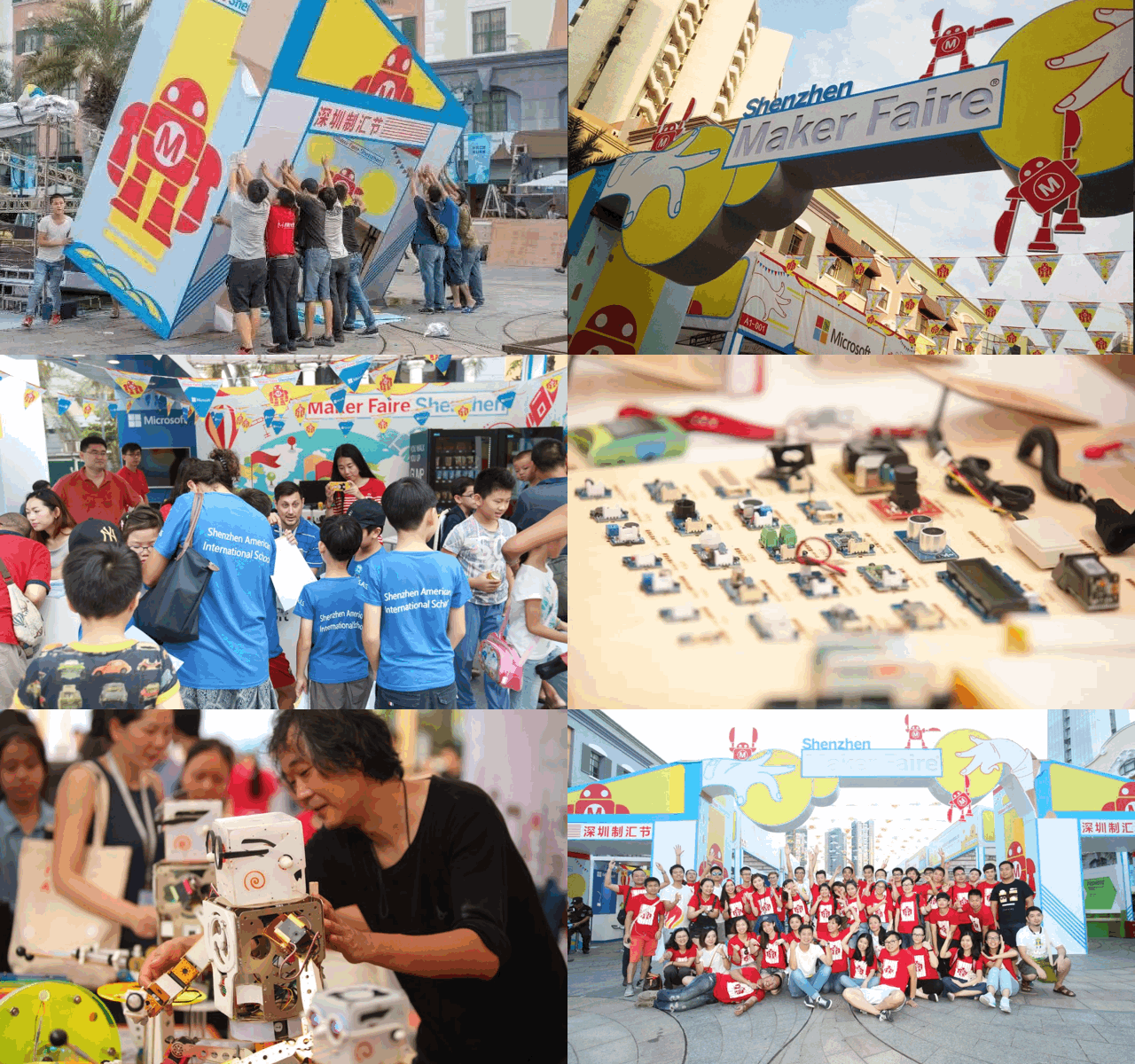
- 2017: “Makers, Go Pro” – The event took place at the university campus for the first time, focusing on Maker Pros and providing a platform for diverse innovators and makers to showcase themselves, presenting more possibilities for the growth path of makers to the entire community.
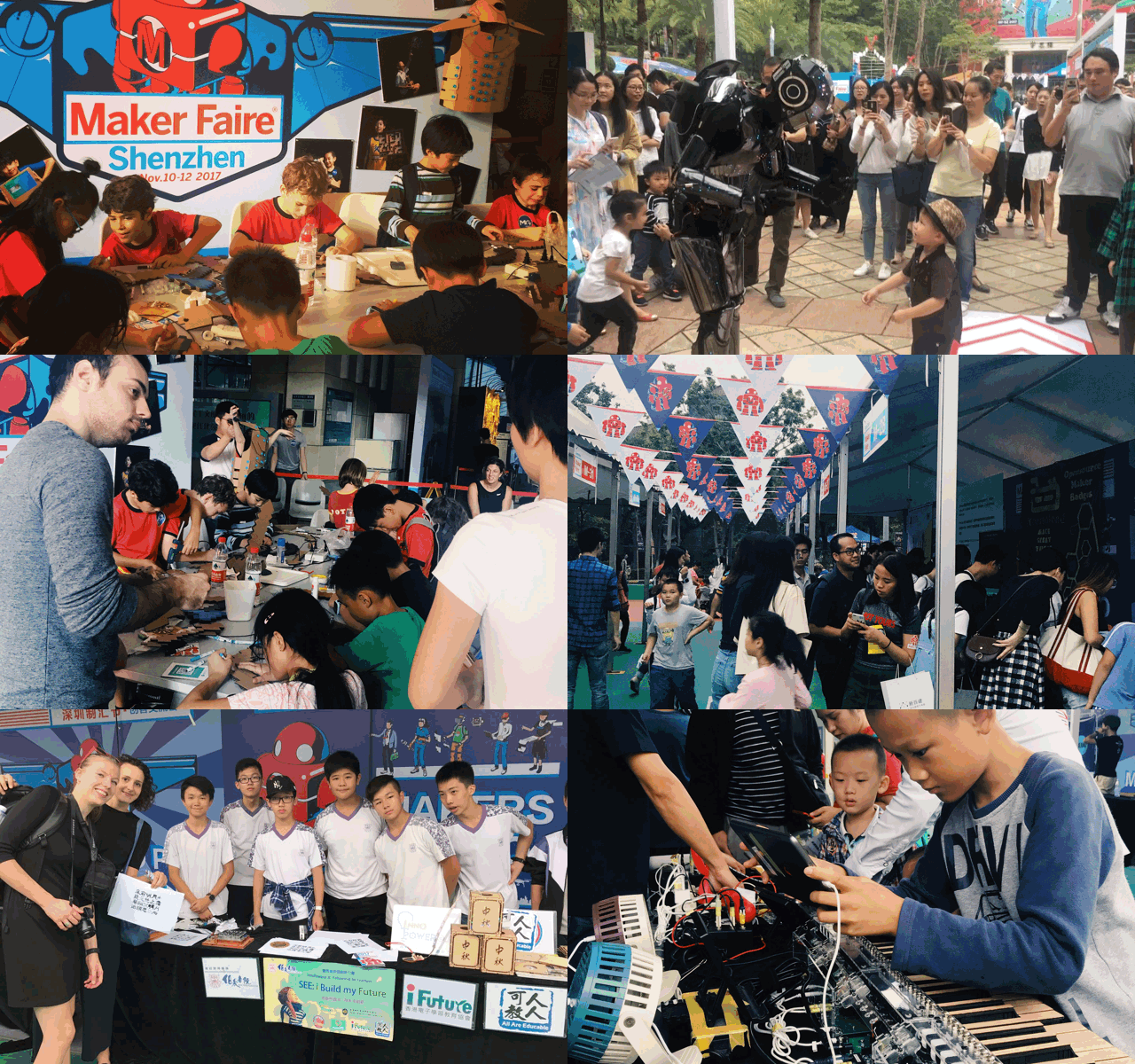
- 2018: “Co-making in the City” – The main venue of Shenzhen International Maker Week, where individuals and groups with shared visions and values gathered to showcase stories, projects, and explorations of collaboration among different communities and people.
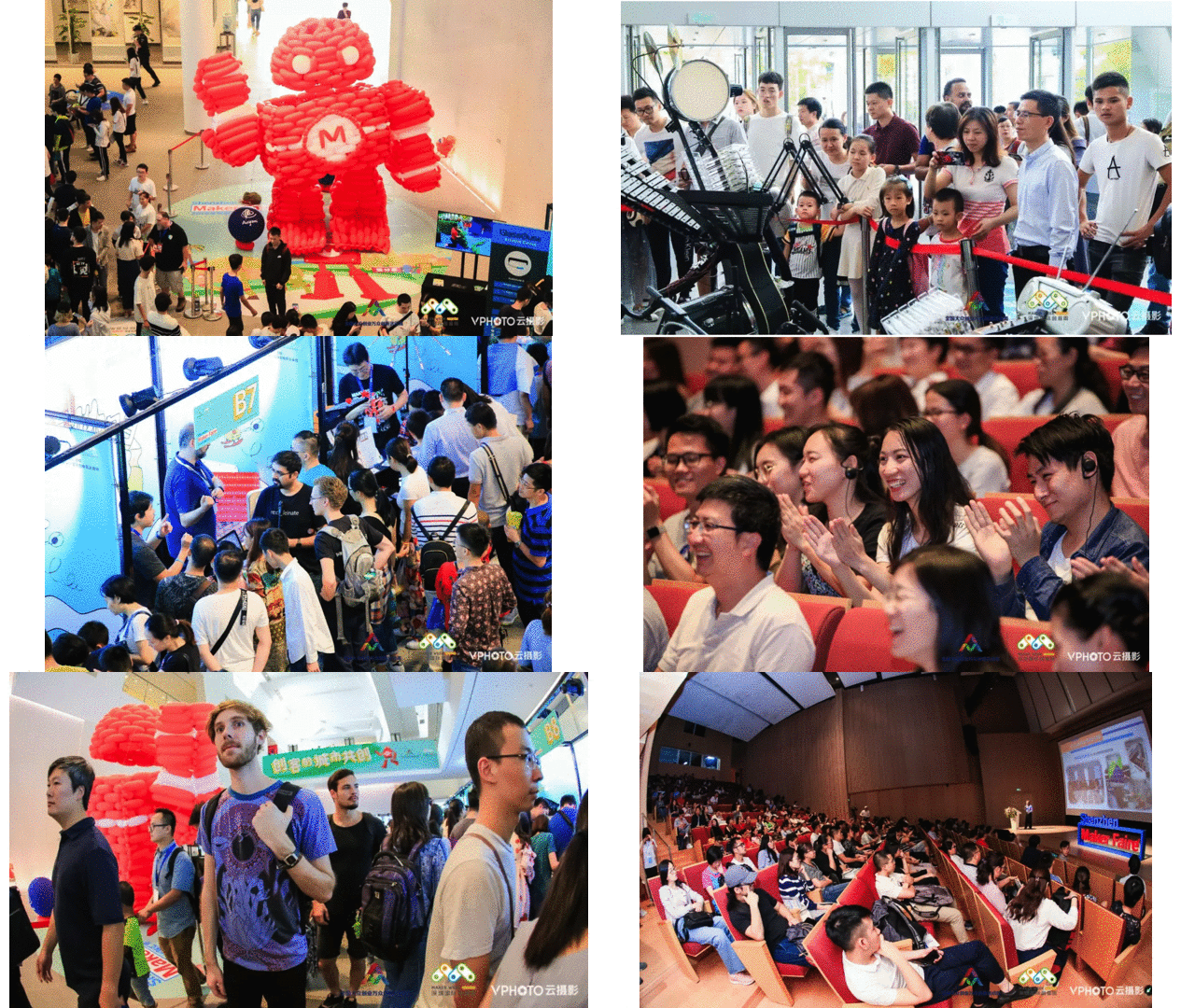
- 2019: ” To the Heart of Community, To the Cluster of Industry” – The event was upgraded to the Maker Faire Shenzhen, attempting to attract professional audiences and focusing on pragmatic aspects such as solving the needs of industrial upgrading and co-developin. It aims to build a platform for innovation and industry dialogue and collaboration.
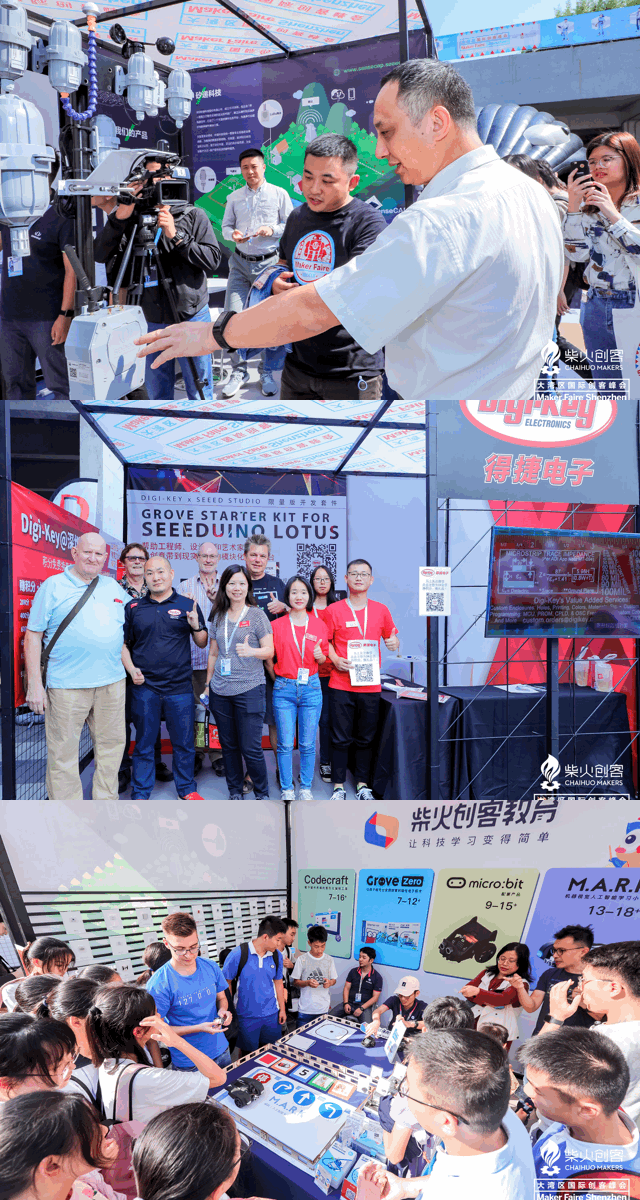
- 2023: “Where Are The Makers?”Starting from our own mission and values, we aim to explore the future direction of makers and the possibilities for commercialization. Though this question does not have a definitive answer, we do hope that through this event, we can communicate and share with every one of you, finding more ideas and directions together.
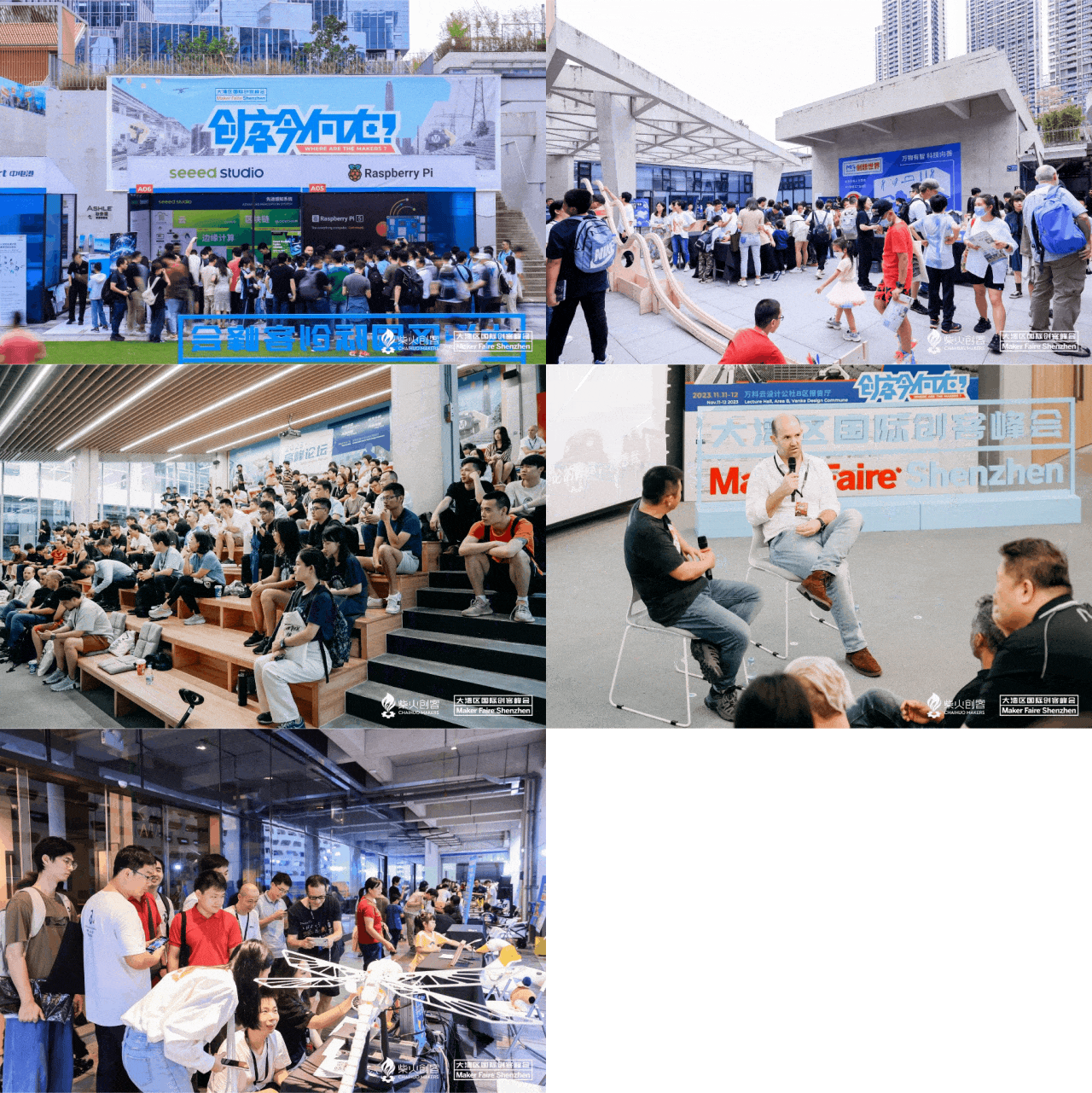
- 2024 —:“Everything Can Be AI” The summit brought together over 120 exhibitors from China and abroad, drawing over 1,500 professional visitors from nearly 20 countries and more than 20 Chinese provinces. The exhibition showcased numerous AI application projects and hosted 10 AI hardware events and workshops.
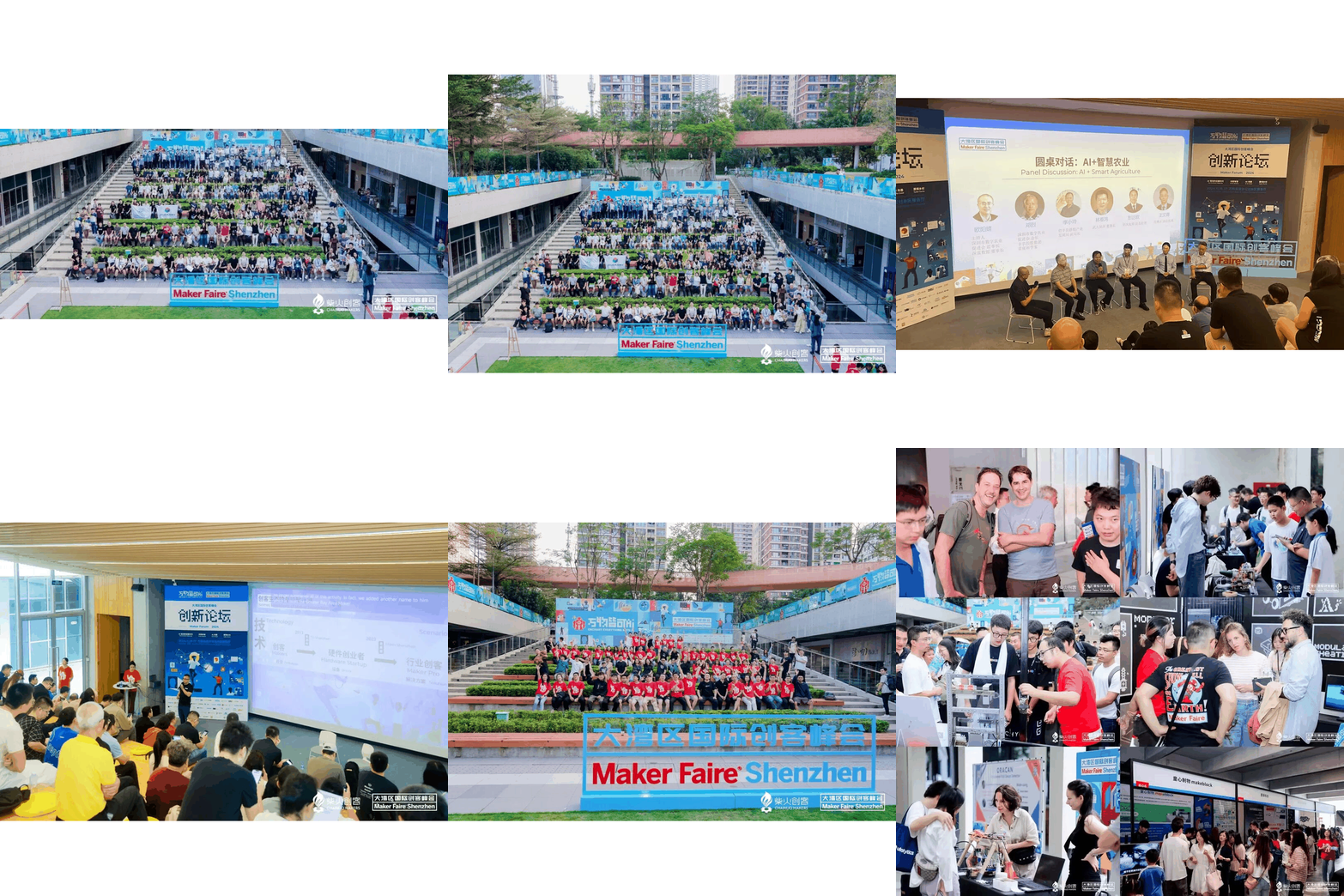
- 2025 — “AI and more things” The summit gathered nearly 100 international innovation ambassadors and showcased nearly 1,000 AI hardware projects. Participants included technology leaders, makers, industry experts, and university teams from over 30 countries, forming a global innovation platform integrating cutting-edge ideas, technical exchange, and cross-disciplinary collaboration.