Preface
The 2026 Greater Bay Area International Maker Summit & Maker Faire Shenzhen is rallying around OPC, creating an annual stage for Makers worldwide to push the boundaries of what one person can build.
Makers are no longer just hobbyists. They are becoming super individuals who fuse AI, hardware, and real-world scenarios into working systems.
That is why we launched OPC Pioneer Stories, a series spotlighting the people at the heart of this year’s stage of hyper-evolution and capturing the defining moments when one person becomes a team.
We are not just telling stories about making things. We are documenting the hardcore journeys of those who are literally and figuratively soldering technology into reality.
The call for OPCs has sounded, and the stories of the pioneers are already unfolding.
If you have an OPC moment worth documenting and sharing, we invite you to submit your story.

Scan the QR code and tell us about your journey.
Now, without further ado, meet this edition’s OPC pioneers:

One person can be an entire team—pulling AI out of the screen, welding it into hardware, and throwing it into the real world. Makers are no longer simply hobbyists. They are super individuals who turn code into circuits and transform digital intelligence into physical systems and sustainable businesses.
In Hezhang County, Bijie, Guizhou—a mountain town far from the electronics supply chain—Maker Mo, whose real name is Zhu Pan, completed a textbook OPC-style evolution.
He went from being a spectator visiting Maker Faire Shenzhen for the first time in 2024, to an exhibitor bringing an AI night-light and an AI retro telephone in 2025. Looking back in 2026, he has already taken Xiaozhi AI from “giving an alarm clock a mouth” to customized educational hardware powered by a knowledge base, as well as cross-border industry–academia collaboration.

The Beginning: From a Boy Who Took Appliances Apart to Maker Education
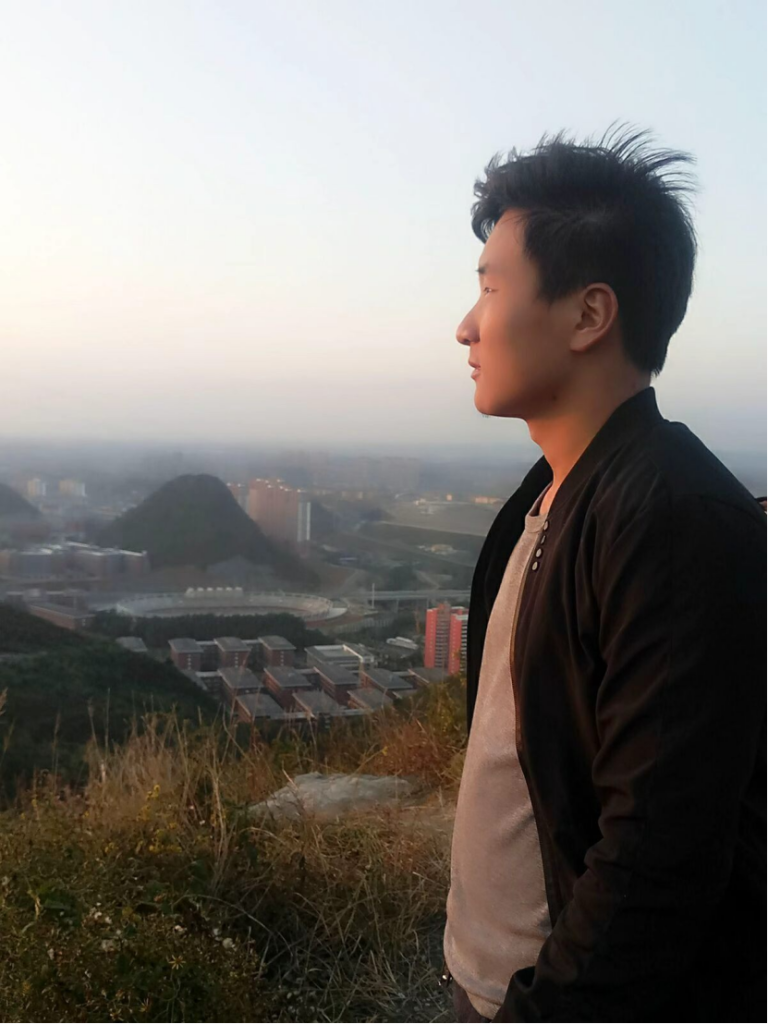
Zhu Pan was born in Hezhang in 1994. As a child, he loved Transformers and Bakusō Kyōdai Let’s & Go!! He took apart the family’s electric fans, rice cooker, and flashlights, leaving the pieces scattered everywhere.
“I only knew how to take things apart, not how to put them back together. My parents scolded me plenty of times.”
In 2015, he enrolled in the Electrical Engineering and Automation program at Guizhou Normal University. During his junior year, he overheard a classmate asking a teacher about Arduino in a computer lab. That was the first time he heard about OpenBlock visual programming: “I realized programming could be as simple as building with blocks.”
Arduino led him into the world of open-source hardware. He taught himself through overseas blogs and forums, making countless early mistakes: buying the wrong sensors, struggling with English documentation, and staring blankly at an oscilloscope.
The turning point was an online course titled “IoT, So Easy!” He proactively sent the course creator, teacher Qiu Jiongtao, suggestions for improvement. The two became partners as well as mentor and student. Later, through Qiu’s introduction, Zhu joined Professor Fu Qian’s team at Beijing Normal University to help maintain the Mixly graphical programming tool. For the first time, he found the doorway to systematizing maker education.
“Teacher Qiu accomplished what I had always wanted to do but never managed to achieve: turning maker education into a complete system,” he said.
A Snapshot of 2025: As Xiaozhi Went Viral, He Gave Old Objects an “AI Soul”
In early 2025, the open-source AI hardware project Xiaozhi AI topped GitHub’s trending chart. Maker Mo seized the moment and published a series of “Xiaozhi + traditional object” tutorials across Bilibili, WeChat Channels, Douyin, and Xiaohongshu: a dot-matrix clock that could talk, a pen holder that could check the weather, and a well-known humanoid robot that—after he installed Xiaozhi—could hold natural-language conversations outdoors.
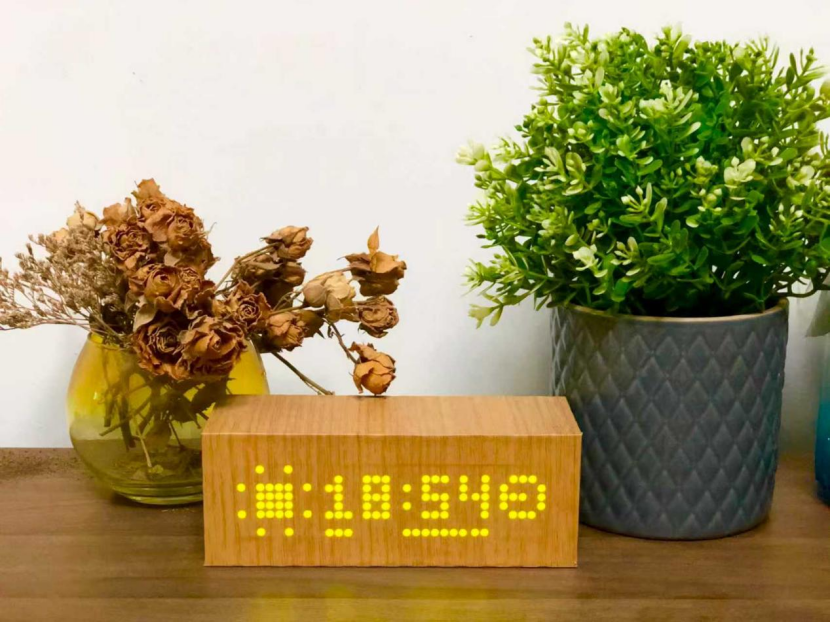
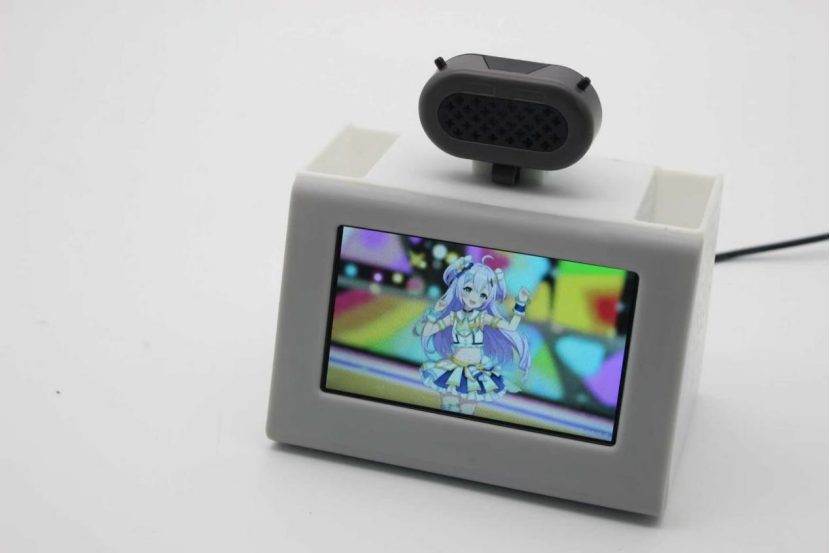
His following grew from 4,000 to more than 40,000. He describes himself as “60% maker and 40% content creator.” He creates out of passion and shares because he remembers the frustration of having nowhere to turn when he was learning.
In 2025, he returned to Maker Faire Shenzhen as an exhibitor. His booth centered on three projects:
- Xiaozhi × STEAM Education: Demonstrating that Xiaozhi is not merely a chat toy, but a physical teaching tool for learning AI.
- AI Night-Light: Voice-controlled brightness and color temperature, storytelling capabilities, and a customizable DIY form.
- AI Retro Telephone: Inspired by research conducted in nursing homes. Elderly residents felt lonely and wanted someone to talk to, while caregivers had little time. He converted an old-fashioned telephone into a Xiaozhi-powered device. The handset protects privacy, while its buttons switch between different AI agents to help relieve loneliness.
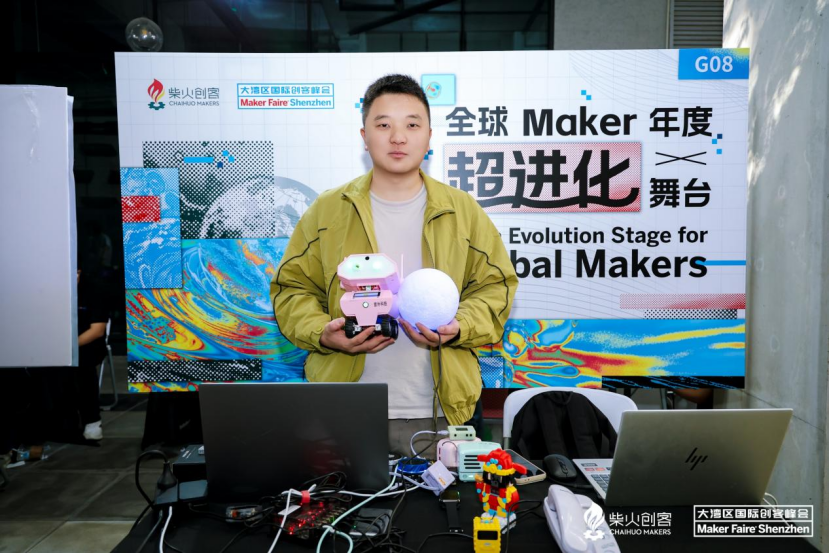
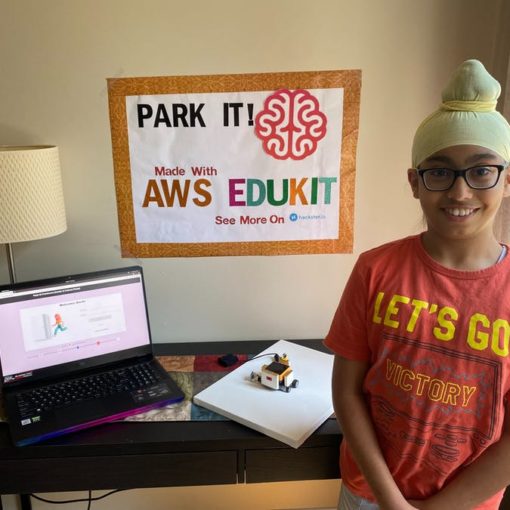
At the event, he met Sachin Soni, an overseas blogger whose content had helped him during his self-learning journey. He also noticed a striking contrast: projects by overseas makers were not necessarily flashy—or even “practical”—yet their creators showed tremendous excitement.
After returning home, he reflected: “Are we too obsessed with making things ‘useful and cool,’ forgetting that creation itself should be fun? When I reject students’ ideas because I want them to win competitions, am I doing the right thing?” His answer was no.
“Every child’s idea is the best idea for them at that moment.”
2026 Follow-Up: From “Giving It a Mouth” to “Giving It a Brain”—Three Breakthroughs
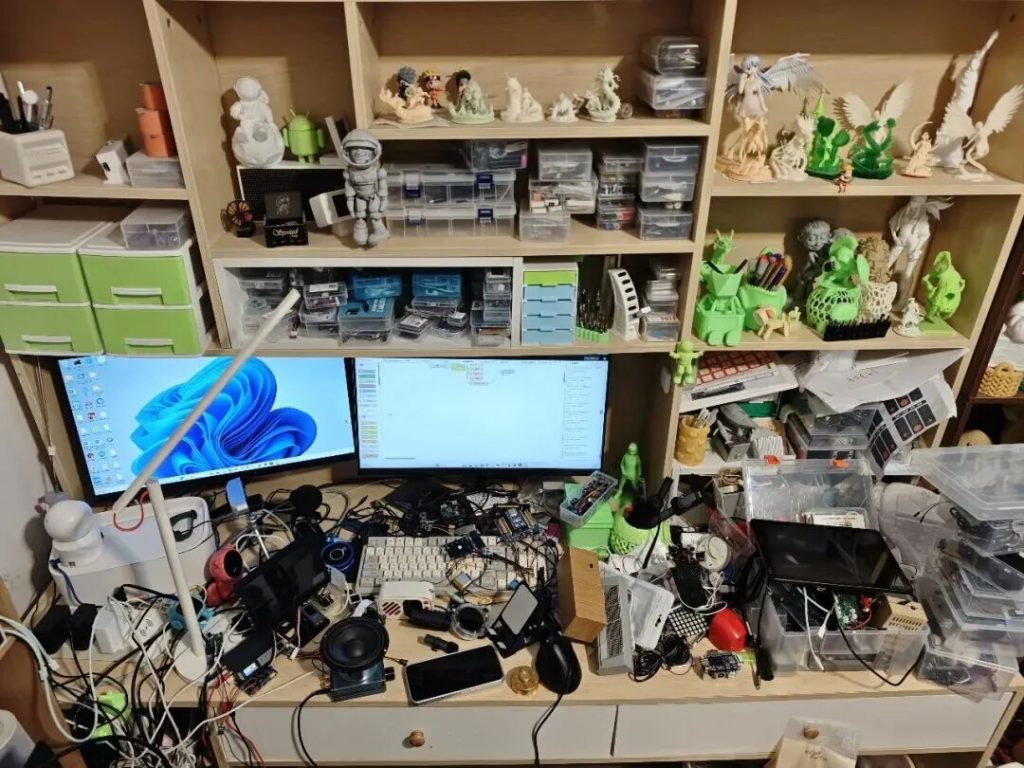
When we spoke with Maker Mo again this year, half a year had passed since our last in-depth interview. He had not changed cities, nor had he left the small home workshop packed with development boards and 3D-printed parts. But the center of gravity of his work had clearly shifted deeper.
1.From “Attaching a Model” to “Knowledge-Base-Driven”
“Over the past six months, I’ve continued to feel that Xiaozhi is very capable. But going forward, the most important thing will not be the hardware itself—it will be large models equipped with knowledge bases.”
He built a reception demo for a hotel in Vietnam. It was not a general-purpose chatbot. The knowledge base incorporated the hotel’s operations, recommendations for nearby attractions, and multilingual responses.
2.From “Modifying Individual Products” to Building an Educational Hardware System
In 2025, he exhibited a clock, a lamp, and a telephone. In 2026, he is breaking Xiaozhi down into modular educational components: sensor kits, voice kits, and knowledge-base configuration cards. Teachers can guide students as if they were conducting a laboratory class, taking them from zero to a desktop assistant capable of answering questions from their textbooks.
3.From “Personal Sharing” to Cross-Border and Industry–Academia Connections
Bijie has no local electronics supply chain, but he uses the internet to connect the nodes: school training programs in Guangzhou, company visits—several companies began proactively inviting him after September 2025—custom projects for overseas hotel clients, and peers he met at Maker Faire. On his own, he handles connections across regions, curriculum development, and project delivery.
Maker Mo’s “mega evolution” did not involve switching to a different field. Instead, he kept adding new layers on top of the same development board:
- AI Out of the Screen: Xiaozhi moved from a web chat window into dot-matrix clocks, retro telephones, humanoid robots, and hotel reception desks.
- Welded into Hardware: The table in his home in Bijie is the production line. 3D-printed components, a soldering station, Node-RED, and Home Assistant all operate in the physical world.
- Thrown into the Real World: Loneliness in nursing homes, multilingual hotel reception, and the lack of AI teaching tools in western China are all concrete, real-world scenarios.
- One Person, a Full Team: Self-learning, project development, filming tutorials, accepting custom work, teaching courses, and communicating internationally—he closes the entire loop himself.
- Giving Back to the Community: Spectator at Maker Faire Shenzhen in 2024 → exhibitor at Maker Faire Shenzhen in 2025 → transforming the “pure joy” he saw among overseas makers into his own educational philosophy in 2026.
His journey validates the central idea behind the 2026 summit: makers are evolving from hobbyists into entrepreneurs and community organizers who define the next generation of productivity.
Maker Mo never rented an apartment in Shenzhen. Starting from Bijie, however, he has extended the radius of his OPC work into classrooms in Guangzhou, hotel reception desks in Vietnam, and telephone handsets in nursing homes.

If you would like to share your OPC ideas and experiences at China’s largest maker innovation celebration—and demonstrate how AI can truly become part of our work and everyday lives while solving real-world problems—this is your opportunity.
Let your project be seen by more peers, developers, partners, and potential customers, and allow new ideas to meet and grow here.
Scan the QR code below or click “Read the Original Article” at the end of the post to apply. Together, let us step into the era of OPC creators and unlock the infinite possibilities of the future!

Greater Bay Area International Maker Summit & Maker Faire Shenzhen 2026
Global Call for Makers Now Open
Application period: June 30–October 30, 2026
Event dates: December 12–13, 2026
P.S. Companies that reserved a booth last year do not need to submit another application. More participation opportunities will be announced soon—stay tuned!

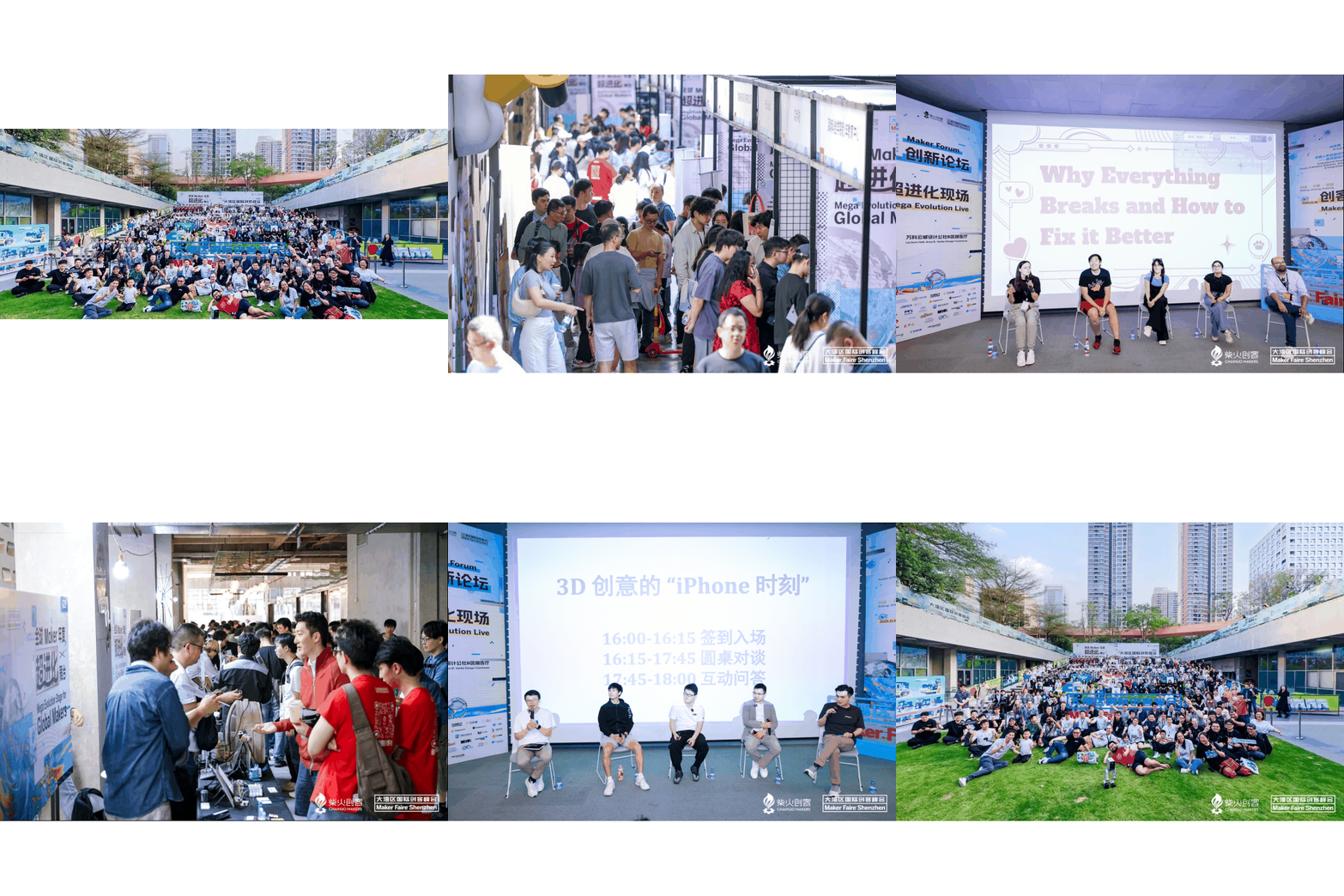
Over the past 13 years, the development trajectory of Maker Faire Shenzhen can be seen as a microcosm of the development of maker culture in China.
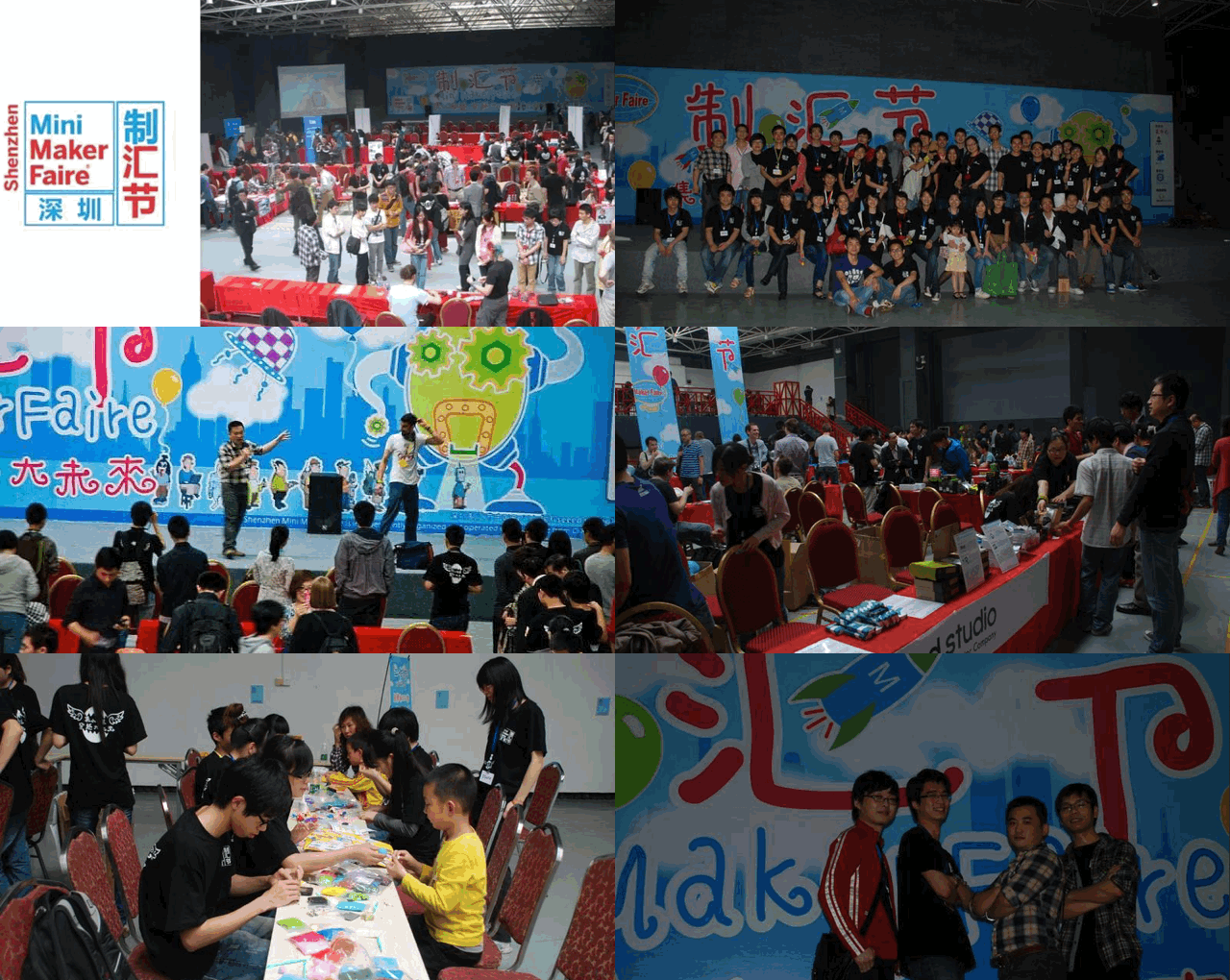
- 2012: “Gathering Small Wisdom, Journeying through the Great Future” – This was the first Mini Maker Faire in China, with less than 1000 attendees, and was more like a gathering within a small circle. But we saw the infinite possibilities emerging from the maker community.
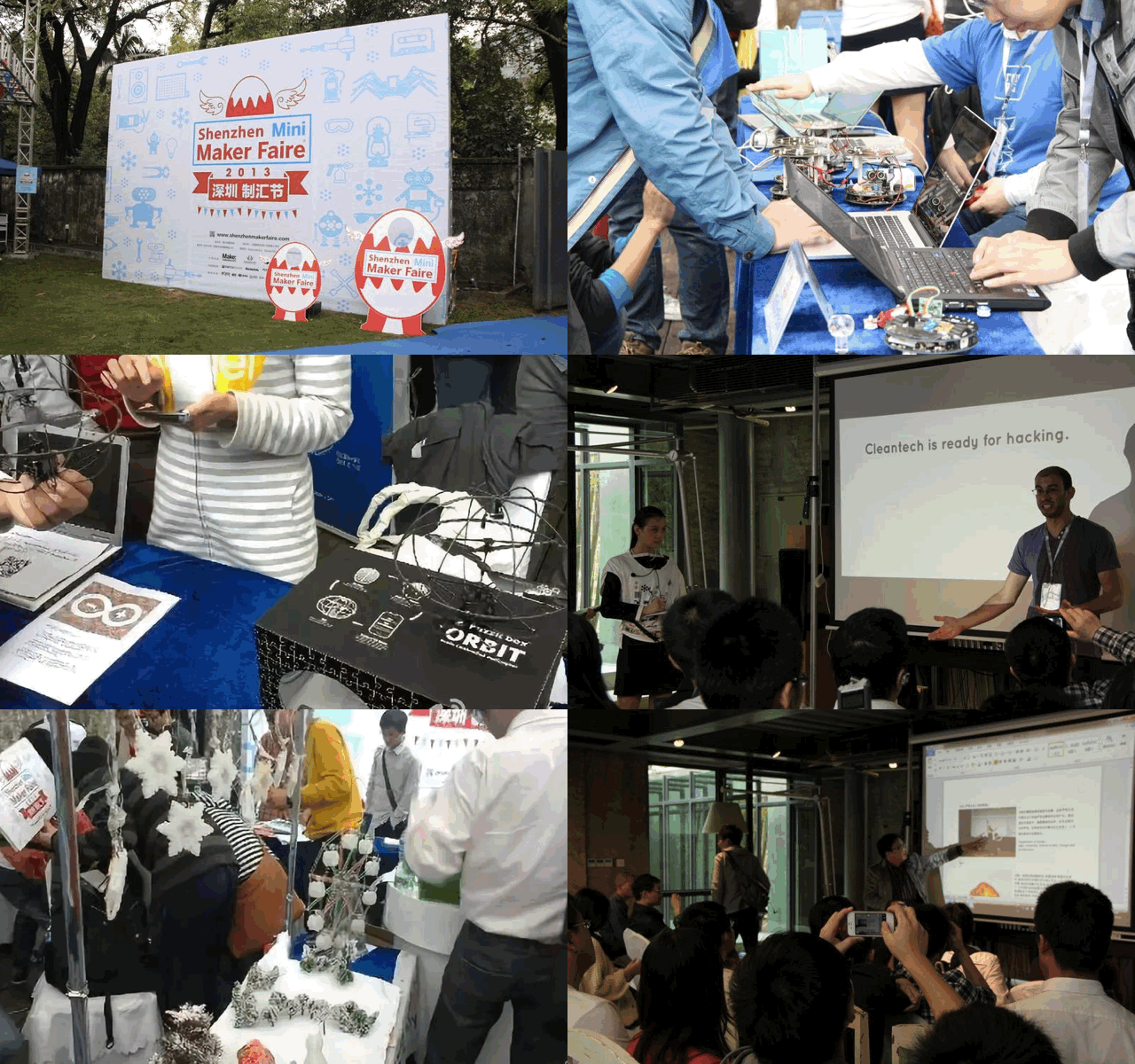
- 2013: The slogan was absent, and the maker community was still small. – In the OCT Creative Park, there were cross-disciplinary exchanges among different creative communities, silently laying the foundation for cultural output.
- 2014: “Innovate with China” – the event was upgraded to the Featured level for the first time, with a significant increase in scale compared to previous years, and the beginning of professional independent forums. This year, makers began to enter the public’s view.
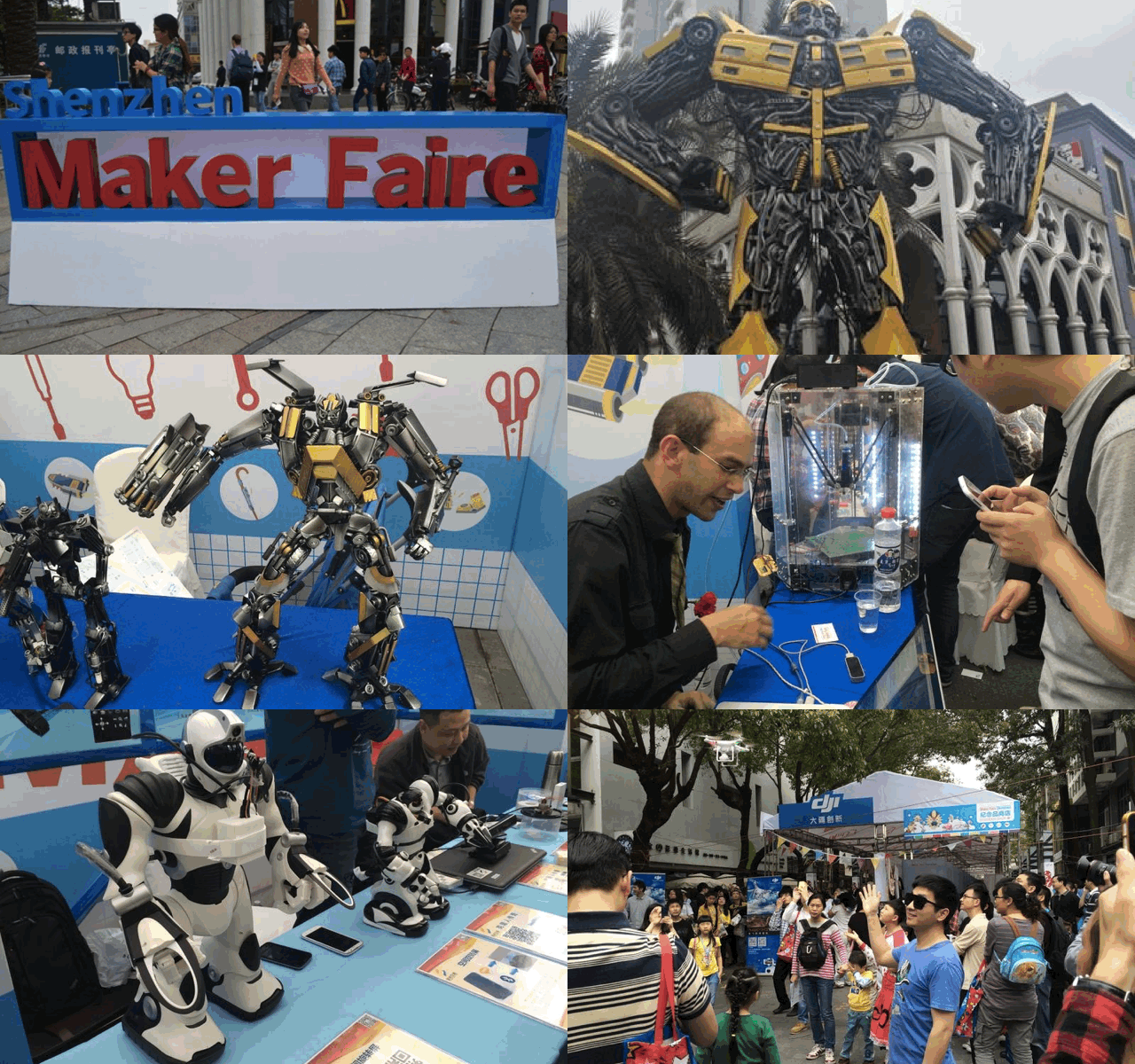
- 2015: “Everyone is a Maker, what are you waiting for?” – This year’s Shenzhen International Maker Week became one of the largest Maker Faires in the world. This year, the concept of “maker” was elevated to a national level, and the trend of “mass innovation, mass entrepreneurship” swept across the country.
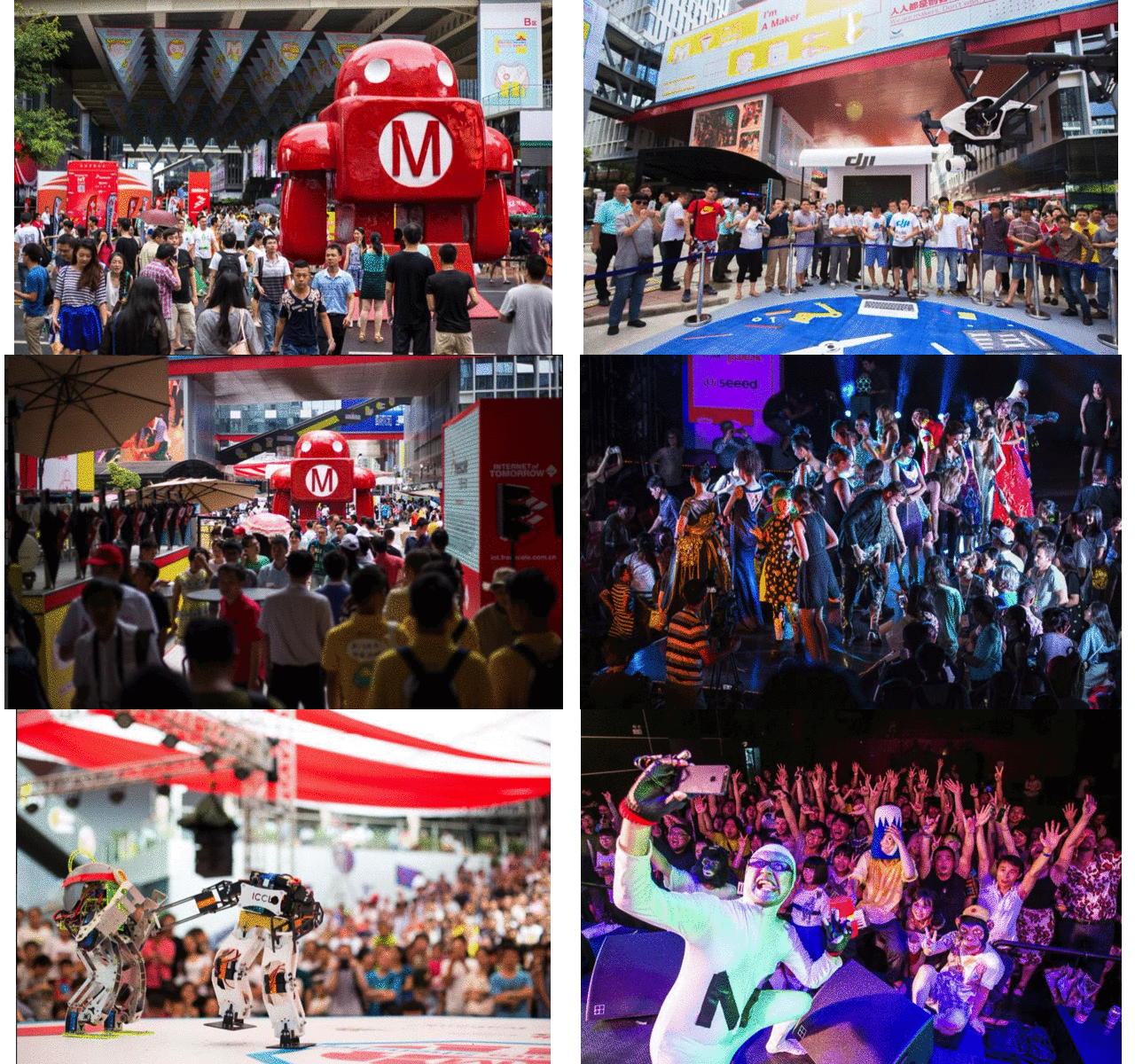
- 2016: “My World, My Creation” – As the sub-venue of the National Innovation and Entrepreneurship Week, the event was held for the first time in the commercial center area, experiencing unpredictable weather from typhoons to scorching heat. Many makers succeeded in your entrepreneurial endeavors this year, but it seemed like there were even more failures. The hype around entrepreneurship shifted towards rationality.
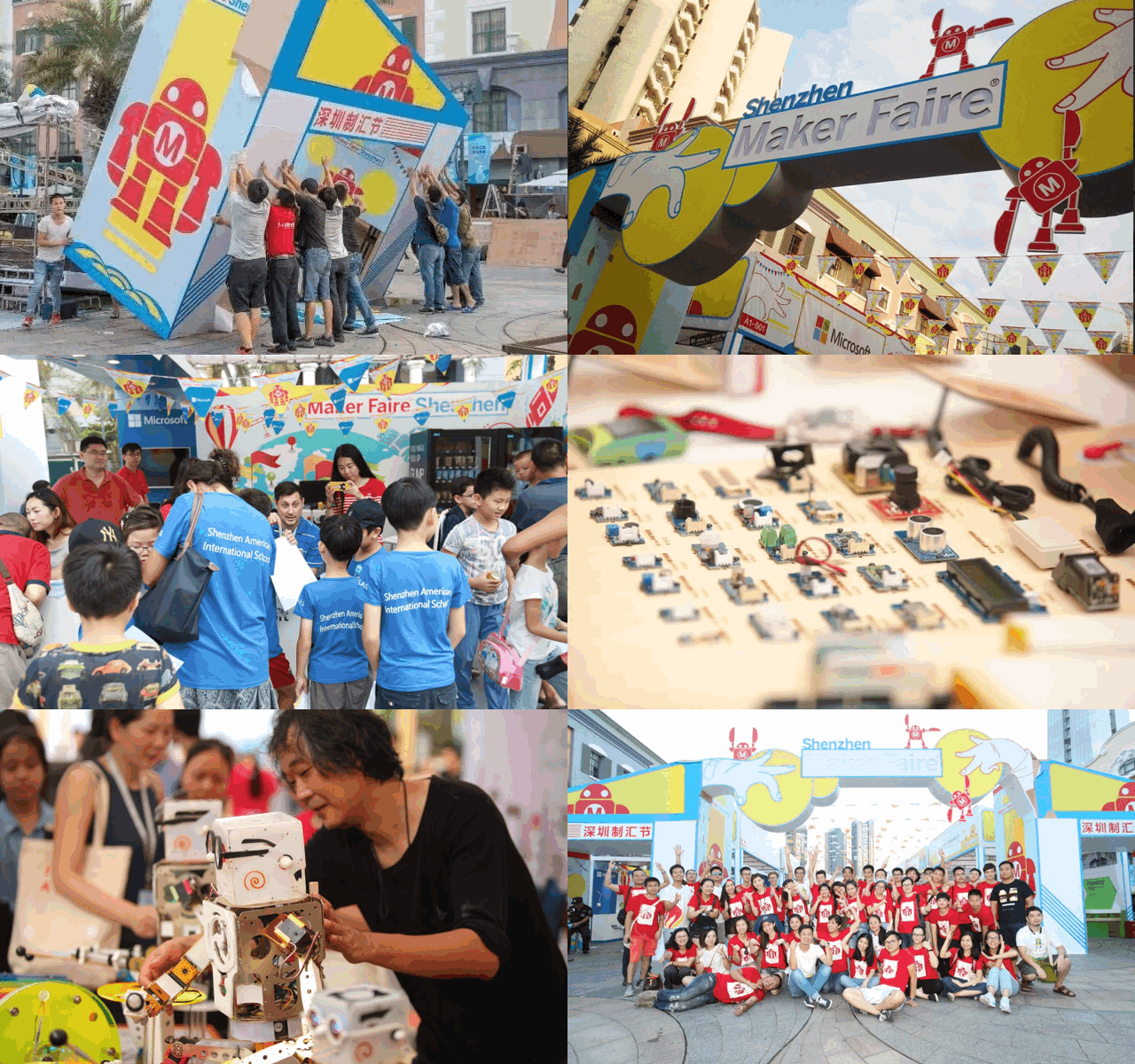
- 2017: “Makers, Go Pro” – The event took place at the university campus for the first time, focusing on Maker Pros and providing a platform for diverse innovators and makers to showcase themselves, presenting more possibilities for the growth path of makers to the entire community.
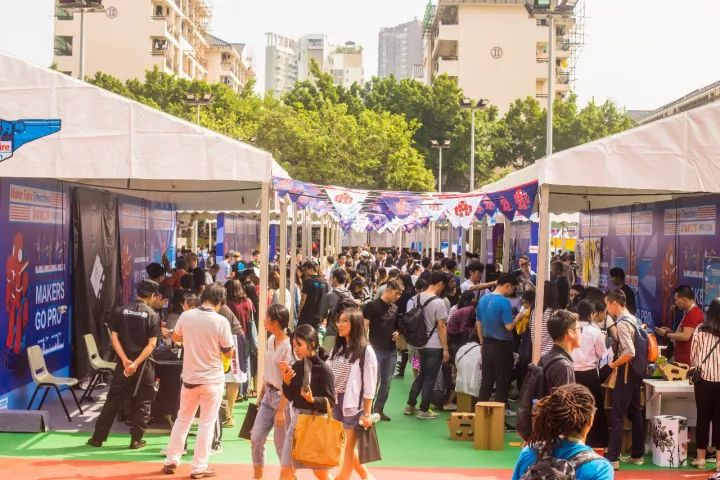
- 2018: “Co-making in the City” – The main venue of Shenzhen International Maker Week, where individuals and groups with shared visions and values gathered to showcase stories, projects, and explorations of collaboration among different communities and people.
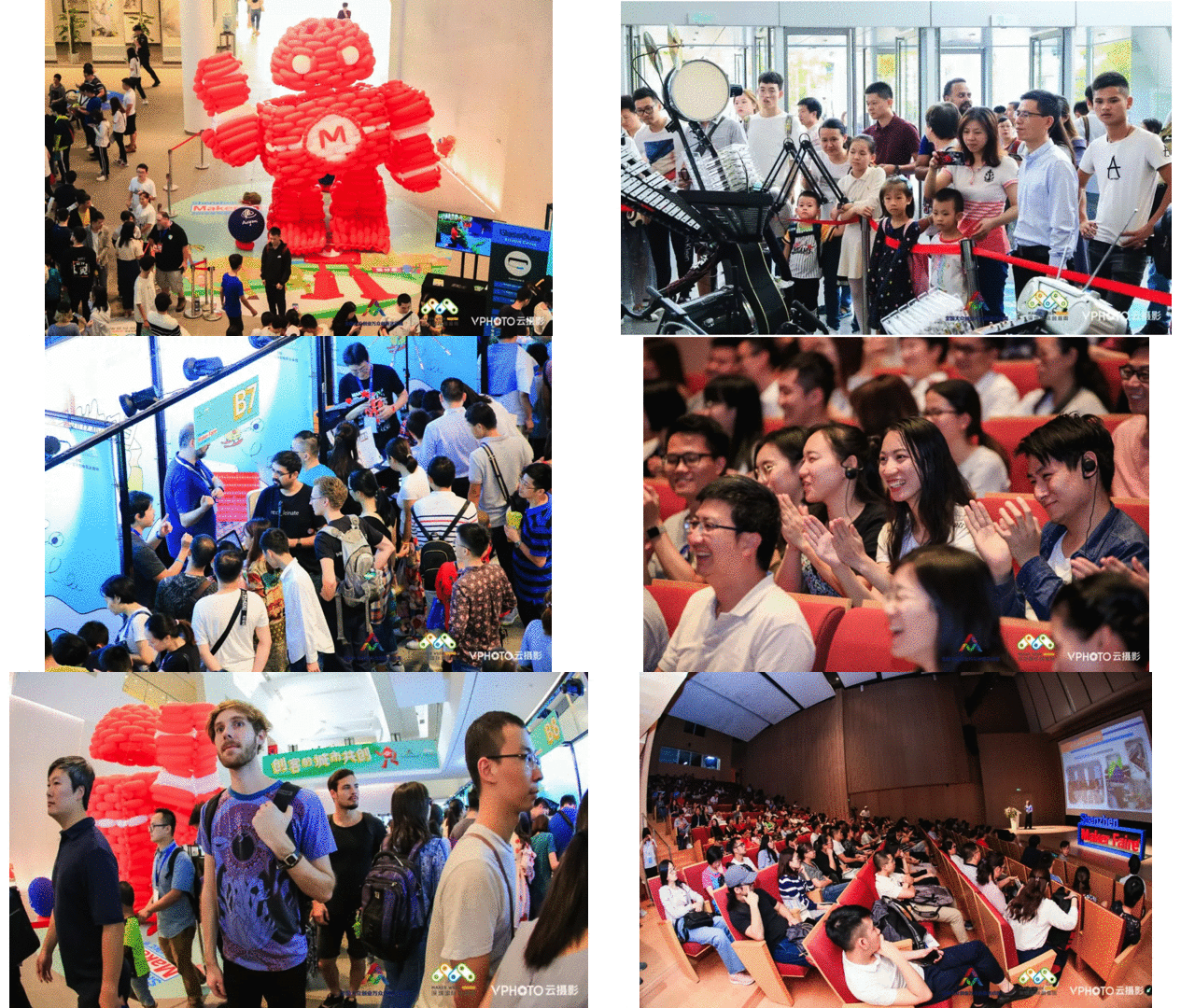
- 2019: ” To the Heart of Community, To the Cluster of Industry” – The event was upgraded to the Maker Faire Shenzhen, attempting to attract professional audiences and focusing on pragmatic aspects such as solving the needs of industrial upgrading and co-developin. It aims to build a platform for innovation and industry dialogue and collaboration.

- 2023: “Where Are The Makers?”– Starting from our own mission and values, we aim to explore the future direction of makers and theapossibilities for commercialization. Though this question does not have a definitive answer, we do hope that through this event, we can communicate and share with every one of you, finding more ideas and directions together.

- 2024: “Everything is AI” – This year, we brought together over 120 exhibitors from around the world, attracting nearly 1,500 professional attendees from nearly 20 countries and over 20 provinces across China. The exhibition showcased a wide range of AI application projects and hosted 10 AI hardware-themed satellite events, alongside various workshops.
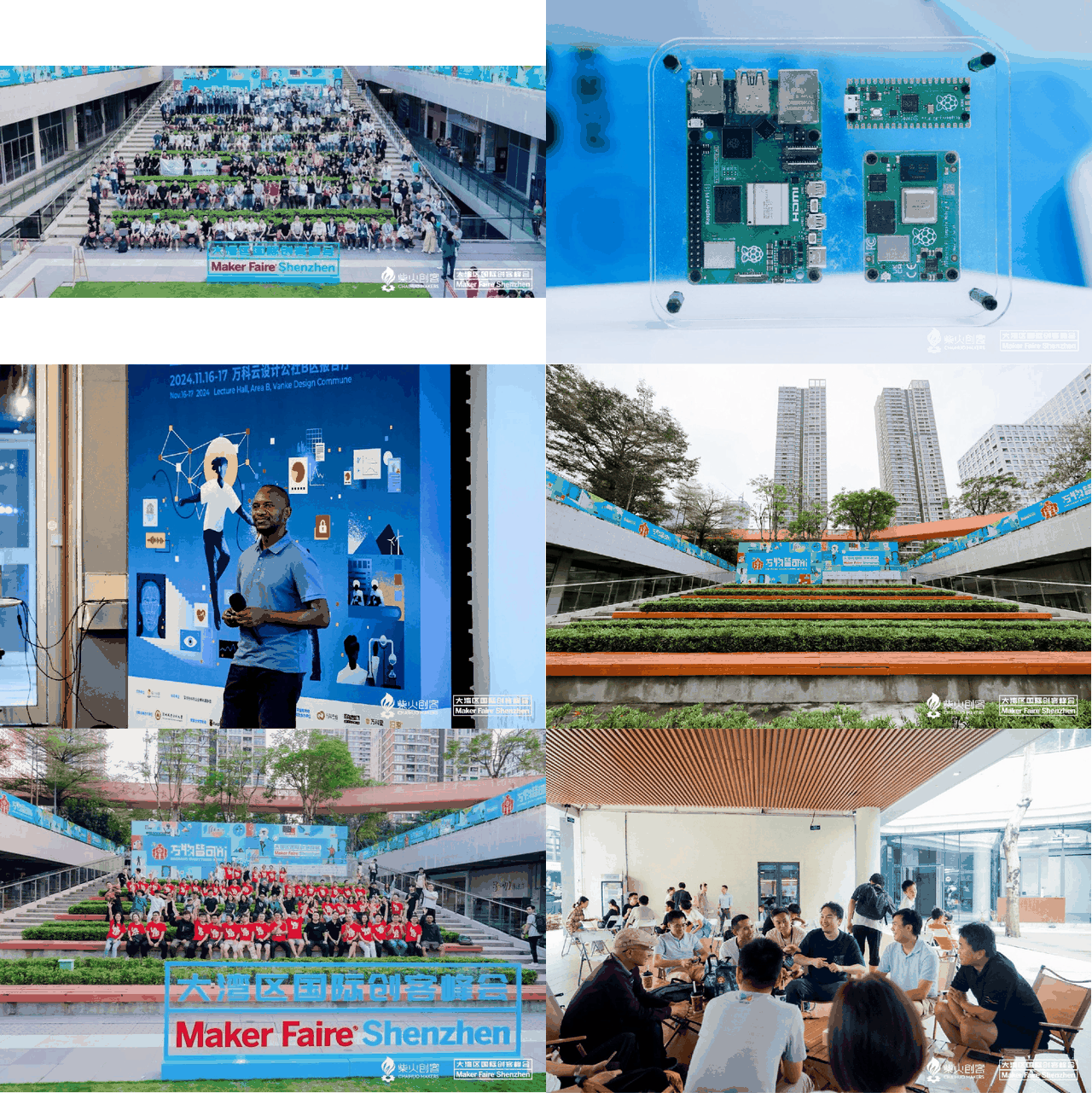
- 2025: “AI Without Boundaries, Everything Reimagined”The summit brought together nearly 100 international innovation ambassadors and showcased almost 1,000 AI hardware projects.Technology leaders, pioneering makers, industry experts, and university teams from more than 30 countries gathered to create an international innovation event combining frontier thinking, technical exchange, and cross-disciplinary collaboration.