Preface
The 2026 Greater Bay Area International Maker Summit & Maker Faire Shenzhen is rallying around OPC, creating an annual stage for Makers worldwide to push the boundaries of what one person can build.
Makers are no longer just hobbyists. They are becoming super individuals who fuse AI, hardware, and real-world scenarios into working systems.
That is why we launched OPC Pioneer Stories, a series spotlighting the people at the heart of this year’s stage of hyper-evolution and capturing the defining moments when one person becomes a team.
We are not just telling stories about making things. We are documenting the hardcore journeys of those who are literally and figuratively soldering technology into reality.
The call for OPCs has sounded, and the stories of the pioneers are already unfolding.
If you have an OPC moment worth documenting and sharing, we invite you to submit your story.

Scan the QR code and tell us about your journey.
Now, without further ado, meet this edition’s OPC pioneers:

The 2026 Greater Bay Area International Maker Summit & Maker Faire Shenzhen, rallying under the banner of OPC, has defined this year’s theme as the “Annual Hyper-Evolution Stage for Global Makers.”
One person can be a whole team — pulling AI out of the screen, soldering it into hardware, and throwing it into the real world.
Among the many OPC pioneers, Pentagon Bird stands out as especially unique.
His real name is Li Lin, with a high-school education and no formal training in engineering. Everything about building robots — modeling, electronics, embedded programming, mechanical design — he taught himself, one painstaking step at a time.
“I’m not a master of any of it,” he says. “But I know a bit of everything.”
The Starting Point: No Academic Background, Only Curiosity-Driven Drive
Li Lin’s path into making traces back to a childhood fascination with electronics and mechanical structures.
“Most products I saw on the market were never quite the way I imagined them,” he says.
The idea was simple — if he couldn’t buy what he had in mind, he’d build it himself. With that obsession, he formally set out on his maker journey.
Without any formal engineering education, he relied on curiosity-driven drive, self-teaching modeling, electronics, embedded programming, and mechanical structure design.
Those four skill sets happen to cover the entire chain of robot-making — from exterior form to control, from software to hardware.
“I learned everything about building robots on my own.” That is how he summarizes his path.
No mentors, no structured courses, no lab — with just a pair of hands and a computer, he turned his curiosity into craft.

Li Lin in his studio
Works: From a Desktop “Little Iron” to a Large Tracked Robot
His two most important pieces this year.
One is a desktop-class robot pair — “Little Iron” and WALL-E — featuring Bluetooth remote control, basic interaction, and visual following.


Li Lin’s work
The biggest inspiration for this build came from childhood memory.
“Through what I’ve taught myself, I can create works that preserve the original, handmade traces as much as possible — keeping that rough, handmade liveliness,” he says.
The creative journey was riddled with challenges. His biggest shortcoming was the lack of formal training in mechanics and electronics — assembly dimensions not matching after structural modeling, motors lacking torque, control code throwing errors were daily occurrences.
“When you hit a problem, there’s no teacher to ask. Most of the time, you dig through references, lean on AI to help debug the code, and start over, again and again. Many structures go through ten-plus print-and-revise cycles — that’s the norm. You inch forward through trial and error.”
His other robot is currently in the works — a large tracked robot, 70–90 cm tall.

“For me as an individual maker, the budget for the big robot is very tight — the production cost is just too high. So for now, what’s on display is mostly the hand-built exterior structure. It mimics a film IP, delivers some emotional value, and can be remote-controlled for basic movement,” he says.
The robot’s operating system, though, still has a long road ahead.
His dream is clear: “To build a robot like the ones in the movies — with its own consciousness, that can actually do work, and come alive. I believe that’s also the goal for the entire embodied-intelligence industry in the future.”
Shift: AI Is Now a Must-Have for Making
Comparing to last year, Pentagon Bird’s take is straightforward.
“With AI advancing so fast, now all you need is an idea combined with AI to quickly bring the work you want into reality. It helps the most when writing code. Being fluent with various AI tools is now a must-have, and it also makes content creation far more systematic.”
A self-taught maker with only a high-school education, who ground his way through modeling, electronics, embedded systems, and mechanical structures on sheer curiosity, then used AI to fill in the gaps in his coding — that is the 2026 version of OPC going solo.

Li Lin and His Robots
Li Lin also has a clear vision for what comes next.
First, he plans to fully bring his large tracked robot to life, with a focus on creating content for social media. His goal is to develop a sophisticated AI control system that makes the robot feel truly alive—“just like in the movies, with a mind of its own, no longer relying on traditional preset programs or remote controls.”
Second, he will continue refining his most popular desktop robot.
Today, Wujiaoniao has around 300,000 followers across social media, with the majority on Douyin (China’s TikTok). Through his content, Li Lin shares the entire journey of building robots from scratch, documenting every step from the initial idea to a working machine.

Li Lin’s Social Media Accounts
“The reason my social media account was able to grow so quickly within just one year is that people really love desktop robots. There’s a strong market for them, and a lot of people want one. If I can secure investment, I’ll consider moving toward mass production while leveraging my own social media presence to promote the product. I see two paths forward: content creation and productization.”
He hopes that through his videos, he can show more people who share his passion for mechanics and robotics what the real journey of self-learning, building, and creating looks like.
Although he has never attended Maker Faire Shenzhen, when asked about this year’s summit, Li Lin said: “I’m looking forward to meeting more independent makers face to face. If conditions allow, I’d love to bring my finished big robot to showcase, along with a bunch of desktop robots — to find like-minded partners to share and learn with.”

If you would like to share your OPC ideas and experiences at China’s largest maker innovation celebration—and demonstrate how AI can truly become part of our work and everyday lives while solving real-world problems—this is your opportunity.
Let your project be seen by more peers, developers, partners, and potential customers, and allow new ideas to meet and grow here.
Scan the QR code below or click “Read the Original Article” at the end of the post to apply. Together, let us step into the era of OPC creators and unlock the infinite possibilities of the future!

Greater Bay Area International Maker Summit & Maker Faire Shenzhen 2026
Global Call for Makers Now Open
Application period: June 30–October 30, 2026
Event dates: December 12–13, 2026
P.S. Companies that reserved a booth last year do not need to submit another application. More participation opportunities will be announced soon—stay tuned!

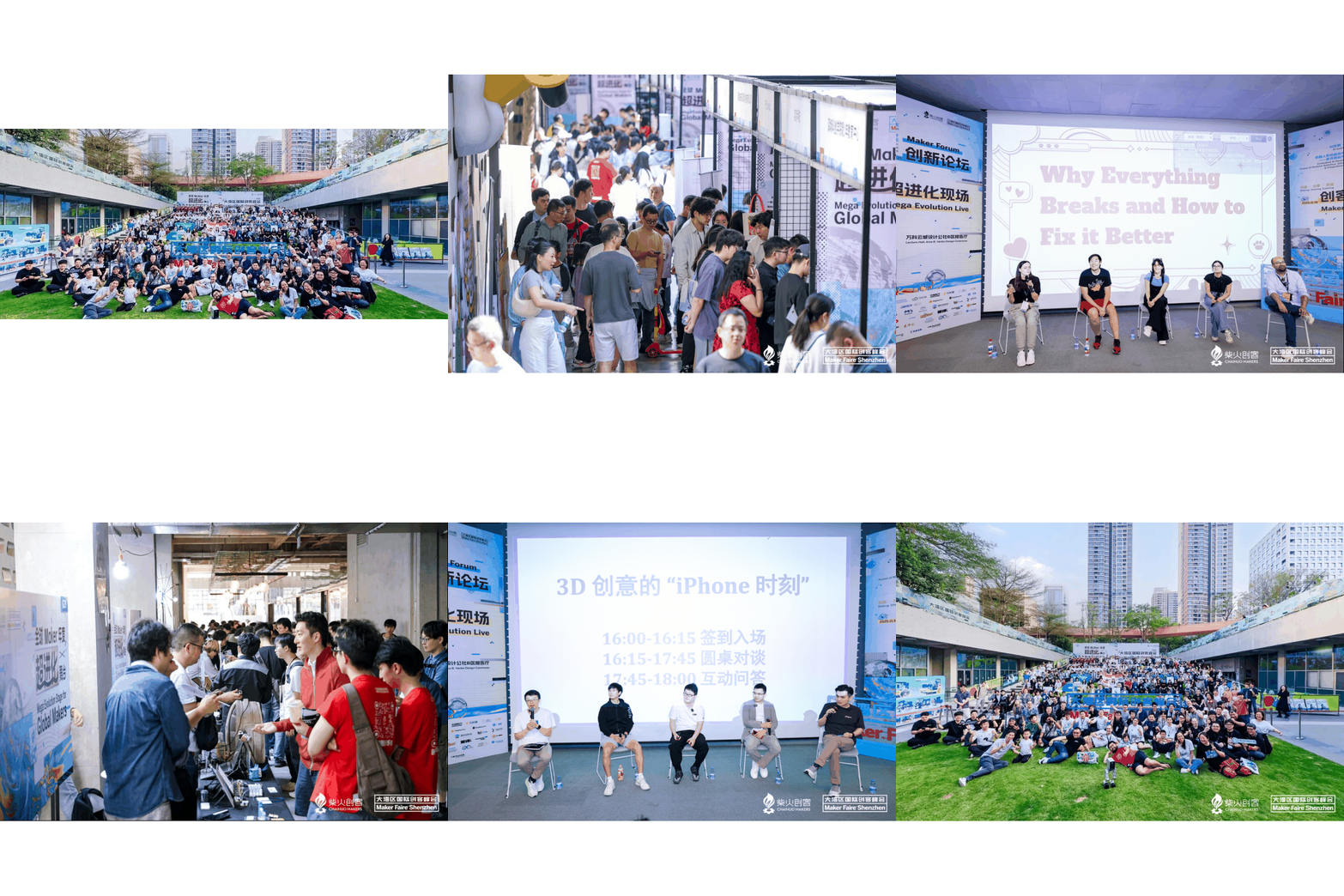
Over the past 13 years, the development trajectory of Maker Faire Shenzhen can be seen as a microcosm of the development of maker culture in China.
- 2012: “Gathering Small Wisdom, Journeying through the Great Future” – This was the first Mini Maker Faire in China, with less than 1000 attendees, and was more like a gathering within a small circle. But we saw the infinite possibilities emerging from the maker community.
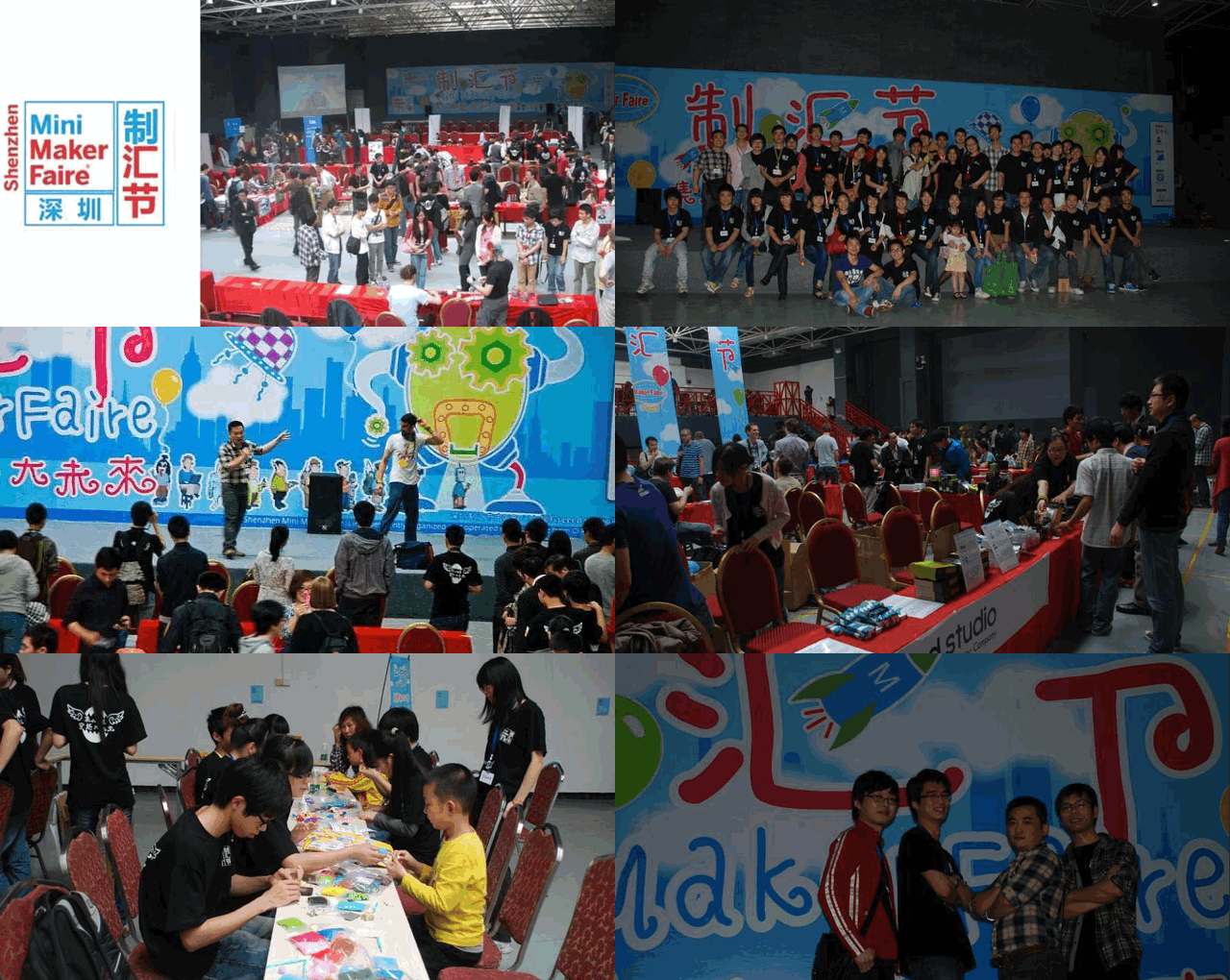
- 2013: The slogan was absent, and the maker community was still small. – In the OCT Creative Park, there were cross-disciplinary exchanges among different creative communities, silently laying the foundation for cultural output.
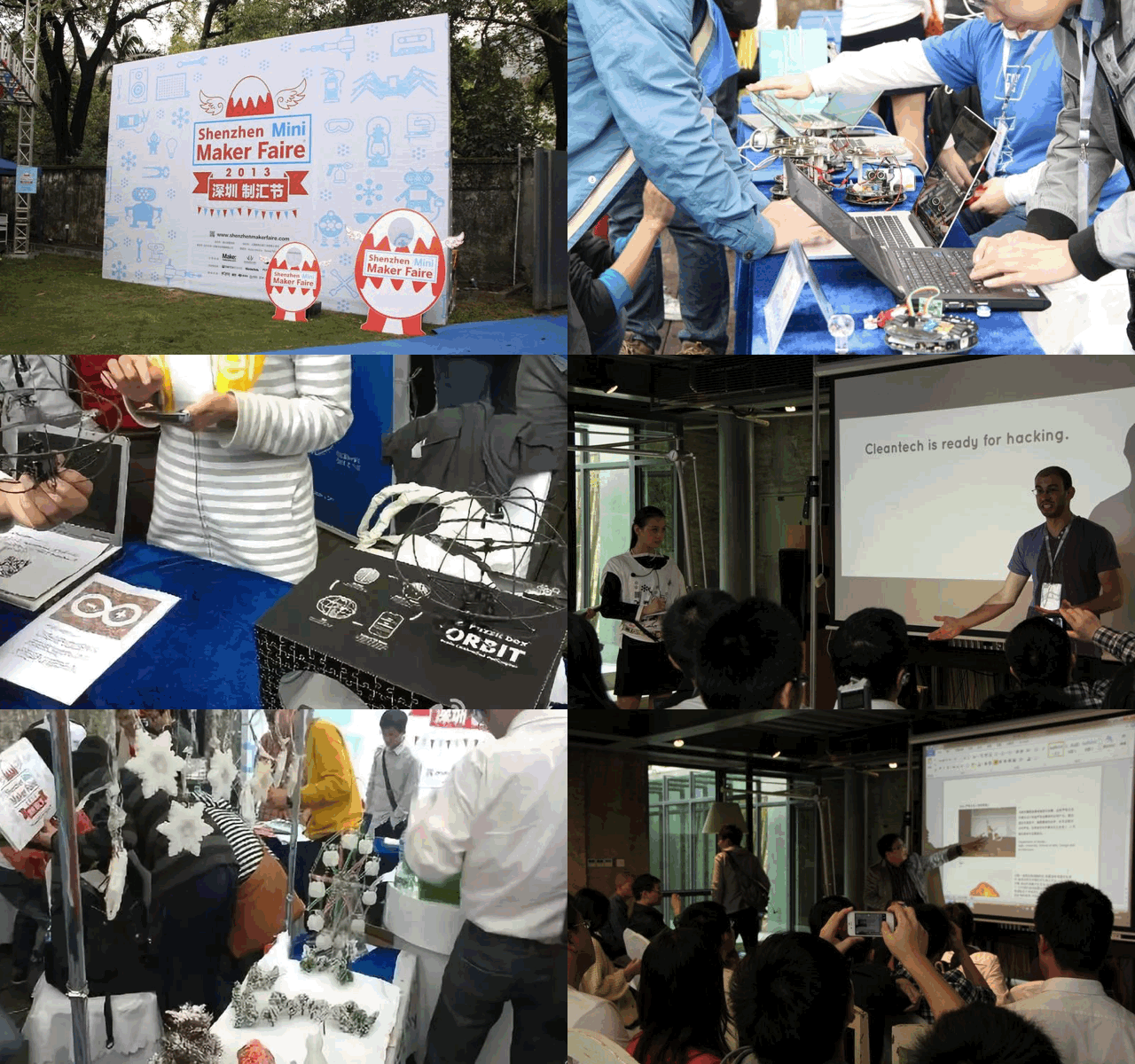
- 2014: “Innovate with China” – the event was upgraded to the Featured level for the first time, with a significant increase in scale compared to previous years, and the beginning of professional independent forums. This year, makers began to enter the public’s view.
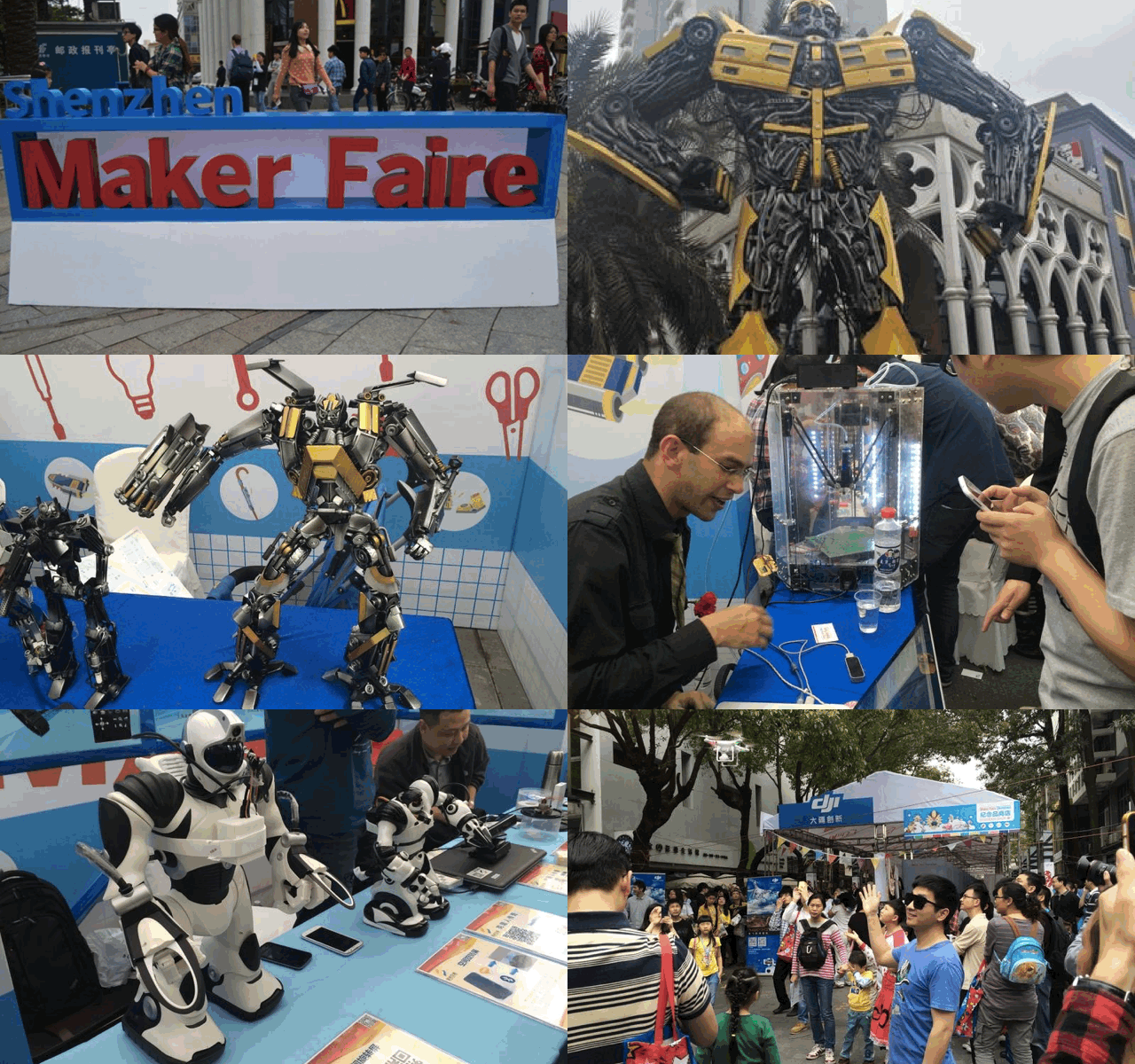
- 2015: “Everyone is a Maker, what are you waiting for?” – This year’s Shenzhen International Maker Week became one of the largest Maker Faires in the world. This year, the concept of “maker” was elevated to a national level, and the trend of “mass innovation, mass entrepreneurship” swept across the country.
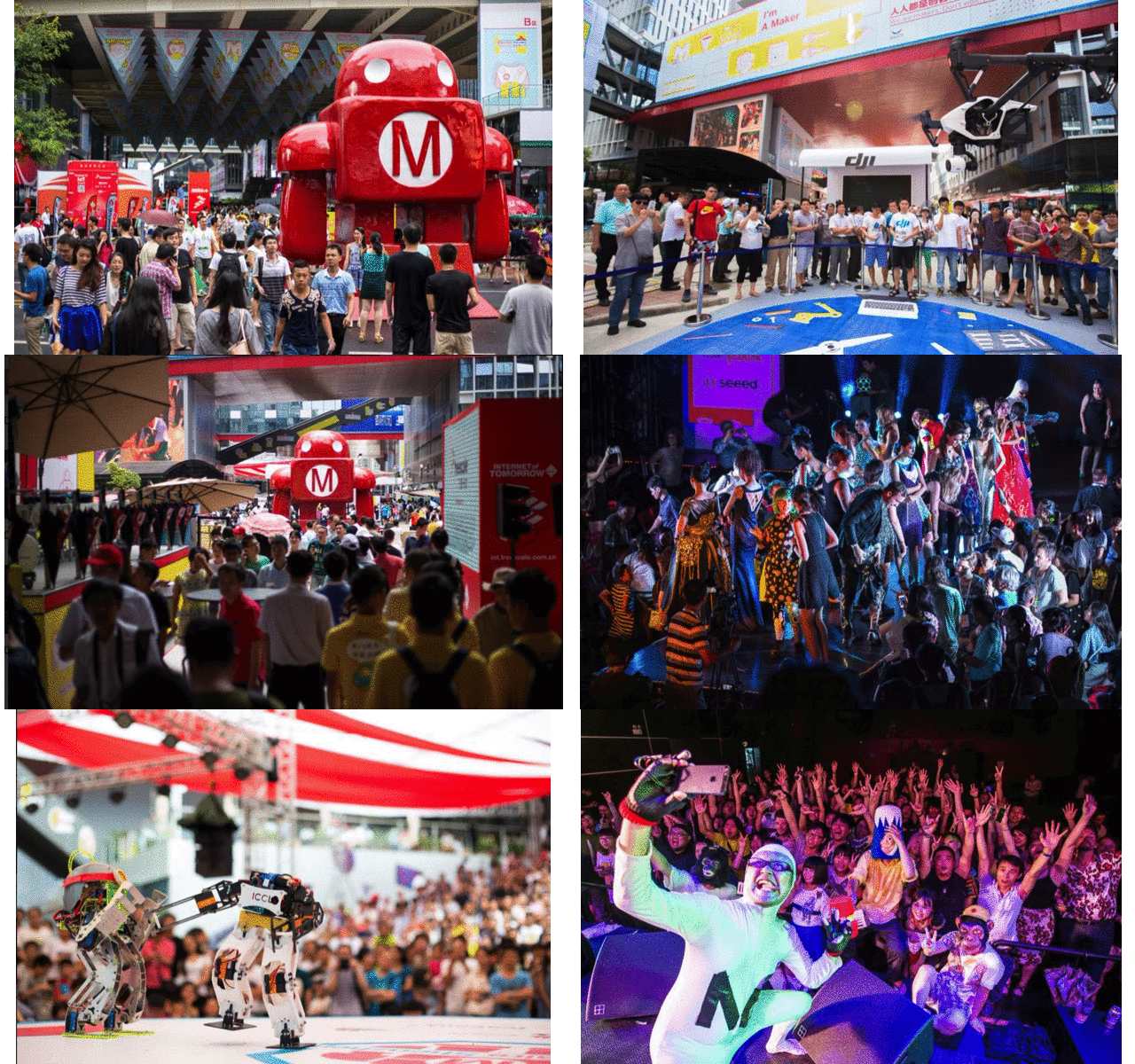
- 2016: “My World, My Creation” – As the sub-venue of the National Innovation and Entrepreneurship Week, the event was held for the first time in the commercial center area, experiencing unpredictable weather from typhoons to scorching heat. Many makers succeeded in your entrepreneurial endeavors this year, but it seemed like there were even more failures. The hype around entrepreneurship shifted towards rationality.
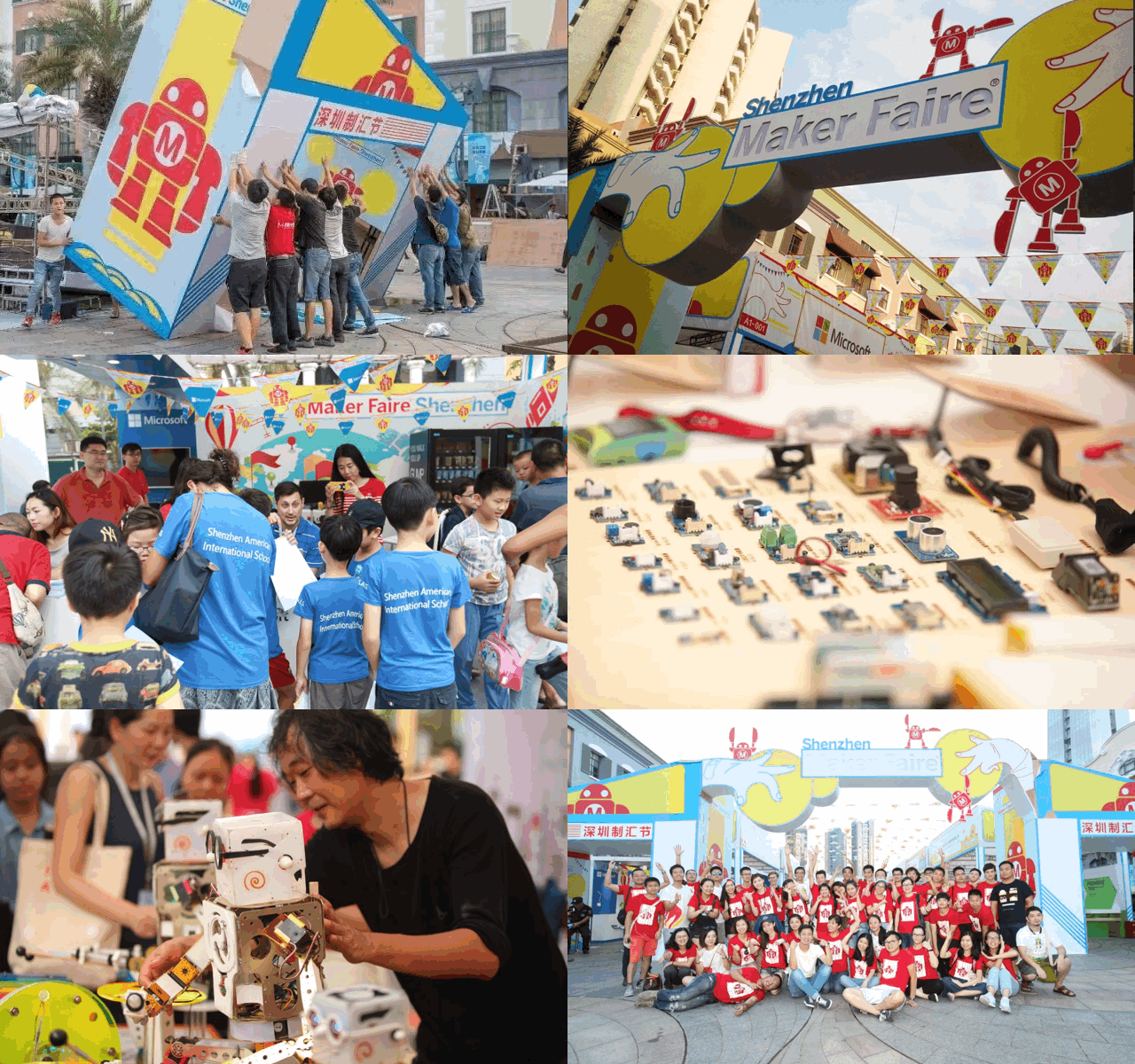
- 2017: “Makers, Go Pro” – The event took place at the university campus for the first time, focusing on Maker Pros and providing a platform for diverse innovators and makers to showcase themselves, presenting more possibilities for the growth path of makers to the entire community.
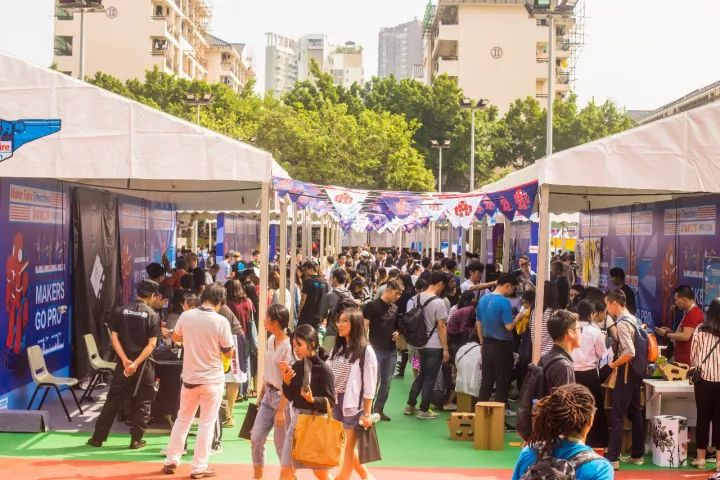
- 2018: “Co-making in the City” – The main venue of Shenzhen International Maker Week, where individuals and groups with shared visions and values gathered to showcase stories, projects, and explorations of collaboration among different communities and people.
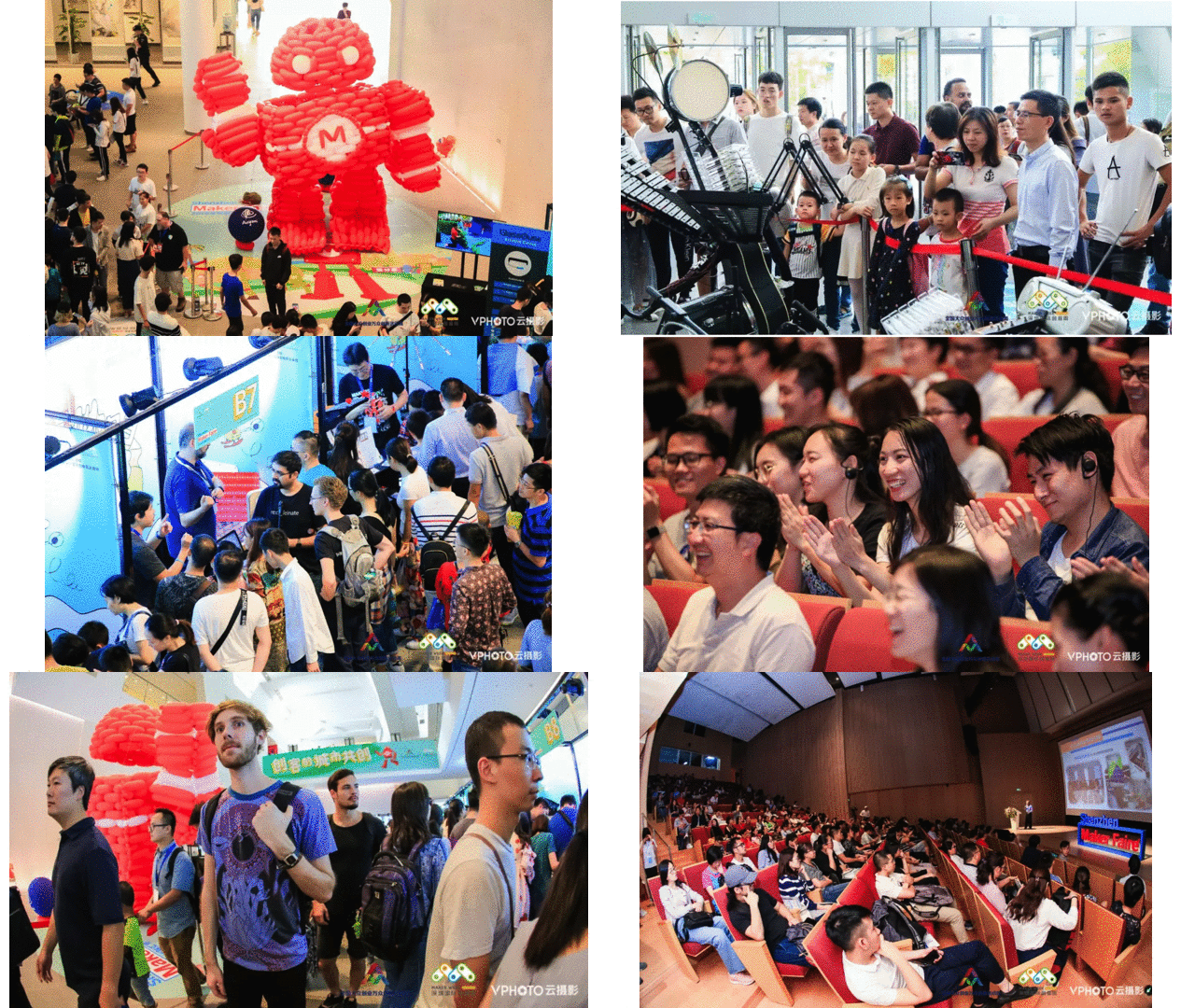
- 2019: ” To the Heart of Community, To the Cluster of Industry” – The event was upgraded to the Maker Faire Shenzhen, attempting to attract professional audiences and focusing on pragmatic aspects such as solving the needs of industrial upgrading and co-developin. It aims to build a platform for innovation and industry dialogue and collaboration.

- 2023: “Where Are The Makers?”– Starting from our own mission and values, we aim to explore the future direction of makers and theapossibilities for commercialization. Though this question does not have a definitive answer, we do hope that through this event, we can communicate and share with every one of you, finding more ideas and directions together.

- 2024: “Everything is AI” – This year, we brought together over 120 exhibitors from around the world, attracting nearly 1,500 professional attendees from nearly 20 countries and over 20 provinces across China. The exhibition showcased a wide range of AI application projects and hosted 10 AI hardware-themed satellite events, alongside various workshops.
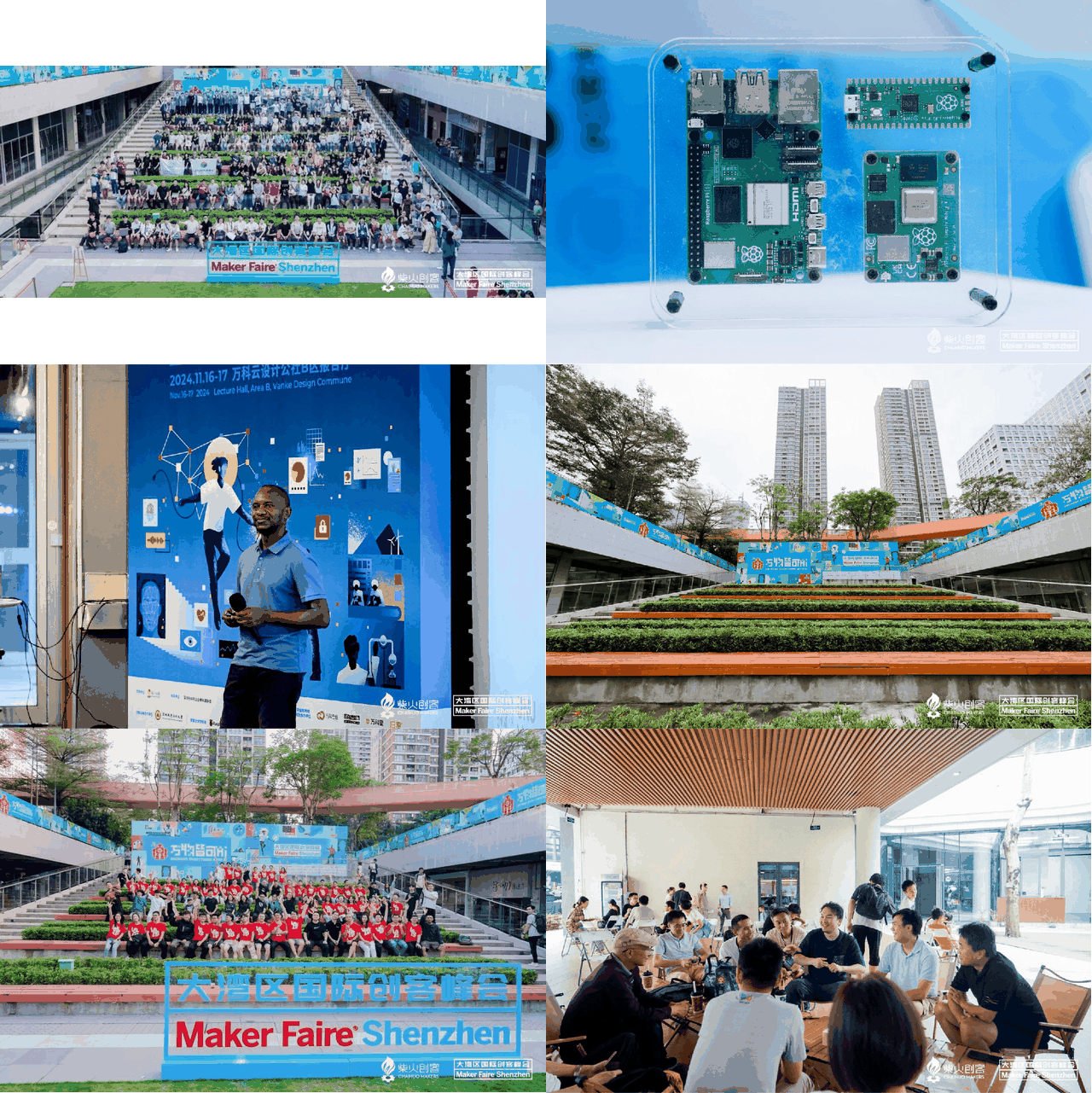
- 2025: “AI Without Boundaries, Everything Reimagined”The summit brought together nearly 100 international innovation ambassadors and showcased almost 1,000 AI hardware projects.Technology leaders, pioneering makers, industry experts, and university teams from more than 30 countries gathered to create an international innovation event combining frontier thinking, technical exchange, and cross-disciplinary collaboration.