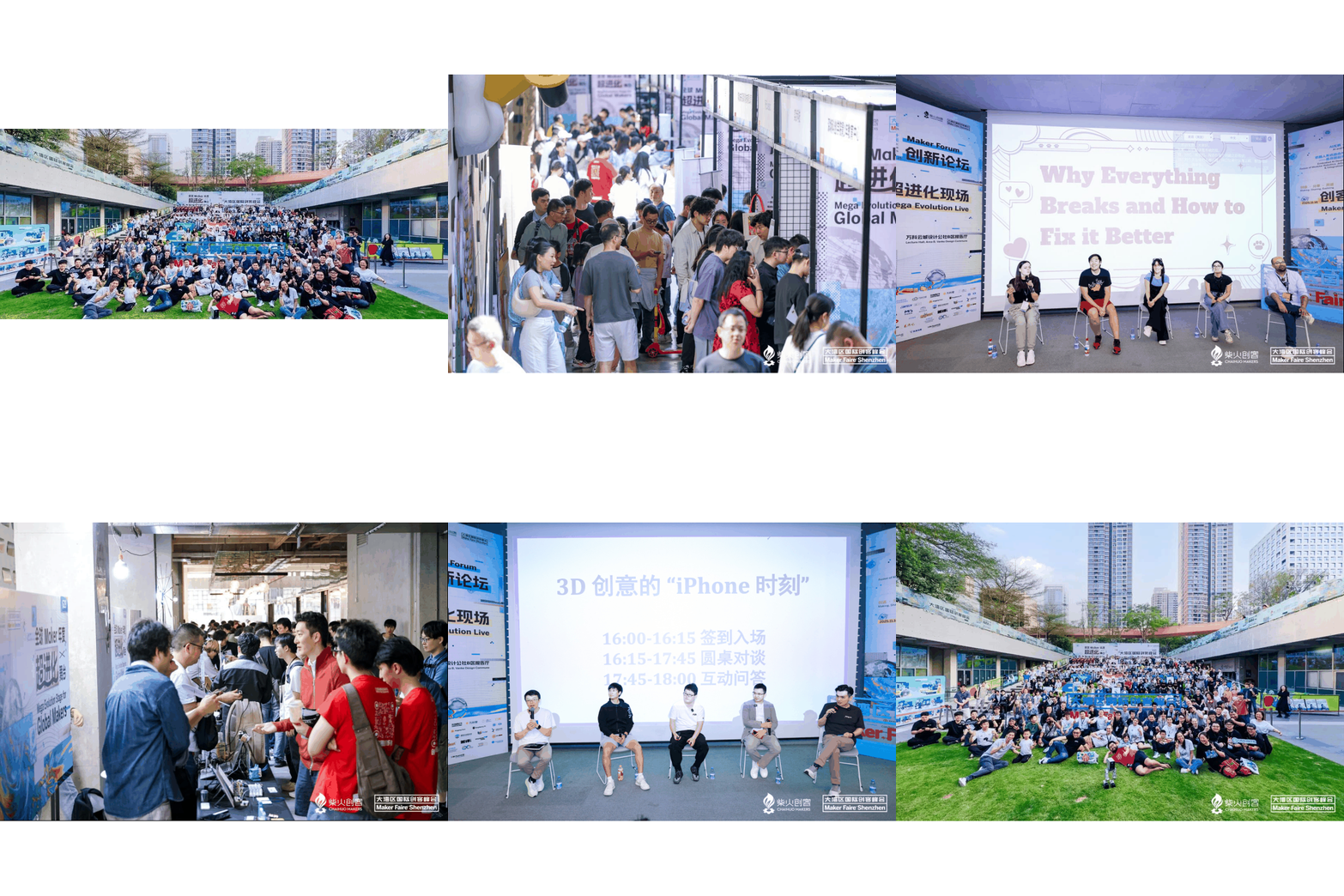
If previous editions of Maker Faire Shenzhen were testing grounds where inspiration sparked, this year we will see how creative ideas take root and become reality.
This time, we are putting OPC creators and full-industry-chain service providers center stage, working together to build a “Mega Evolution Stage for Global Makers.”
Long-time friends of Maker Faire Shenzhen know that it consistently ranks among the season’s most popular offline events. In addition to offering an in-depth look at cutting-edge technologies and industry trends, its wide range of on-site activities attracts professionals and visitors from many different communities.
This year’s event is officially scheduled for December 12–13.
In today’s “Empowering Partner Sponsor” column, we introduce — Shenzhen Polytechnic University, located at Booth A3.

Time flies.
The Greater Bay Area International Maker Summit & Maker Faire Shenzhen has now reached its 15th year.
Since the very first maker exchange event held on a university campus in 2017, Shenzhen Polytechnic University has forged an inextricable bond with Chaihuo Makerspace and Maker Faire Shenzhen—
That year, Shenzhen Polytechnic University co-hosted MFSZ with Chaihuo, and Sherry Huss, Vice President of Make Media and co-founder of Maker Faire in the US, praised the exchange event as “the best one in history.”
Every year since then, no matter how the theme has changed, Shenzhen Polytechnic University’s booth has always been there. This year, the story continues, and the spark never dies.
About Shenzhen Polytechnic University: More Than a “Vocational College”
Shenzhen Polytechnic University is a public undergraduate institution. Its predecessor, Shenzhen Polytechnic, was founded in 1993, and in 2023, it was approved by the Ministry of Education to be upgraded to a vocational undergraduate university. Since its founding, the university has adhered to the motto of “Advancing Virtue and Profession, Striving for Continuous Self-Improvement,” with its comprehensive strength consistently ranking among the top of similar institutions nationwide. It is hailed as “a banner” of China’s higher vocational education and has created multiple “firsts” in this field. The university actively promotes the reform of the multi-entity talent cultivation model and deepens industry-education integration and school-enterprise cooperation. Together with Fortune 500 companies and industry leaders such as Huawei and BYD, it has jointly established 17 specialized industrial colleges. Its deeply integrated industry-education model has been listed by the National Development and Reform Commission as “Shenzhen Experience” to be promoted nationwide.

When it comes to “being able to make things and daring to start businesses,” Shenzhen Polytechnic University has its own methodology.
School of Innovation and Entrepreneurship: Empowering “Vocational Students” to Become Hardcore Tech Entrepreneurs
The Industrial Training Center (School of Innovation and Entrepreneurship) of Shenzhen Polytechnic University is the core engine of the university’s innovation and entrepreneurship education and a national-level construction unit for schools of innovation and entrepreneurship. It has successively received a series of honors, including the National College Practice-Based Education Innovation and Entrepreneurship Base (first batch), National School of Innovation and Entrepreneurship, National Typical Experience University for Innovation and Entrepreneurship (first batch), National Demonstration University for Deepening Innovation and Entrepreneurship Education Reform, Guangdong Provincial Demonstration School for Innovation and Entrepreneurship Education Reform (first batch), Guangdong Provincial Demonstration Base for Mass Innovation and Mass Entrepreneurship, Guangdong Provincial Entrepreneurship Incubation Demonstration Base, and Guangdong Province’s first batch of key scenario pilots for the integration of education, science and technology, and talent.
There is no empty talk here; instead, education is placed in real-world scenarios:
- Building a “Four Real” model of “real needs, real projects, real benefits, and real outcomes.”
- Establishing a trinity practical training system of “workshop–factory–plant.”
- Forming a full-cycle incubation chain from “idea–prototype–mass production–entrepreneurship.”
- Implementing “four-stage innovation and entrepreneurship” cultivation: enlightenment education → professional integration → cross-disciplinary practice → entrepreneurial incubation.
The data perhaps speaks for itself:
- A total of 17 gold and 13 silver medals in the national finals of the China International College Students’ Innovation Competition, ranking first among vocational colleges nationwide in terms of gold medals.
- Incubated 480+ student enterprises, including 11 with annual revenues exceeding 100 million RMB.
- The Maker Center has cultivated 450+ projects and authorized 260+ patents.
- Led the construction of a national vocational education teaching resource library for innovation and entrepreneurship, with over 660,000 registered learners.
In 2020, this innovation and entrepreneurship education model was promoted globally by UNESCO as an outstanding case.
Here, entrepreneurship is a matter for the few, but everyone is allowed to have the courage to “make ideas happen.”
What Are We Bringing to Booth A3 This Year?
The theme of MFSZ 2026 is “Mega Evolution Stage for Global Makers,” focusing on OPC super-individuals, edge AI, embodied intelligence, and hardcore making.
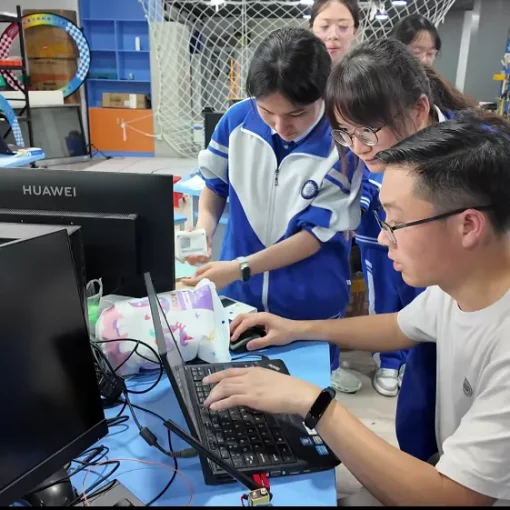
This time, the School of Innovation and Entrepreneurship of Shenzhen Polytechnic University has brought the “work-in-progress and finished products” from classrooms, workshops, and incubators to the scene—

Cross-disciplinary Integrated Student Maker Project Matrix
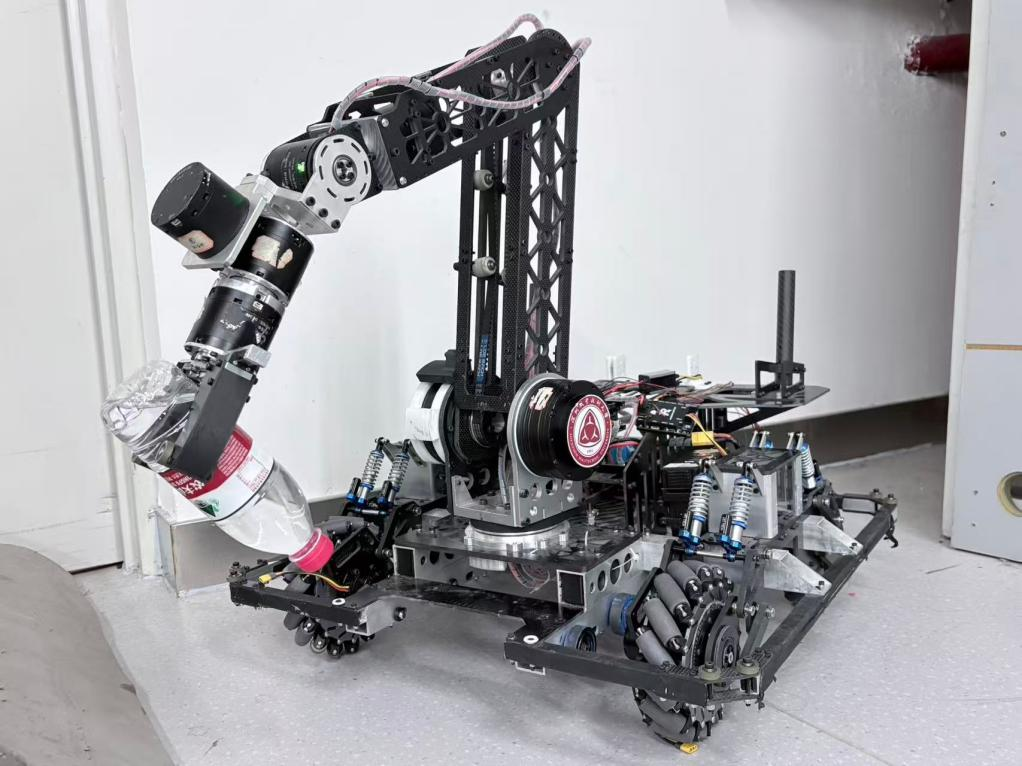
1.Modular Multifunctional Mobile Robot Platform (Equipped with a 7-Axis Robotic Arm)
Designed for automated operations in complex environments such as foreign object clearance in nuclear power plant reactor pools, it can also be used for scientific research algorithm validation and mechatronics teaching experiments. The platform integrates a mobile chassis, a 7-DoF robotic arm, and an end-effector module, capable of completing tasks such as foreign object detection, grasping, transfer, and placement in pool environments. It adopts a modular design, facilitating the rapid replacement of actuators and expansion of sensors according to operational needs.
2.Smart Film Navigator
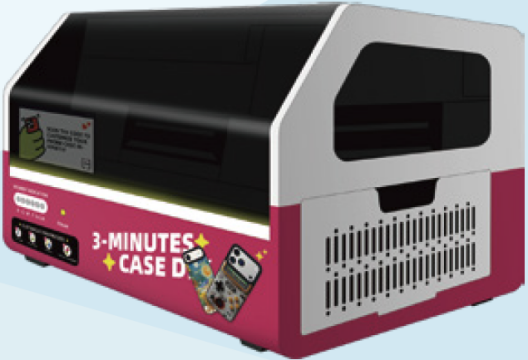
A Gold Award project at the China International College Students’ Innovation Competition, dedicated to becoming the global standard-setter for unmanned aftermarket services for mobile phones. Its self-developed fully automatic phone screen protector applicator and fully automatic AI phone case customizer can complete screen protector application in as fast as 90 seconds and DIY phone case production in 3 minutes, respectively. The equipment has been exported to over 50 countries and regions, with over 30 applications for international PCT, invention patents, and design patents, and has obtained multiple international authoritative certifications such as FCC in the US, CE in the EU, and PSE in Japan. In the future, it will create unmanned 3C service scenarios, build a “proprietary channels + third-party channels” model, establish overseas operation centers, and lead the development of the global unmanned mobile phone aftermarket industry.

3.AI Smart Eye Guide and Reception System
This system is an integrated hardware and software AI solution designed for exhibition halls, museums, and other scenarios. The product integrates four core technologies: real-time bilingual translation, visual recognition multi-screen interaction, wireless audio base stations, and AI smart teleprompters. It supports multilingual mutual translation, automatic content playback, and clear listening for multiple users, enabling newcomers to get on board in just 10 minutes. It can reduce training and labor costs by over 60%, addressing pain points such as the scarcity and high turnover of professional guides. The first-generation product is ready for mass production and supports customization. We sincerely invite strategic investors with resources in the exhibition industry to cooperate and jointly expand the smart reception market.
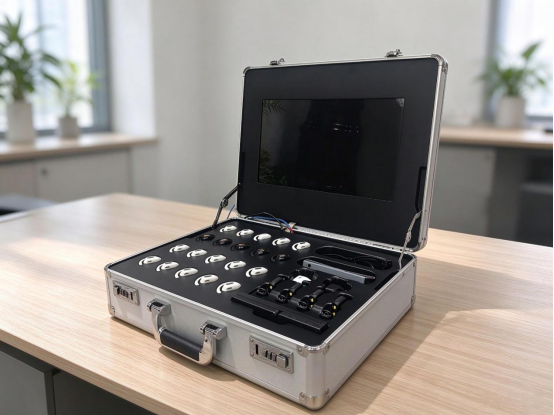
Story Wall: From Campus Makers to Market Entrepreneurs
Real university campus entrepreneurship cases that have grown from maker projects into registered companies:
Shenzhen Kepu Suiying Technology Co., Ltd. is a hardcore sci-tech innovation team rooted in Shenzhen, composed of current students from Shenzhen Polytechnic University, focusing on the independent R&D of desktop fluid visualization equipment and miniature model equipment.
The team has connected the entire chain of structural design, hardware circuits, embedded software, and cross-border operations, insisting on self-developed underlying structures and main control solutions, and focusing on desktop-level smart devices for model enthusiasts, sci-tech innovation hobbyists, and university laboratories.
Representative products include the CRITICAL T1 desktop smart wind tunnel and the Mojing 3D Garage series miniature models. We miniaturize and desktopize industrial-grade fluid experiments and mechanical transmission structures, balancing playability, demonstration effects, and stable performance, continuously providing original hardware products for the model community and sci-tech innovation education scenarios.
The project achieved sales exceeding 220,000 RMB within 20 days of launch and gained widespread traction in model and geek communities. It has been widely reported by mainstream media such as China Education Daily, Xinhua Net, Shenzhen Media Group, and Southern Metropolis Daily.

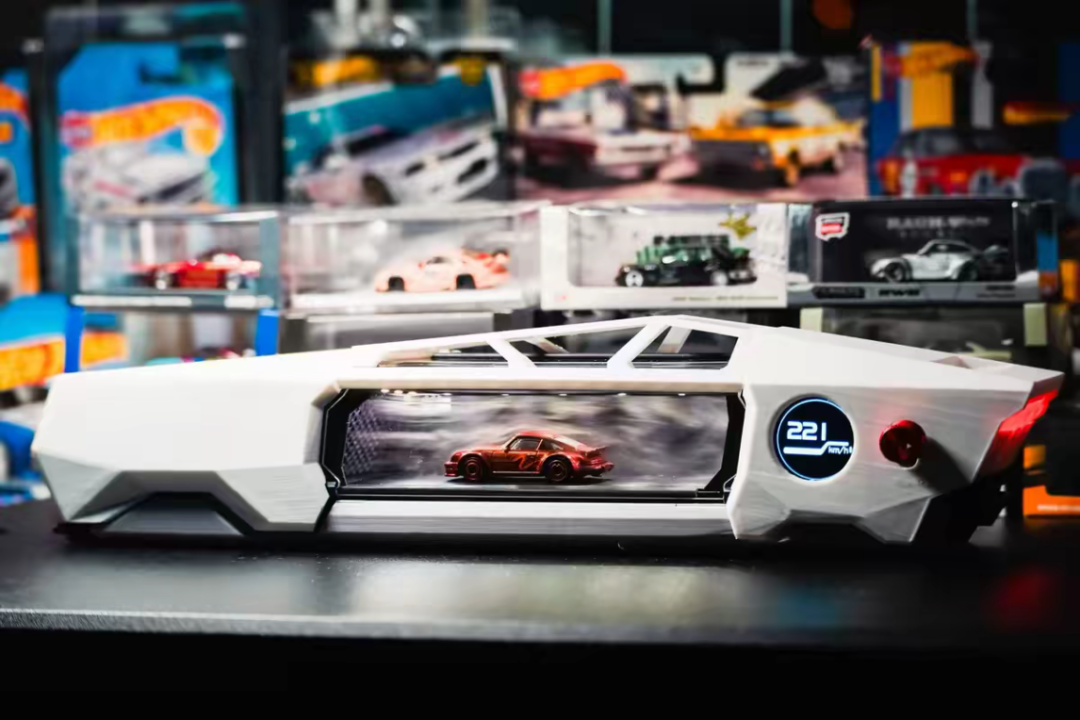
We want to tell every friend who walks into the Shenzhen Polytechnic University booth:
Vocational education can also be very “hardcore,” and vocational students can also be the ones defining the next generation of hardware.
Why Do We Come Every Year?
Because Maker Faire Shenzhen is not an exhibition for “showcasing completed works,” but a site for “seeing what is happening.”
From “co-host” to “strategic co-creator,” Shenzhen Polytechnic University values not just exposure, but those moments when students collide head-on with the real world:
When a freshman stands next to a robot they built, explaining to international makers “why the gripper is designed this way”;
When a student who thought they “could only draw” discovers they can also solder boards, run models, and sell products.
This is what it truly looks like when the maker spirit takes root.
Come See Us
- Booth: A3
- Date: December 12–13, 2026
- Venue: Vanke Cloud City Design Commune · Nanshan District, Shenzhen, China
- Greater Bay Area International Maker Summit & Maker Faire Shenzhen 2026
- Theme: Mega Evolution Stage for Global Makers
For the 2026 Greater Bay Area International Maker Summit, we have specially created a brand-new program segment—Alpha Camp. It is not a conventional exhibition, nor a workshop where you sit in the audience taking notes—it is an unscripted “making experiment ground”: there are no spectators here—either take the stage or get your hands on the tools.
Over the two days, around 40 hardcore skill workshops and sharing sessions will run back-to-back—laser cutting, advanced soldering, hands-on 3D printing, AI hardware deployment… 70%–80% of them are hands-on. Attendees are not judged by degrees or titles; the person sitting at the next table might be a veteran welder from the workshop floor whose skills run deep—or your future partner for all-night project builds.
What Is Included?
- Priority workshop reservations and access to the ticket-holder community. Book your preferred sessions early, get program updates, and connect with other participants before the event.
- Two days of ALPHA Camp access. Explore around 40 workshops and skill-sharing sessions across both days.
- Your own NFC maker badge. Activate it at check-in, tap it for access, and use it to complete challenges and level up your virtual pet.
- Practical workshops led by experienced makers. Work with people who have used these skills on real projects.
- Lunch on both days. Your pass includes an on-site lunch each day.
- A certificate of completion and a maker passport. Complete the workshop and challenge requirements to receive your certificate at the event. Use your passport to collect stamps at participating exhibitor booths.
- Maker merchandise. Take home a sticker pack, a custom woven tote bag, and other event merchandise.

Over the past 13 years, the development trajectory of Maker Faire Shenzhen can be seen as a microcosm of the development of maker culture in China.
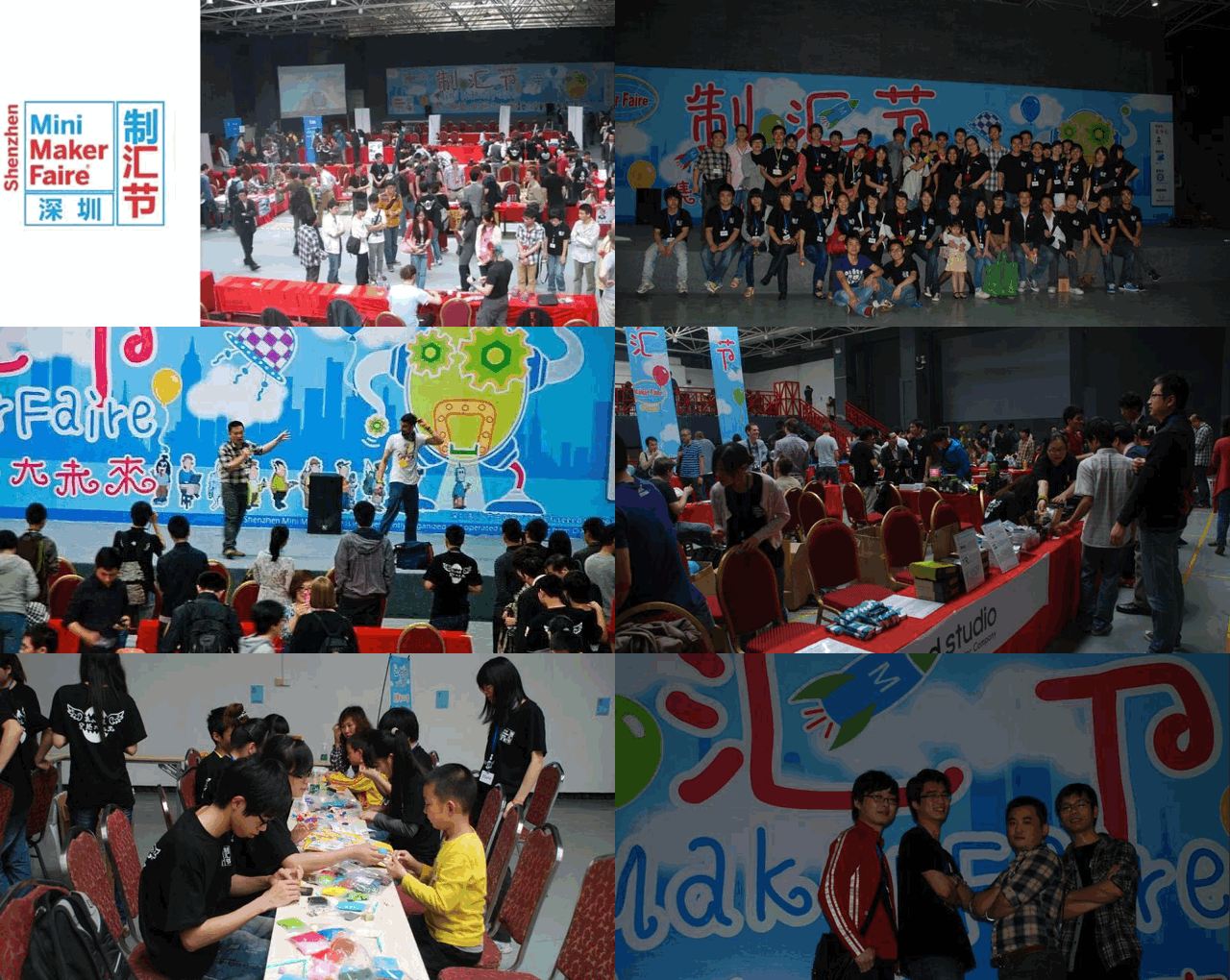
- 2012: “Gathering Small Wisdom, Journeying through the Great Future” – This was the first Mini Maker Faire in China, with less than 1000 attendees, and was more like a gathering within a small circle. But we saw the infinite possibilities emerging from the maker community.
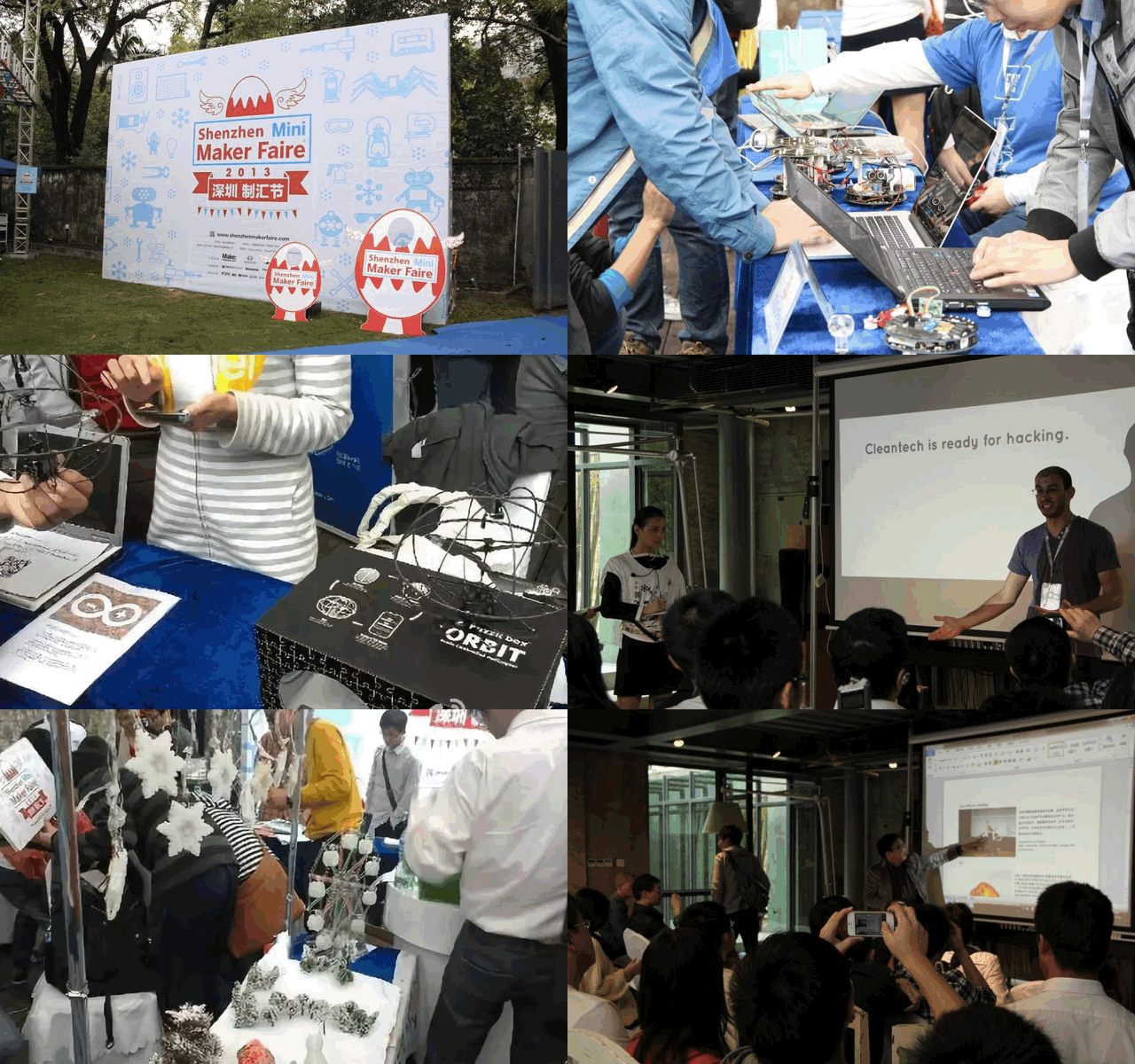
- 2013: The slogan was absent, and the maker community was still small. – In the OCT Creative Park, there were cross-disciplinary exchanges among different creative communities, silently laying the foundation for cultural output.
- 2014: “Innovate with China” – the event was upgraded to the Featured level for the first time, with a significant increase in scale compared to previous years, and the beginning of professional independent forums. This year, makers began to enter the public’s view.
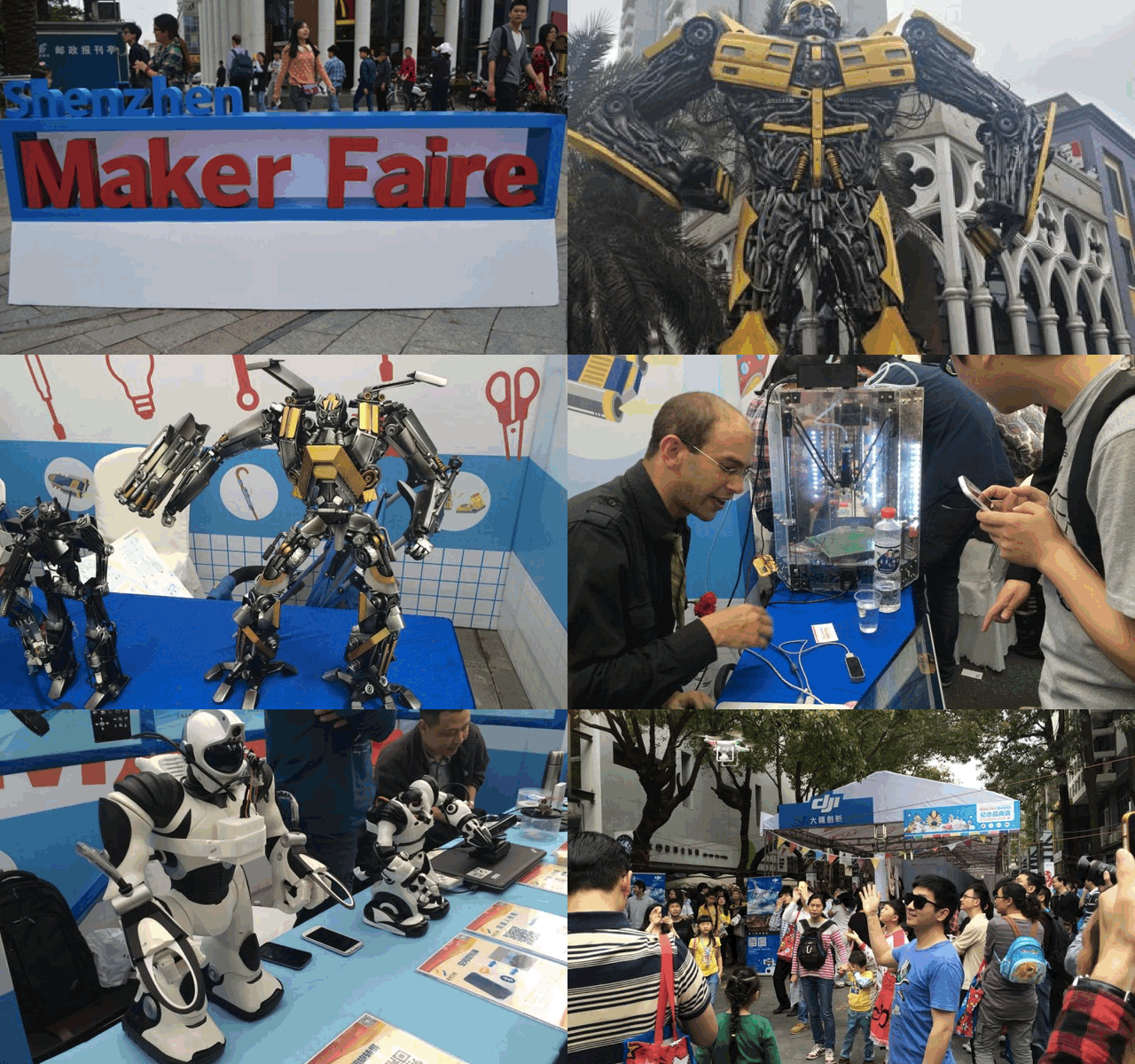
- 2015: “Everyone is a Maker, what are you waiting for?” – This year’s Shenzhen International Maker Week became one of the largest Maker Faires in the world. This year, the concept of “maker” was elevated to a national level, and the trend of “mass innovation, mass entrepreneurship” swept across the country.
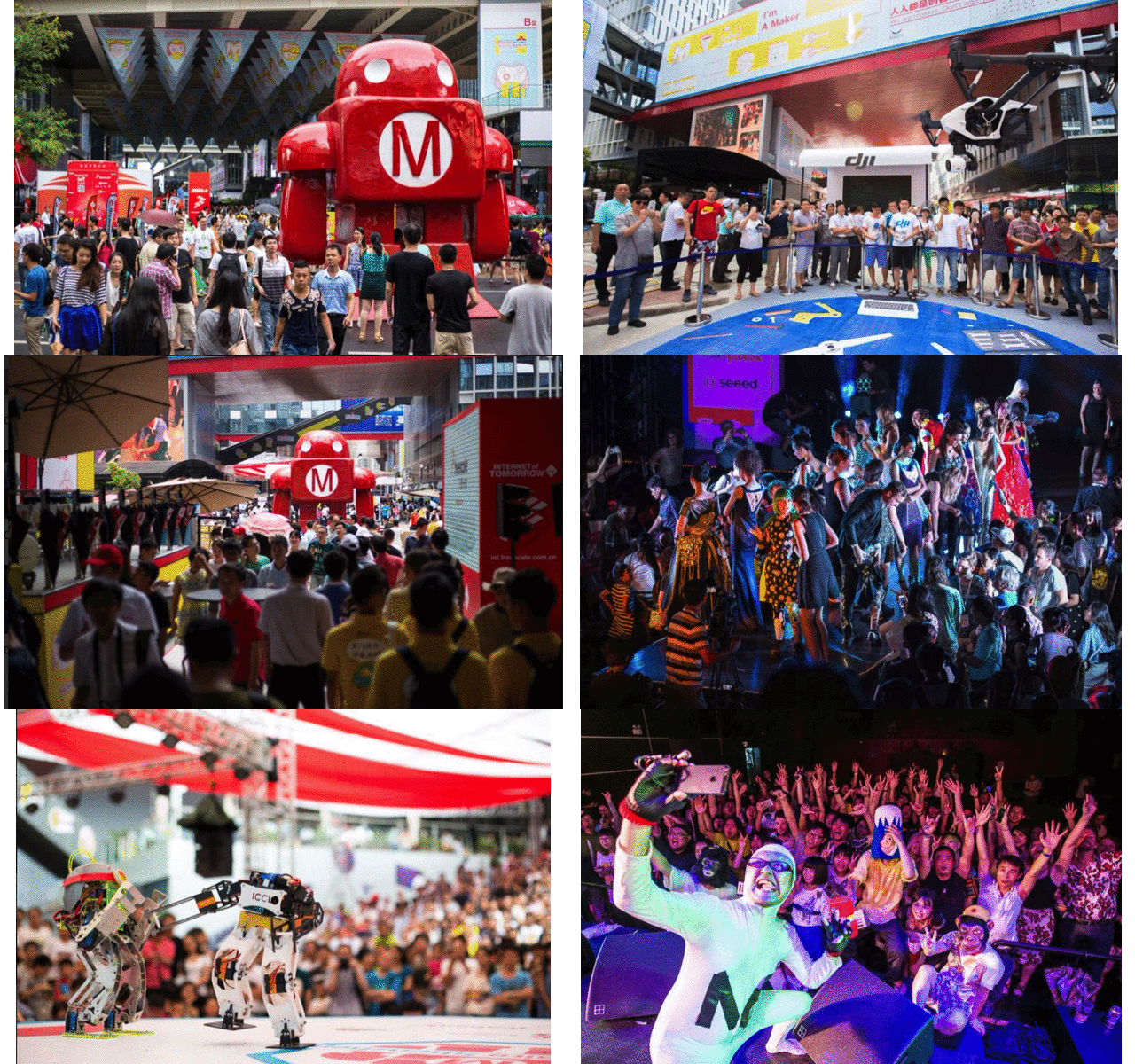
- 2016: “My World, My Creation” – As the sub-venue of the National Innovation and Entrepreneurship Week, the event was held for the first time in the commercial center area, experiencing unpredictable weather from typhoons to scorching heat. Many makers succeeded in your entrepreneurial endeavors this year, but it seemed like there were even more failures. The hype around entrepreneurship shifted towards rationality.
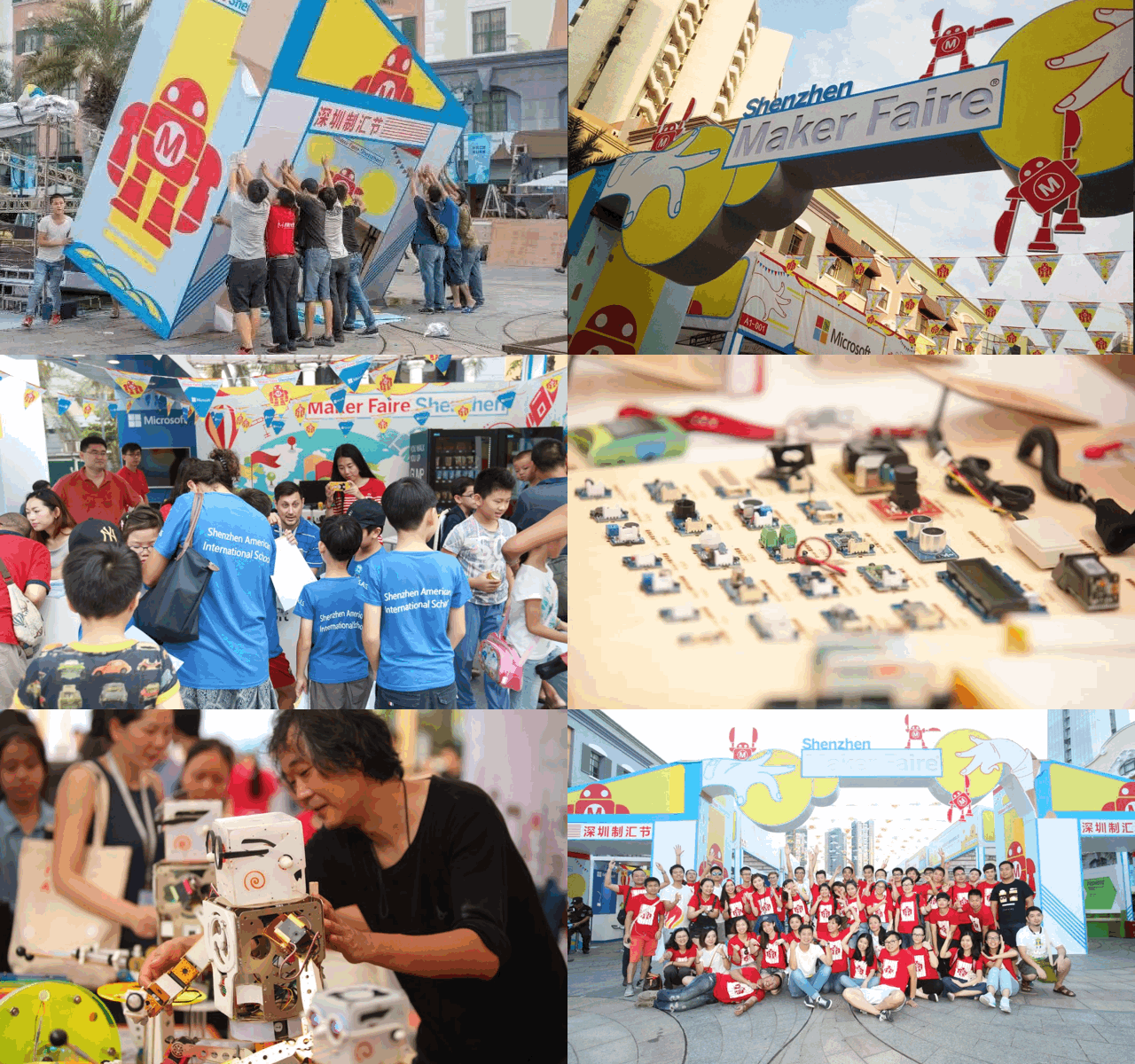
- 2017: “Makers, Go Pro” – The event took place at the university campus for the first time, focusing on Maker Pros and providing a platform for diverse innovators and makers to showcase themselves, presenting more possibilities for the growth path of makers to the entire community.
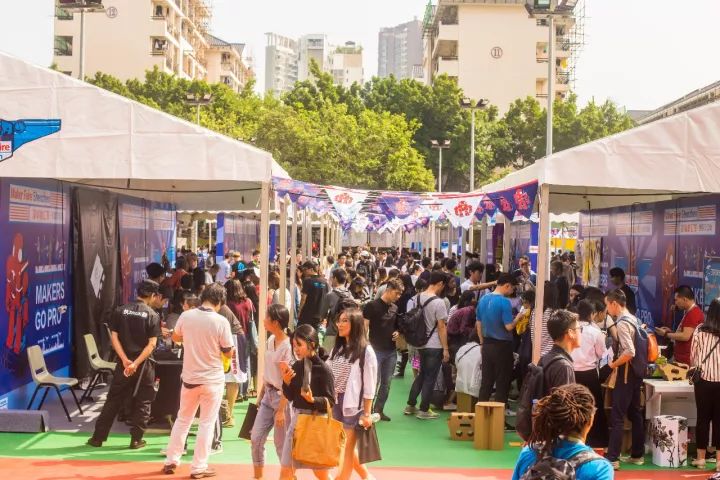
- 2018: “Co-making in the City” – The main venue of Shenzhen International Maker Week, where individuals and groups with shared visions and values gathered to showcase stories, projects, and explorations of collaboration among different communities and people.
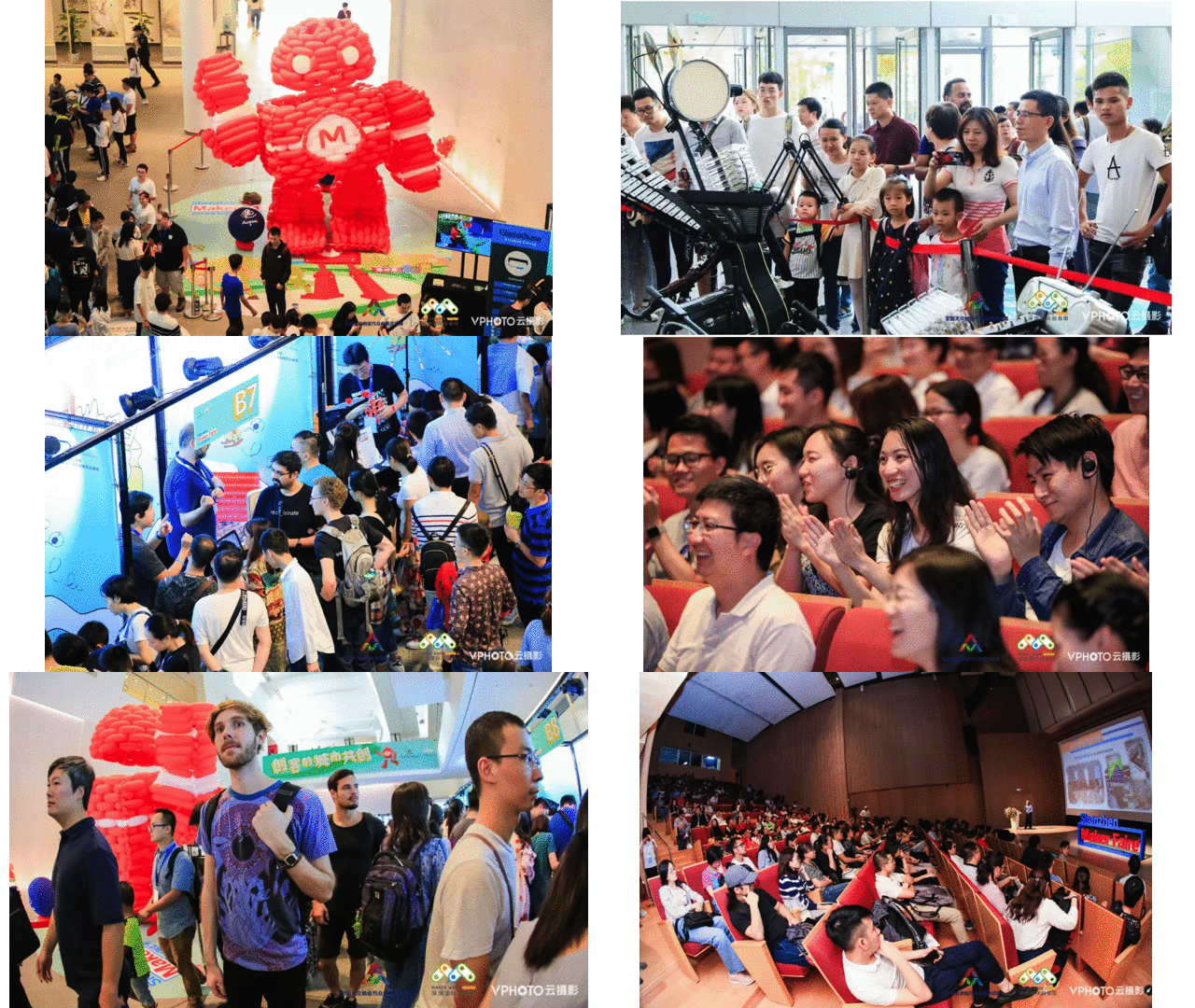
- 2019: ” To the Heart of Community, To the Cluster of Industry” – The event was upgraded to the Maker Faire Shenzhen, attempting to attract professional audiences and focusing on pragmatic aspects such as solving the needs of industrial upgrading and co-developin. It aims to build a platform for innovation and industry dialogue and collaboration.

- 2023: “Where Are The Makers?”– Starting from our own mission and values, we aim to explore the future direction of makers and theapossibilities for commercialization. Though this question does not have a definitive answer, we do hope that through this event, we can communicate and share with every one of you, finding more ideas and directions together.

- 2024: “Everything is AI” – This year, we brought together over 120 exhibitors from around the world, attracting nearly 1,500 professional attendees from nearly 20 countries and over 20 provinces across China. The exhibition showcased a wide range of AI application projects and hosted 10 AI hardware-themed satellite events, alongside various workshops.
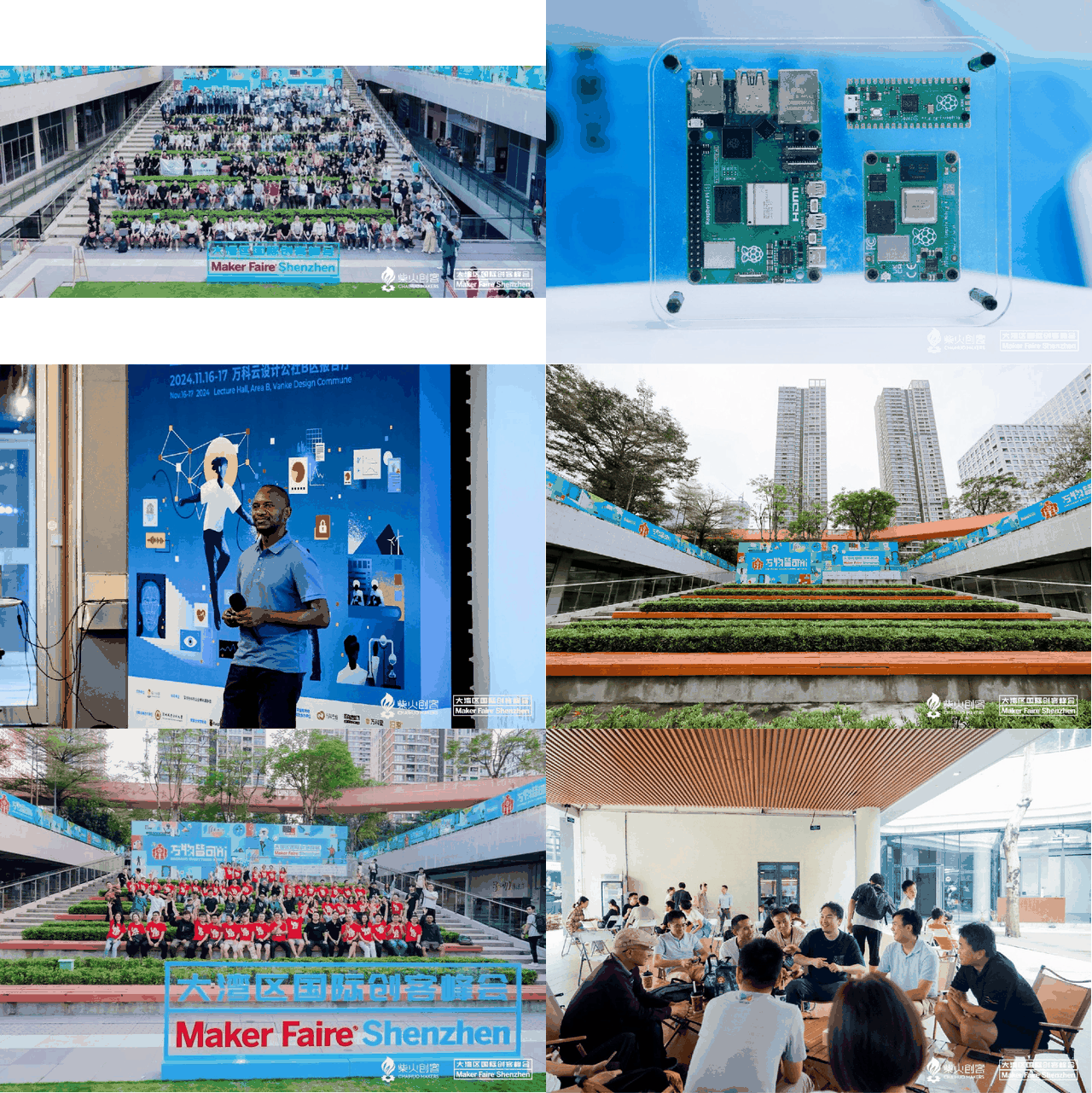
- 2025: “AI Without Boundaries, Everything Reimagined”The summit brought together nearly 100 international innovation ambassadors and showcased almost 1,000 AI hardware projects.Technology leaders, pioneering makers, industry experts, and university teams from more than 30 countries gathered to create an international innovation event combining frontier thinking, technical exchange, and cross-disciplinary collaboration.