At the beginning of the month, we officially announced Alpha Camp and released a limited number of early-bird tickets. To our surprise, the event attracted a large number of fellow makers from the maker community to apply as soon as it was announced. Thank you all so much for your support!!
Today, let’s share the workshop content you are most looking forward to—and see what you can actually play with on site.
From light-up cat ears to an edge AI speed camera, from robotic arms to a sound-light-electric “Malatang” cooked into one pot, plus hardcore panel discussions on different themes that dig deep into Physical AI and 3D technology. This is only the first batch—more sessions will be officially announced soon.
More importantly, if you are still watching from behind the screen, do not delay—because only 3 days are left for early-bird tickets!
If you want an immersive hands-on maker experience this December, come to Alpha Camp and set off on a thoroughly satisfying hardcore tech learning journey~

International Workshops
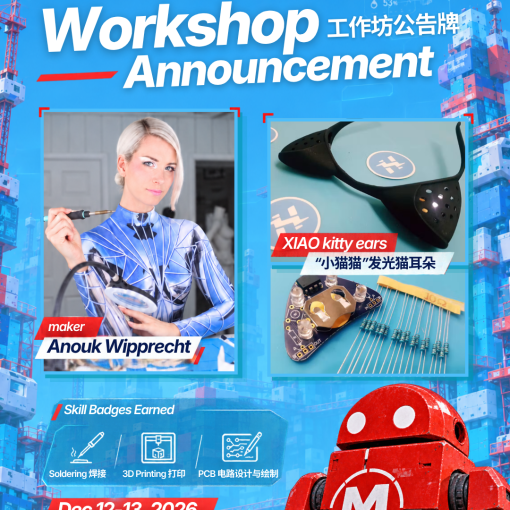
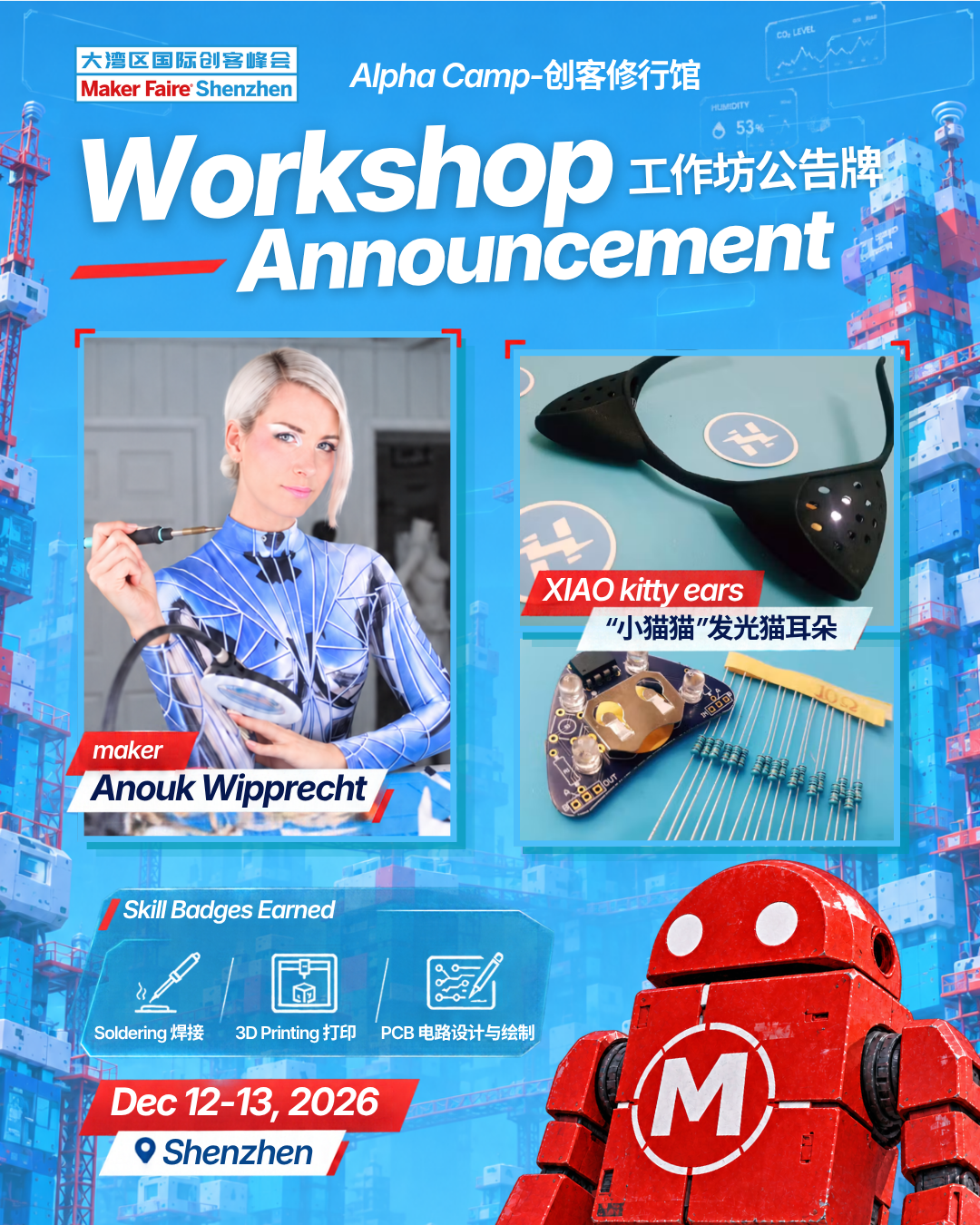
01|Kitty Ears Workshop
Instructor: Anouk Wipprecht (Netherlands) | Workshop language: English
▍About the Instructor
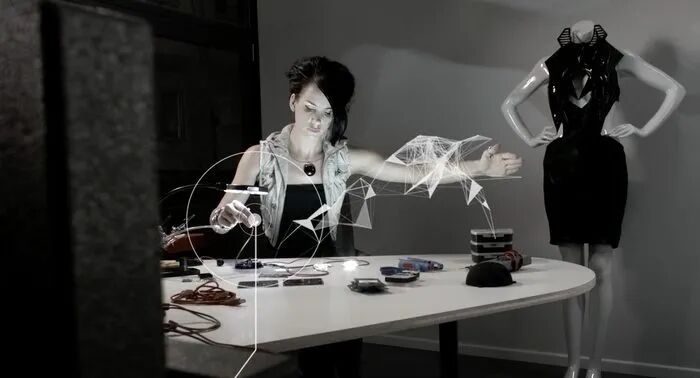
Anouk Wipprecht is a Netherlands-born innovator / artist / designer / engineer—there is no “or” among her titles, because she does all four. Her work spans wearable technology, robotic fashion, interactive design, and performance art, and she has long been active on the global tech and design scene: from Ars Electronica to the judging panel of the CODAME hackathon, from speaking for the Lima government to an architecture exhibition in Mexico City.
Her best-known creative approach is weaving electronic components into clothing—so that clothes are not just worn, but sense, react, and speak.
▍What You Will Do
In this hands-on FashionTech workshop, you will use components built around the XIAO microcontroller to create your own 3D-printed electronic cat ears! Inspired by Anouk Wipprecht’s original “electronic cat ears” work, this project seamlessly blends wearable technology, DIY electronics, soldering, and programming into a fun-filled making experience.

▍What You Will Learn
- The basics of wearable electronics and microcontrollers
- How to solder electronic components
- How to write and upload code to control LED light animations
- How to combine electronics engineering with fashion creativity (FashionTech)
02|JBR-001: Build Your Own Vision Robot
Instructor: Goran Vuksic (Denmark) | Workshop language: English
▍About the Instructor
Goran Vuksic is an internationally renowned engineer, entrepreneur, robotics developer, and lifelong maker. As co-founder and CTO of syntheticAIdata, he has long explored how artificial intelligence, computer vision, and robotics can move from the lab into the real world. Beyond entrepreneurship, he is a Microsoft AI MVP, an active technology community organizer, and an international speaker, regularly sharing hands-on experience in edge AI, robotics, and the future of computing at global technology conferences.
▍What You Will Do
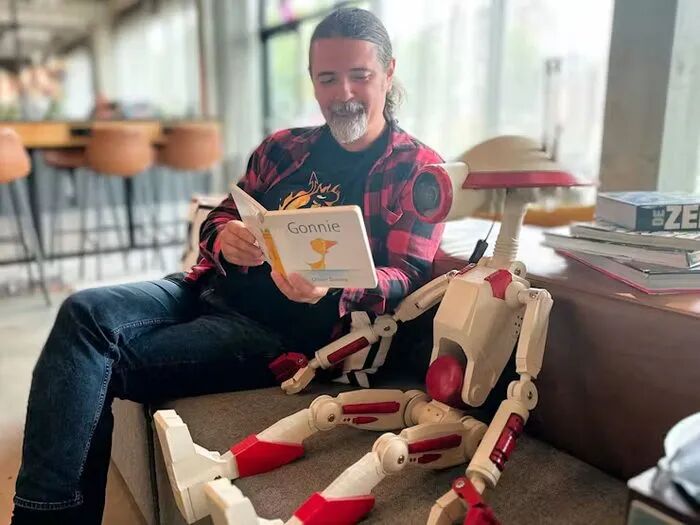
Welcome to the JBR-001 workshop—a hands-on journey into robotics, computer vision, and edge artificial intelligence (Edge AI)! This session centers on JBR-001—an open source, 3D-printed companion robot developed by syntheticAIdata in collaboration with Arduino.
▍What You Will Learn
- Full robot assembly (assembling 3D-printed parts)
- Servo and sensor control
- Training a computer vision model with Edge Impulse for object recognition
- Foundational concepts of Edge AI
- Integrating and coordinating hardware, software, and AI
03|PMSG Smart Glasses DIY: Control Hardware with AI Prompts from Zero
Instructor: Paul Stefaan Mooij (Netherlands / Amsterdam) | Workshop language: English
▍What You Will Do
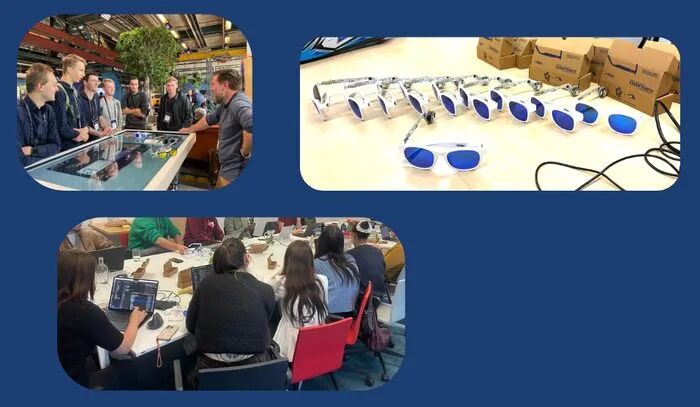
Take you from a complete beginner to someone capable of developing advanced AI hardware applications. Here is what this workshop will cover:
- Level 1: The Spark — Install ChatGPT and flash firmware via Chrome PMSG. Use simple examples to control 4 LEDs and a vibration motor, then start directly controlling physical hardware with your own prompts!
- Level 2: The Core — Use my customized AIS Setup package to unlock your dedicated development environment. Master the PMSG library to build mini-apps, and achieve wireless control with Web BLE and APIs.
- Level 3: The Edge — Use Claw-ESP, local speech-to-text / machine learning to explore advanced features, and build connected apps for platforms such as WeChat.
▍What You Will Learn
- Directly control hardware (LEDs, vibration motors) with AI prompts
- One-click PMSG firmware flashing via Chrome
- Develop mini-apps with the PMSG library
- Wireless control with Web BLE and APIs
- Advanced: Claw-ESP, local speech recognition / machine learning, WeChat-connected apps
04|Predictive Maintenance at the Edge: Build Your Own Fault Detector
Instructor: Abhinav Krishna N (India) | Workshop language: English
▍About the Instructor
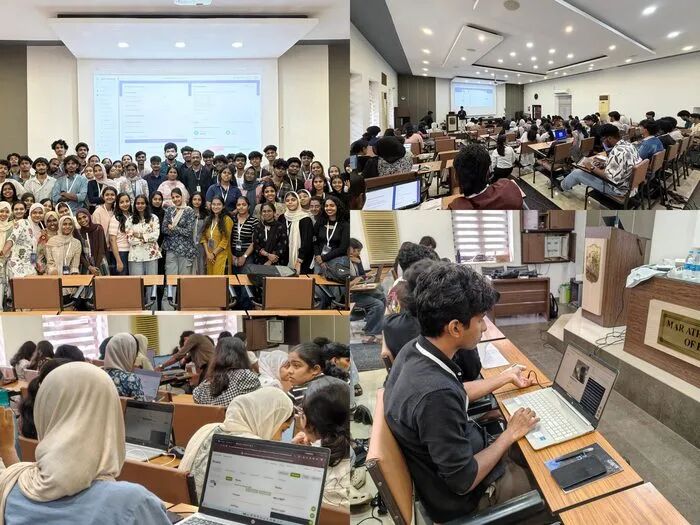
Abhinav Krishna N is a tech maker enthusiast with a background in electronics and computer engineering, deeply engaged in sensors, IoT, embedded systems, edge AI, and other technical fields. He leads the EleTect project, which combines LoRa and edge AI to mitigate human-elephant conflict and has been running on site in two locations in Kerala for over a month. He has organized many events and hackathons, is a member of the Edge Impulse Ambassador Program, and helps others bring their ideas to life.
▍What You Will Do
In this workshop, you will use an XIAO ML kit and a small motor with a fan to record the feel and sound of a normal motor, train a TinyML model in Edge Impulse, and run it on a development board so it displays HEALTHY or FAULT on its built-in screen. Then comes the fun part: use a piece of tape, a loose screw, or a stuck fan blade to artificially damage your motor and see whether your detector can identify it. You will learn the complete TinyML workflow: collecting data, training, deploying, and tuning it to avoid false alarms.
▍What You Will Learn
- Build a simple motor circuit
- Collect vibration and sound data from a microcontroller
- Train an anomaly detection model in Edge Impulse, deploy it to run on-device, and test it by creating real faults
- Participants will also learn to interpret model results and tune the model to avoid false alarms
05|From Pixels to Radar: Building an Edge AI Speed Camera on NVIDIA Jetson, Step by Step
Instructor: Jacek Ciuba (Poland) | Workshop language: English
▍What You Will Do
How does a camera convert pixels into kilometers per hour?
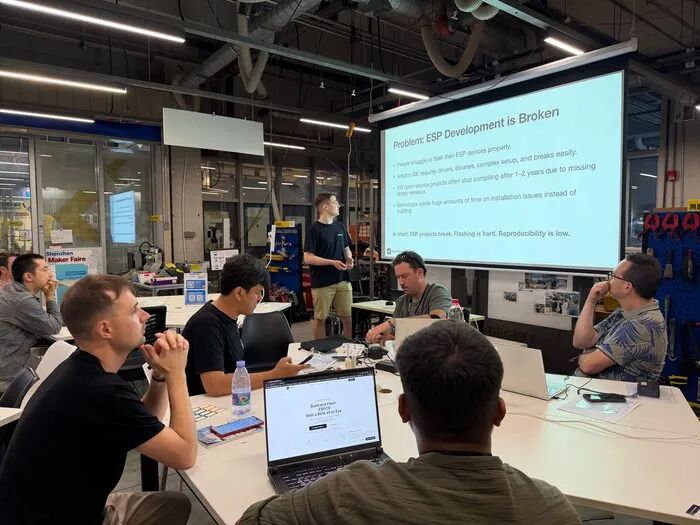
In this workshop, the instructor will take you from a real street and introduce a working edge AI speed camera, which we will build live on an NVIDIA Jetson.
Part One: The Real Camera. My open source AI speed camera runs from my home in Poland, overlooking a busy city road. Using recorded footage and traffic statistics, I will walk through the theory step by step: camera geometry, why a single camera can measure distance, calibration, tracking, timing, and sources of error.
Part Two: Building It Live on NVIDIA Jetson. Starting from an empty project, we will build the complete workflow in six stages, each running live on recorded 4K street footage:
- Read the video stream and measure performance.
- Detect vehicles using TensorRT-accelerated YOLO.
- Track each vehicle using ByteTrack.
- Calibrate the camera: select reference points on the road and compute the homography matrix.
- Estimate speed from each vehicle’s trajectory.
- Publish results to a live dashboard while keeping images on-device for privacy. At each stage, we will discuss potential problems (false detections, ID switches, perspective errors), solutions, and how model size trades off speed against accuracy.
Participants can later follow the instructions to build their own speed camera without complex sensors.
▍What You Will Learn
The end-to-end construction of a real edge AI vision system: video streaming (RTSP), TensorRT-accelerated YOLO object detection on NVIDIA Jetson, multi-object tracking (ByteTrack), camera calibration and homography, speed estimation based on tracking results, error measurement and reduction; practical tips for deploying edge AI in the real world (performance tuning, privacy by design).
06|PLANETAI Node: Let Your Makerspace Sense Its Own Location
Instructor: Tomas Diez (Indonesia) | Workshop language: English
▍What You Will Do
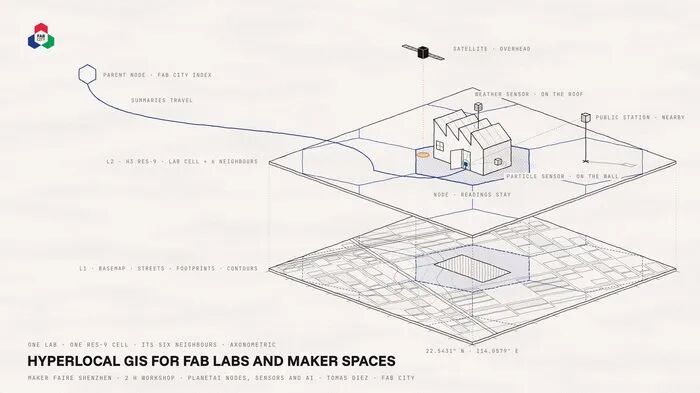
This workshop teaches participants to equip their makerspace with a “sensing computer” (a PLANETAI node)—using an old laptop / mini PC already in the lab plus a sensor board, so the space can sense in real time “the air at its doorstep, the temperature on its roof, and the streets around it,” and use AI to translate the data into plain language, turning the lab into a “sensor of the city.”
What you will learn: sensor wiring (using XIAO ESP32S3 + Grove environmental sensors), local AI node installation, reading map / street data—no GIS or programming background required.
▍What You Will Learn
Sensors, hyperlocal GIS, urban manufacturing
07|Smart Home DIY: Connect XIAO ESP32-C6 Sensors to Zigbee / HomeAssistant
Instructor: Logan Crosier (USA) | Workshop language: English
▍What You Will Do
Participants will use the XIAO ESP32-C6 development board and expansion board to assemble miniature devices and connect simple sensors; then learn how to configure their ESPHome / YAML files to connect them to a HomeAssistant server over a Zigbee network.
Before the workshop, I will configure a Raspberry Pi as a portable, compact HomeAssistant server equipped with a Zigbee transceiver. Participants can use any laptop to configure their devices via the ESPHome Web tool, and the instructors will then help connect them to the server to test the configuration.
▍What You Will Learn
- Smart home sensor hardware assembly (XIAO ESP32-C6 + expansion board + sensors)
- ESPHome / YAML firmware configuration
- Zigbee wireless networking
- HomeAssistant server setup and device connection debugging
08|Create Fashion with Baked AI (and let your “Labubu” Wear It)
Thermoforming 3D printable assistive devices
Instructor: Kitty Yeung | Workshop language: English
▍What You Will Do
Participants will learn practical maker skills combining AI, fashion design, digital fabrication, and wearable technology. Each participant will use AI to design a mini outfit, generate and customize its patterns, and make the garment for their own figure, gaining hands-on experience in AI-assisted design and physical fabrication.
▍What You Will Learn
- AI-assisted fashion design: use generative AI to create and customize clothing styles for humans, pets, and figures.
- Digital patternmaking: convert AI-generated fashion designs into 2D sewing patterns, understand garment structure, and adjust patterns to fit different body types and sizes.
- Measurement and pattern scaling: measure model figures, create custom-sized patterns, and prepare printable templates.
- Fabric cutting and garment assembly: learn basic fabric cutting, pattern layout, and beginner-friendly mini garment assembly techniques.
- 2D to 3D construction: understand how flat patterns become wearable three-dimensional objects.
- Wearable electronics (optional): explore integrating LEDs, conductive materials, and simple electronic components into clothing to create glowing or interactive effects.
- Fabrication techniques (optional): may involve 3D printing, laser cutting, and sewing techniques.
Domestic Workshops
01|Robotic Arm VLA Hands-On Workshop
Workshop language: Chinese
▍What You Will Do
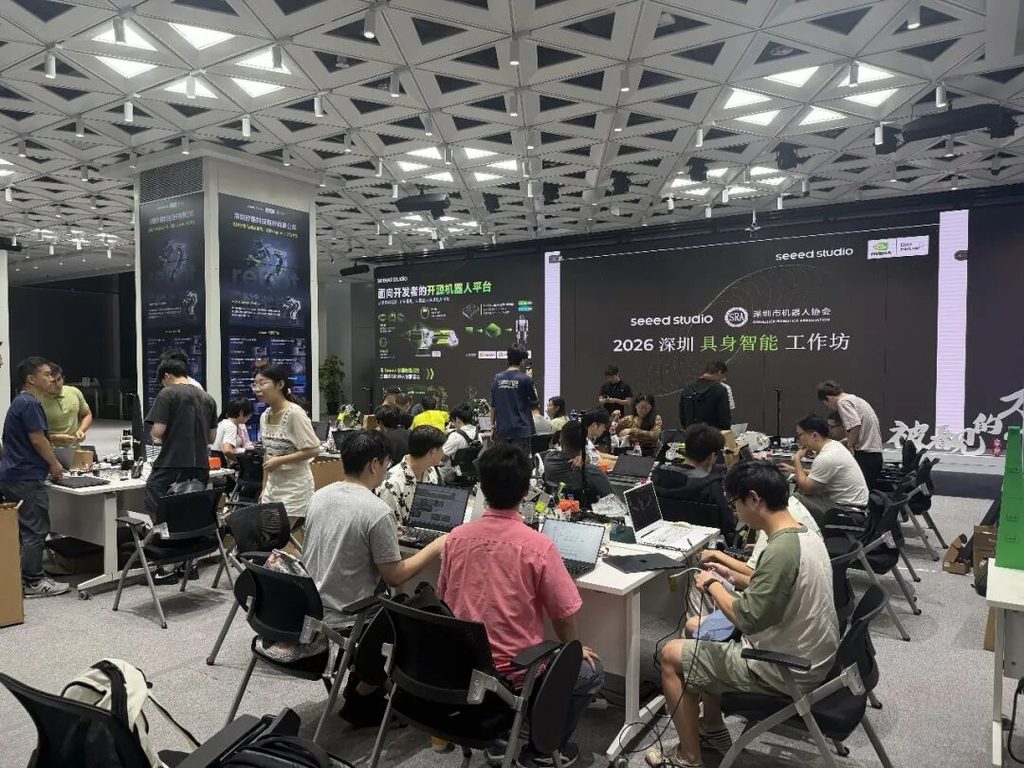
Participants will use three versions of open source robotic arms—SO-ARM and reBot DM/RS—along with the SenseCraft Robotics low-code platform to experience the full process from data collection and training strategy design to model optimization and actual deployment, quickly getting hands-on with how robots can learn through AI and autonomously complete real-world tasks.
▍What You Will Learn
Open source robotic arm tuning, imitation learning, VLA training and deployment
02|DigiShow-MLT Malatang Workshop Series
Instructors: Shen Bowen, Ino, Ji He, Lucas, Cheng Weinan, Yunlong | Workshop language: Chinese
▍About the Instructors
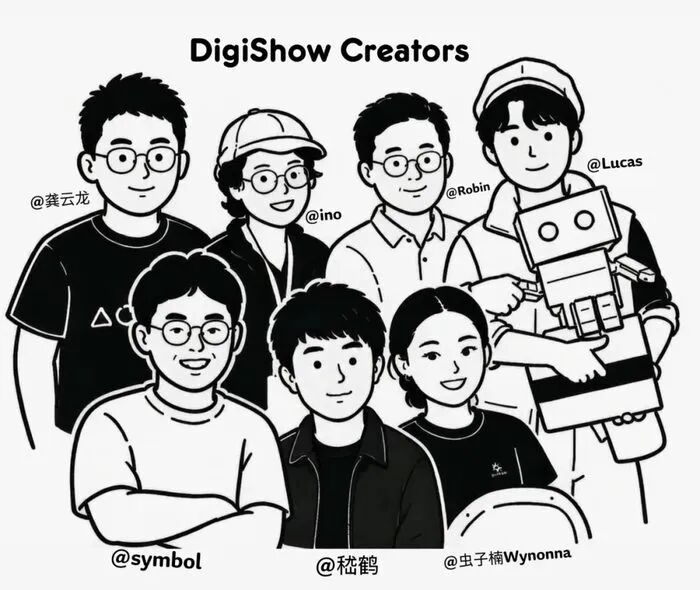
- Yinuo (Ino), founder of Haoqishe and initiator of AI SOUND LAB.
- Gong Yunlong, a music-tech content creator focused on music × visual × interactive creative project development. Representative works: “Mouth Shape Acid” and “Hands Band.” He is committed to exploring innovative practices at the intersection of music and technology in the AI era.
- Ji He, installation artist and 3D interaction designer. His works have been exhibited in more than ten countries and cities worldwide, including Ars Electronica in Linz, Austria, and the London Festival of Architecture. He has served as a workshop/course instructor and guest lecturer at multiple universities and design institutions, and is a winner and award recipient in numerous sci-tech art competitions and hackathons.
- Shen Bowen (symbol), a Chaihuo-certified AI Pioneer. His representative work is “The Talking Space.” The common thread in such projects: before a person speaks, the space responds first.
- Cheng Weinan, master’s degree holder from Sichuan Fine Arts Institute and currently a research assistant at the Chongqing Center for Brain and Intelligence Science. The “Neurodiversity” series uses brain science to create installations—how signals are read and turned into images follows a path quite different from the stage side.
- Wang Yidi (Lucas), magic instructor at Shanghai Circus School, mentor for the Shanghai University Student Magic Competition, and judge for the 6th Shanghai University Student Magic Competition. He specializes in combining sci-tech art installations with performance.
▍What You Will Do
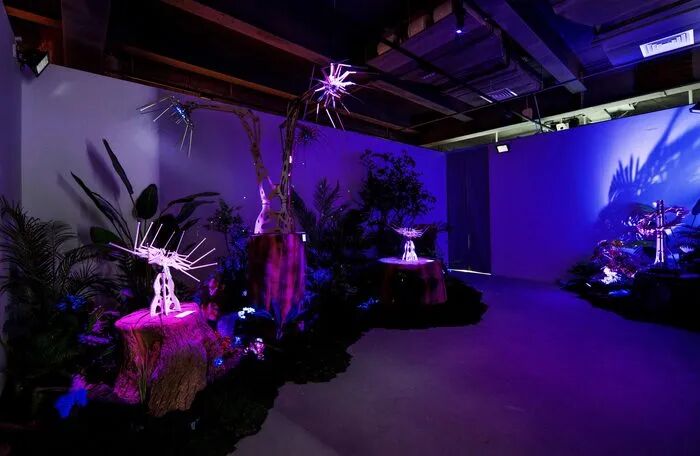
The DigiShow-MLT Malatang Workshop offers a progression from DigiShow basics to advanced creation tools and equipment—from “Hardware Rhapsody” to workshops on sound, light, and electric effects for everything, culminating in a showcase in the Shadow Theater.
This experience day is designed for light-and-shadow enthusiasts, magic and stage creators—no prior experience needed. It focuses on hands-on practice, teaching simple wiring connections and interactive triggering.
▍What You Will Learn
- Hardware Literacy — Read a simple circuit and master the basic wiring of LED strips. No more “error the moment you connect it.”
- Interaction Thinking — Understand the underlying principle of “signal triggering” between software and hardware—how motion becomes a command, and how a command becomes light.
- Hands-On Skills — Independently build and debug a simple interactive light-and-shadow installation. Not watching someone else do it—you make it yourself.
- On-Site Experience — Learn basic circuit troubleshooting. Poor connections, unexplained failures to light up—the most critical problems on a live stage—you will be able to spot them on the spot.
- Real-World Output — A small interactive light-and-shadow piece you made yourself, ready to demo on site and take home as a real item for your portfolio.
03|Build a Robot with AI: TARS from Idea to Physical Object
Instructor: Zeng Zhi | Workshop language: Chinese
▍About the Instructor
Zeng Zhi graduated from Harbin Institute of Technology and has 5 years of experience as an embedded hardware engineer. He has fully developed a UV printer and is proficient in electronic circuits, programming, mechanical structure design, and 3D printing. He currently focuses on exploring an AI-collaborative personal development model, extending hardware experience into full-stack project development; he has completed the TARS desktop robot and AI Codex keyboard projects, covering the entire process from concept to implementation, with all project materials open source and related sharing videos accumulating 400,000 views across platforms.
▍What You Will Do
Through the real-world case of the TARS project, participants will learn how to collaborate with AI to gradually turn an idea into a working physical object, including requirements breakdown, mechanical structure design, 3D printing, electronic circuits, and program debugging. Drawing on specific experiences, the sharing session will introduce which steps are suitable for AI assistance, which still require human judgment and hands-on verification, as well as common problems and lessons learned.
On site, participants will watch a physical TARS demo, learn how the modules work together, and through Q&A discuss how to apply these methods to their own projects.
▍What You Will Learn
Using the TARS project, he will introduce mechanical structure design and 3D printing, electronic module connection and hardware-software integration, and methods for using AI to assist programming and troubleshooting. The focus will be on how to break down project requirements, build and verify modules separately, and then integrate all parts into a working physical object, helping participants understand the complete maker project development process.
04|5-Axis CNC Skills Workshop: AI Modeling + Zero-Code CAM, Make Metal Parts by Hand
Instructor: Chen Bin (Xhorse3D) | Workshop language: Chinese
▍About the Instructor
Technical support lead at Xhorse3D, with extensive hands-on and training experience. He has long been responsible for in-depth technical training for Xmachine users, machine operation guidance, and solving complex machining problems.
▍What You Will Do
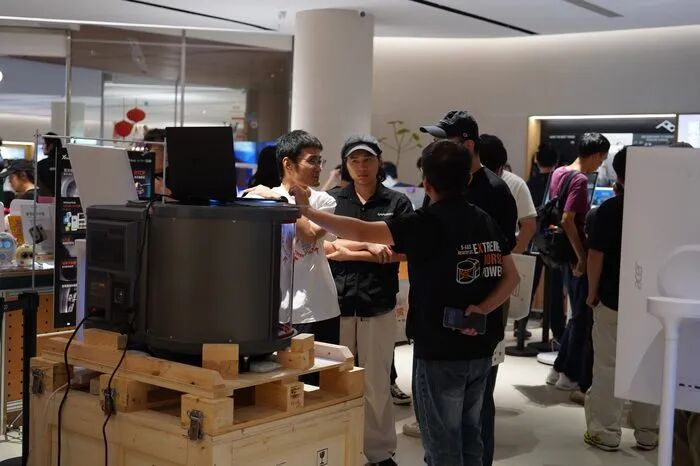
This workshop is designed for beginners—makers, engineers, designers, and others. Participants will learn the basic operation of the Xmachine desktop 5-axis CNC and, under the instructor’s guidance, work in groups to personally experience the full machining process: workpiece clamping, tool setting, and real cutting. In addition, participants will try the XMakerHub AI CAM platform, which can generate a 3D model and automatically produce 5-axis toolpaths with one click from just a piece of text or an image—completely breaking down the barrier of “programming is hard” and fully experiencing the joy of “turning a wild idea into reality with one click.”
▍What You Will Learn
- Basic operation of the Xmachine desktop 5-axis CNC
- AI-assisted 3D modeling with XMakerHub software
- Zero G-code automatic CAM programming
- Full desktop manufacturing workflow transformation
05|Introduction to AI and SLA 3D Printing
Instructor: Owen Yang (Yang Jinghao) | Workshop language: Chinese
▍About the Instructor
Yang Jinghao has worked as a mechanical engineer for 5 years, focusing on 3D printing development. He previously served as a mechanical engineer for Form 4 and Form 4L, and as lead mechanical engineer for Form Studio 1. He has been using various CAD software for the past 15 years and has served as a teaching assistant for engineering and manufacturing courses at a university.
▍What You Will Do
Participants will learn how to use AI to create simple printable CAD models, some general knowledge about SLA 3D printing, and how to set up printable SLA parts for printing.
▍What You Will Learn
CAD and 3D printing
06|Fidget Spinner Workshop
Instructor: MG-Lin Yuanhan | Workshop language: Chinese
▍What You Will Do
Participants will use 3D modeling to design and print their own fidget spinners, going through the complete process from modeling to finished product, and learn the basic principles and key craft points of 3D printing. At the end of the workshop, each participant will take home a unique piece. The session will also share practical pathways for driving product development with 3D modeling, as well as teaching experience from 3D printing courses.
▍What You Will Learn
3D modeling and 3D printing
07|Chaihuo Academy M0 Workshop Series
Theme 1|“Play with Screens—Display the Information You Want”
Instructor: Wang Zhijian | Workshop language: Chinese
Wang Zhijian holds a master’s degree in mechanical manufacturing and automation,with years of experience in R&D management and product engineering. Familiar with 3D printing / laser cutting / open source hardware / AI applications, he is committed to promoting innovation education based on AI and open source hardware. He currently serves as an innovation and entrepreneurship mentor at Xi’an Jiaotong-Liverpool University, Suzhou Vocational University, and other schools, and as a maker advisor at Ecovacs Bajie Open Source Innovation Space.
▍What You Will Learn
- Participants will learn to use large AI models to complete hardware programming, recognize sensor signals, and drive screen displays.
- Understand Arduino development board basics
- Master methods for quickly building personal prototype models with AI
- On site, learn to use the accompanying kit for AI programming to achieve real-time temperature, humidity, and ambient noise display on an OLED screen, and even develop a small black-and-white screen game console
Theme 2|“Turn Movement into Music: Make Your Pocket Synthesizer”
Instructor: Shen Haoran | Workshop language: Chinese
Shen Haoran is a makerspace / Fab Lab operator deeply rooted in Suzhou. Currently working through the platform of the Suzhou Institute of Innovation and Creative Design, he is committed to exploration and practice in spatial interaction and new media art.
▍What You Will Learn
- AI Vibe Coding prompt construction: learn how to use structured natural language (BPM, scales, chords, motion mapping rules) as prompts to precisely guide AI in generating hardware-executable music configuration code.
- Dynamic interaction logic and mapping: understand how human movements (tilting, shaking, covering the light sensor) are converted into control signals, and establish intuitive interactive mapping links with musical elements (pitch, timbral brightness, accented hits).
- Modular hardware rapid assembly: master the physical assembly of the Wio Terminal main unit, detachable portable speaker module, and battery base, and experience the maker “LEGO-style” approach to rapid prototyping.
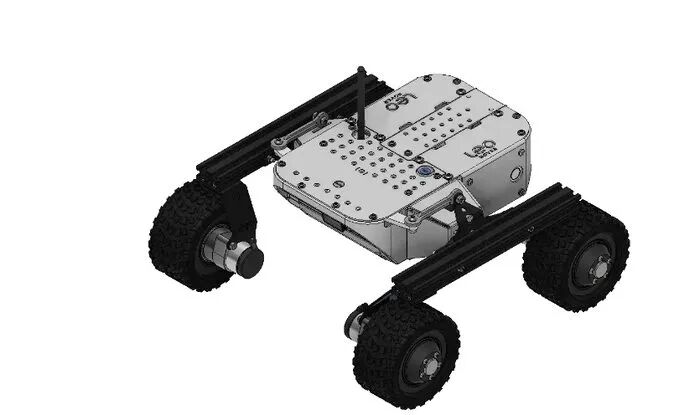
Theme 3|“MISSION CONTROL|Build an AI-Programming-Driven Mission Control Terminal for a Six-Wheel Space Exploration Robot”
Instructor: Ziro Lu (Lu Zhirong) | Workshop language: Chinese
Based in Guiyang, Ziro Lu is a maker practitioner, robotics developer, and AI hardware enthusiast. He graduated from Nanjing University of Posts and Telecommunications and has worked in the communications industry and at UBTECH. He has a background in electronic information and applied physics, along with practical experience in robot-related industries.
Familiar with mainstream embedded software and hardware platforms, he has experience in developing multiple types of robots and integrating hardware systems, and is currently developing a space exploration-themed robot.
He has extensive experience in sci-tech innovation teaching and has participated in sci-tech innovation projects at dozens of schools in Guiyang. This workshop will draw on his hands-on and teaching experience to guide participants in using AI-assisted programming to build a working mission control terminal.
▍What You Will Do
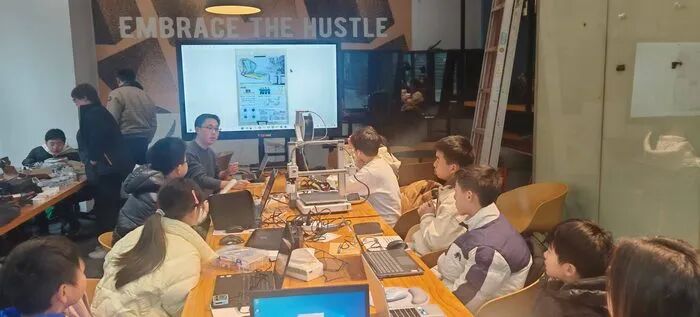
Participants will take on the role of a ground mission control engineer and use the Wio Terminal to build an intelligent mission control terminal. Throughout the process, they will use AI-assisted programming to complete interface generation, sensor data reading, interactive functions, and three-level status judgment, and actually flash the program onto the hardware for testing and debugging. Each group will ultimately complete an independently runnable terminal prototype and keep the prompts and programs used. The six-wheel robot is presented as a real engineering application scenario; this session does not require real-time wireless control of the physical robot.
▍What You Will Learn
AI-assisted programming and prompt design, Wio Terminal embedded development, reading light and motion sensor data, small-screen UI design, button and directional switch interaction, conditional judgment and status alerts, program compilation and flashing, real hardware testing and AI code debugging, as well as foundational thinking for robotic systems.
Panel Discussions
Physical AI: From Intelligence to Real-World Action
Interview language: English (on-site interpretation provided)
▍Panelists
Nikodem Bartnik (Poland)—maker, HuggingFace engineer, and YouTube creator. He runs a channel with over 200,000 subscribers, documenting open source robotics and engineering projects he builds with 3D printing, electronics, and machine learning, including the IndyMill CNC, ChatGPT robot, and Ludwik drone.
Tom Mulder—robotics and AI development engineer at Pollen Robotics (part of Hugging Face). With over 20 years of experience in data platforms, ML systems, and robotics building, he previously worked at Google and served as head of data at Wehkamp and EQOM Group. He currently leads the Reachy Mini project, a desktop robot designed for highly expressive human-robot interaction scenarios.
▍About the Panel
As AI moves from digital applications into the physical world, robotics is becoming a major field of innovation.
This panel brings together perspectives from the AI computing ecosystem and the robotics industry to explore the development path of embodied intelligence, existing challenges, and how intelligent devices move from prototype to real-world application.
This discussion is aimed at makers, developers, robotics enthusiasts, and industry practitioners, and welcomes deep technical insights, practical experience, and diverse perspectives.
Brainwaves: From “Time Capsules” to Figures and Robot Training—How Will 3D Enter Our Lives?
Guest: Wang Zhengnan (Jack), co-founder and CEO of Remy and KIRI Engine
Interviewers: Nixon and Thomas (Thomas Bai), hosts of the tech podcast “Brain Discharge”
Interview language: Chinese
▍About the Panel
Join Jack, co-founder of Remy and KIRI Engine, as he starts from the 3D photo album on your phone and real-person figures to discuss how 3D technology is entering ordinary people’s lives, and its relationship with content creation, home decoration, maps, and robot training.

▍What You Will Learn
- Connect the development of the 3D industry—from 3D figures to 3D spatial recording—and depict the picture of an era increasingly shaped by 3D technology.
- Expand your understanding of 3D scanning, 3D reconstruction, 3D manufacturing, and related industries, and grasp the underlying logic of these technological advances and industries.
- Find a 3D hobby that interests you, or a new experience you want to try hands-on right away.

For the 2026 Greater Bay Area International Maker Summit, we have specially created a brand-new program segment—Alpha Camp. It is not a conventional exhibition, nor a workshop where you sit in the audience taking notes—it is an unscripted “making experiment ground”: there are no spectators here—either take the stage or get your hands on the tools.
Over the two days, around 40 hardcore skill workshops and sharing sessions will run back-to-back—laser cutting, advanced soldering, hands-on 3D printing, AI hardware deployment… 70%–80% of them are hands-on. Attendees are not judged by degrees or titles; the person sitting at the next table might be a veteran welder from the workshop floor whose skills run deep—or your future partner for all-night project builds.
What Is Included?
- Priority workshop reservations and access to the ticket-holder community. Book your preferred sessions early, get program updates, and connect with other participants before the event.
- Two days of ALPHA Camp access. Explore around 40 workshops and skill-sharing sessions across both days.
- Your own NFC maker badge. Activate it at check-in, tap it for access, and use it to complete challenges and level up your virtual pet.
- Practical workshops led by experienced makers. Work with people who have used these skills on real projects.
- Lunch on both days. Your pass includes an on-site lunch each day.
- A certificate of completion and a maker passport. Complete the workshop and challenge requirements to receive your certificate at the event. Use your passport to collect stamps at participating exhibitor booths.
- Maker merchandise. Take home a sticker pack, a custom woven tote bag, and other event merchandise.

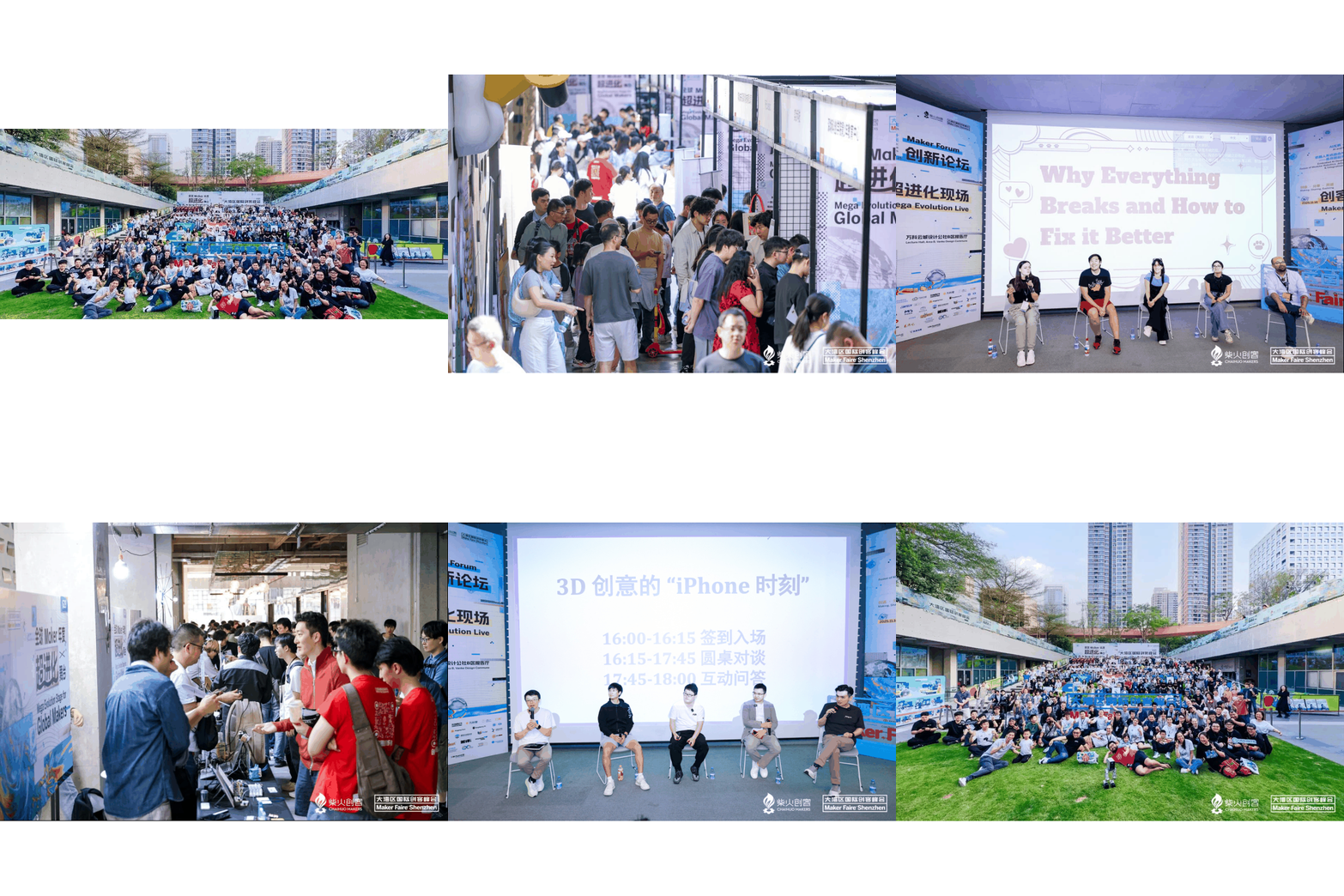
Over the past 13 years, the development trajectory of Maker Faire Shenzhen can be seen as a microcosm of the development of maker culture in China.
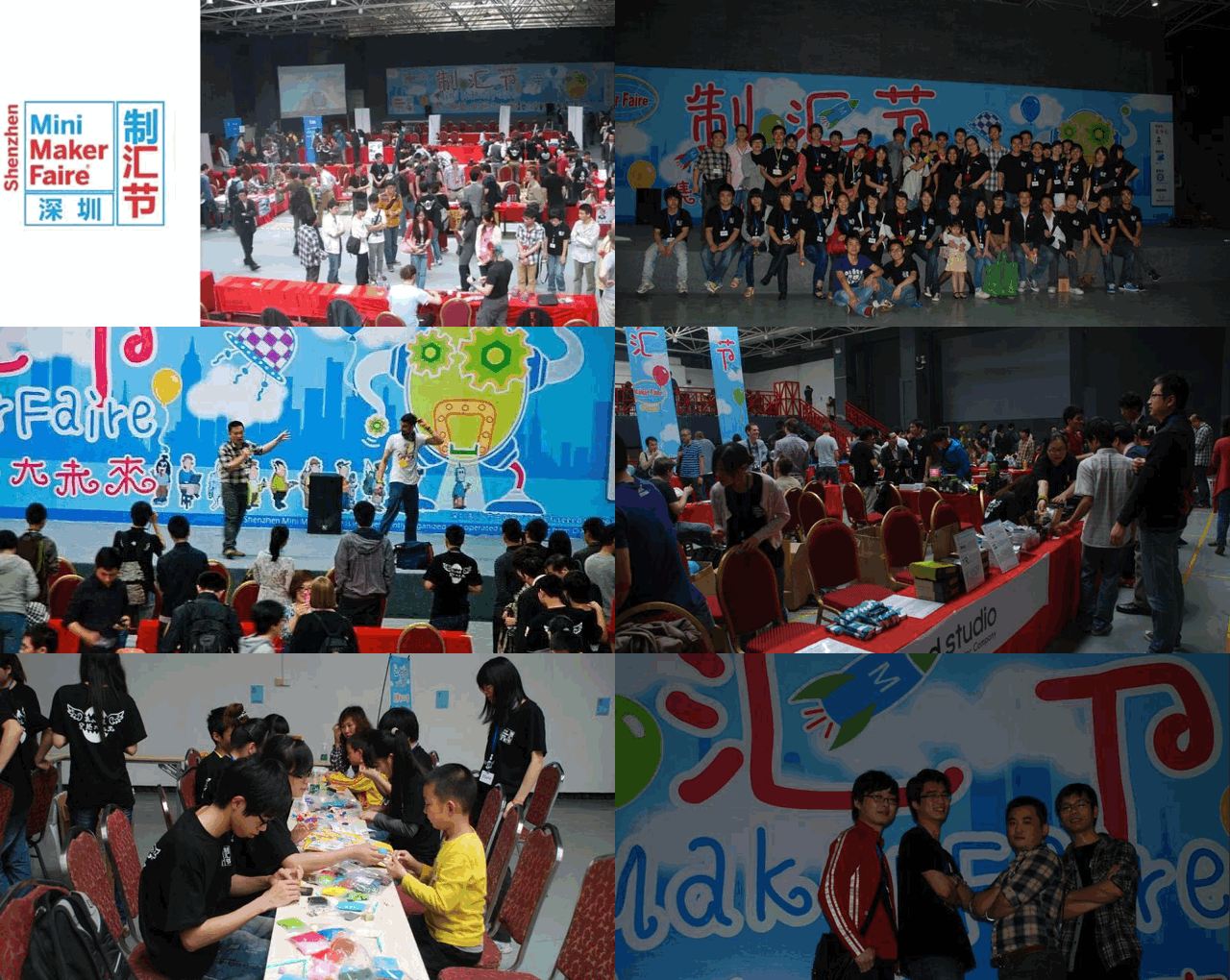
- 2012: “Gathering Small Wisdom, Journeying through the Great Future” – This was the first Mini Maker Faire in China, with less than 1000 attendees, and was more like a gathering within a small circle. But we saw the infinite possibilities emerging from the maker community.
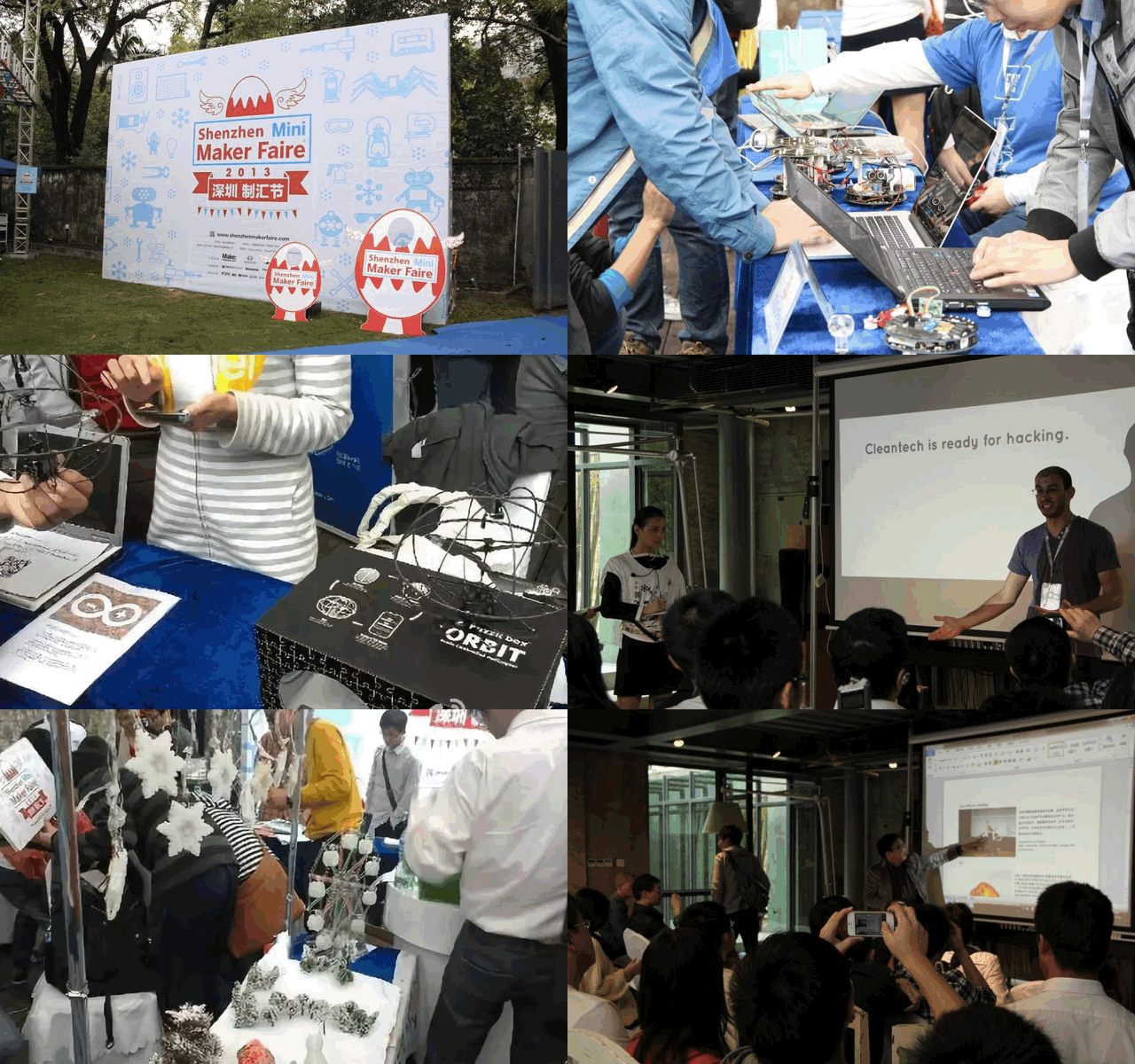
- 2013: The slogan was absent, and the maker community was still small. – In the OCT Creative Park, there were cross-disciplinary exchanges among different creative communities, silently laying the foundation for cultural output.
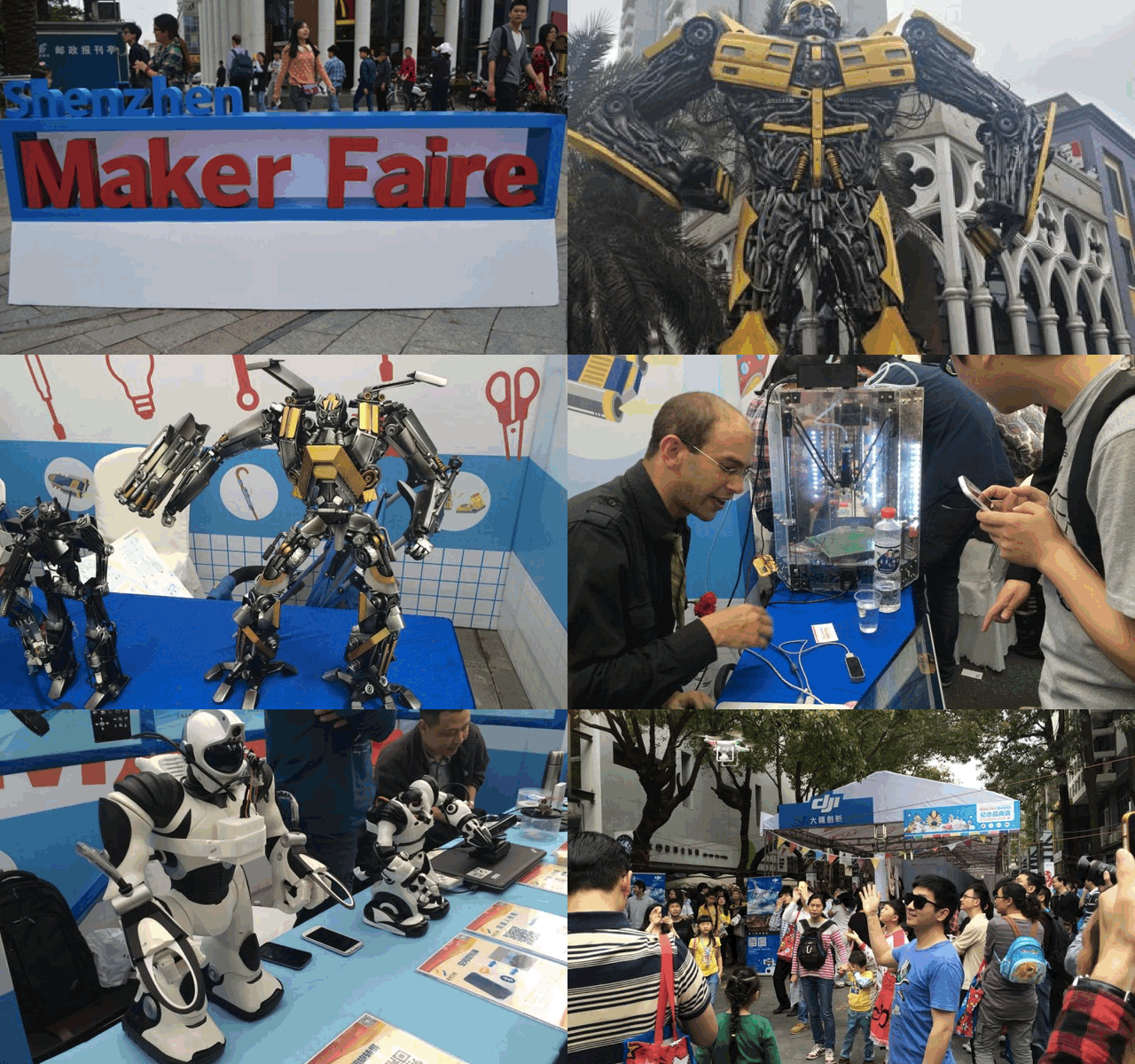
- 2014: “Innovate with China” – the event was upgraded to the Featured level for the first time, with a significant increase in scale compared to previous years, and the beginning of professional independent forums. This year, makers began to enter the public’s view.
- 2015: “Everyone is a Maker, what are you waiting for?” – This year’s Shenzhen International Maker Week became one of the largest Maker Faires in the world. This year, the concept of “maker” was elevated to a national level, and the trend of “mass innovation, mass entrepreneurship” swept across the country.

- 2016: “My World, My Creation” – As the sub-venue of the National Innovation and Entrepreneurship Week, the event was held for the first time in the commercial center area, experiencing unpredictable weather from typhoons to scorching heat. Many makers succeeded in your entrepreneurial endeavors this year, but it seemed like there were even more failures. The hype around entrepreneurship shifted towards rationality.
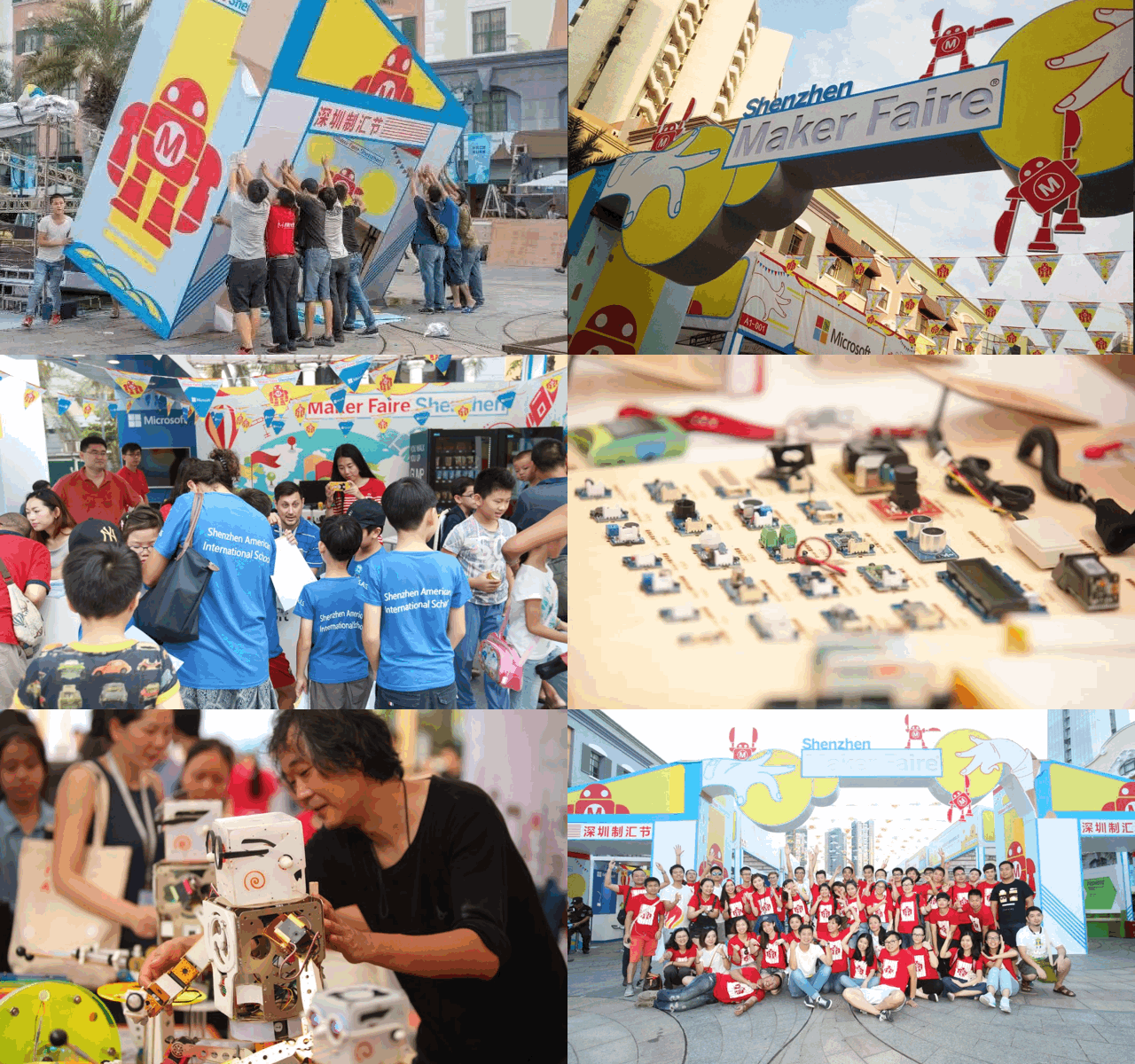
- 2017: “Makers, Go Pro” – The event took place at the university campus for the first time, focusing on Maker Pros and providing a platform for diverse innovators and makers to showcase themselves, presenting more possibilities for the growth path of makers to the entire community.
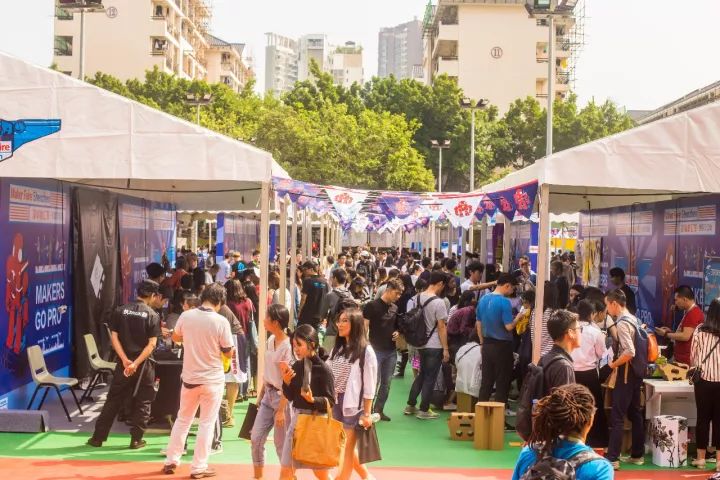
- 2018: “Co-making in the City” – The main venue of Shenzhen International Maker Week, where individuals and groups with shared visions and values gathered to showcase stories, projects, and explorations of collaboration among different communities and people.
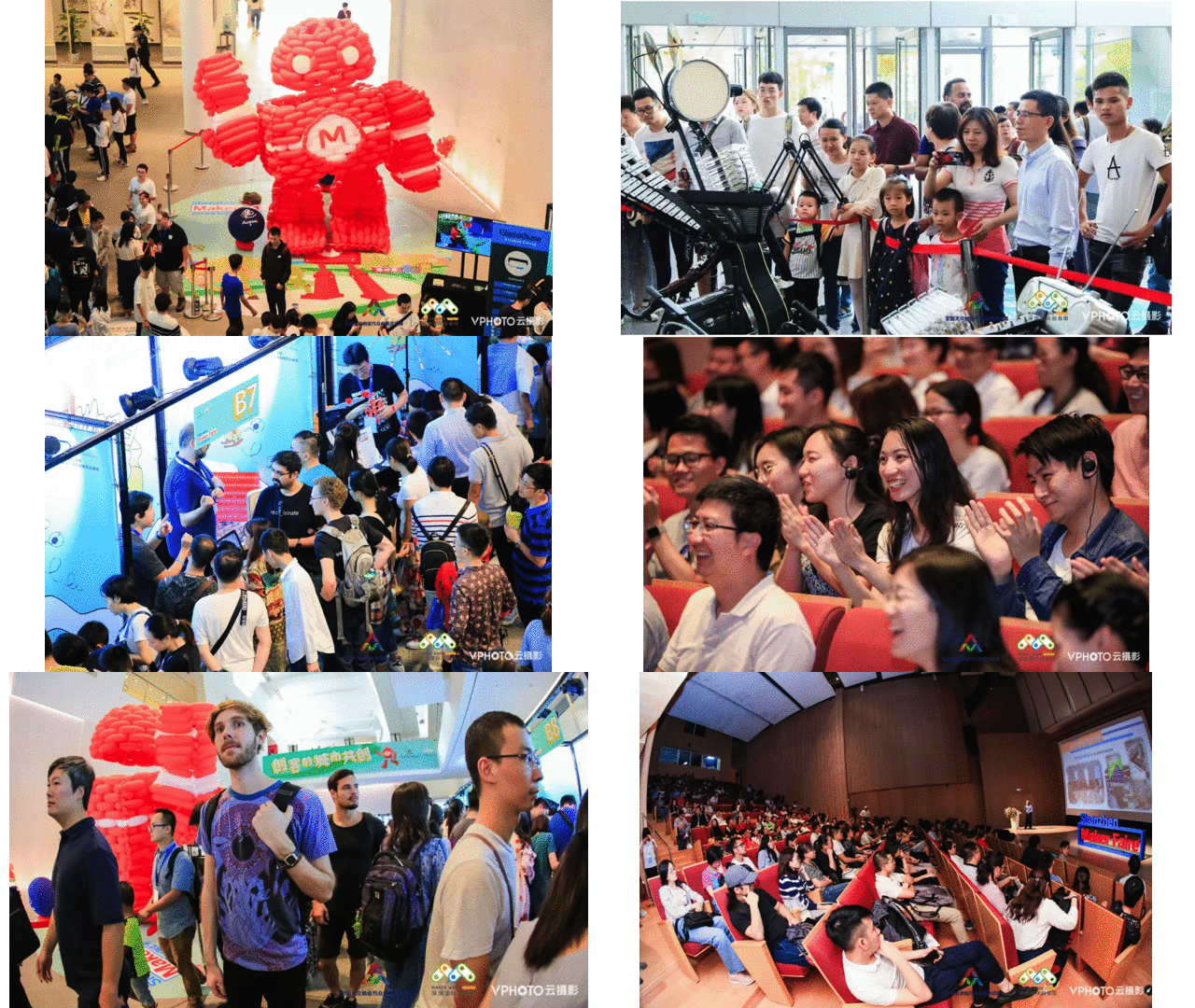
- 2019: ” To the Heart of Community, To the Cluster of Industry” – The event was upgraded to the Maker Faire Shenzhen, attempting to attract professional audiences and focusing on pragmatic aspects such as solving the needs of industrial upgrading and co-developin. It aims to build a platform for innovation and industry dialogue and collaboration.

- 2023: “Where Are The Makers?”– Starting from our own mission and values, we aim to explore the future direction of makers and theapossibilities for commercialization. Though this question does not have a definitive answer, we do hope that through this event, we can communicate and share with every one of you, finding more ideas and directions together.

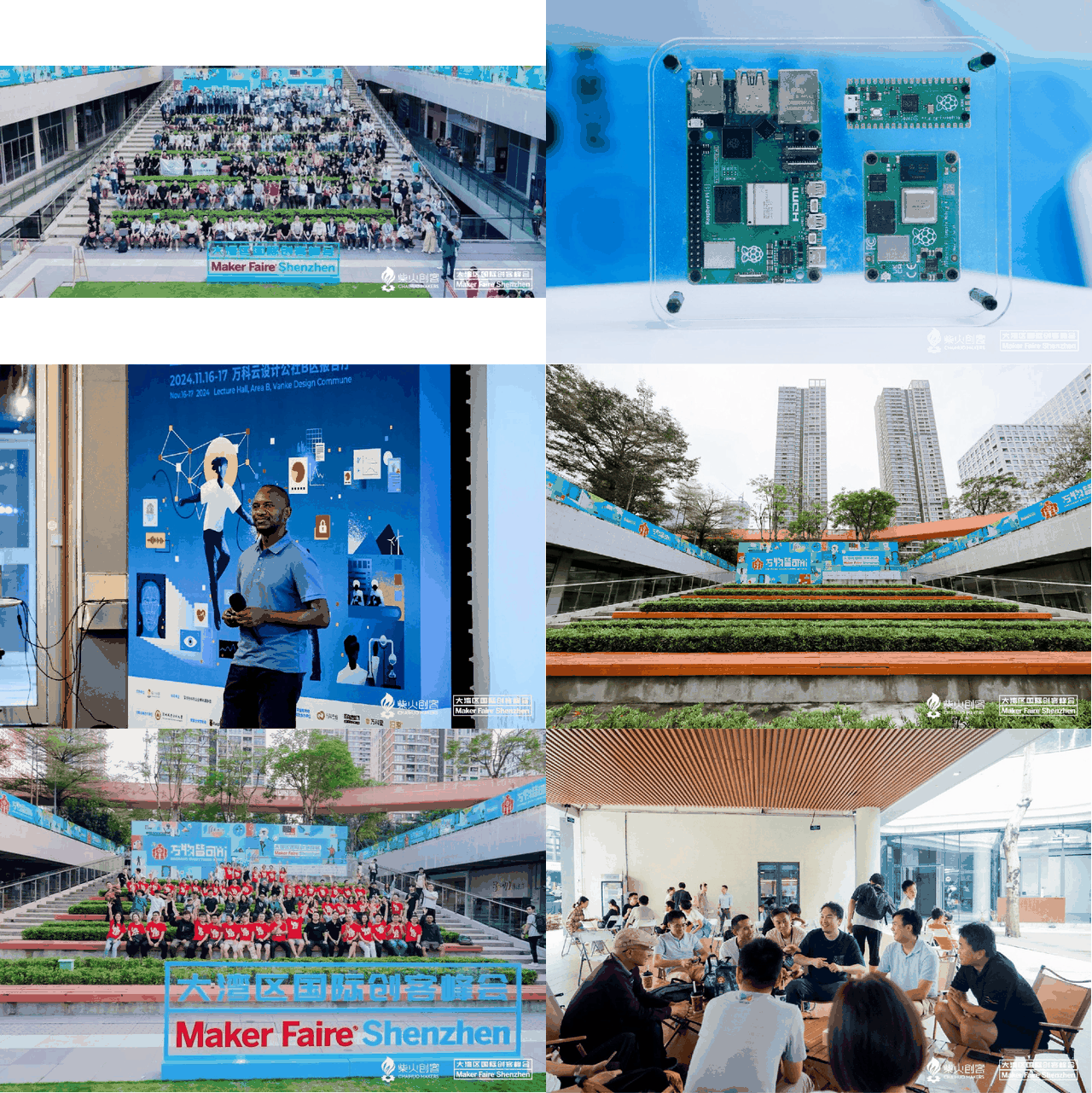
- 2024: “Everything is AI” – This year, we brought together over 120 exhibitors from around the world, attracting nearly 1,500 professional attendees from nearly 20 countries and over 20 provinces across China. The exhibition showcased a wide range of AI application projects and hosted 10 AI hardware-themed satellite events, alongside various workshops.
- 2025: “AI Without Boundaries, Everything Reimagined”The summit brought together nearly 100 international innovation ambassadors and showcased almost 1,000 AI hardware projects.Technology leaders, pioneering makers, industry experts, and university teams from more than 30 countries gathered to create an international innovation event combining frontier thinking, technical exchange, and cross-disciplinary collaboration.