To date, we have been inviting a group of highly capable and influential seasoned veterans from around the world to serve as Alpha Camp mentors and featured speakers. We will continue to update workshop and interview content—stay tuned~
In this edition, we preview one of the featured workshops at Alpha Camp—the “DigiShow-MLT Malatang” Workshop. Let’s see what kind of “rhapsody” you will create together with the mentors!

Shanghai has a Beijing East Road, once a nationally renowned “Hardware Street.” In July this year, a group of young people moved wrenches, bearings, steel pipes, and tape measures collected from this street into a workshop and connected them to LED strips and sensors—strike a wrench and you get a percussion beat; turn a bearing and the pitch changes; pull a tape measure and the rhythm follows.
That playable “hardware sculpture” is called “Hardware Rhapsody.” What gives it a voice is an open source tool developed by Chinese creators: DigiShow.
This December, this tool and a workshop series titled “DigiShow-MLT Malatang” will move into Alpha Camp at MFSZ2026—no coding required, no stage required; first wire it up, then make it light up.
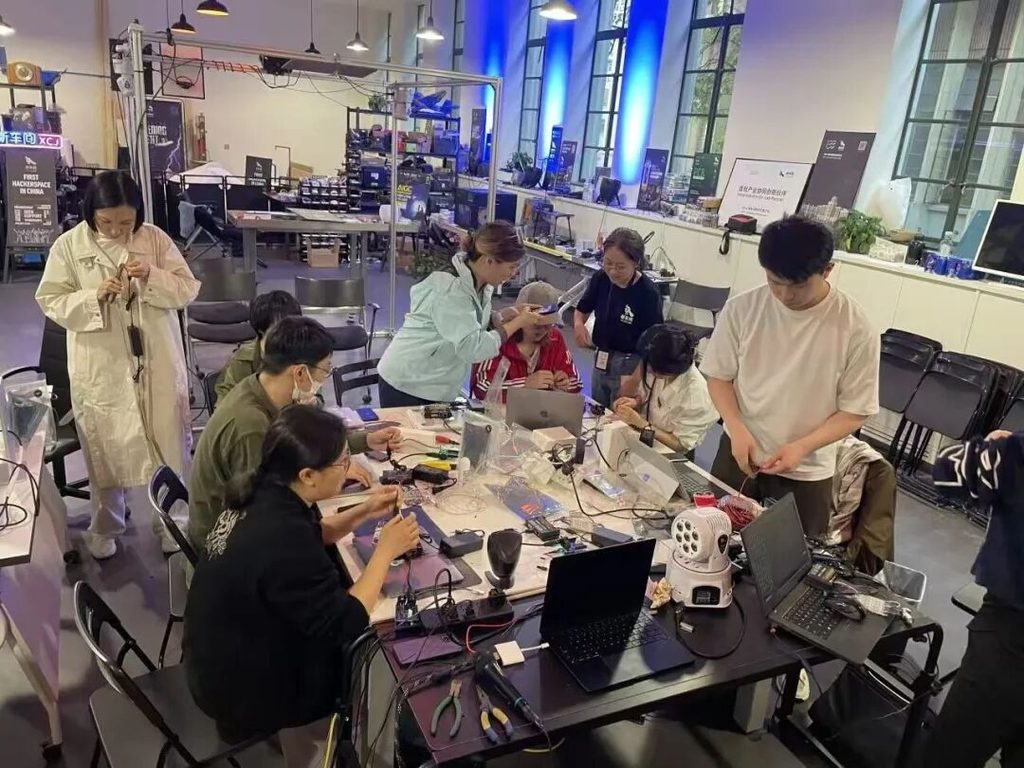
DigiShow workshop scene
What Is This Pot of “Malatang”?
The broth is DigiShow: a lightweight performance control console software—open source, free, and runs on Windows / macOS / Linux. What it does is simple—it connects the “signals” between different devices: LED strips, sensors, MIDI, DMX, OSC, ArtNet, Arduino, and smart bulbs all speak the same language here.

DigiShow live demonstration
You don’t need to learn programming. In the visual interface, inputs are on the left, outputs on the right, and you draw a line in between—touch a sensor, and the light turns on; the image on screen switches a frame. It’s that simple.
The ingredients are yours to choose: a WS2812 LED strip, a touch sensor, a piece of old hardware, a magic prop, an acrylic sheet, a piece of fabric… Want it “spicier”? Connect a couple more signal channels. Prefer it “milder”? Just order one strip of light. Once you’ve picked your ingredients, drop them in the pot—and out comes a light-and-shadow installation that can be triggered and demonstrated.
So this workshop has only three stages—no lengthy theory:
- Stage One · Wiring — Understand power, signal, and ground, and connect the LED strip safely. Don’t worry—you start getting hands-on right at this step.
- Stage Two · Signal Interaction — Get hands-on with DigiShow and set “who triggers whom”: motion trigger, touch trigger, sound trigger—and how visuals and lighting sync.
- Stage Three · Effect Triggering — Tune it until it works. Lighting up is not the end; it has to light up the right way, at the right cue, and be repeatable on site.
This is not empty theory—it is seeing your own creativity triggered before your eyes: that “click” moment when it lights up is something no tutorial video can give you.
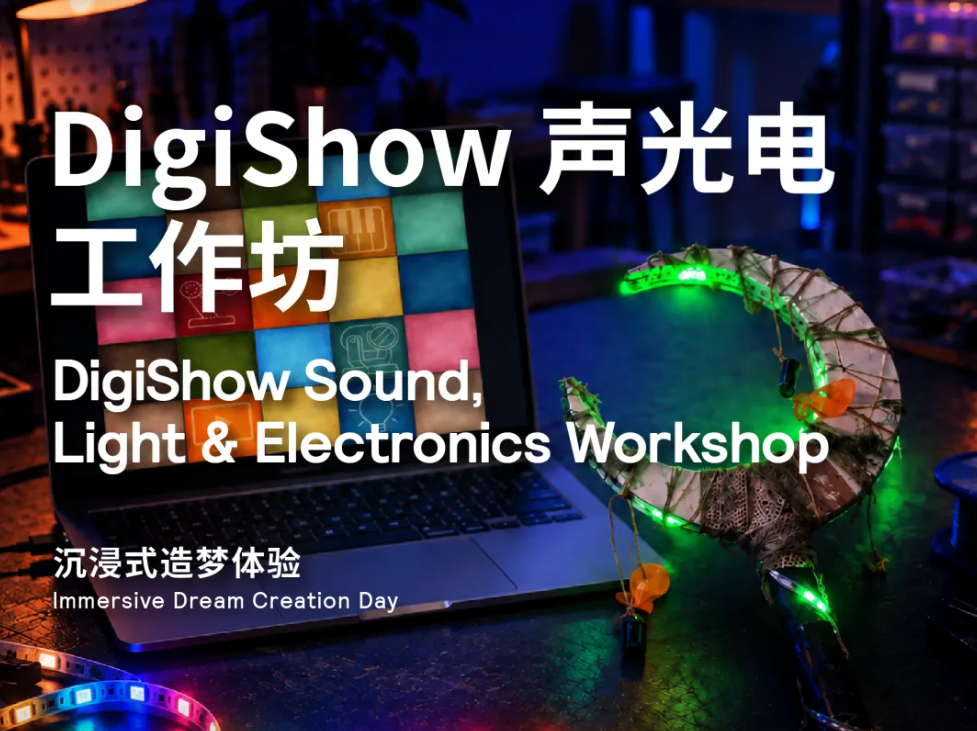
What You Will Learn?
The DigiShow-MLT Malatang Workshop offers a progression from DigiShow basics to advanced creation tools and equipment—from “Hardware Rhapsody” to workshops on sound, light, and electric effects for everything, culminating in a showcase in the Shadow Theater.
This experience day is designed for light-and-shadow enthusiasts, magic and stage creators—no prior experience needed. It focuses on hands-on practice, teaching simple wiring connections and interactive triggering.
- ① Hardware Literacy
Read a simple circuit and master the basic wiring of LED strips. No more “error the moment you connect it.” - ② Interaction Thinking
Understand the underlying principle of “signal triggering” between software and hardware—how motion becomes a command, and how a command becomes light. - ③ Hands-On Skills
Independently build and debug a simple interactive light-and-shadow installation. Not watching someone else do it—you make it yourself. - ④ On-Site Experience
Learn basic circuit troubleshooting. Poor connections, unexplained failures to light up—the most critical problems on a live stage—you will be able to spot them on the spot. - ⑤ Real-World Output
A small interactive light-and-shadow piece you made yourself, ready to demo on site and take home as a real item for your portfolio.
If you are a magician or stage creator, it means your prop effects shift from “buying” to “making”; if you work in exhibition design, educational tools, or event planning, it means an interactive installation you can realize for a few hundred yuan; and if you simply want to make yourself a glowing desktop gadget—it is more than enough.
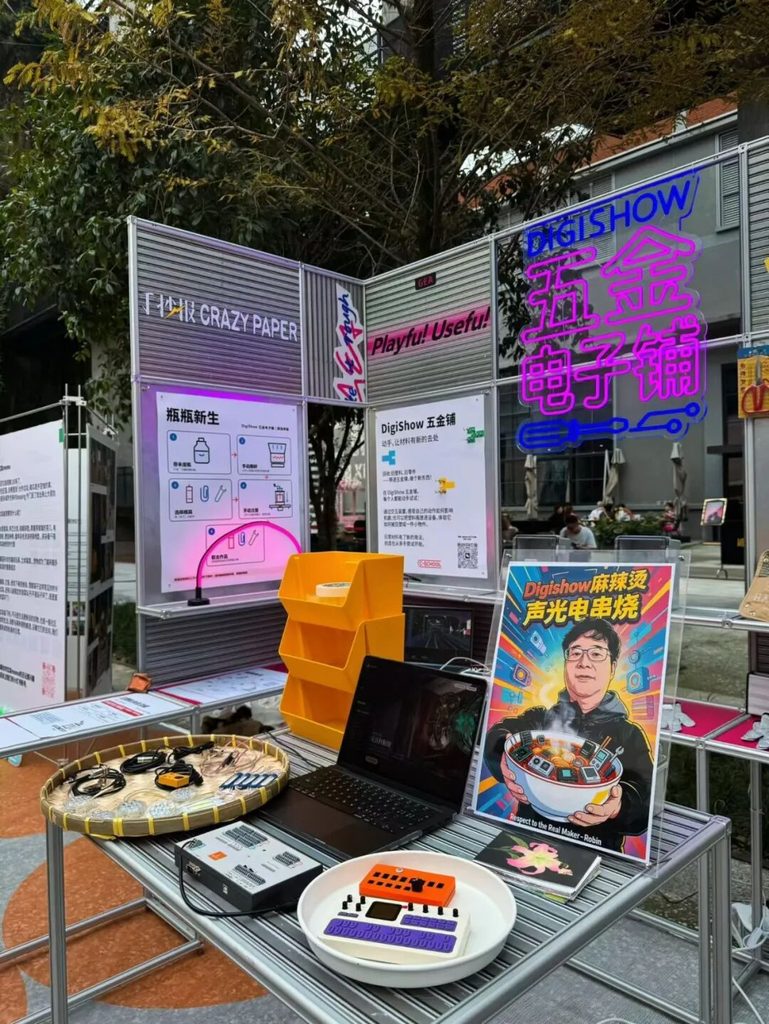
Who Will Guide You?
DigiShow was initiated by engineer Zhang Qi (Robin), one of China’s earliest Apple platform software developers and a developer of interactive media playback control systems. He set the tool’s underlying tone with just four words—improvisation with objects: not treating people as operators and objects as things to be operated, but letting objects become performers themselves.
In “Alley Rhapsody,” created by him and fellow maker artists, everyday objects were reconfigured into a musical machine; in this year’s “Hardware Rhapsody,” parts from Hardware Street learned to sing. None of this relies on VFX companies—it relies on a free, open source tool and a group of people willing to get their hands dirty.
The lead mentors for this workshop are core members of this team: among them are DigiShow’s core creators, a music content creator and installation artist, a Chaihuo-certified AI Pioneer, a Sichuan Fine Arts Institute artist working as a research assistant, and a magician using technology to create “alternative” magic. With so many seasoned mentors teaching across disciplines, this is sure to be an audiovisual fantasy journey worth looking forward to~
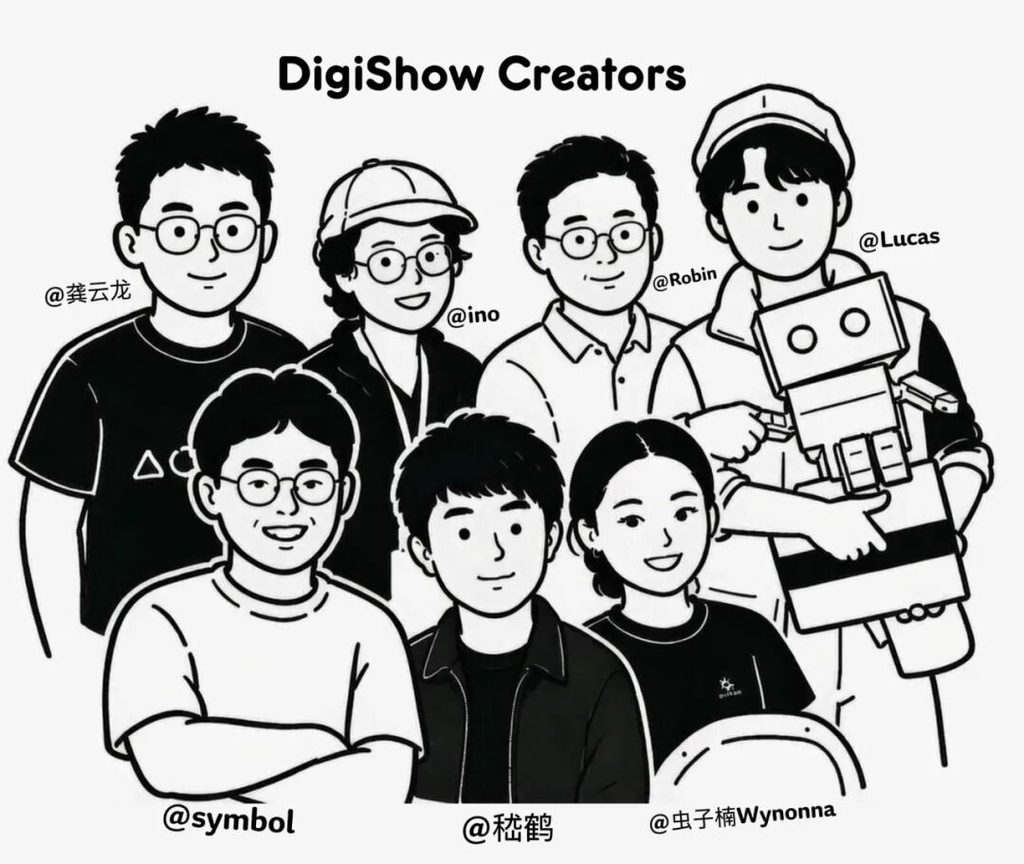
Yinuo (Ino), founder of Haoqishe and initiator of AI SOUND LAB.
Gong Yunlong, a music-tech content creator focused on music × visual × interactive creative project development. Representative works: “Mouth Shape Acid” and “Hands Band.” He is committed to exploring innovative practices at the intersection of music and technology in the AI era.
Ji He, installation artist and 3D interaction designer. His works have been exhibited in more than ten countries and cities worldwide, including Ars Electronica in Linz, Austria, and the London Festival of Architecture. He has served as a workshop/course instructor and guest lecturer at multiple universities and design institutions, and is a winner and award recipient in numerous sci-tech art competitions and hackathons.
Shen Bowen (symbol), a Chaihuo-certified AI Pioneer. His representative work is “The Talking Space.” The common thread in such projects: before a person speaks, the space responds first.
Cheng Weinan, master’s degree holder from Sichuan Fine Arts Institute and currently a research assistant at the Chongqing Center for Brain and Intelligence Science. The “Neurodiversity” series uses brain science to create installations—how signals are read and turned into images follows a path quite different from the stage side.
Wang Yidi (Lucas), magic instructor at Shanghai Circus School, mentor for the Shanghai University Student Magic Competition, and judge for the 6th Shanghai University Student Magic Competition. He specializes in combining sci-tech art installations with performance.
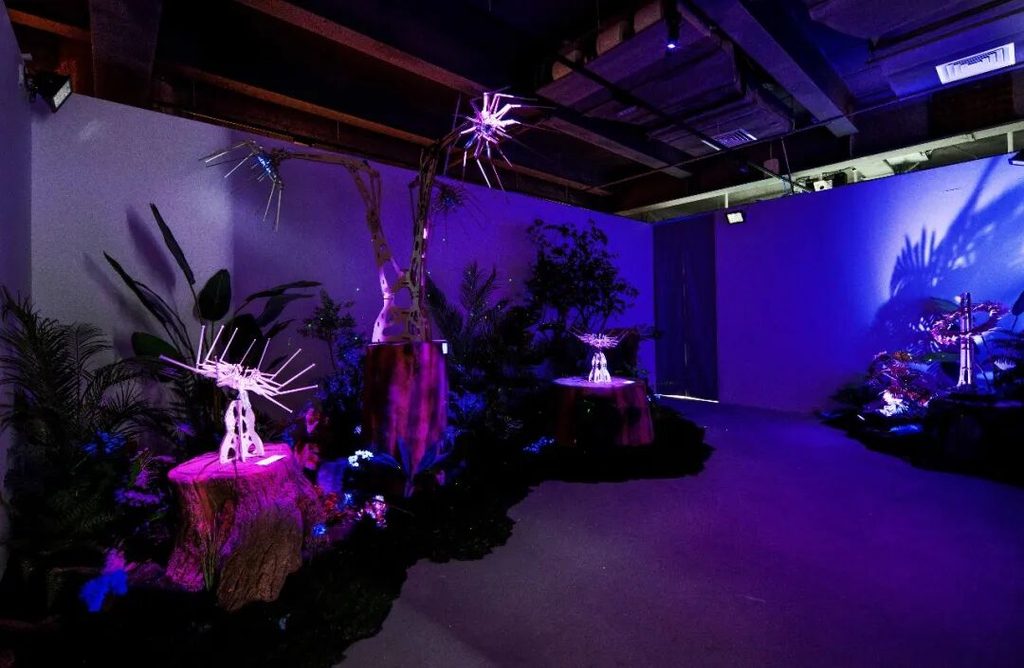
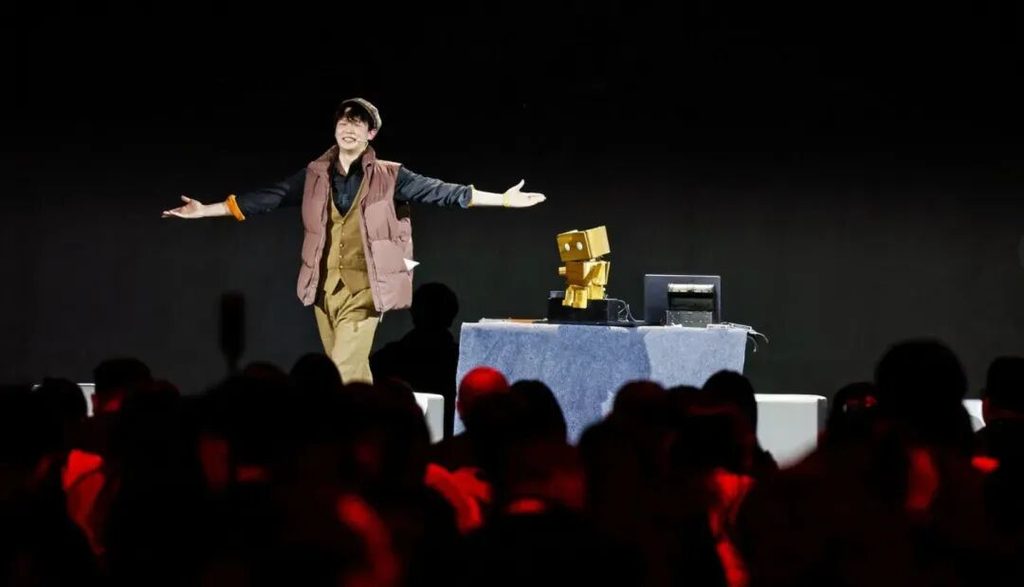
Image courtesy of the 2050 Conference: Wang Yidi and the Nicolas robot

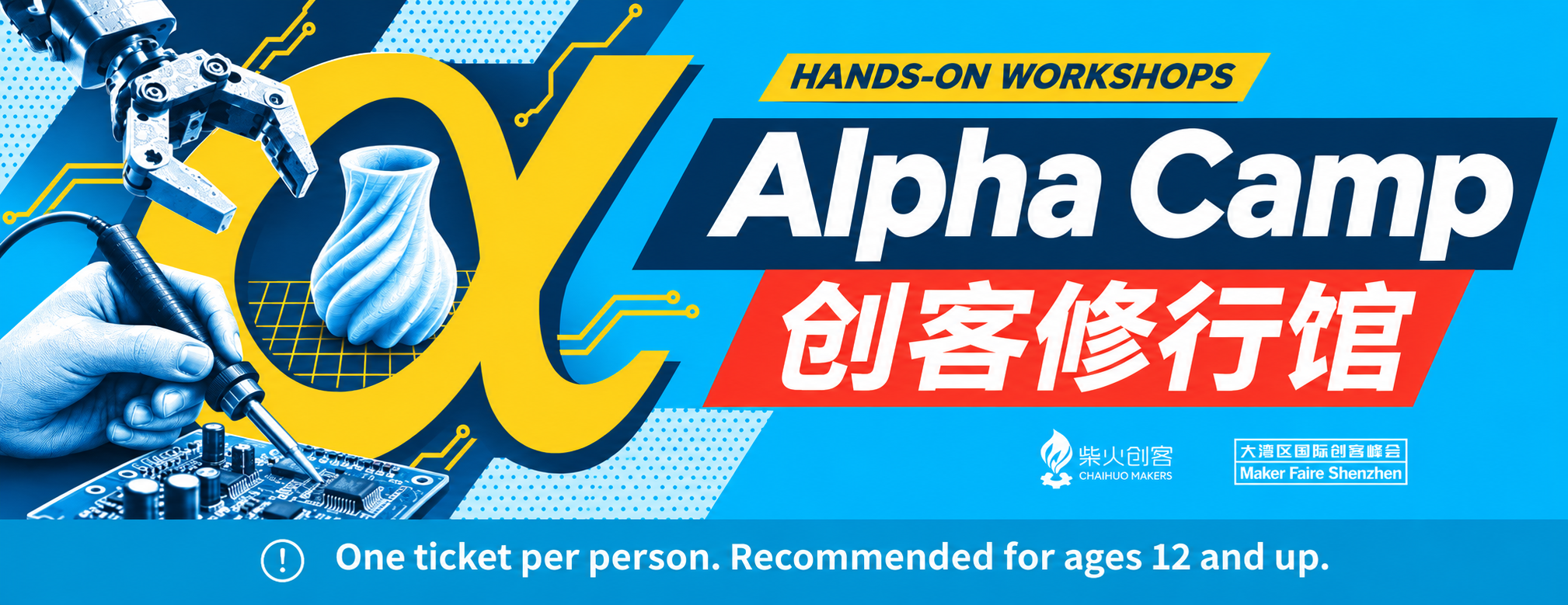
For the 2026 Greater Bay Area International Maker Summit, we have specially created a brand-new program segment—Alpha Camp. It is not a conventional exhibition, nor a workshop where you sit in the audience taking notes—it is an unscripted “making experiment ground”: there are no spectators here—either take the stage or get your hands on the tools.
Over the two days, around 40 hardcore skill workshops and sharing sessions will run back-to-back—laser cutting, advanced soldering, hands-on 3D printing, AI hardware deployment… 70%–80% of them are hands-on. Attendees are not judged by degrees or titles; the person sitting at the next table might be a veteran welder from the workshop floor whose skills run deep—or your future partner for all-night project builds.
What Is Included?
- Priority workshop reservations and access to the ticket-holder community. Book your preferred sessions early, get program updates, and connect with other participants before the event.
- Two days of ALPHA Camp access. Explore around 40 workshops and skill-sharing sessions across both days.
- Your own NFC maker badge. Activate it at check-in, tap it for access, and use it to complete challenges and level up your virtual pet.
- Practical workshops led by experienced makers. Work with people who have used these skills on real projects.
- Lunch on both days. Your pass includes an on-site lunch each day.
- A certificate of completion and a maker passport. Complete the workshop and challenge requirements to receive your certificate at the event. Use your passport to collect stamps at participating exhibitor booths.
- Maker merchandise. Take home a sticker pack, a custom woven tote bag, and other event merchandise.

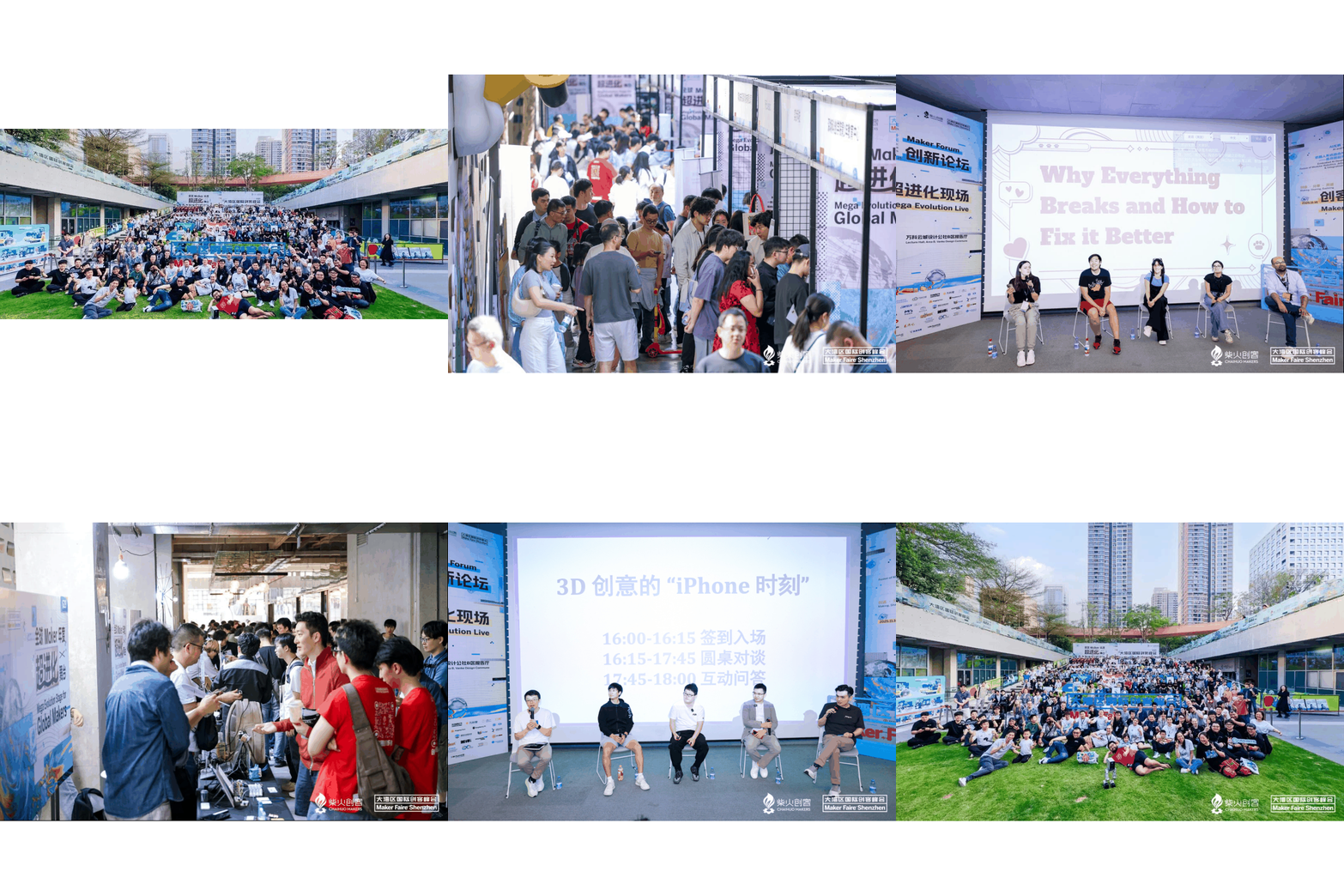
Over the past 13 years, the development trajectory of Maker Faire Shenzhen can be seen as a microcosm of the development of maker culture in China.
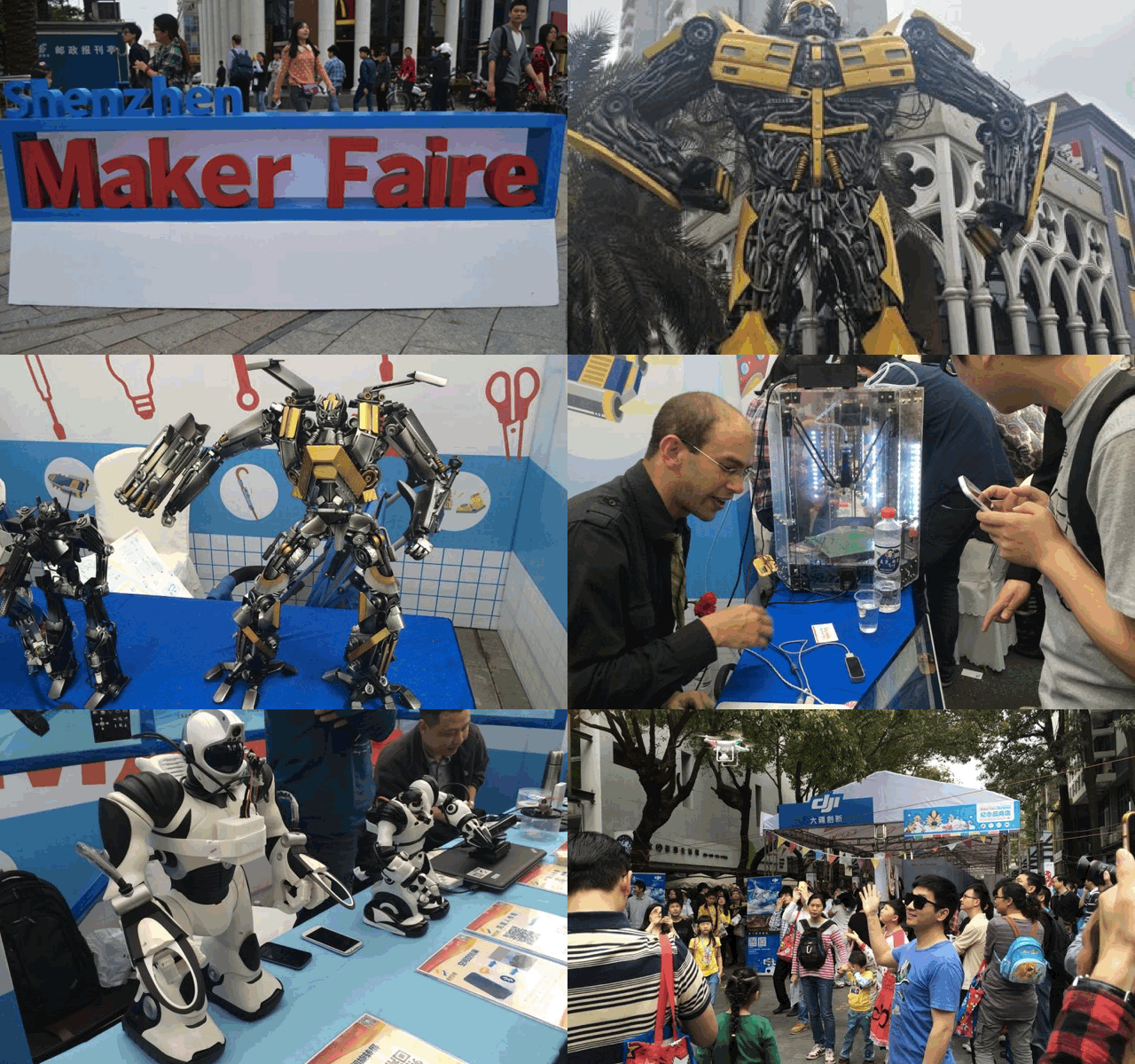
- 2012: “Gathering Small Wisdom, Journeying through the Great Future” – This was the first Mini Maker Faire in China, with less than 1000 attendees, and was more like a gathering within a small circle. But we saw the infinite possibilities emerging from the maker community.
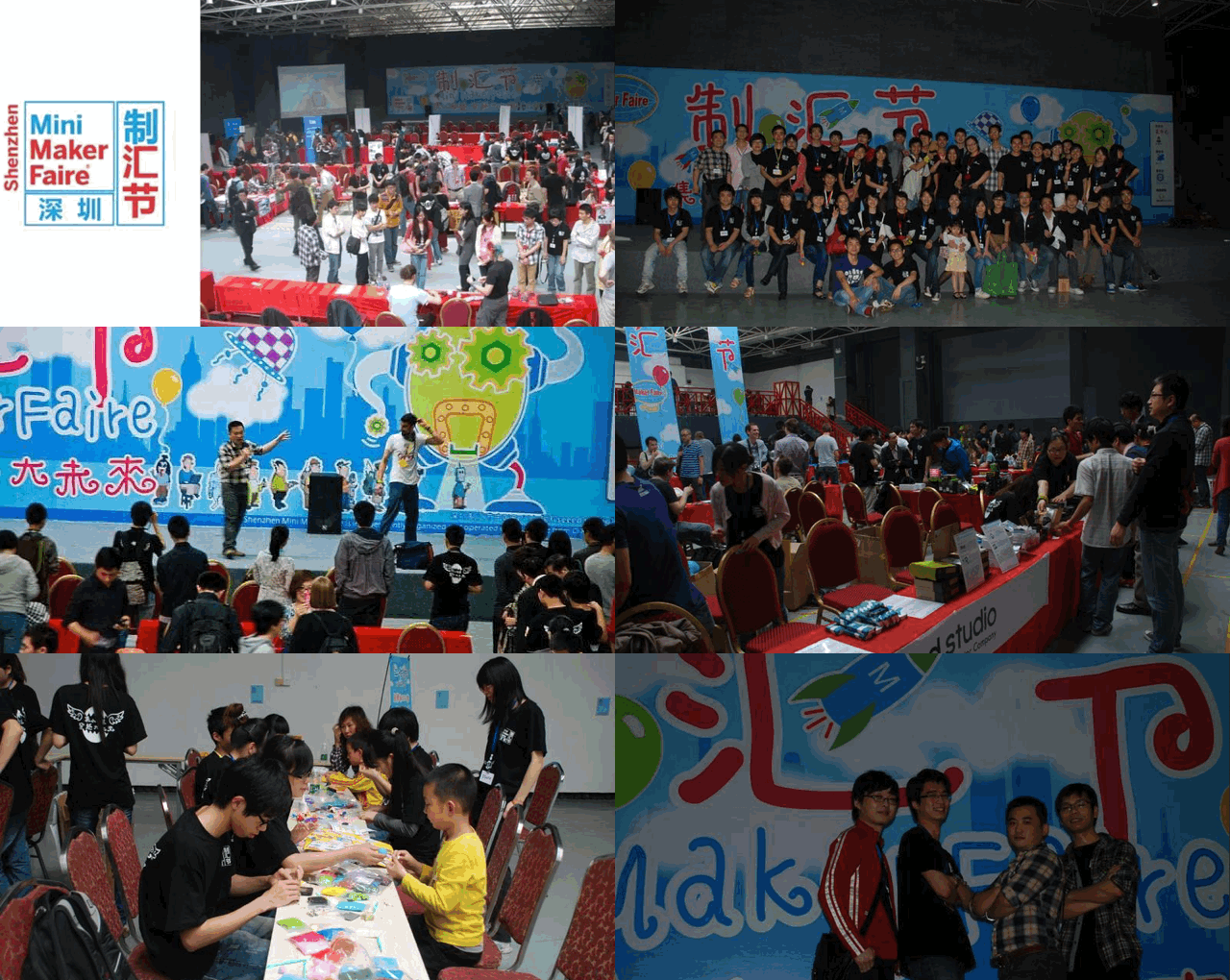
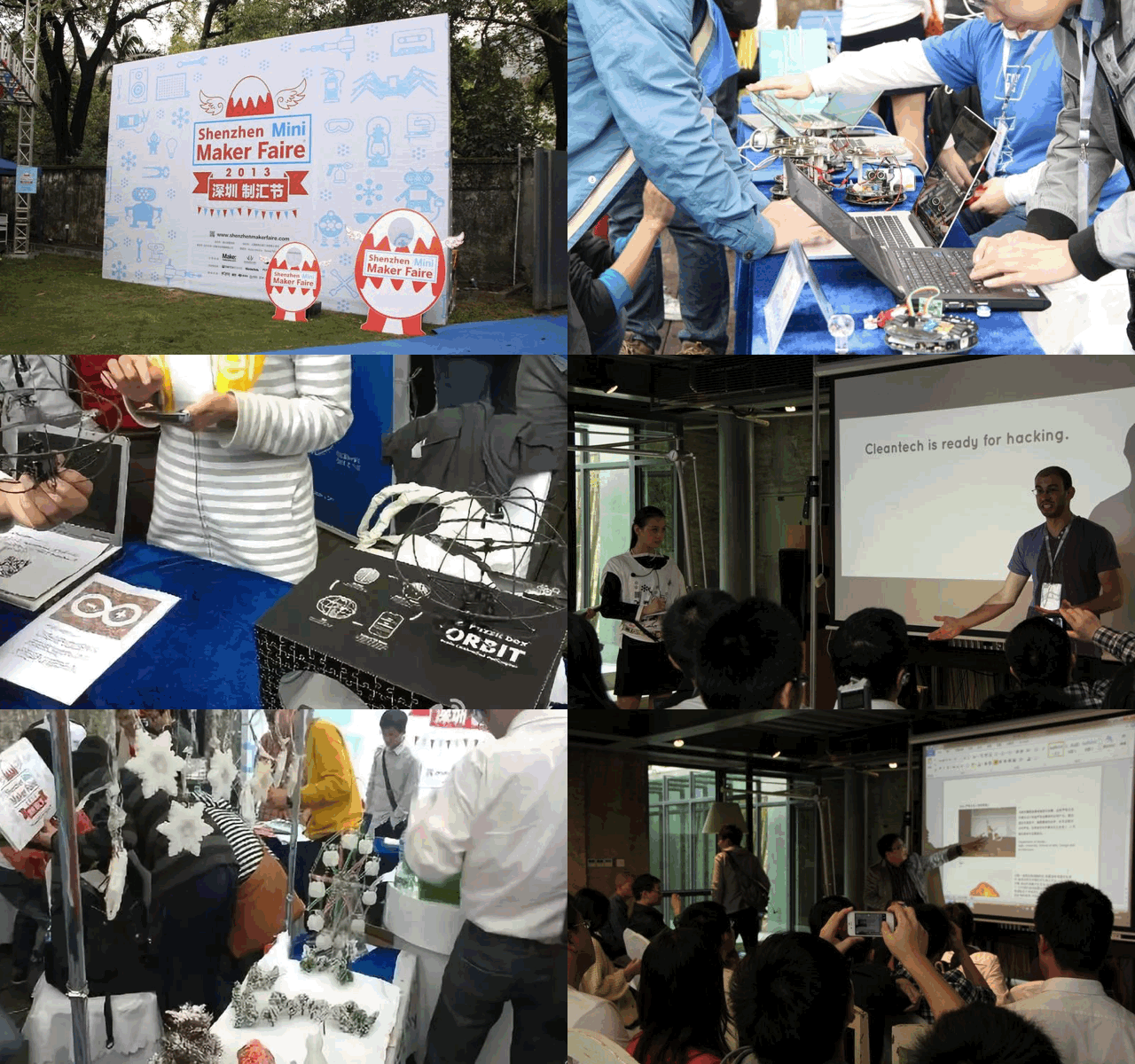
- 2013: The slogan was absent, and the maker community was still small. – In the OCT Creative Park, there were cross-disciplinary exchanges among different creative communities, silently laying the foundation for cultural output.
- 2014: “Innovate with China” – the event was upgraded to the Featured level for the first time, with a significant increase in scale compared to previous years, and the beginning of professional independent forums. This year, makers began to enter the public’s view.
- 2015: “Everyone is a Maker, what are you waiting for?” – This year’s Shenzhen International Maker Week became one of the largest Maker Faires in the world. This year, the concept of “maker” was elevated to a national level, and the trend of “mass innovation, mass entrepreneurship” swept across the country.
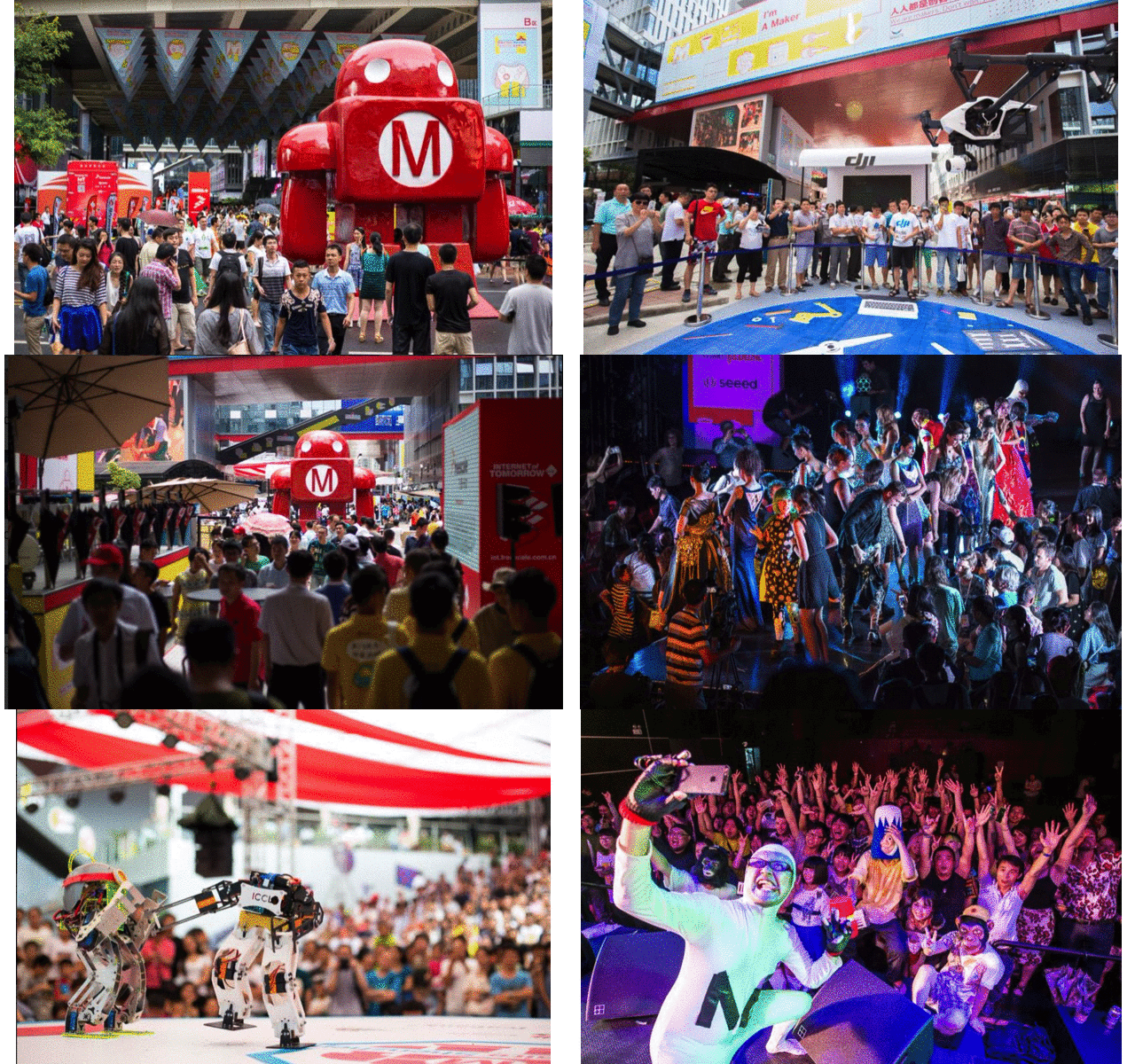
- 2016: “My World, My Creation” – As the sub-venue of the National Innovation and Entrepreneurship Week, the event was held for the first time in the commercial center area, experiencing unpredictable weather from typhoons to scorching heat. Many makers succeeded in your entrepreneurial endeavors this year, but it seemed like there were even more failures. The hype around entrepreneurship shifted towards rationality.
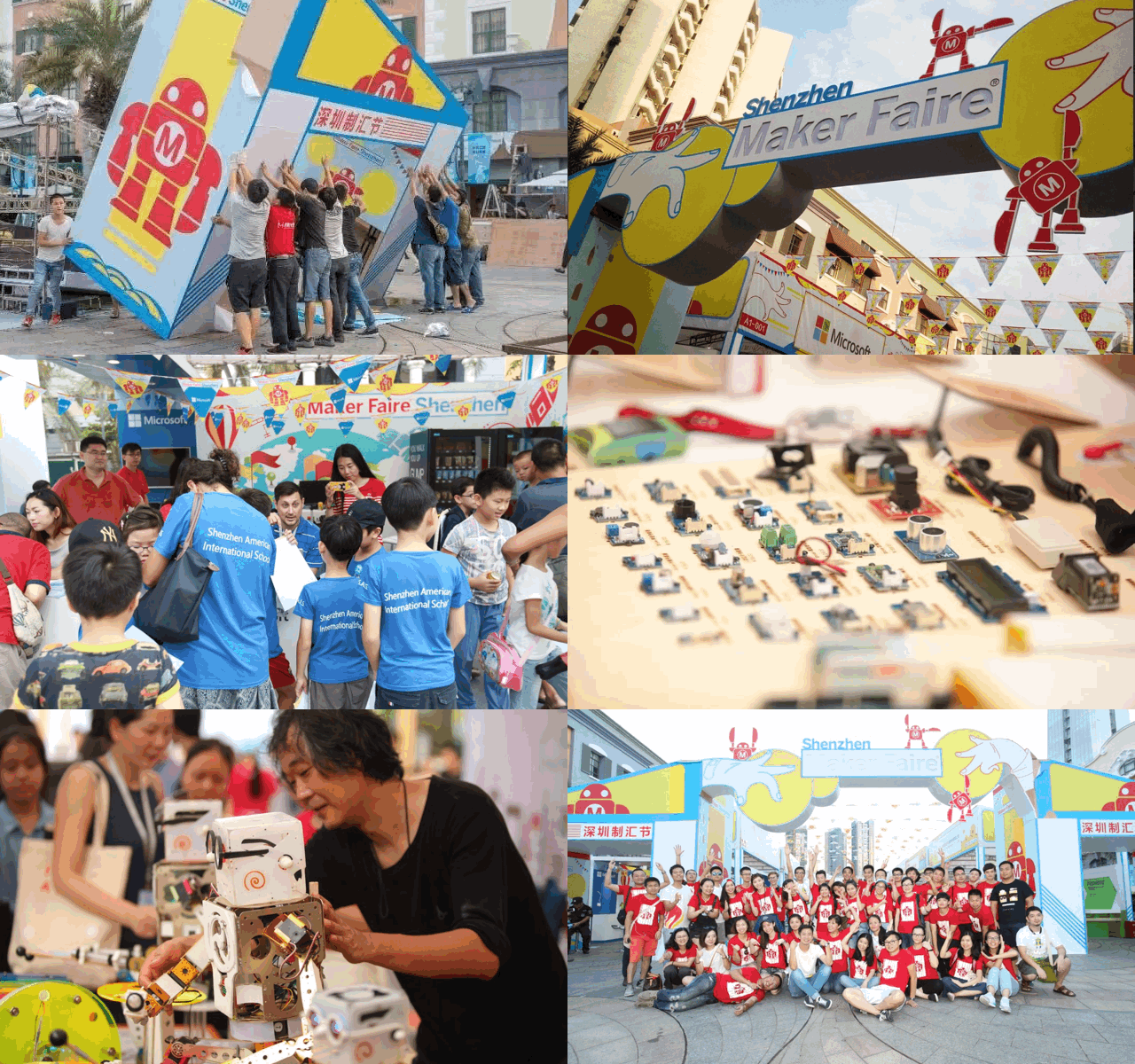
- 2017: “Makers, Go Pro” – The event took place at the university campus for the first time, focusing on Maker Pros and providing a platform for diverse innovators and makers to showcase themselves, presenting more possibilities for the growth path of makers to the entire community.
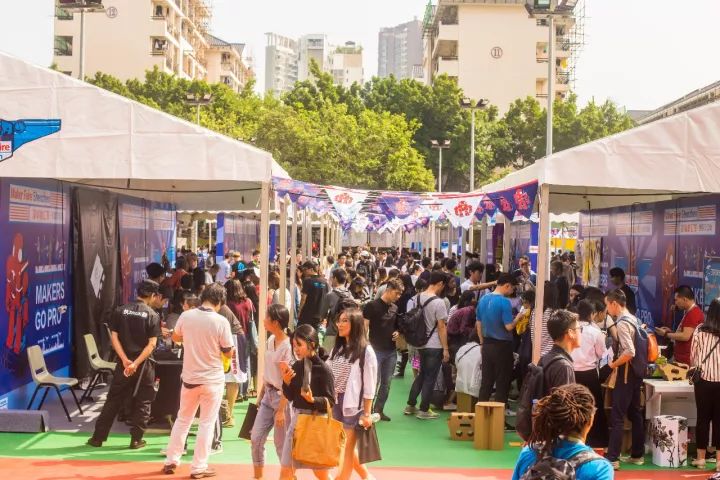
- 2018: “Co-making in the City” – The main venue of Shenzhen International Maker Week, where individuals and groups with shared visions and values gathered to showcase stories, projects, and explorations of collaboration among different communities and people.
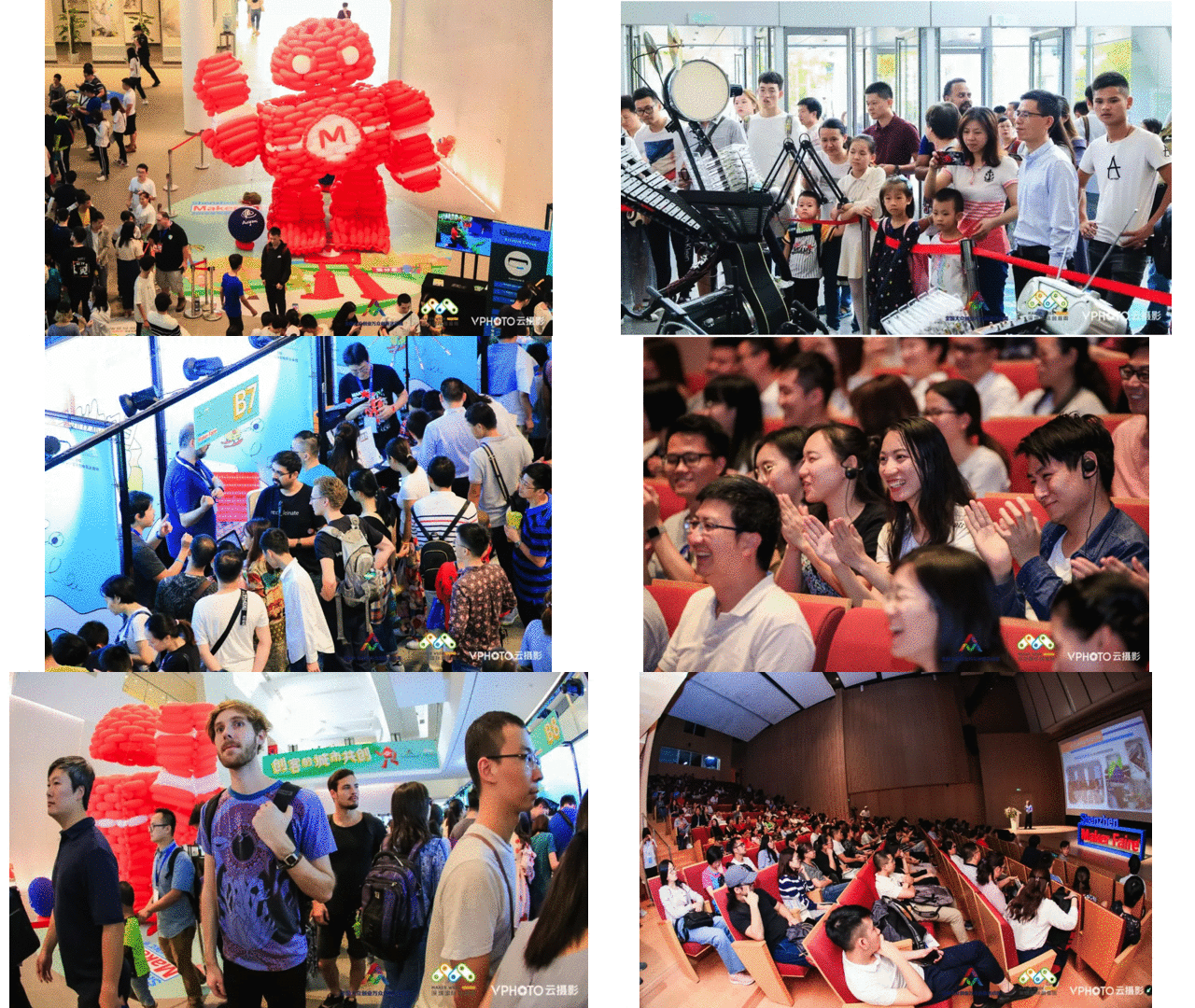
- 2019: ” To the Heart of Community, To the Cluster of Industry” – The event was upgraded to the Maker Faire Shenzhen, attempting to attract professional audiences and focusing on pragmatic aspects such as solving the needs of industrial upgrading and co-developin. It aims to build a platform for innovation and industry dialogue and collaboration.

- 2023: “Where Are The Makers?”– Starting from our own mission and values, we aim to explore the future direction of makers and theapossibilities for commercialization. Though this question does not have a definitive answer, we do hope that through this event, we can communicate and share with every one of you, finding more ideas and directions together.

- 2024: “Everything is AI” – This year, we brought together over 120 exhibitors from around the world, attracting nearly 1,500 professional attendees from nearly 20 countries and over 20 provinces across China. The exhibition showcased a wide range of AI application projects and hosted 10 AI hardware-themed satellite events, alongside various workshops.
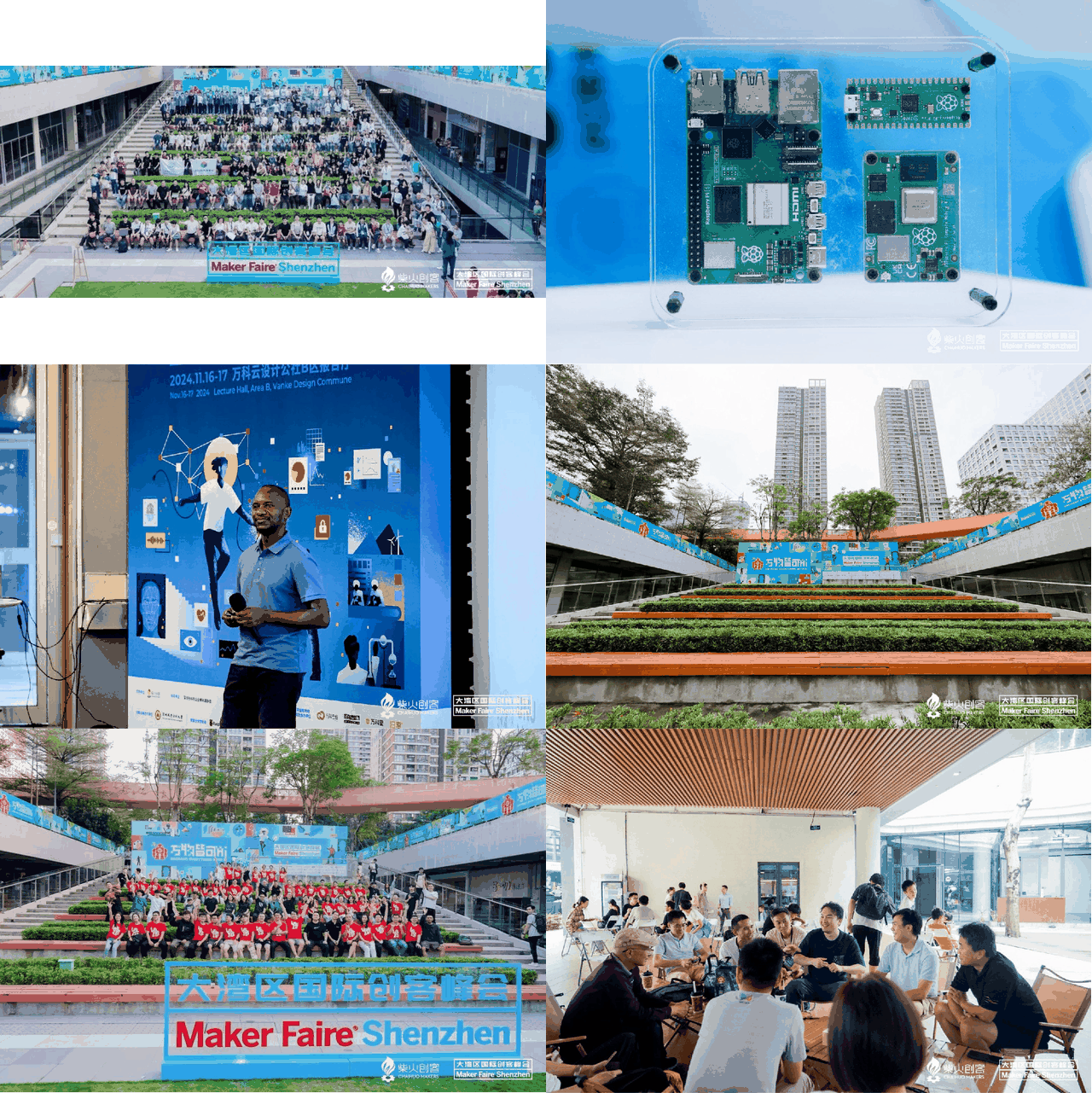
- 2025: “AI Without Boundaries, Everything Reimagined”The summit brought together nearly 100 international innovation ambassadors and showcased almost 1,000 AI hardware projects.Technology leaders, pioneering makers, industry experts, and university teams from more than 30 countries gathered to create an international innovation event combining frontier thinking, technical exchange, and cross-disciplinary collaboration.