Please note: this Microduck workshop will be delivered in Chinese.
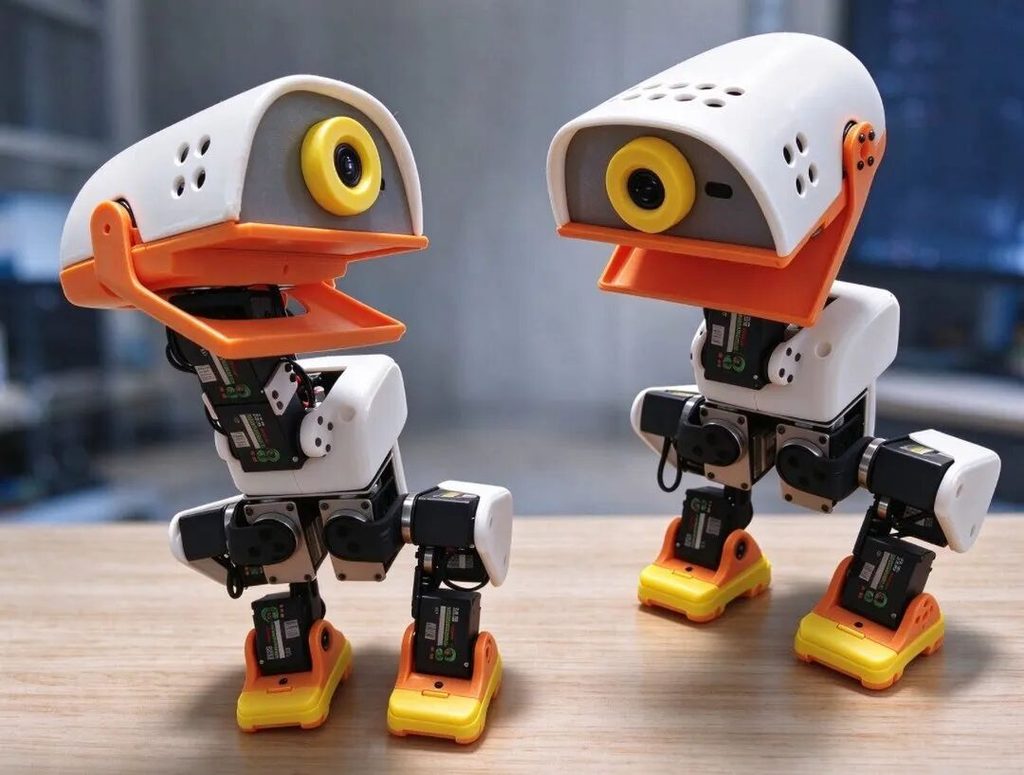
On August 27 this year, Pollen Robotics opened pre-orders for a duck.
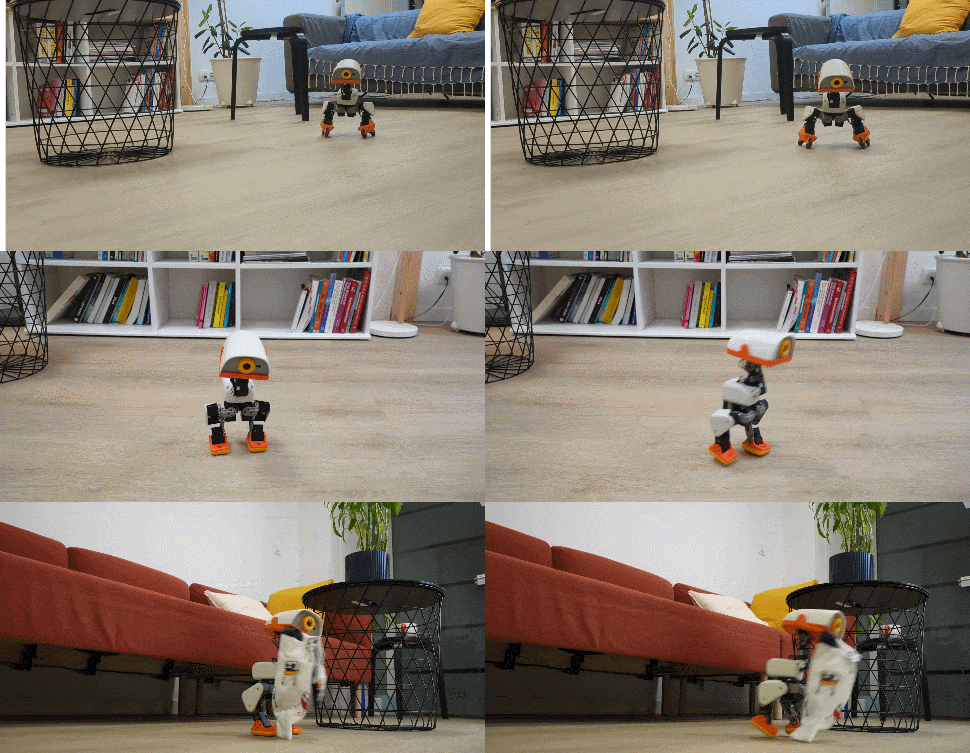
$399, 25 cm tall, under 800 grams, 15 motors, and a beak that doubles as a small gripper. It can walk, squat, pick up socks, get back up after a fall, and even glide a little on roller skates.
Then things spun out of control—within 6 hours of launch, orders exceeded $1 million; within 24 hours, $2.6 million and over 5,000 units; at its wildest, one duck was selling every 4 seconds on average.
Order now and you will wait 4 to 6 months—many people won’t receive theirs until spring 2027. Those who couldn’t buy one started finding their own ways, with some using 3D printers to replicate the shell piece by piece from photos…
Who wouldn’t want to see this little duck in person, and fast!
Now, here’s your chance—
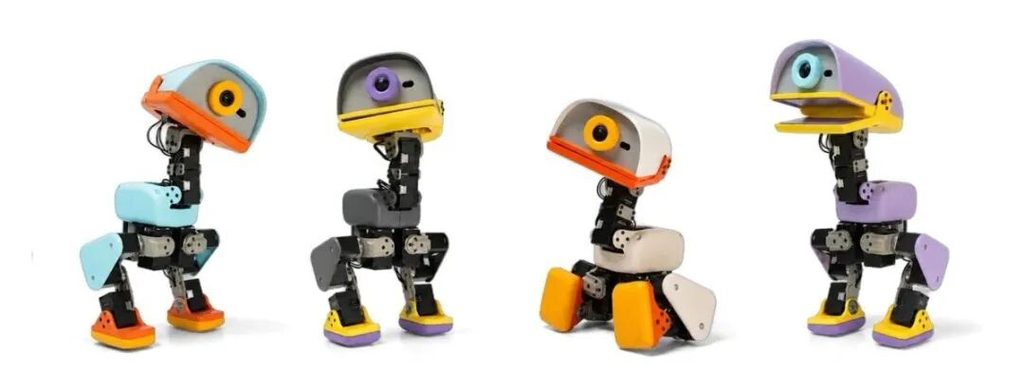
The breakout open source star of the 2026 embodied intelligence scene—the Microduck bipedal robot duck—is about to make its offline debut in China!
At Alpha Camp, the brand-new hardcore hands-on zone at Maker Faire Shenzhen 2026, we are launching a blockbuster offline Microduck workshop!
Say goodbye to watching demos through a screen—this time, come get up close and personal with the duck on site:
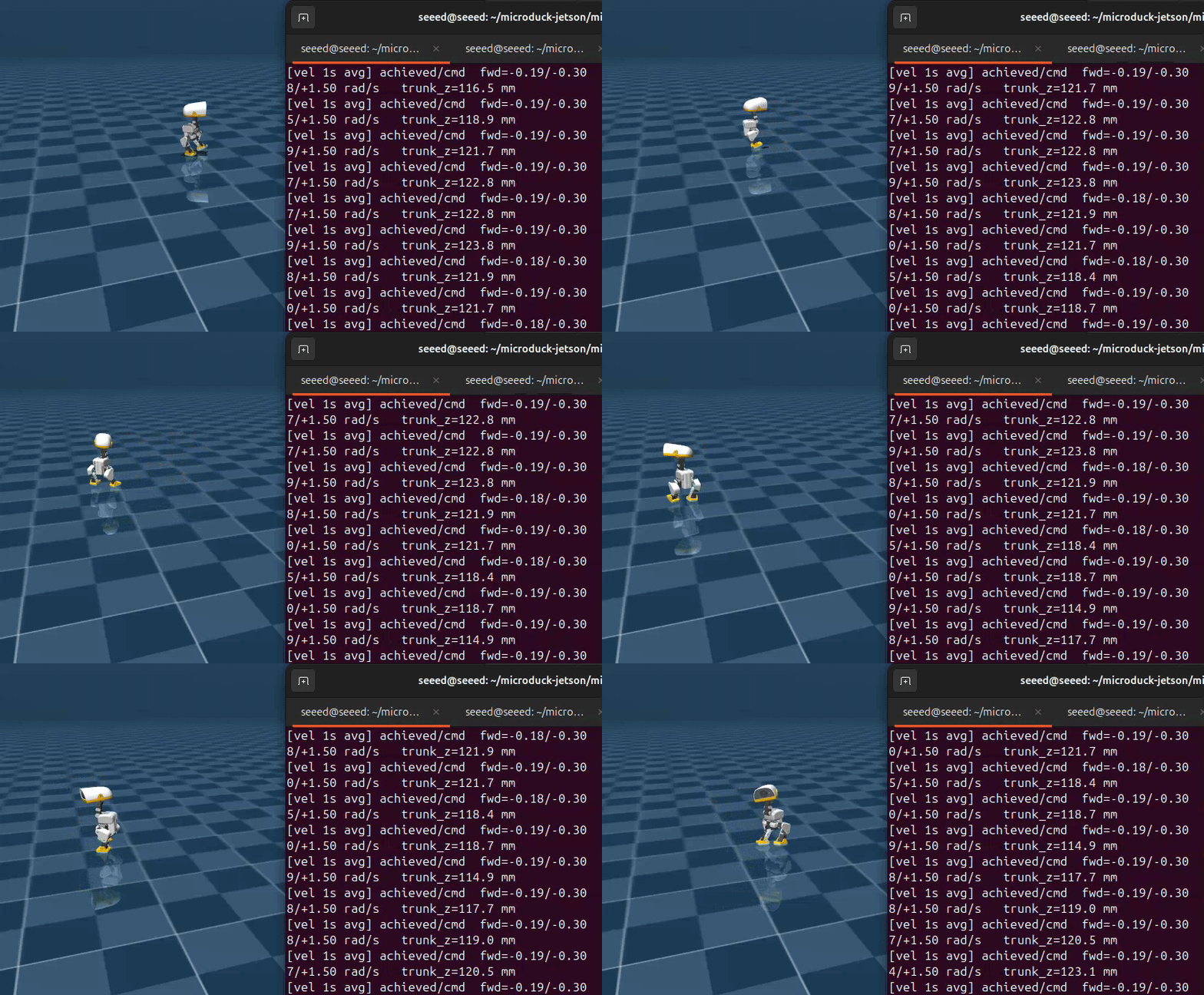
- Try and fail in simulation: train gait policies yourself—it can fall as many times as it needs to~
- Witness it on the real machine: deploy the algorithm with one click and watch this little hardware duck stand up, take its first step under your hands, and even walk fast and steady!

At the 2026 Greater Bay Area International Maker Summit (Maker Faire Shenzhen), Alpha Camp, we have arranged two dedicated Microduck workshop sessions. The workshop will be conducted in Chinese.This is not a “watch it walk a few steps and shoot a video” kind of demo—we are really bringing the duck on site for two hours, from simulation training all the way to running on the real machine, and finally three teams racing on the track.
01 MEET MICRODUCK
Microduck is a creation of Pollen Robotics. This French robotics company was acquired by Hugging Face; the team previously made Reachy Mini, the desktop robot that sold over 10,000 units in a year. Microduck was born from a question they asked themselves: if a robot is not meant to stay on a desk to keep you company, but to move around in the world, what would it look like?
And then there was this duck. Beyond moving flexibly and performing all kinds of challenging moves, the key is that its entire software stack is open source—you can run PPO training in simulation environments (mjlab / MuJoCo), export the policy to ONNX, and deploy it back to the real machine. The entire sim2real pipeline is on GitHub, nothing left out. This used to belong to labs and million-dollar robot dogs; now you can have it for $399.
That is also why it has been snapped up like this.
02 What You Will Experience in Two Hours
Each session lasts 120 minutes, with a packed schedule:
- 0–5 min Check-in and team formation
One duck per team; pick up your cloud server account along the way. - 5–15 min Get to know it first
What exactly is Microduck, and what are we going to train it to do today? - 15–55 min Simulation training
Go through the development docs, get the key cautions clear, then get hands-on: run training in simulation and use sim2sim to see whether the policy actually works. - 55–95 min Move to the real machine
Deploy the trained policy to the real machine and watch it stand up in front of you for the first time. If it doesn’t work well, go back, adjust parameters, retrain, and try again. - 95–115 min Competition
Three teams, three tracks—run an obstacle race with the policy you trained yourselves. - 115–120 min Awards
Each group presents on stage; the team with the highest score takes home a certificate and merch.
(Friendly reminder: actual activity time and flow are subject to on-site arrangements~)
There is also a hidden bonus in the middle: while the computer is running training, teammates can pick up the real duck and take it to the track—collect balls, race, and score points too.
03 About the On-Site Competition
Two main events, plus a bonus round.
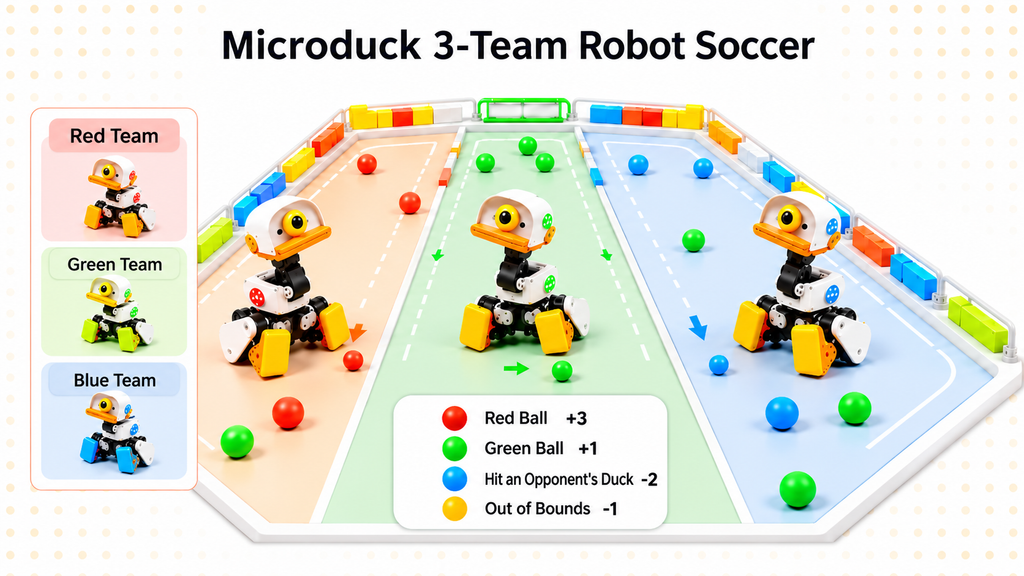
- Event One: Remote Control Warm-Up.
First, you get 5 minutes with the controller—no scoring, just getting a feel for it. Then the ball grab begins: for 5 minutes, the three teams’ ducks carry balls back to their own home base—red ball +3, green ball +1; running out of the field -1, hitting another team’s duck -2. - Event Two: Obstacle Race.
Use your own trained policy to run three tracks, with small blocks placed as obstacles. First place +20, second +10, third +5; each obstacle hit -2. - Bonus Round: Duck Race.
Three tracks; winner +5, hitting an opponent mid-race -3, running off the track -1.
The team with the highest total score wins first place. It sounds like kids playing in the mud, but it is serious reinforcement learning: how the reward function is set and how parameters are tuned all show up in the final score.
04 What You Need to Prepare Before Coming
- 01 A laptop.
A dedicated GPU is preferred (RTX 3050 or above), with Ubuntu 22.04 or above. If you don’t have one, it won’t hold you back—we will open a cloud server account for each team on site, and you can train right in the browser. - 02 A little patience for typing commands.
You don’t need to be an algorithm engineer; the training docs are ready-made, and each team has an on-site engineer—if you get stuck, someone will guide you. - 03 Don’t grab the duck by the head, and don’t let it hit the wall.
That is a real machine; 15 servos can’t take rough handling—one fall and it may be out of action.
Once again, please note that the workshop language is Chinese.
If you are also interested in the Microduck project
↓ Welcome to join our domestic WeChat workshop community group in China ↓

For the 2026 Greater Bay Area International Maker Summit, we have specially created a brand-new program segment—Alpha Camp. It is not a conventional exhibition, nor a workshop where you sit in the audience taking notes—it is an unscripted “making experiment ground”: there are no spectators here—either take the stage or get your hands on the tools.
Over the two days, around 40 hardcore skill workshops and sharing sessions will run back-to-back—laser cutting, advanced soldering, hands-on 3D printing, AI hardware deployment… 70%–80% of them are hands-on. Attendees are not judged by degrees or titles; the person sitting at the next table might be a veteran welder from the workshop floor whose skills run deep—or your future partner for all-night project builds.
What Is Included?
- Priority workshop reservations and access to the ticket-holder community. Book your preferred sessions early, get program updates, and connect with other participants before the event.
- Two days of ALPHA Camp access. Explore around 40 workshops and skill-sharing sessions across both days.
- Your own NFC maker badge. Activate it at check-in, tap it for access, and use it to complete challenges and level up your virtual pet.
- Practical workshops led by experienced makers. Work with people who have used these skills on real projects.
- Lunch on both days. Your pass includes an on-site lunch each day.
- A certificate of completion and a maker passport. Complete the workshop and challenge requirements to receive your certificate at the event. Use your passport to collect stamps at participating exhibitor booths.
- Maker merchandise. Take home a sticker pack, a custom woven tote bag, and other event merchandise.
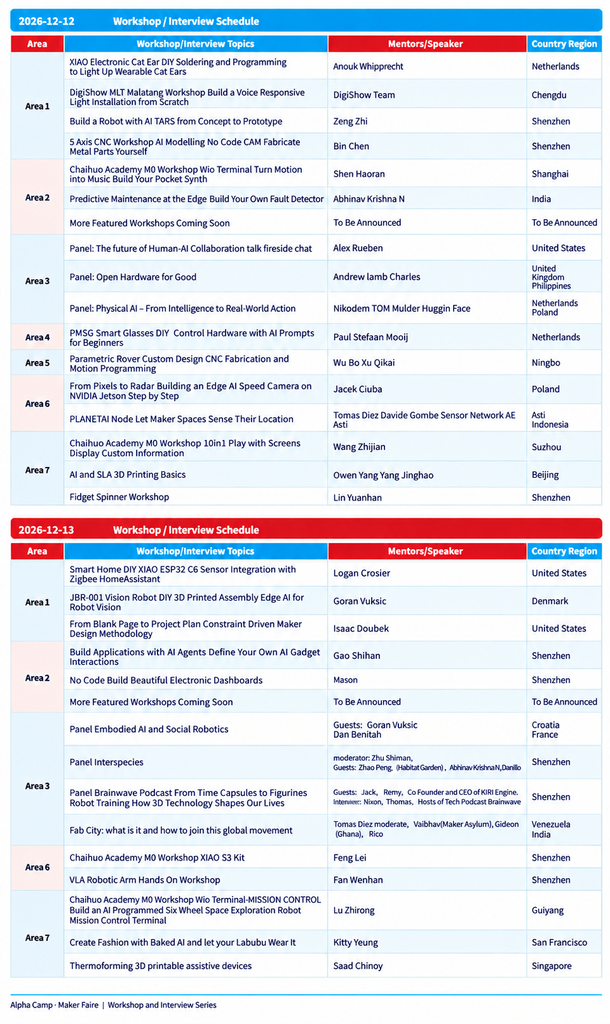
The complete workshop and interview lineup is continuously updated…
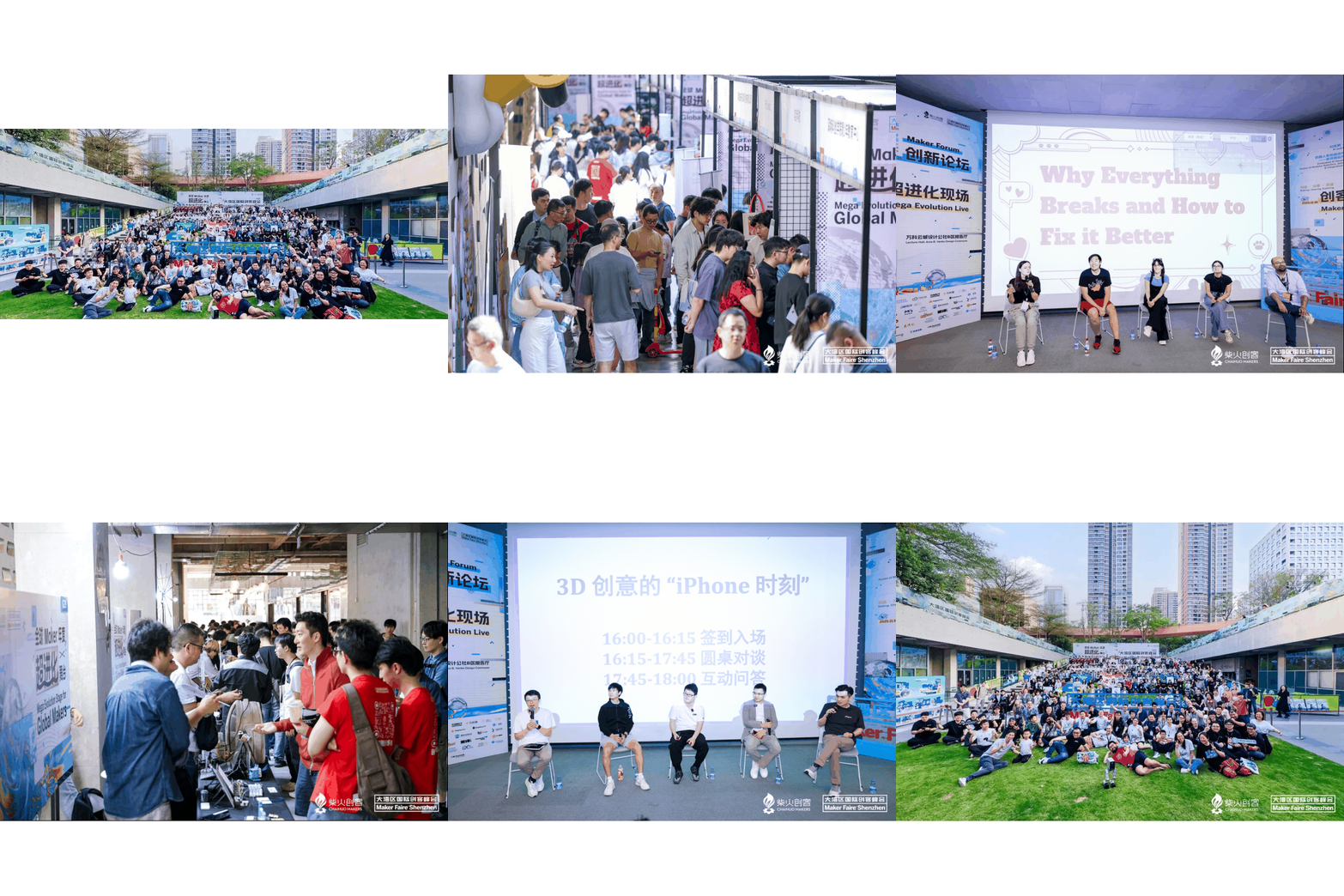
Over the past 13 years, the development trajectory of Maker Faire Shenzhen can be seen as a microcosm of the development of maker culture in China.
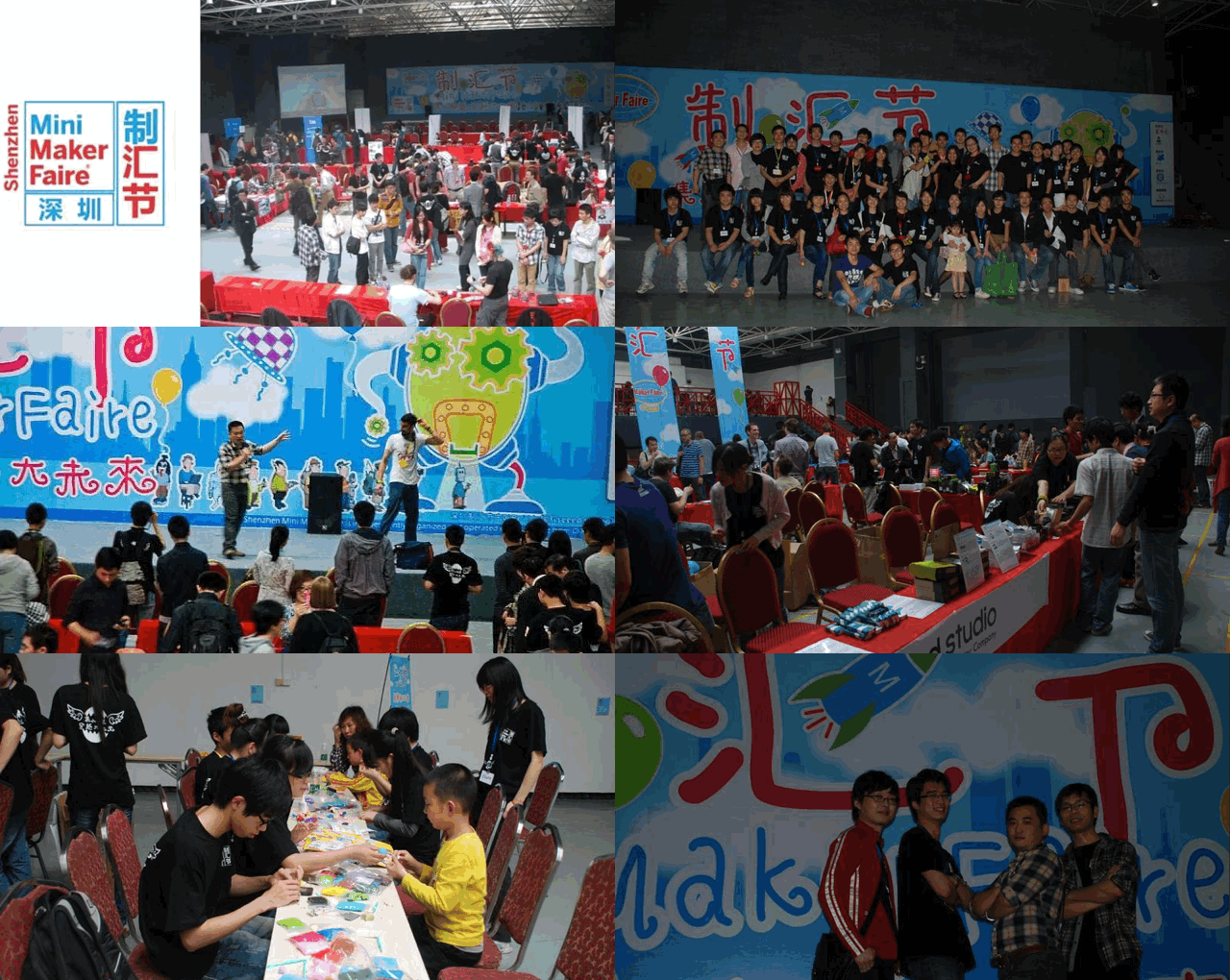
- 2012: “Gathering Small Wisdom, Journeying through the Great Future” – This was the first Mini Maker Faire in China, with less than 1000 attendees, and was more like a gathering within a small circle. But we saw the infinite possibilities emerging from the maker community.
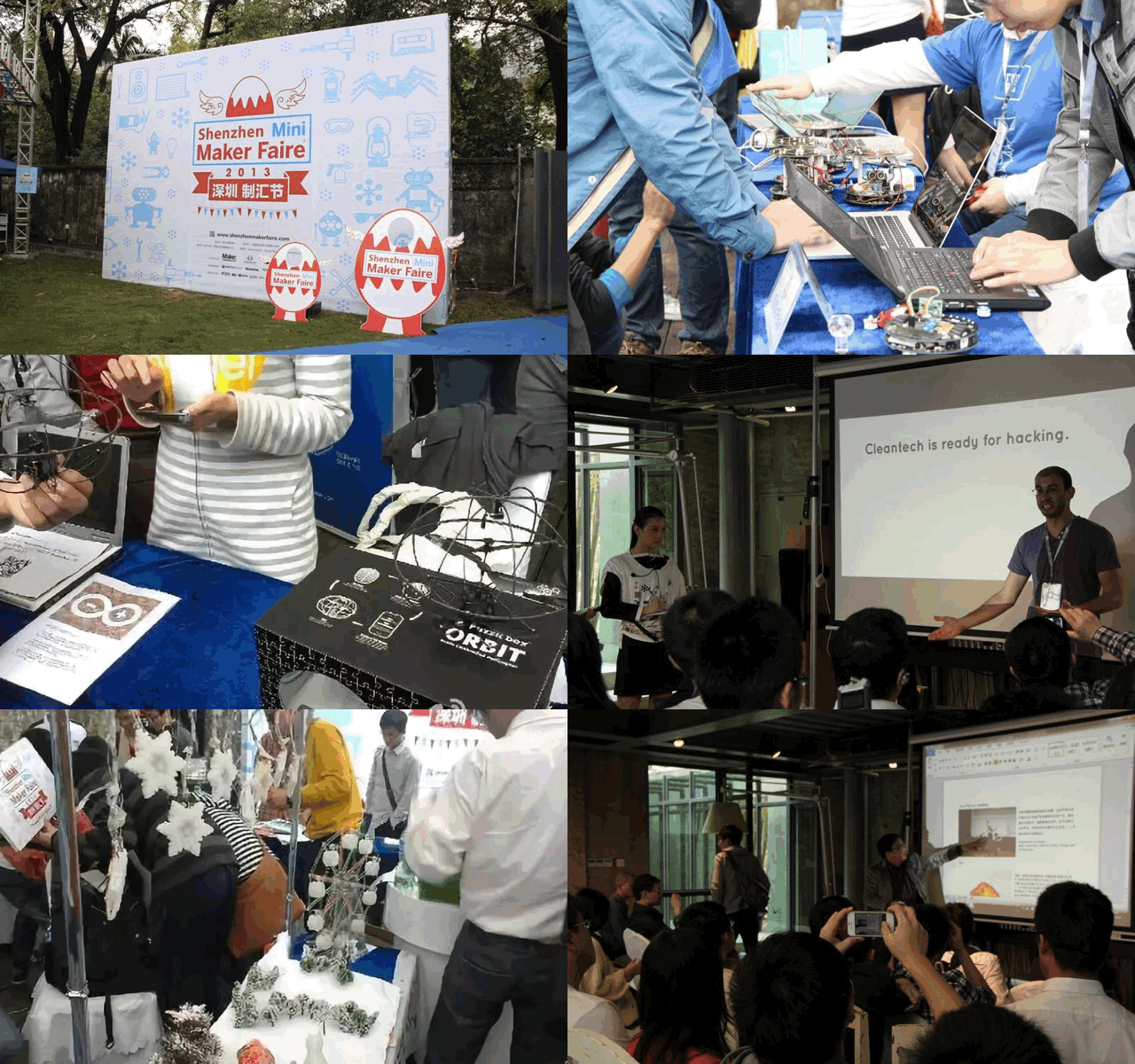
- 2013: The slogan was absent, and the maker community was still small. – In the OCT Creative Park, there were cross-disciplinary exchanges among different creative communities, silently laying the foundation for cultural output.
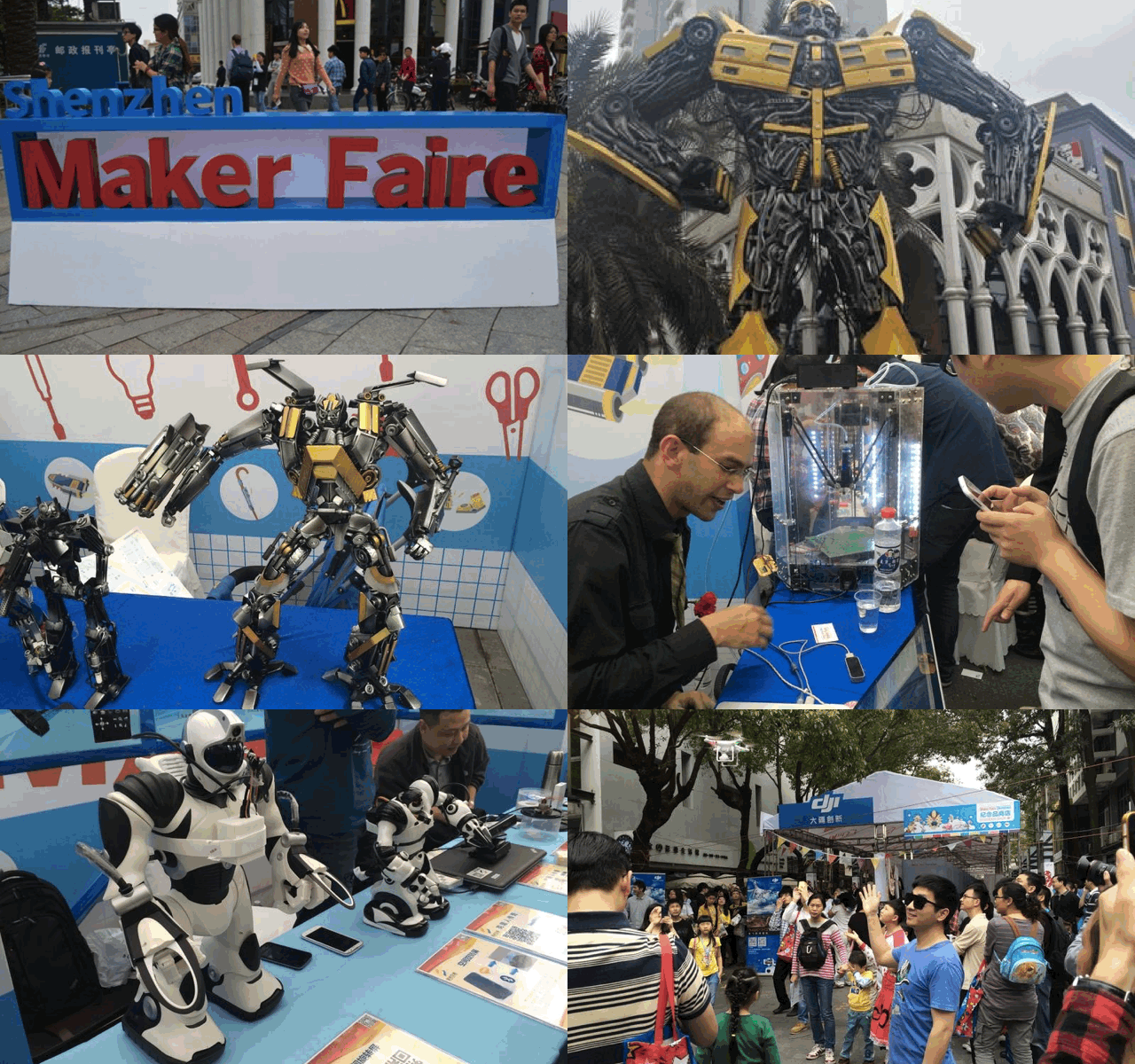
- 2014: “Innovate with China” – the event was upgraded to the Featured level for the first time, with a significant increase in scale compared to previous years, and the beginning of professional independent forums. This year, makers began to enter the public’s view.
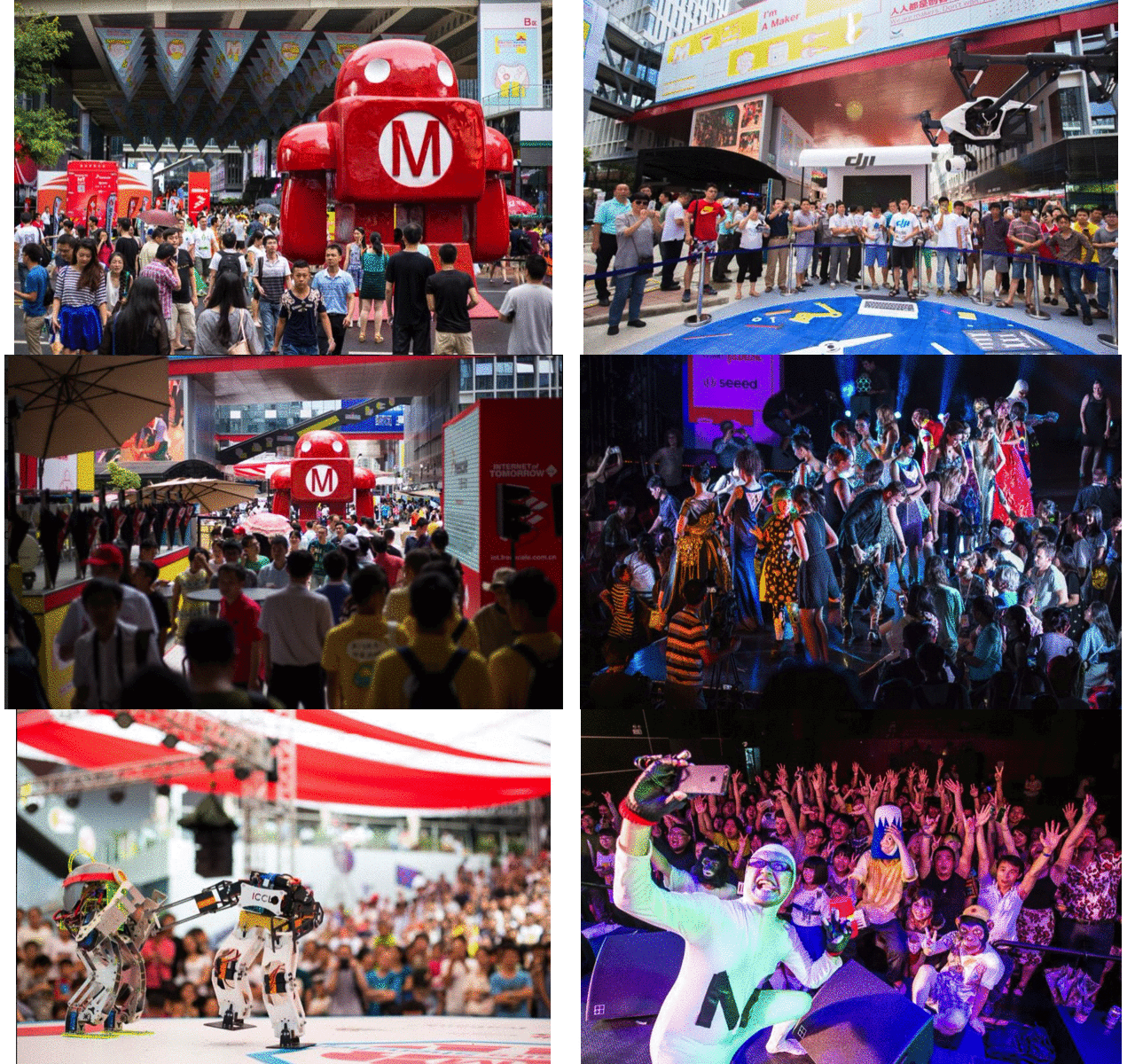
- 2015: “Everyone is a Maker, what are you waiting for?” – This year’s Shenzhen International Maker Week became one of the largest Maker Faires in the world. This year, the concept of “maker” was elevated to a national level, and the trend of “mass innovation, mass entrepreneurship” swept across the country.
- 2016: “My World, My Creation” – As the sub-venue of the National Innovation and Entrepreneurship Week, the event was held for the first time in the commercial center area, experiencing unpredictable weather from typhoons to scorching heat. Many makers succeeded in your entrepreneurial endeavors this year, but it seemed like there were even more failures. The hype around entrepreneurship shifted towards rationality.
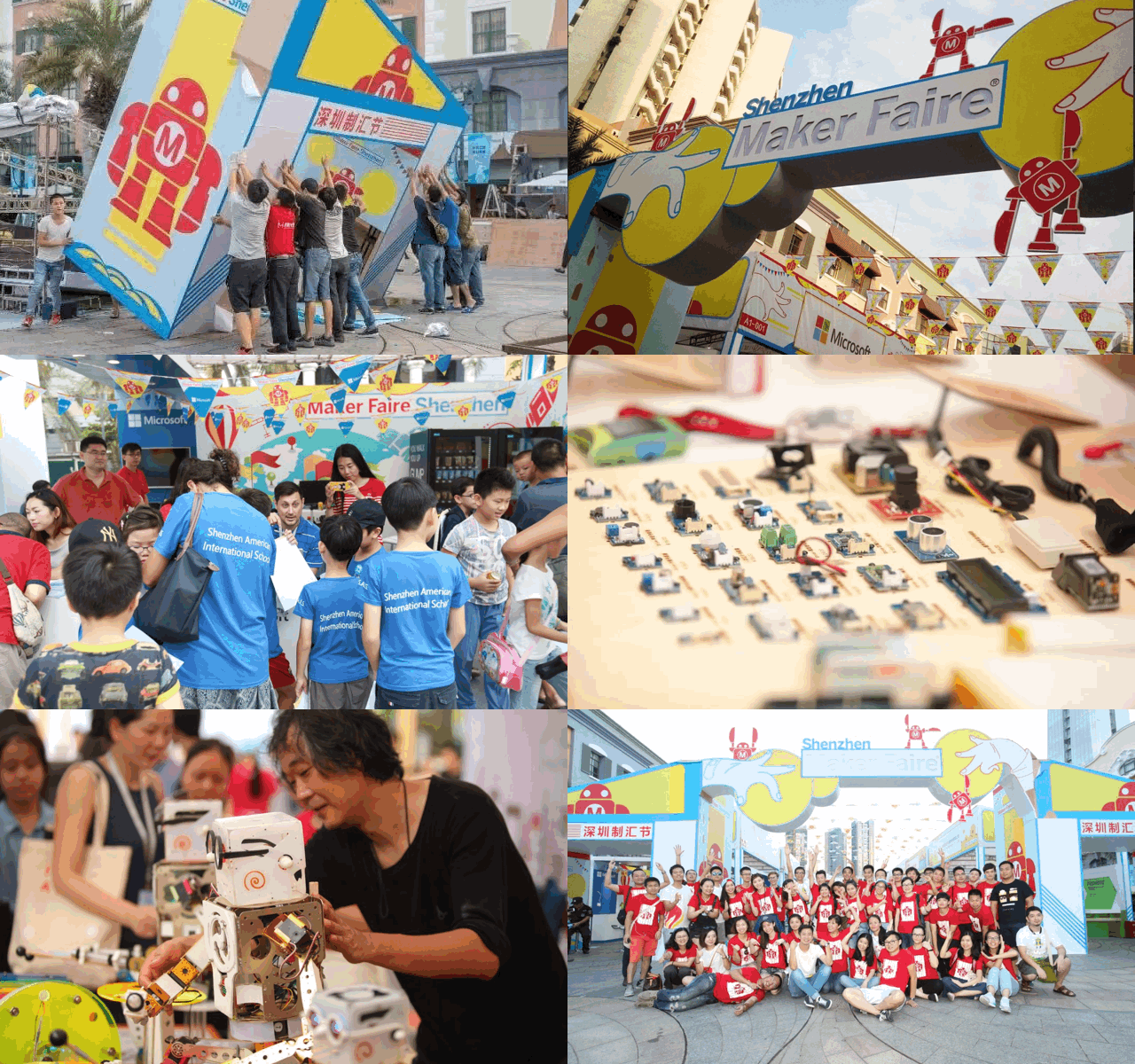
- 2017: “Makers, Go Pro” – The event took place at the university campus for the first time, focusing on Maker Pros and providing a platform for diverse innovators and makers to showcase themselves, presenting more possibilities for the growth path of makers to the entire community.
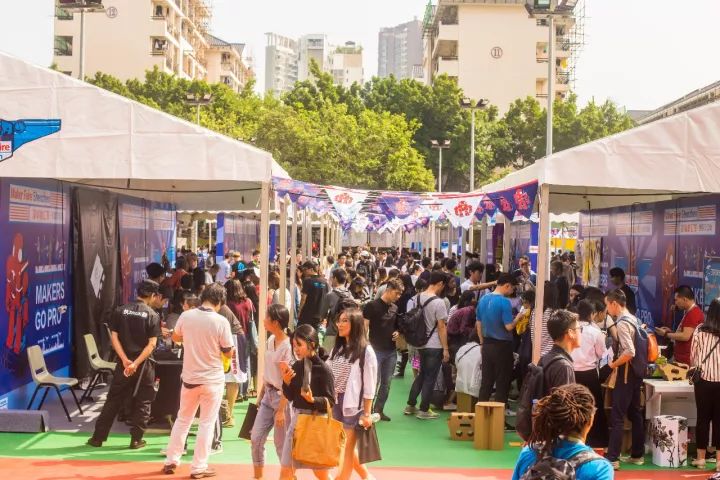
- 2018: “Co-making in the City” – The main venue of Shenzhen International Maker Week, where individuals and groups with shared visions and values gathered to showcase stories, projects, and explorations of collaboration among different communities and people.
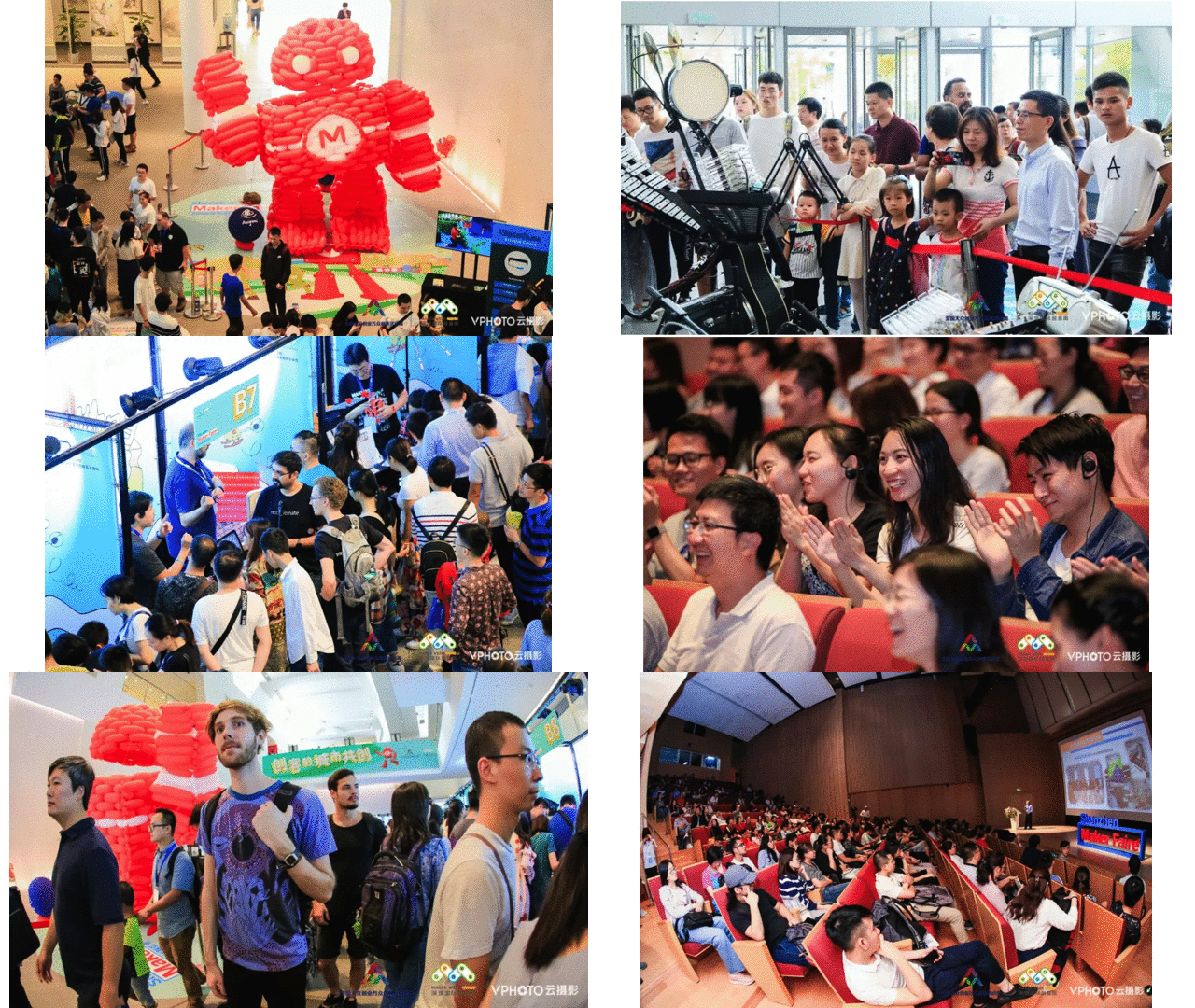
- 2019: ” To the Heart of Community, To the Cluster of Industry” – The event was upgraded to the Maker Faire Shenzhen, attempting to attract professional audiences and focusing on pragmatic aspects such as solving the needs of industrial upgrading and co-developin. It aims to build a platform for innovation and industry dialogue and collaboration.

- 2023: “Where Are The Makers?”– Starting from our own mission and values, we aim to explore the future direction of makers and theapossibilities for commercialization. Though this question does not have a definitive answer, we do hope that through this event, we can communicate and share with every one of you, finding more ideas and directions together.

- 2024: “Everything is AI” – This year, we brought together over 120 exhibitors from around the world, attracting nearly 1,500 professional attendees from nearly 20 countries and over 20 provinces across China. The exhibition showcased a wide range of AI application projects and hosted 10 AI hardware-themed satellite events, alongside various workshops.
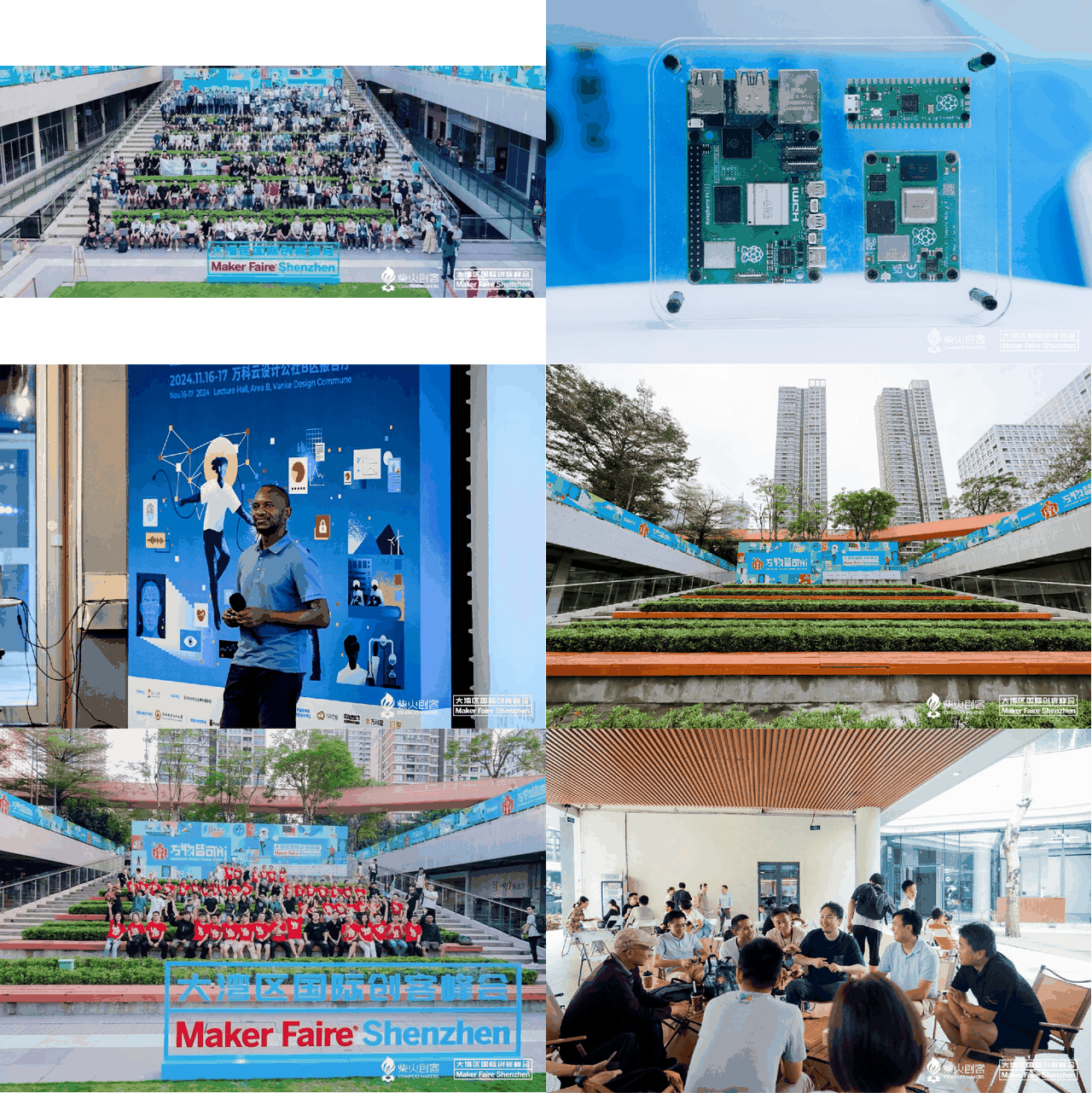
- 2025: “AI Without Boundaries, Everything Reimagined”The summit brought together nearly 100 international innovation ambassadors and showcased almost 1,000 AI hardware projects.Technology leaders, pioneering makers, industry experts, and university teams from more than 30 countries gathered to create an international innovation event combining frontier thinking, technical exchange, and cross-disciplinary collaboration.