If previous editions of Maker Faire Shenzhen were testing grounds where inspiration sparked, this year we will see how creative ideas take root and become reality.
This time, we are putting OPC creators and full-industry-chain service providers center stage, working together to build a “Mega Evolution Stage for Global Makers.”
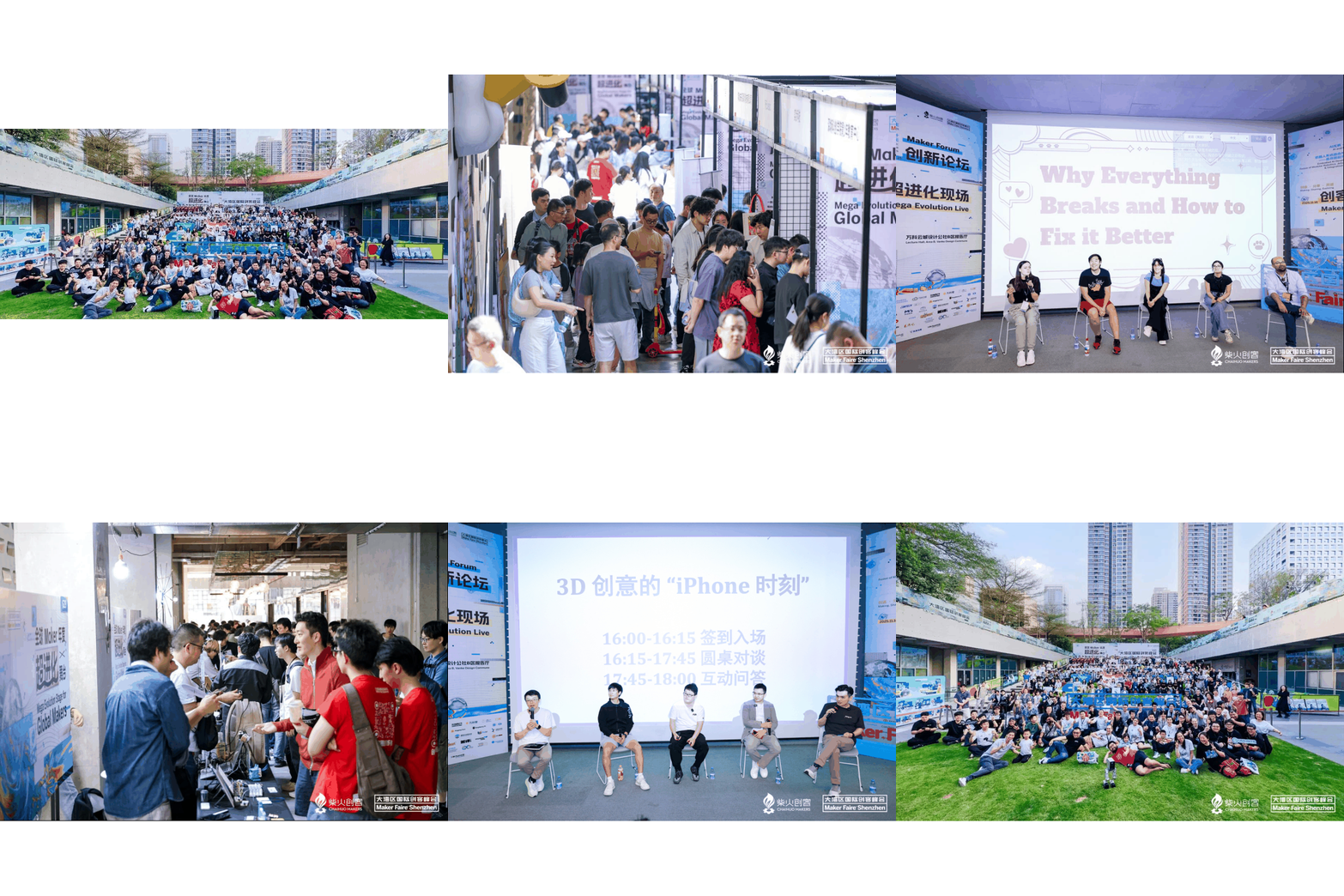
Long-time friends of Maker Faire Shenzhen know that it consistently ranks among the season’s most popular offline events. In addition to offering an in-depth look at cutting-edge technologies and industry trends, its wide range of on-site activities attracts professionals and visitors from many different communities.
This year’s event is officially scheduled for December 12–13.
In today’s “Startup Spotlight” column, we introduce — Petoi, located at Booth B17.

Petoi
The design philosophy and story behind the latest AI desktop robot Quaddle: https://www.hackster.io/RzLi/petoi-quaddle-d09f60
The Quaddle crowdfunding project launched on Kickstarter: https://www.kickstarter.com/projects/petoi/quaddle-open-source-desktop-robot-kit
Petoi (Shenzhen) Technology Co., Ltd. (Petoi LLC) was founded in the United States in 2017 by Dr. Rongzhong Li and established a company in Shenzhen in 2019. Upholding the philosophy of “Robots for Everyone,” Petoi is committed to lowering the technical threshold of quadruped robots and championing the application of small bionic robots in STEM education, scientific research, entertainment, and companionship.
Petoi has validated small quadruped robots with mammalian gaits using consumer-grade servos and established the OpenCat open source developer community. Leveraging the supply chain system of the Guangdong-Hong Kong-Macao Greater Bay Area, the company has successively completed the R&D and mass production of multiple products, with global sales exceeding 30,000 units and citations in over 20 academic papers.
Based on the OpenCat open source architecture, Petoi has launched multiple desktop-level robot products:
- The open source robot cat Nybble, Nybble Q, and the open source robot dog Bittle, Bittle X, Bittle X+Arm;
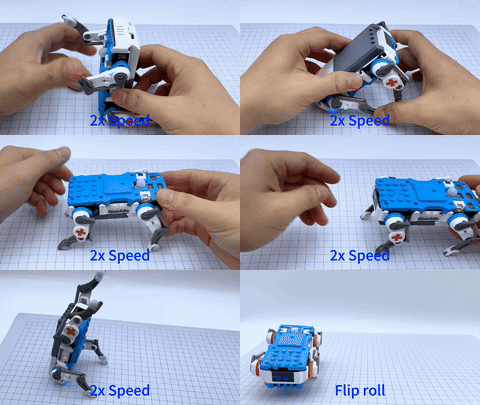
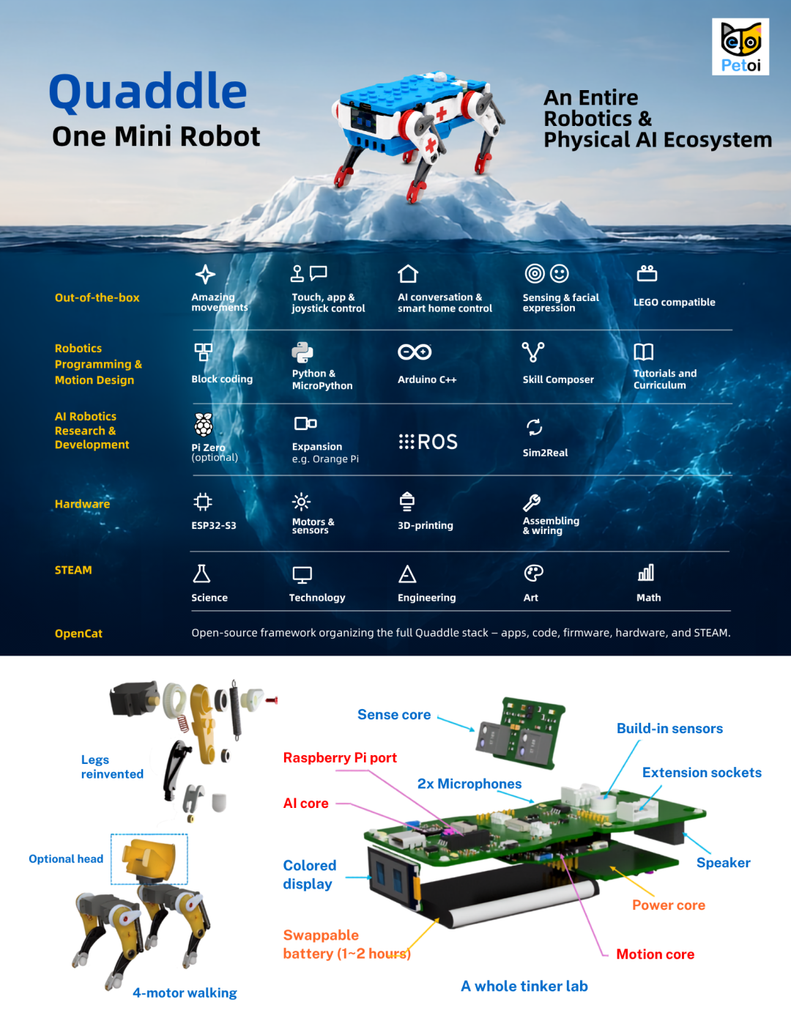
- The all-new desktop quadruped robot Quaddle: through a bionic linkage mechanism (MinDoF leg structure), it achieves fast walking, rotation, and somersaults with only 4 servos, while micro rollers at the toes support high-speed gliding. It naturally integrates AI voice and multiple sensors, allowing physical interactions such as tapping, touch, and dragging. At a fraction of the cost of traditional quadruped robots, it provides an accessible entry point for desktop-level embodied intelligence development.
- OpenCat’s 10th anniversary, a cat-dog-mouse trilogy, breaking down the knowledge and price barriers for the general public to get hands-on with robots.
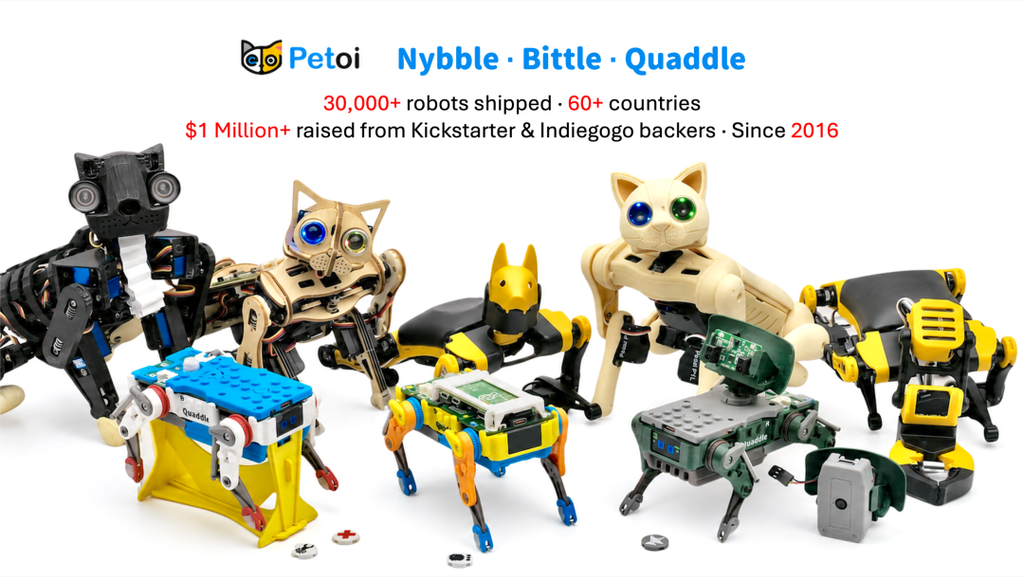
Product Series: Petoi OpenCat Desktop Quadruped Robot Quaddle
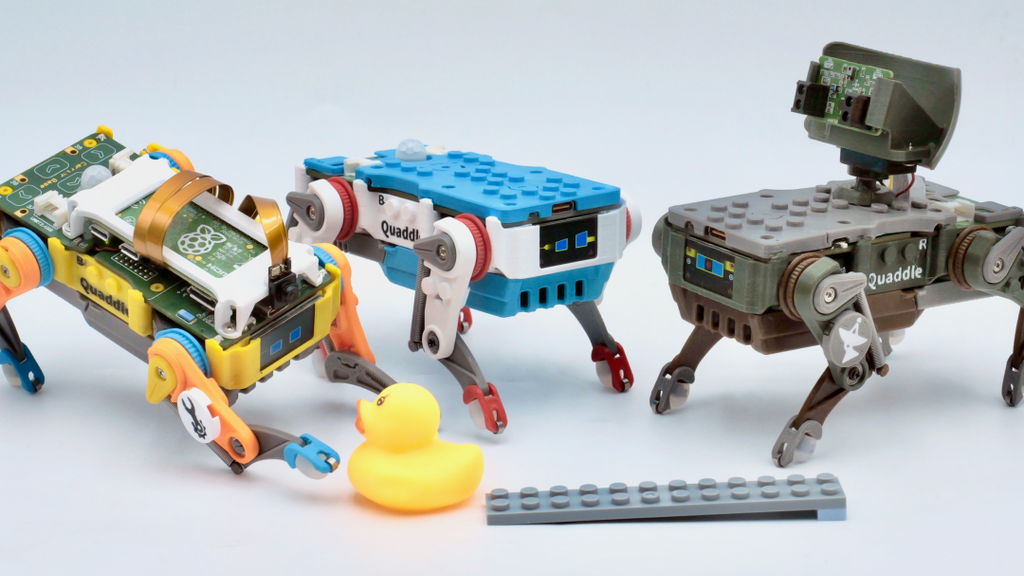
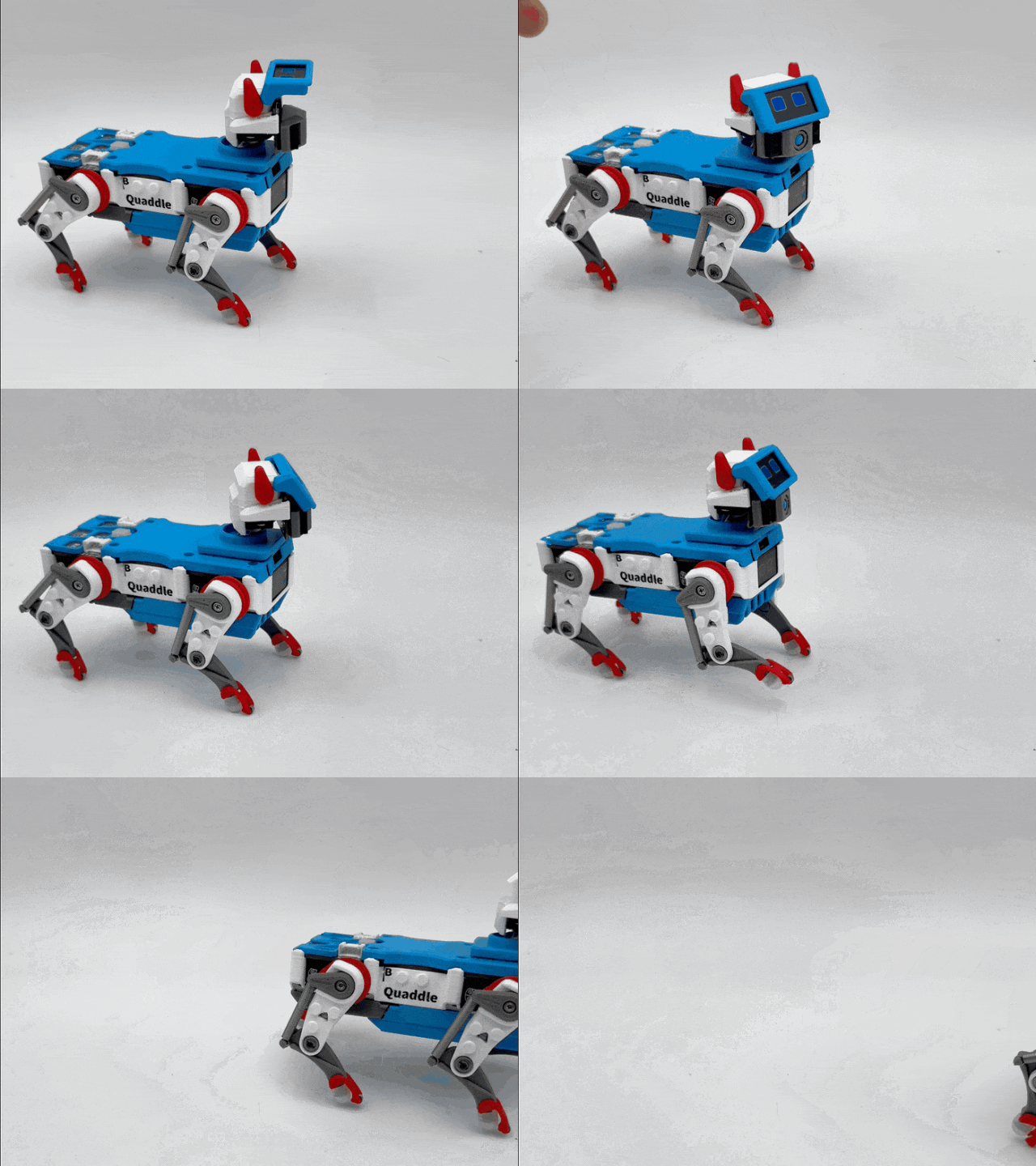
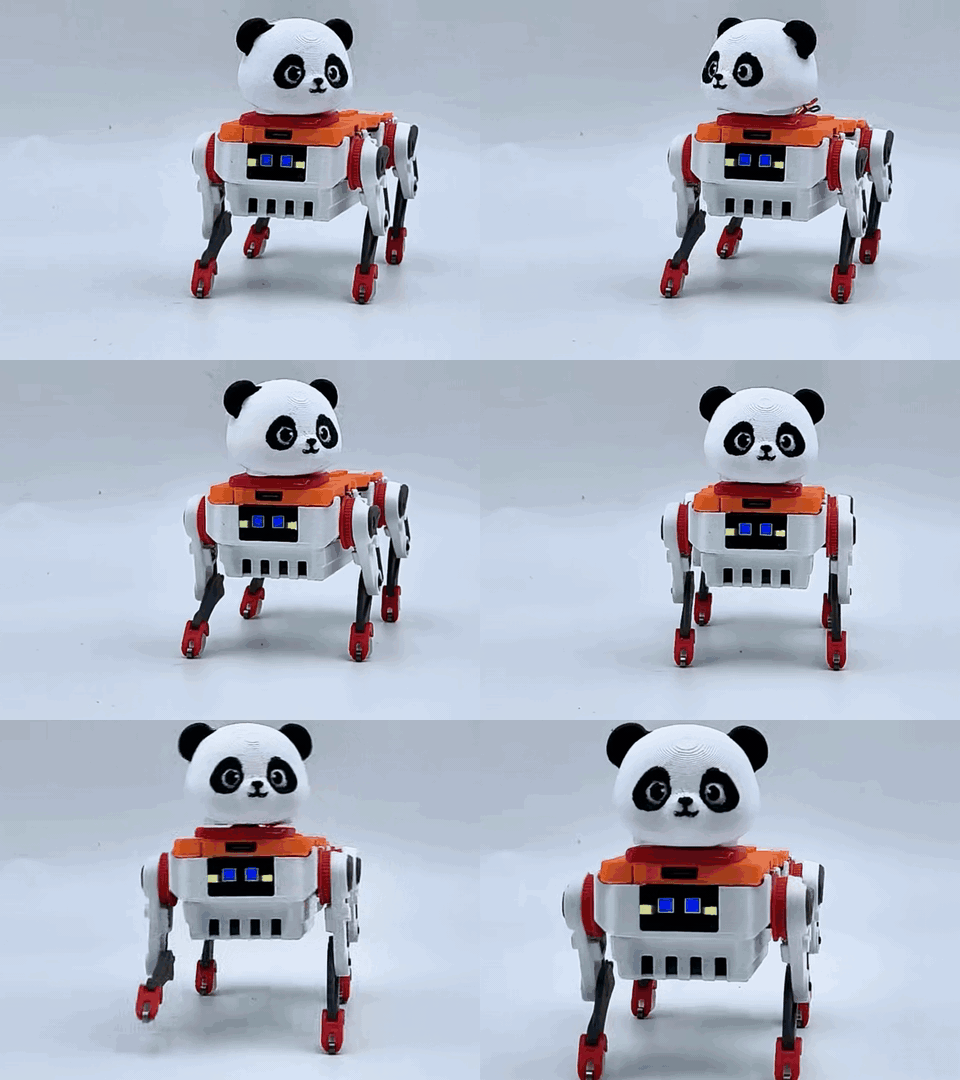
In many people’s impressions, a quadruped robot capable of agile, dynamic movement often requires 8 or 12 motors and comes at a high price, while a 4-motor robot dog can only be a toy that shuffles slowly.
Petoi’s all-new desktop open source quadruped robot Quaddle, with its ingenious bionic linkage mechanism, achieves nearly complete quadruped dynamics with just 4 servos—reducing hardware complexity while delivering excellent battery life and durability. The entire unit has only 4 screws; assembly from scratch to walking takes just 15 minutes; speed reaches 1–3 body lengths per second; it can make a 180-degree turn within a single gait cycle; and continuous movement lasts nearly 2 hours. The crowdfunding early-bird price is only $99, with shipping in December this year.
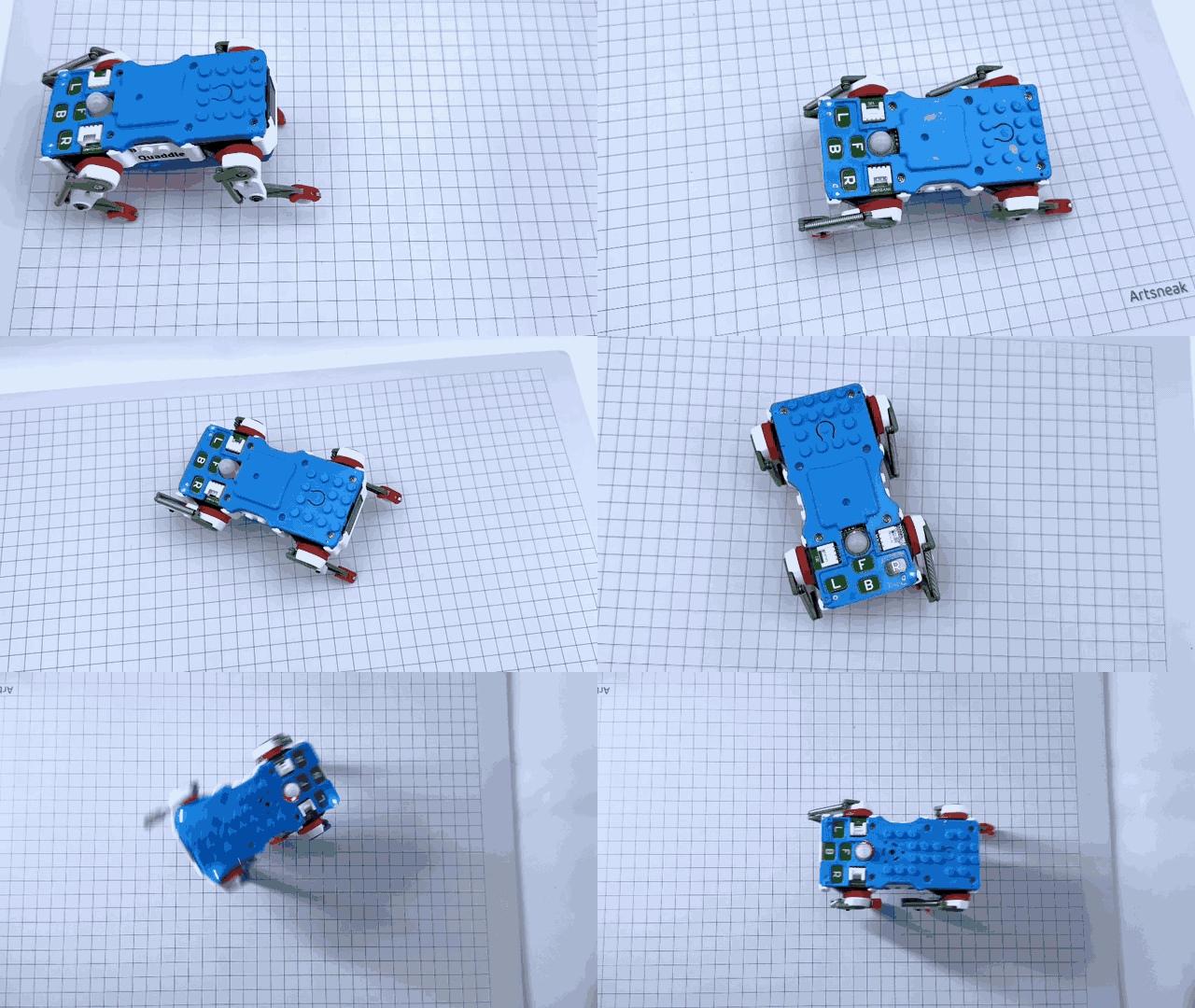
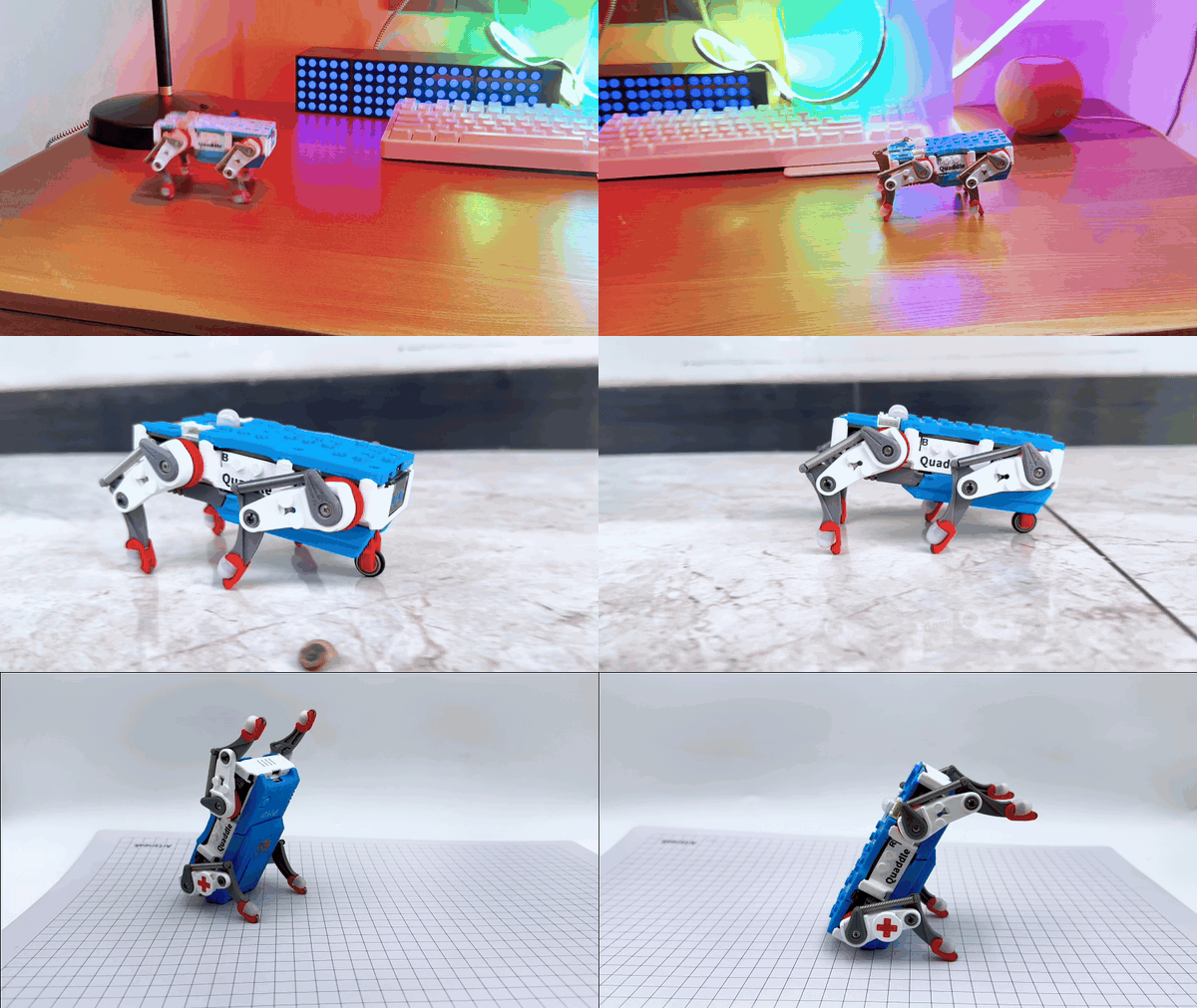
Going off the beaten path:
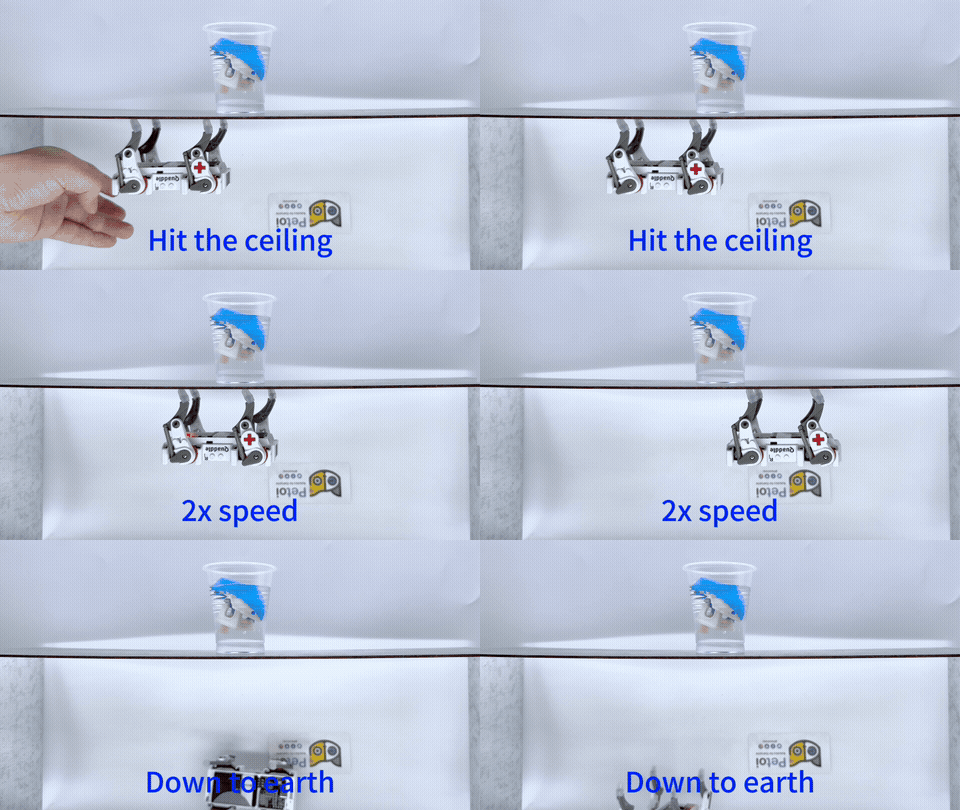
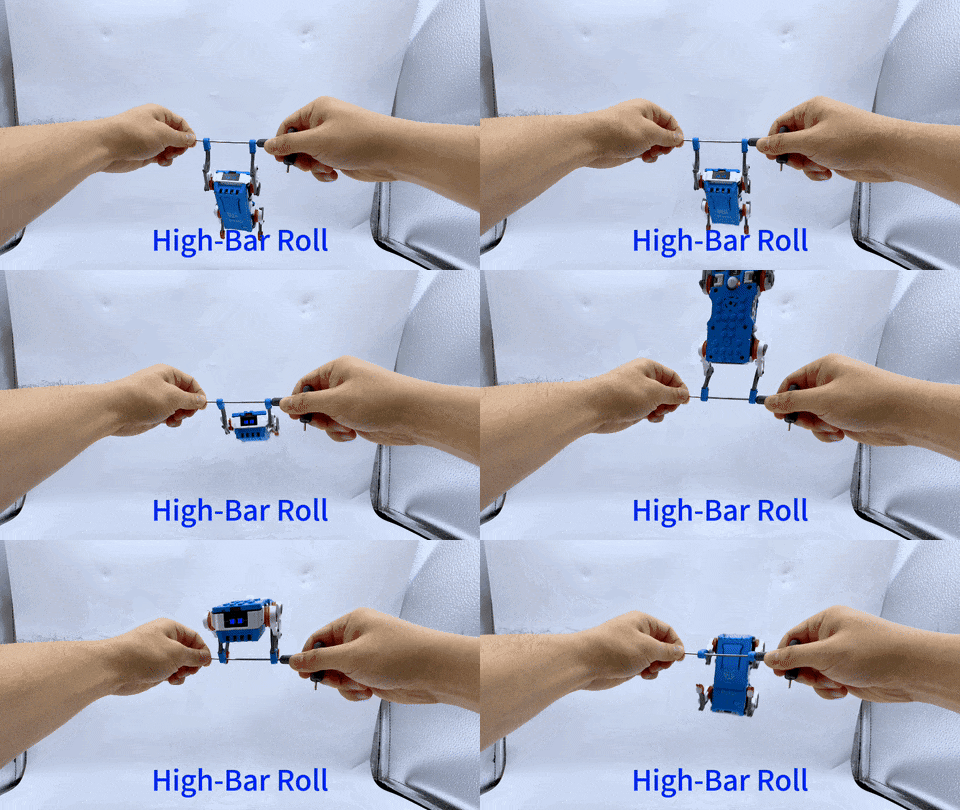
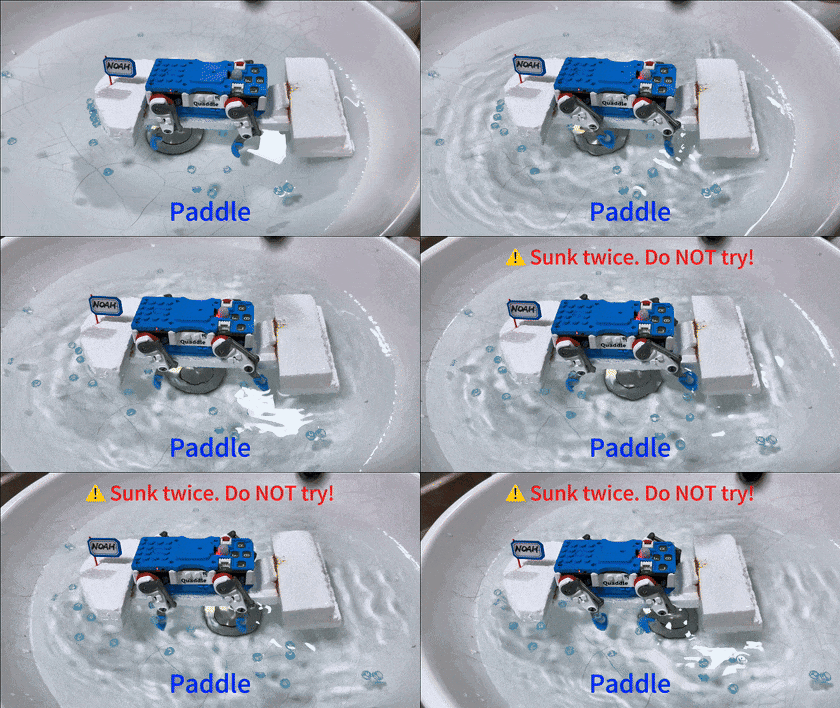
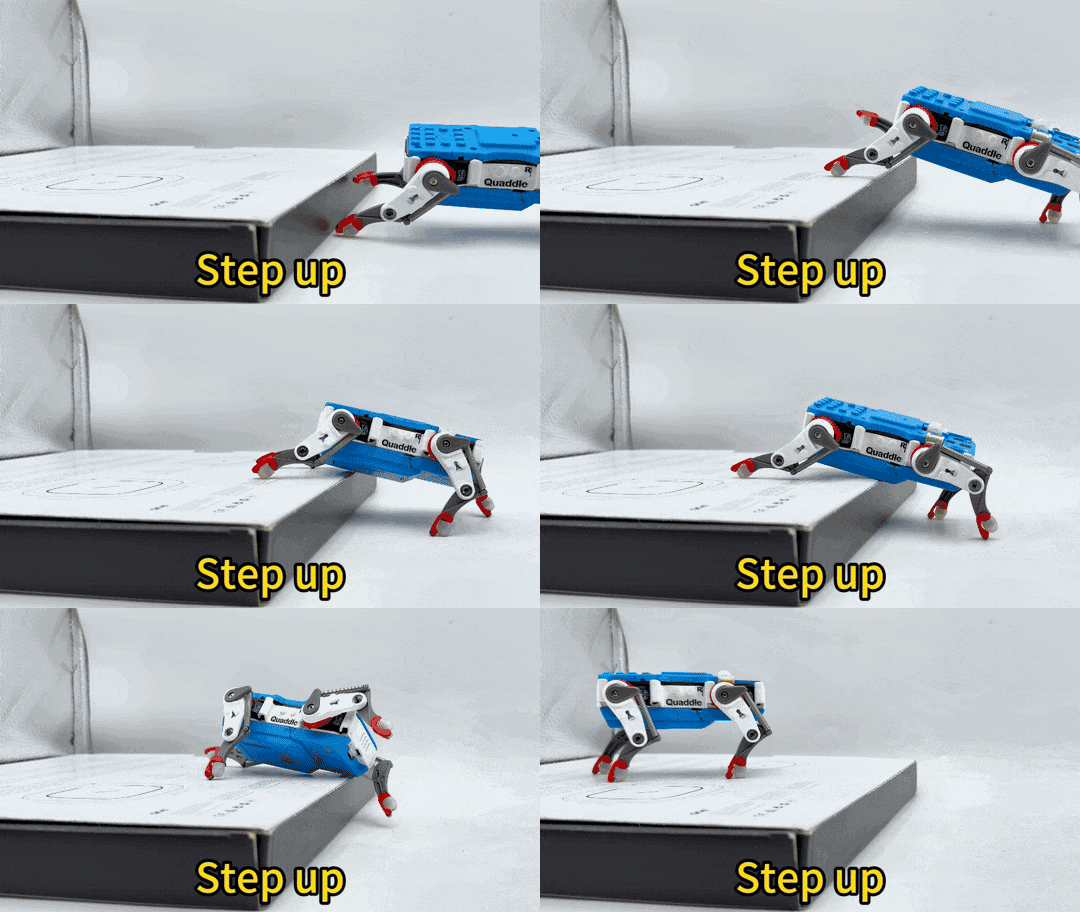
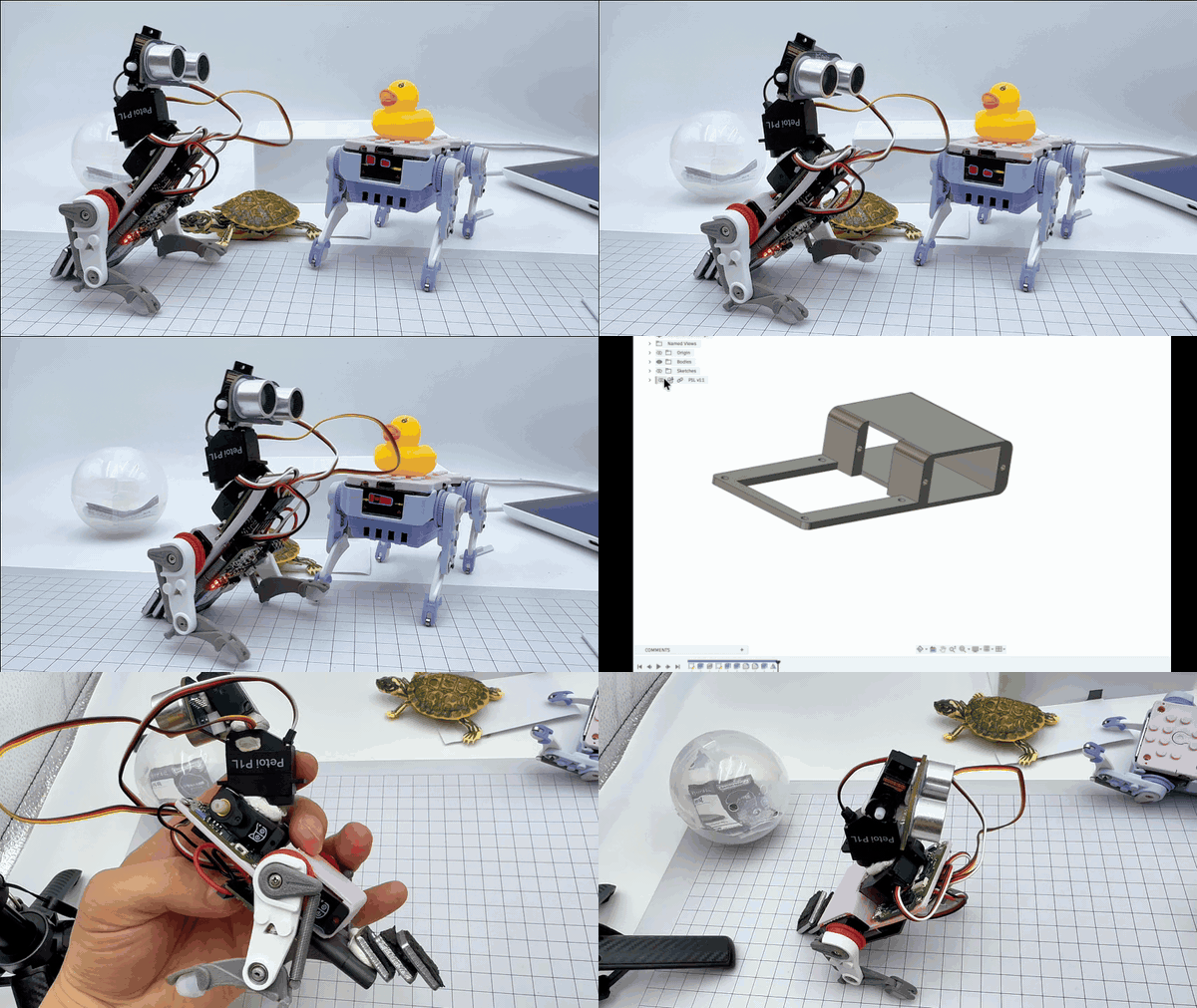
Movement capability is merely the vehicle for service. To meet the different needs of geek desktop companions and advanced research and development, Petoi has specially launched two high-end configurations on top of the Quaddle Builder version—Buddy and Scout:
1.Petoi Quaddle Buddy—Your Desktop AI Companion
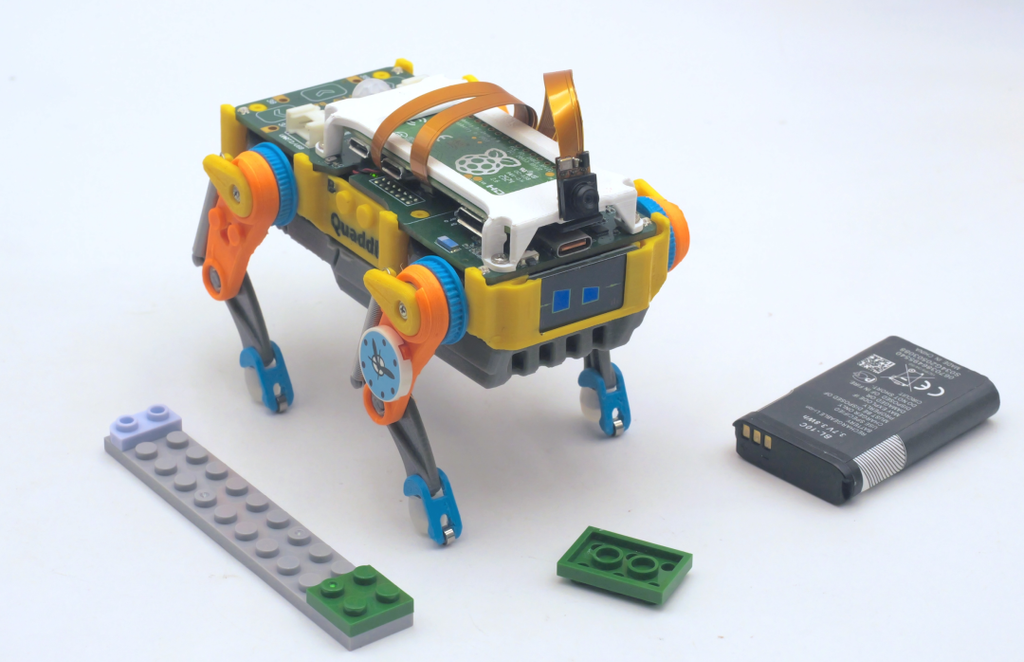
The Quaddle Buddy is built specifically for makers and geek players who seek desktop companionship and voice interaction. It combines a lively, agile body with an AI agent, becoming a responsive, emotional companion on your desk.
- Large-model AI voice, movement, and color-screen expressions: equipped with a built-in AI voice interaction module and a color display, it can not only understand natural language commands and control smart home devices, but also express vivid expressions and respond with emotional movements.
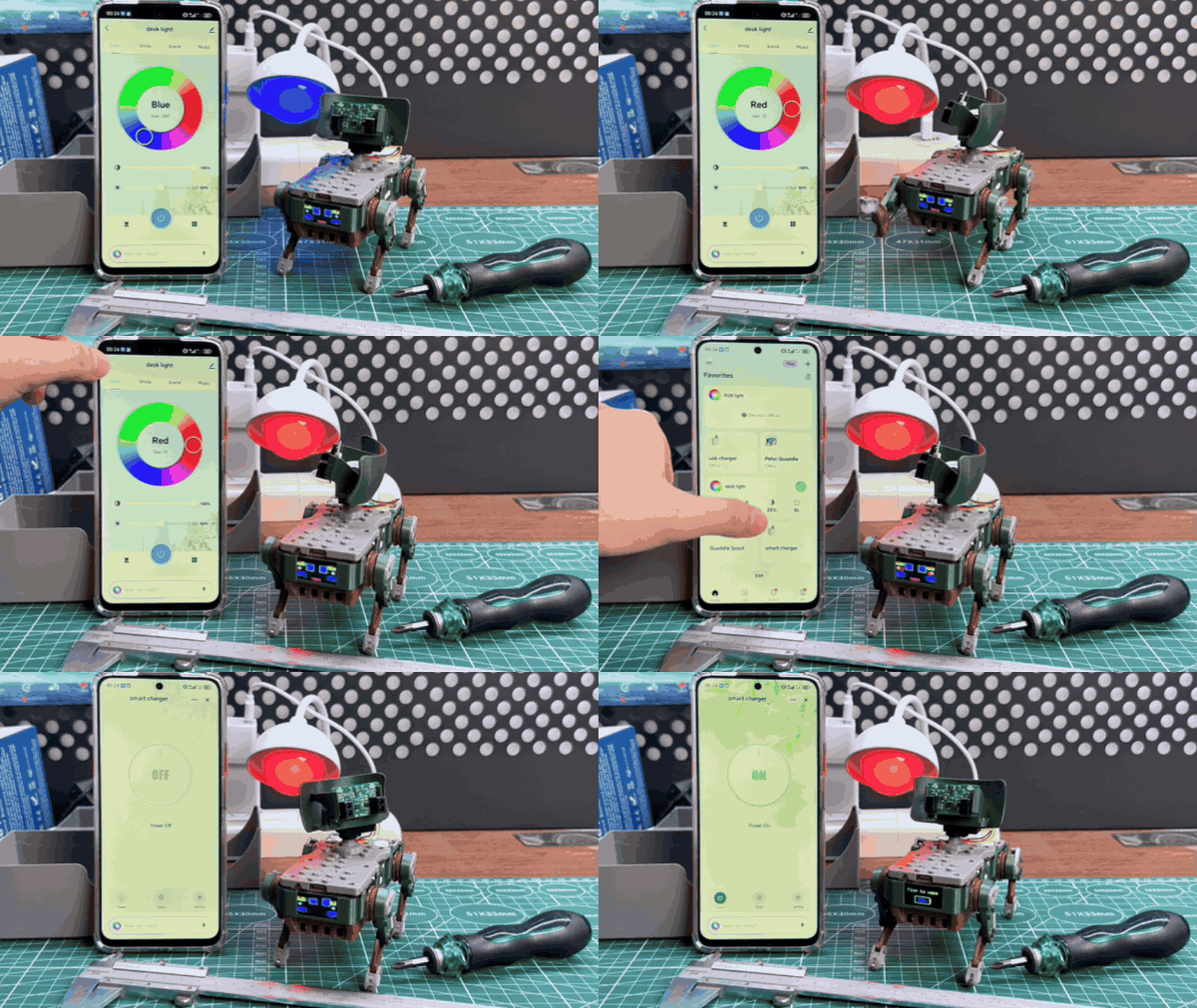
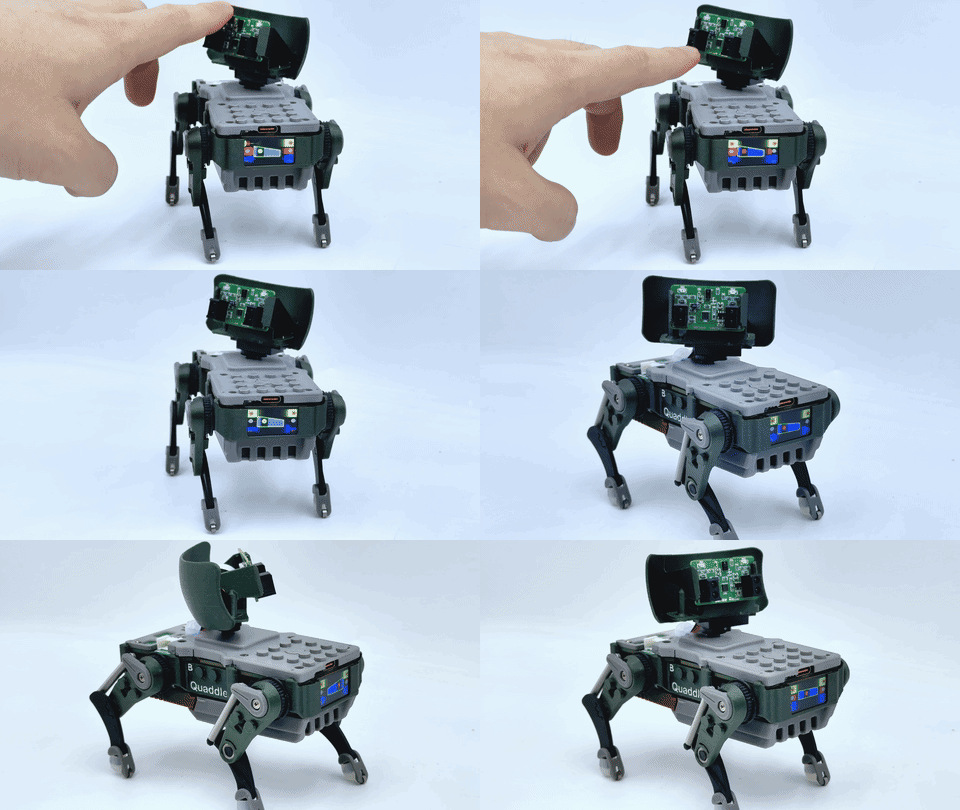
- Touch feedback and emotional expression: integrated vibration and touch sensing—give it a gentle stroke or a pat, and it will respond with playful emotional movements such as head tilting and swaying.
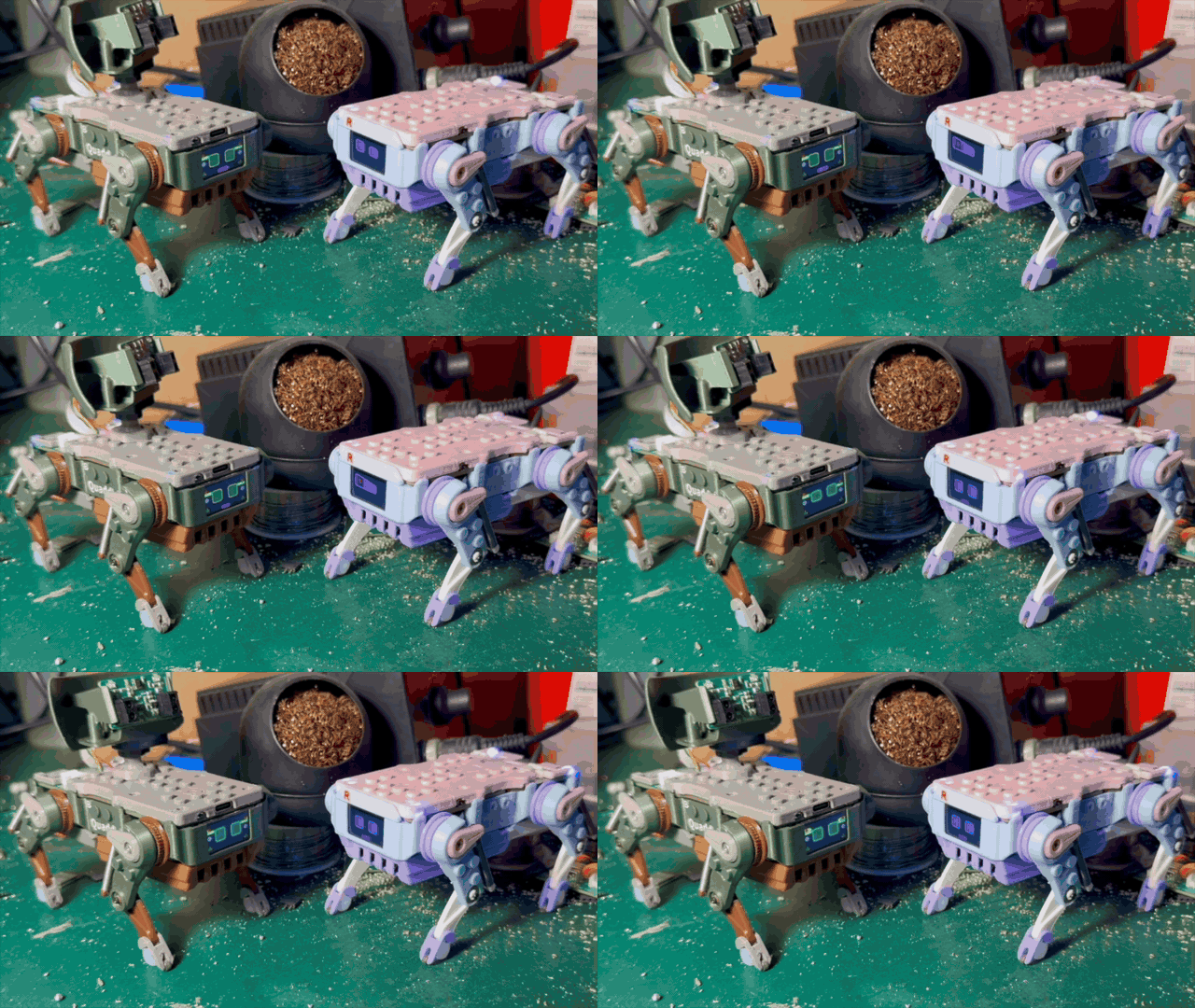
- Zero-barrier physical motion dragging (Learn & Replay): no coding required—use your hands to press and drag Quaddle’s legs into poses, and the servo feedback system automatically records and reproduces creative movements and gaits.
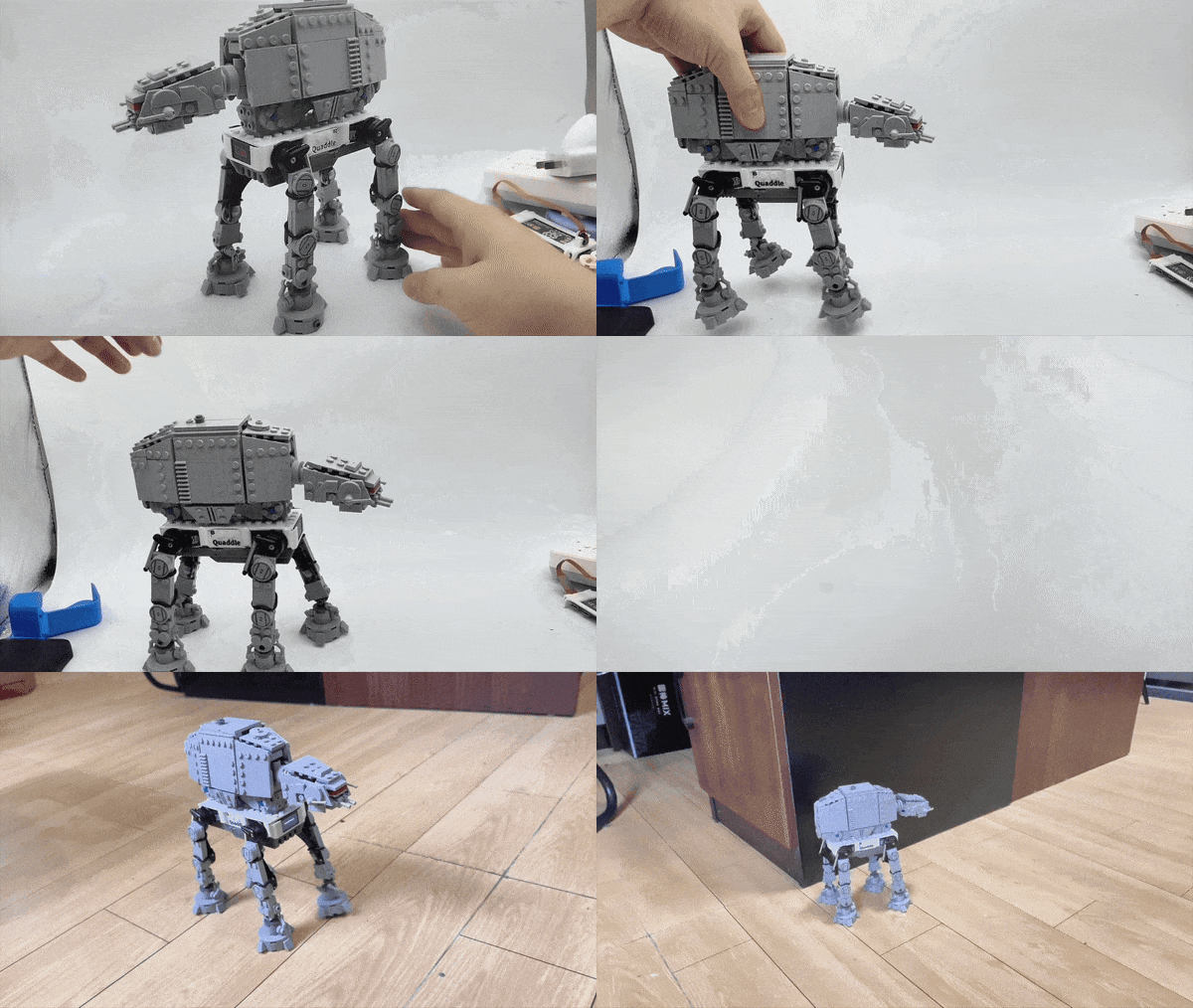
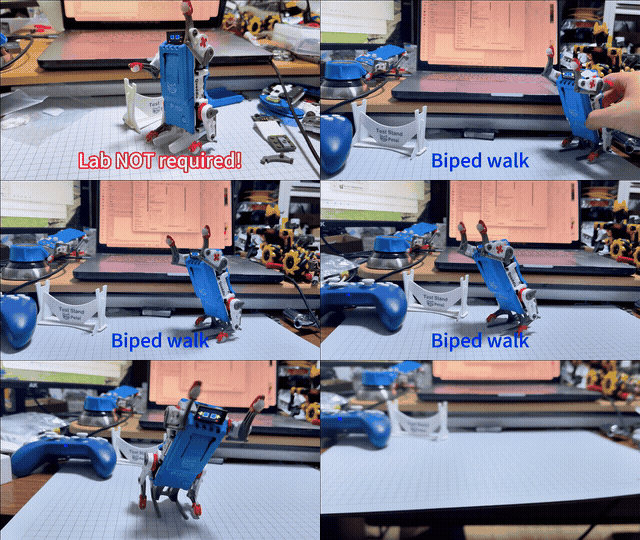
- Geek expansion: compatible with LEGO bricks and supports custom 3D-printed accessories (such as an AT-AT robot or biped mode).
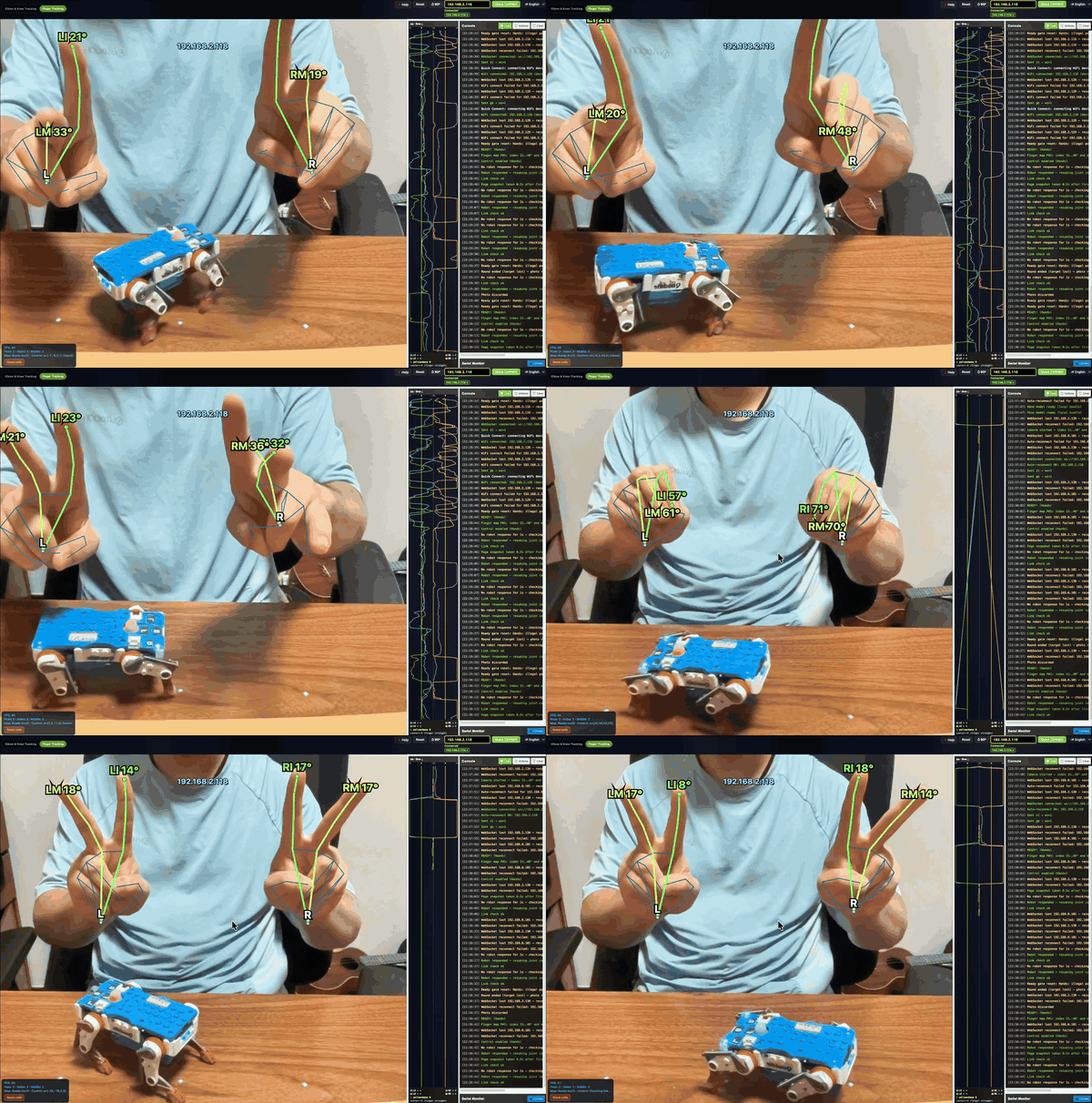
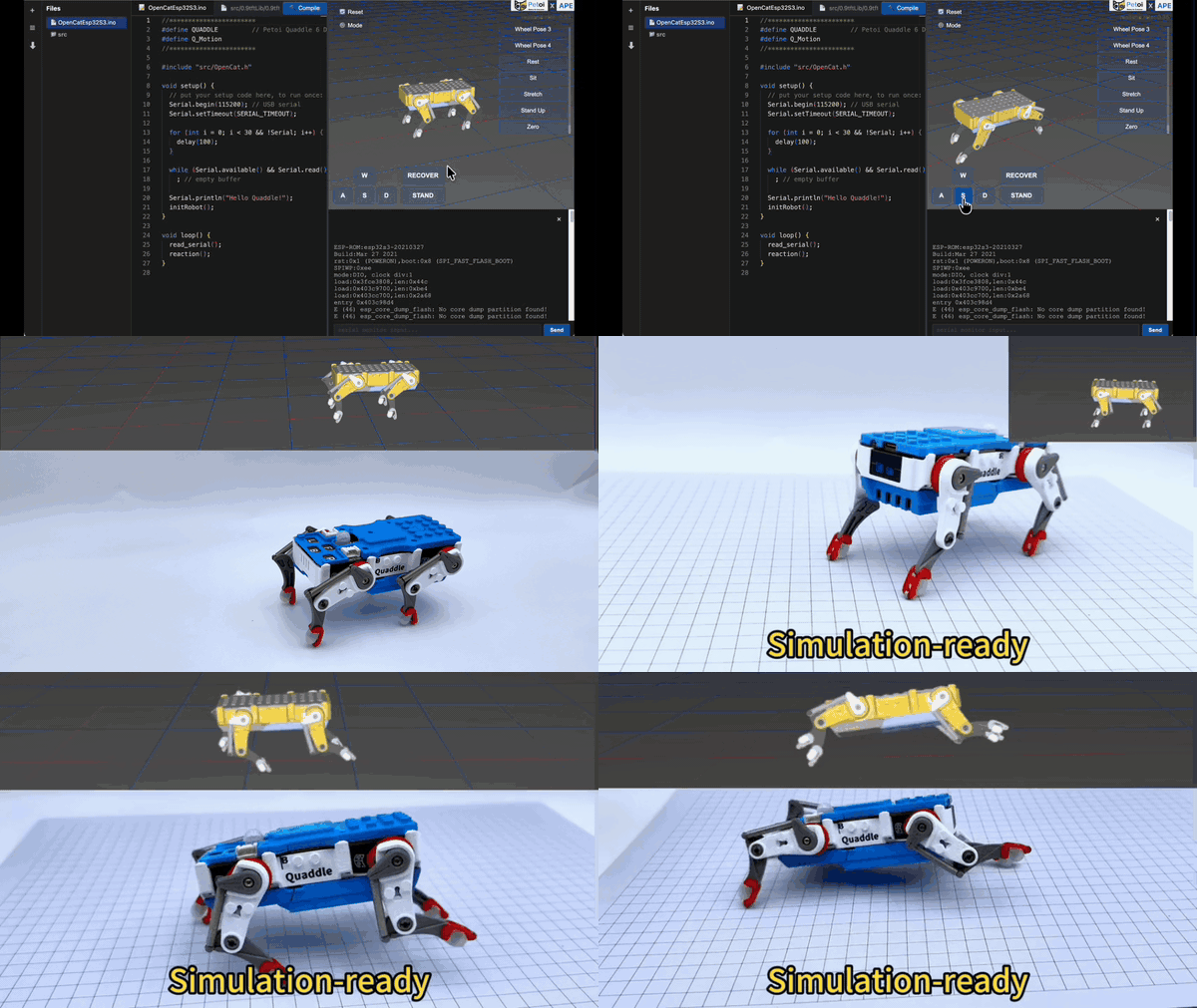
- ROS / ROS2 deep development ecosystem and web-based simulation: built on Petoi’s classic OpenCat open source architecture, it can mount a Raspberry Pi Zero or wirelessly connect to more powerful servers, supporting everything from Block graphical programming, Arduino C++, Micro Python, and Python to ROS/ROS2 high-level algorithm deployment; combined with Vibe-Coding, it rapidly brings experimental ideas to life;
- Provides a web-based real-time physics simulator and Hugging Face URDF models.
2.Petoi Quaddle Scout—Top Configuration, a Teaching and Research Platform
If you are a robot enthusiast, STEM educator, researcher, or advanced developer, the Quaddle Scout is your ideal platform for unlocking algorithms and experiments. Building on the Buddy version, it delivers a comprehensive perception upgrade:
- Multi-dimensional perception array: on top of the gyroscope, microphone, PIR human presence sensing, and touch sensing, it adds light sensing, gesture recognition, and multi-directional obstacle perception modules.
- Radar and vision module expansion: the top reserves slots for LiDAR and AI camera modules, easily enabling mapping, autonomous navigation and obstacle avoidance, and visual tracking.
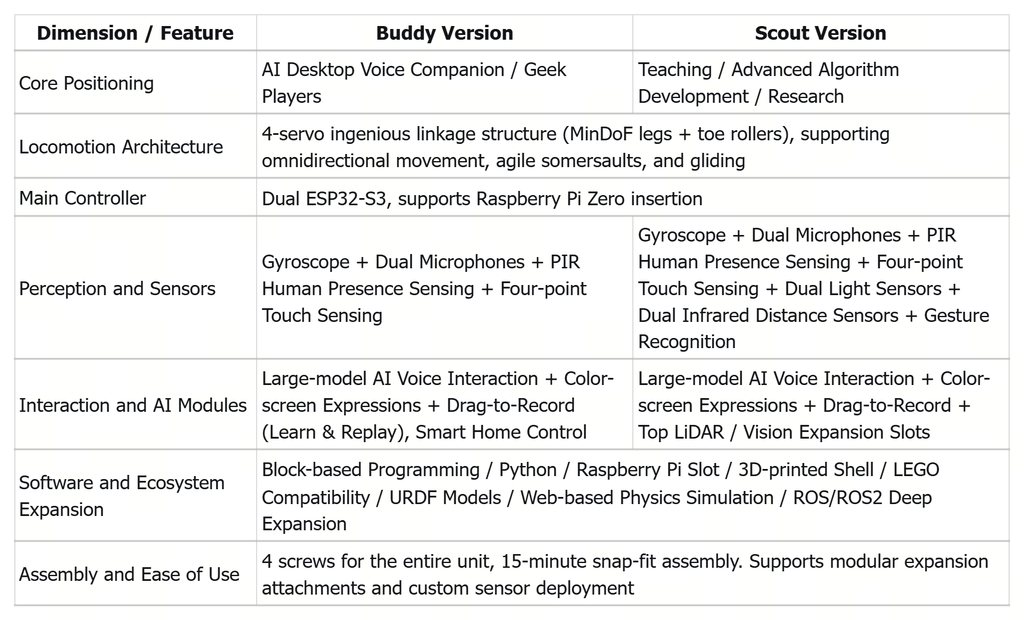
Configuration Parameters and Feature Comparison
Petoi hopes to lower both the cognitive and price barriers of robot products, so that ordinary people can easily access, experience, and understand the charm and fun of robotics. In this process, we insist on starting from real user needs, rapidly validating product-market fit, and gradually exploring a pragmatic, sustainable path to robot commercialization.
Individuals, companies, and traders are all welcome to inquire about cooperation!
Contact Information
- Website: https://www.petoi.com
- Email: info@petoi.com
- Address: Room 303, Building U5, Junxiang U8 Intelligent Manufacturing Industrial Park, Guxing Community, Xixiang Street, Bao’an District, Shenzhen
For the 2026 Greater Bay Area International Maker Summit, we have specially created a brand-new program segment—Alpha Camp. It is not a conventional exhibition, nor a workshop where you sit in the audience taking notes—it is an unscripted “making experiment ground”: there are no spectators here—either take the stage or get your hands on the tools.
Over the two days, around 40 hardcore skill workshops and sharing sessions will run back-to-back—laser cutting, advanced soldering, hands-on 3D printing, AI hardware deployment… 70%–80% of them are hands-on. Attendees are not judged by degrees or titles; the person sitting at the next table might be a veteran welder from the workshop floor whose skills run deep—or your future partner for all-night project builds.
What Is Included?
Priority workshop reservations and access to the ticket-holder community. Book your preferred sessions early, get program updates, and connect with other participants before the event.
Two days of ALPHA Camp access. Explore around 40 workshops and skill-sharing sessions across both days.
Your own NFC maker badge. Activate it at check-in, tap it for access, and use it to complete challenges and level up your virtual pet.
Practical workshops led by experienced makers. Work with people who have used these skills on real projects.
Lunch on both days. Your pass includes an on-site lunch each day.
A certificate of completion and a maker passport. Complete the workshop and challenge requirements to receive your certificate at the event. Use your passport to collect stamps at participating exhibitor booths.
Maker merchandise. Take home a sticker pack, a custom woven tote bag, and other event merchandise.

Over the past 13 years, the development trajectory of Maker Faire Shenzhen can be seen as a microcosm of the development of maker culture in China.
- 2012: “Gathering Small Wisdom, Journeying through the Great Future” – This was the first Mini Maker Faire in China, with less than 1000 attendees, and was more like a gathering within a small circle. But we saw the infinite possibilities emerging from the maker community.
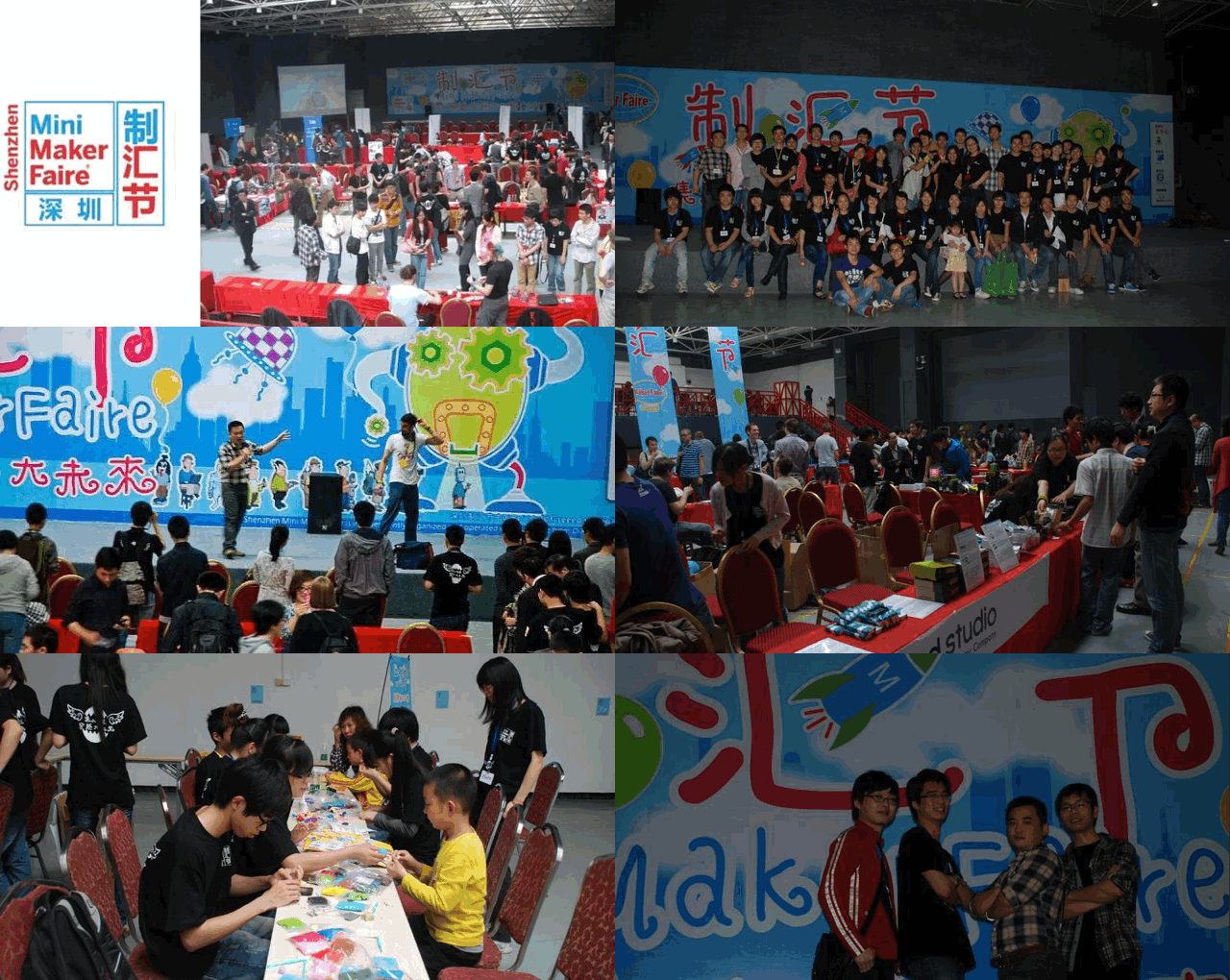
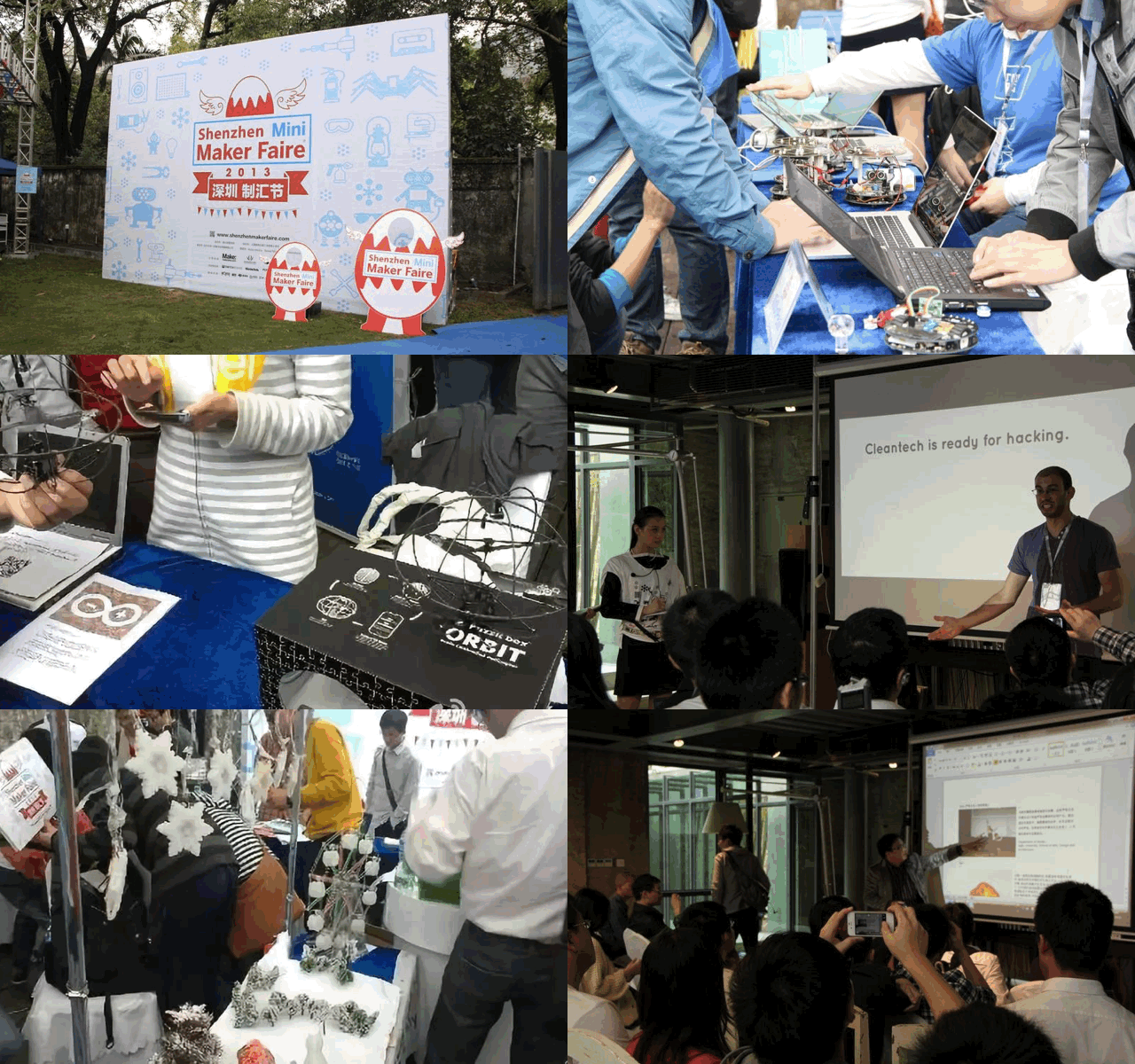
- 2013: The slogan was absent, and the maker community was still small. – In the OCT Creative Park, there were cross-disciplinary exchanges among different creative communities, silently laying the foundation for cultural output.
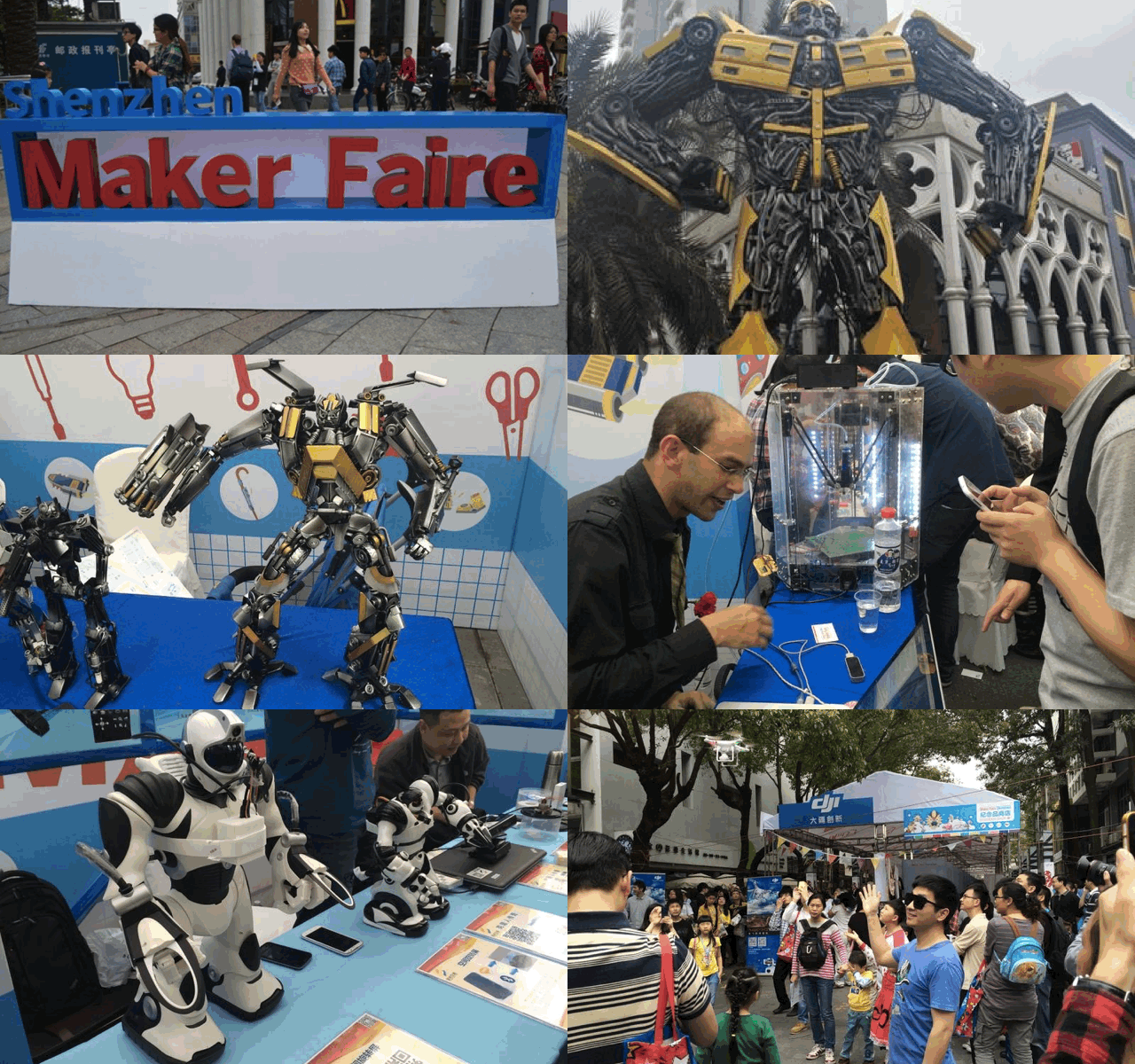
- 2014: “Innovate with China” – the event was upgraded to the Featured level for the first time, with a significant increase in scale compared to previous years, and the beginning of professional independent forums. This year, makers began to enter the public’s view.
- 2015: “Everyone is a Maker, what are you waiting for?” – This year’s Shenzhen International Maker Week became one of the largest Maker Faires in the world. This year, the concept of “maker” was elevated to a national level, and the trend of “mass innovation, mass entrepreneurship” swept across the country.
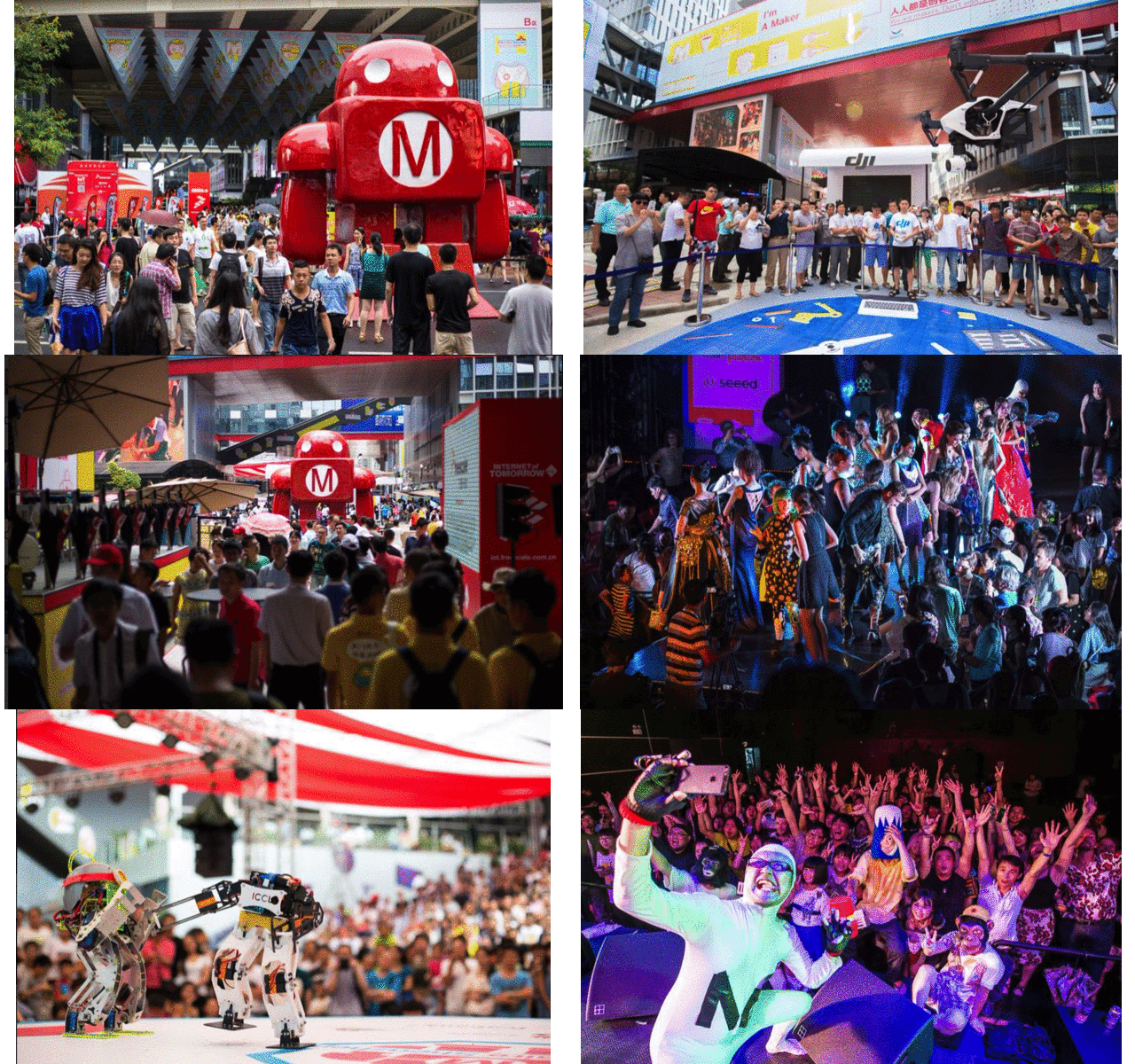
- 2016: “My World, My Creation” – As the sub-venue of the National Innovation and Entrepreneurship Week, the event was held for the first time in the commercial center area, experiencing unpredictable weather from typhoons to scorching heat. Many makers succeeded in your entrepreneurial endeavors this year, but it seemed like there were even more failures. The hype around entrepreneurship shifted towards rationality.
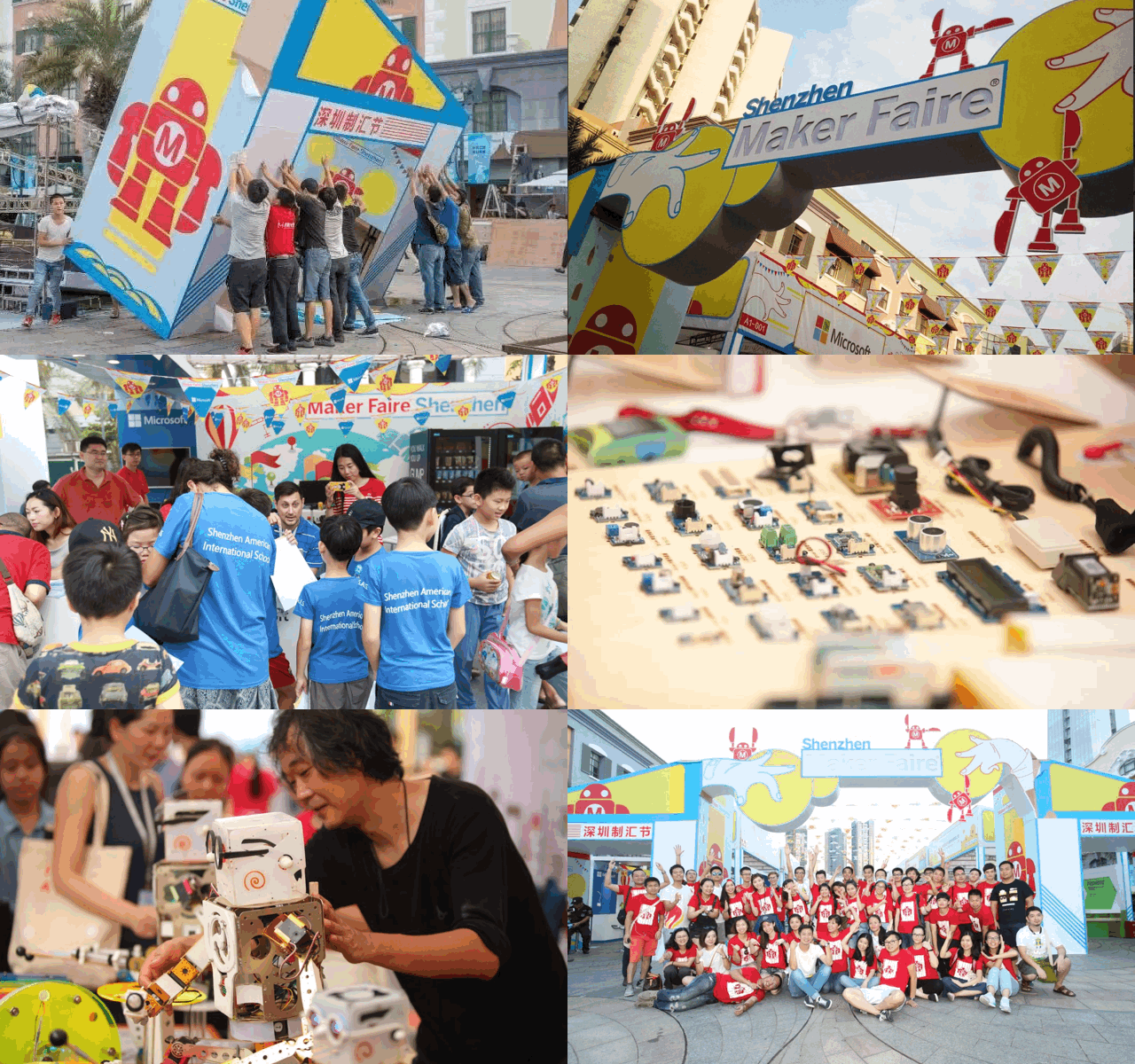
- 2017: “Makers, Go Pro” – The event took place at the university campus for the first time, focusing on Maker Pros and providing a platform for diverse innovators and makers to showcase themselves, presenting more possibilities for the growth path of makers to the entire community.
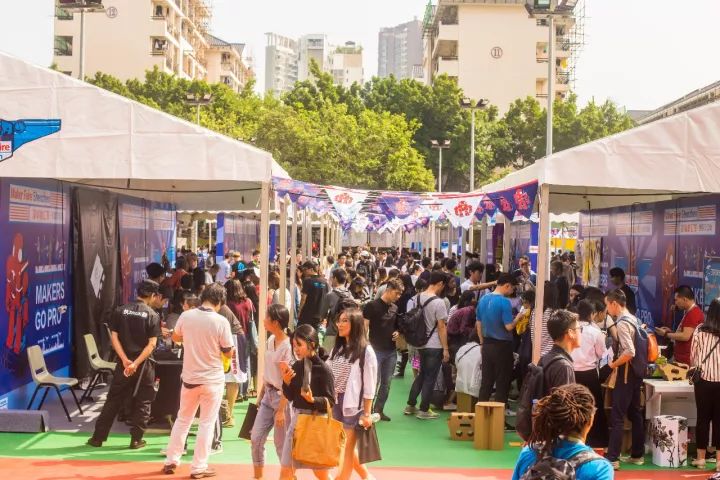
- 2018: “Co-making in the City” – The main venue of Shenzhen International Maker Week, where individuals and groups with shared visions and values gathered to showcase stories, projects, and explorations of collaboration among different communities and people.
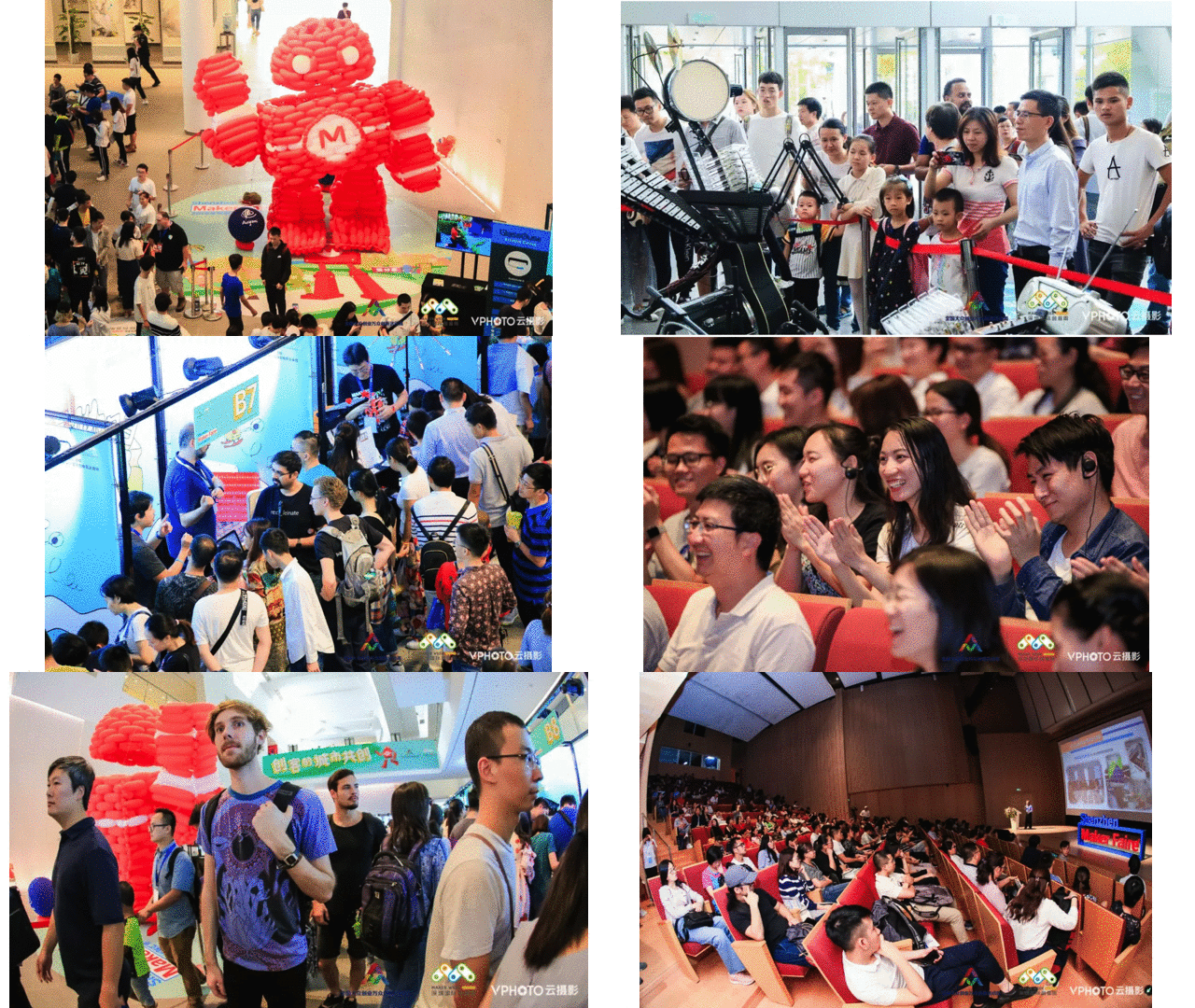
- 2019: ” To the Heart of Community, To the Cluster of Industry” – The event was upgraded to the Maker Faire Shenzhen, attempting to attract professional audiences and focusing on pragmatic aspects such as solving the needs of industrial upgrading and co-developin. It aims to build a platform for innovation and industry dialogue and collaboration.

- 2023: “Where Are The Makers?”– Starting from our own mission and values, we aim to explore the future direction of makers and theapossibilities for commercialization. Though this question does not have a definitive answer, we do hope that through this event, we can communicate and share with every one of you, finding more ideas and directions together.

- 2024: “Everything is AI” – This year, we brought together over 120 exhibitors from around the world, attracting nearly 1,500 professional attendees from nearly 20 countries and over 20 provinces across China. The exhibition showcased a wide range of AI application projects and hosted 10 AI hardware-themed satellite events, alongside various workshops.
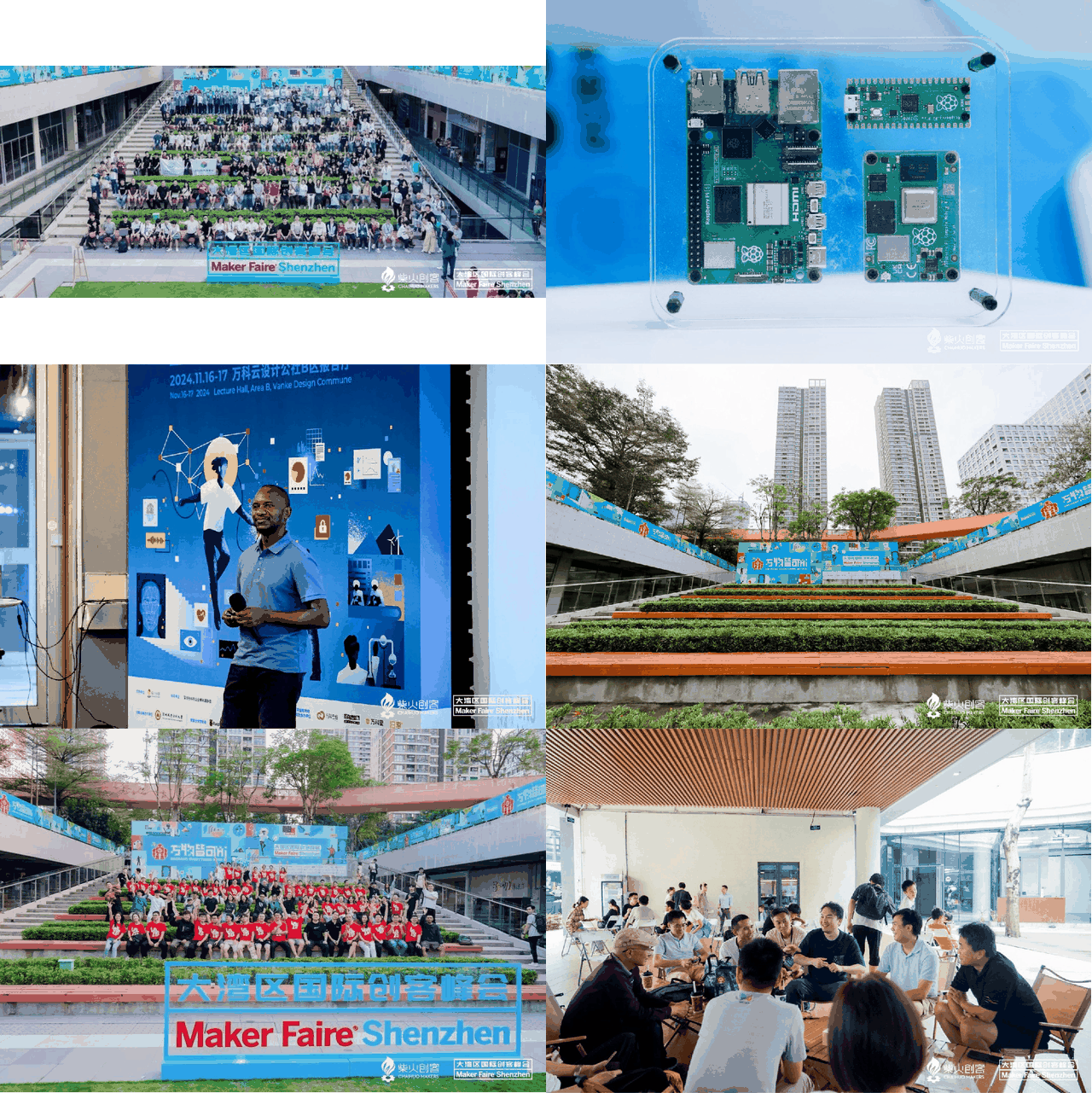
- 2025: “AI Without Boundaries, Everything Reimagined”The summit brought together nearly 100 international innovation ambassadors and showcased almost 1,000 AI hardware projects.Technology leaders, pioneering makers, industry experts, and university teams from more than 30 countries gathered to create an international innovation event combining frontier thinking, technical exchange, and cross-disciplinary collaboration.