Preface
The 2026 Greater Bay Area International Maker Summit & Maker Faire Shenzhen is rallying around OPC, creating an annual stage for Makers worldwide to push the boundaries of what one person can build.
Makers are no longer just hobbyists. They are becoming super individuals who fuse AI, hardware, and real-world scenarios into working systems.
That is why we launched OPC Pioneer Stories, a series spotlighting the people at the heart of this year’s stage of hyper-evolution and capturing the defining moments when one person becomes a team.
We are not just telling stories about making things. We are documenting the hardcore journeys of those who are literally and figuratively soldering technology into reality.
The call for OPCs has sounded, and the stories of the pioneers are already unfolding.
If you have an OPC moment worth documenting and sharing, we invite you to submit your story.

Scan the QR code and tell us about your journey.
Now, without further ado, meet this edition’s OPC pioneer:

The 2026 Greater Bay Area International Maker Summit & Maker Faire Shenzhen, rallying under the banner of OPC, has defined this year’s theme as the “Annual Hyper-Evolution Stage for Global Makers.”
One person is a whole team — pulling AI out of the screen, soldering it into hardware, and throwing it into the real world.
Meet Shen Haoyu (Guangdian Conglin Robot / 光电丛林Robot), an independent maker who builds open-source hexapod robot solutions.
He only truly got into electronics and programming after starting university. In his freshman year he explored Arduino, his entry point. From there, one project led to another: from Nano to ESP32, from 51-series MCUs to STM32; he got his hands on 3D modeling and circuit design, and did both frontend and backend development; on the systems side he worked his way from FreeRTOS to Linux, and on the hardware side from Raspberry Pi to RDK. His research focus also evolved, from kinematics in the early days to embodied intelligence later on.
Learning by doing and pushed forward by pure interest, he has steadily built up the impressive body of work he has today.
The Starting Point: Interest and the Market Pushed Him onto the Maker Path
Shen Haoyu has loved building things since childhood — he was constantly taking toys apart and modifying them.
After entering university, he got into electronics and programming: Arduino in his freshman year, then STM32, then ESP32. “On the hardware side I started with perfboards, and later I learned circuit design — I can now handle everything from two-layer to four-layer boards,” he said.
The road that led him to become a maker began with a very concrete opportunity.
“I’ve always had a strong interest in programming, circuits, and mechanical design. During my undergraduate years I joined clubs such as the drone club, and together with the other members I built all kinds of fun things, which steadily sharpened my hands-on and design skills,” he said.
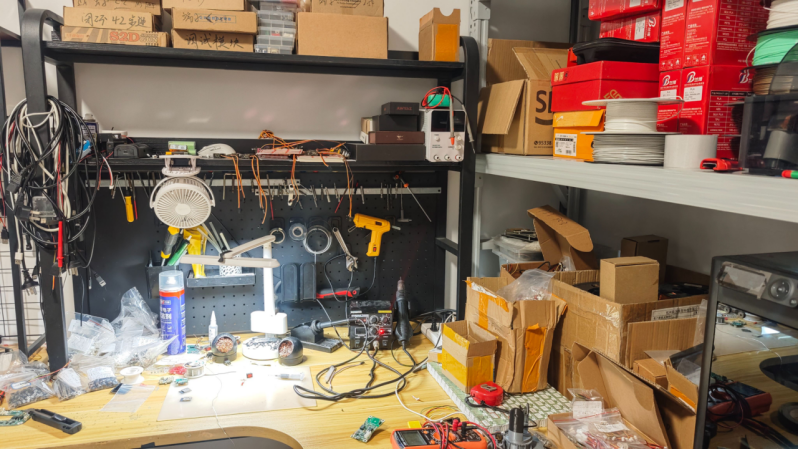
A corner of Shen Haoyu’s studio
Toward the end of his undergraduate studies, he replicated an open-source hexapod robot project and listed it on a second-hand marketplace — and buyers kept coming to him.
He kept iterating and developing based on customer needs, expanding into hexapod robots, quadruped robots, self-balancing vehicles, and more. In effect, he rode along with each year’s trending open-source projects, and gradually found his way onto the maker path.
The Work: A Hexapod Robot Platform for Educational Institutions and Researchers
Speaking of this year’s key work, Shen Haoyu says his main focus has been a hexapod robot platform for educational institutions and university research projects.
“Take my current 18-DOF hexapod robot and 12-DOF hexapod robot, for example. They are not only programmed in Arduino — one of the most popular programming environments in the maker space — I have also developed Mixly (米思奇) graphical programming blocks, so that kids at educational institutions can start learning and using them right away,” he said.
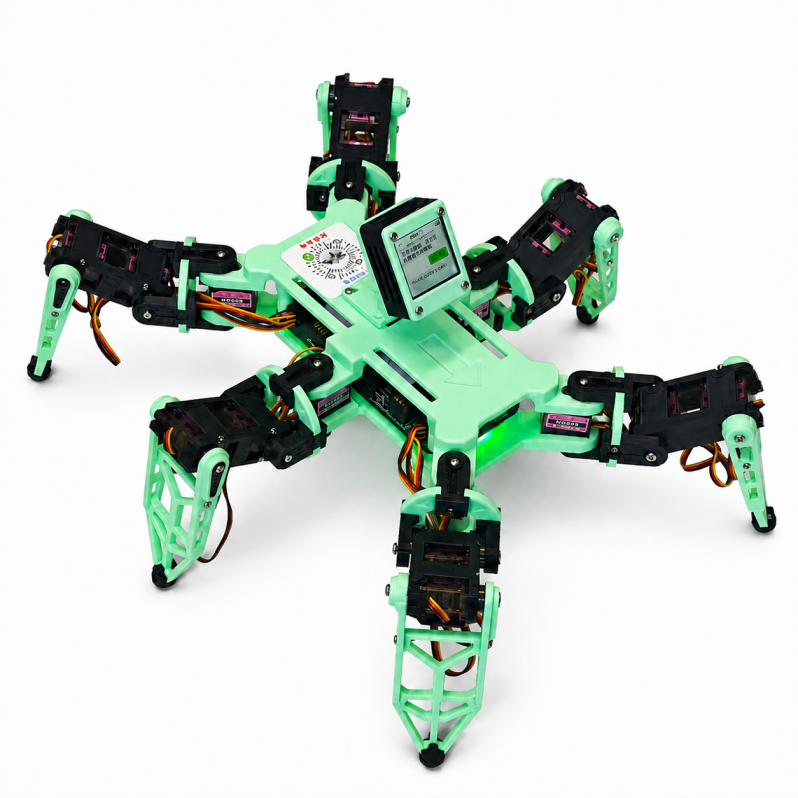
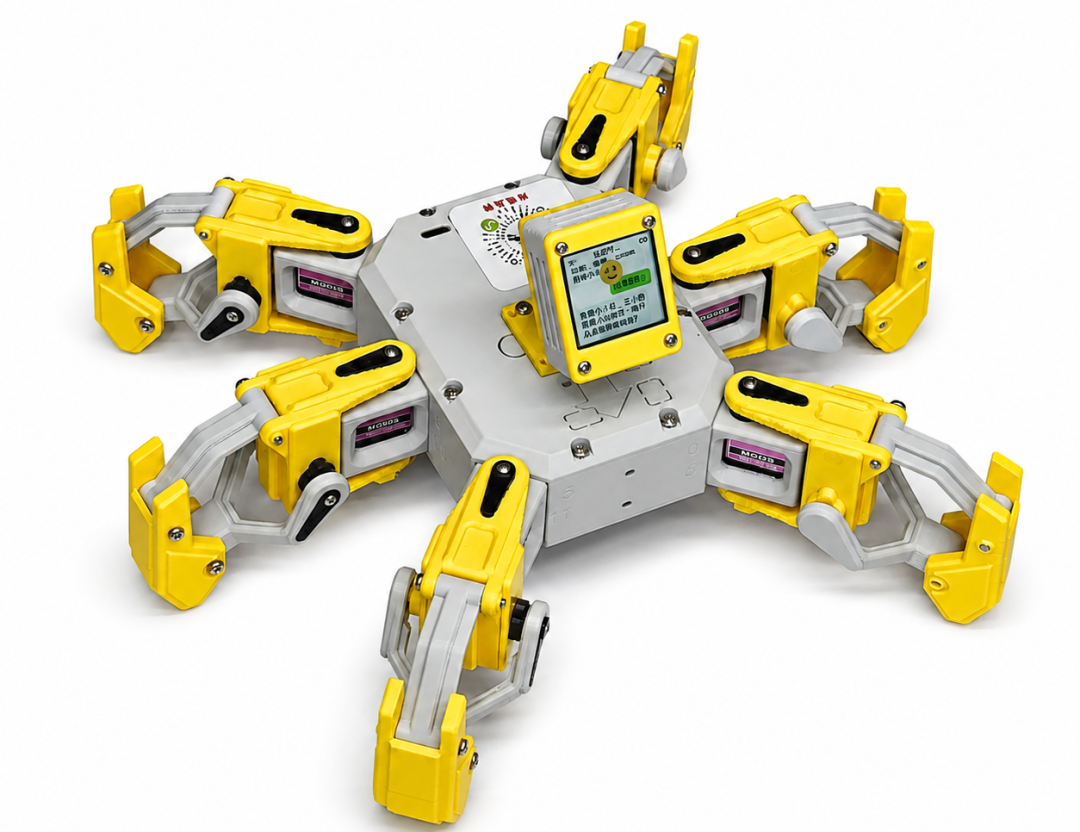
The 18-joint and 12-joint robots built by Shen Haoyu
The robots also come with a rich set of expansion interfaces, making it easy for teachers or students to extend their functions — water-bullet blasters, infrared sensors, ultrasonic sensors, acceleration sensors, XiaoZhi AI voice modules, and more.
His hexapod robots are controlled using robot kinematics, and one of them supports joint-angle feedback, making it a suitable platform for reinforcement learning and embodied intelligence.
The opportunities for product iteration came from his customers.
“Years ago, I listed my earliest open-source ‘garlic-head’ hexapod robot on a second-hand platform. Later, a customer wanted to restyle it as a mecha. On top of that, many student competitions were trending toward 18 DOF, so I built this 18-DOF version,” he said.
Later, to improve payload capacity, he upgraded to a bus-servo hexapod robot and added a water-bullet blaster.
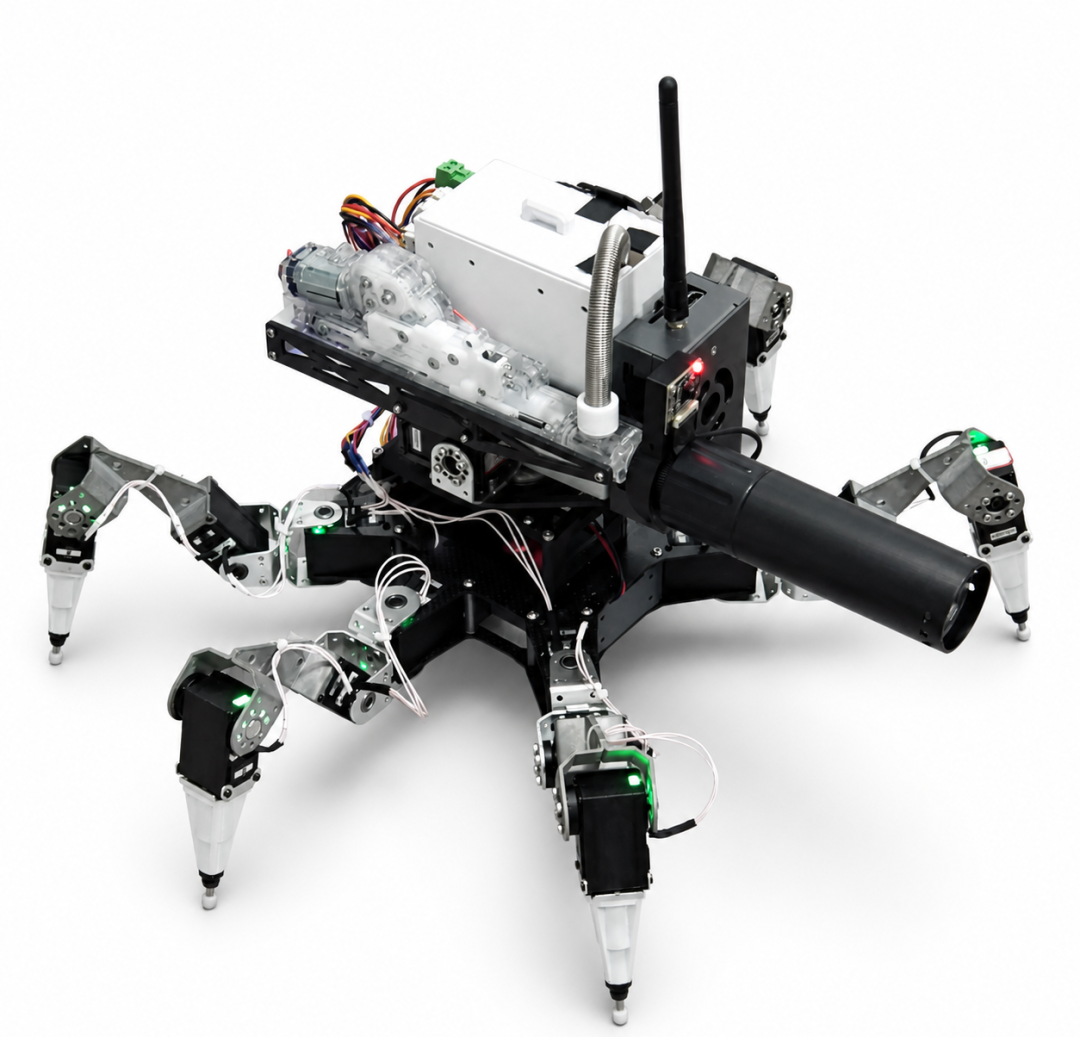
Shen Haoyu’s work — the water-bullet-shooting vision hexapod robot
Along the way, customers supplied the ideas and the funding for upgrades, which — combined with his own technical foundation — kept pushing the product forward.
When XiaoZhi voice assistants took off last year, he added XiaoZhi AI voice to the product. Combined with a camera, the robot gained vision and AI recognition capabilities.
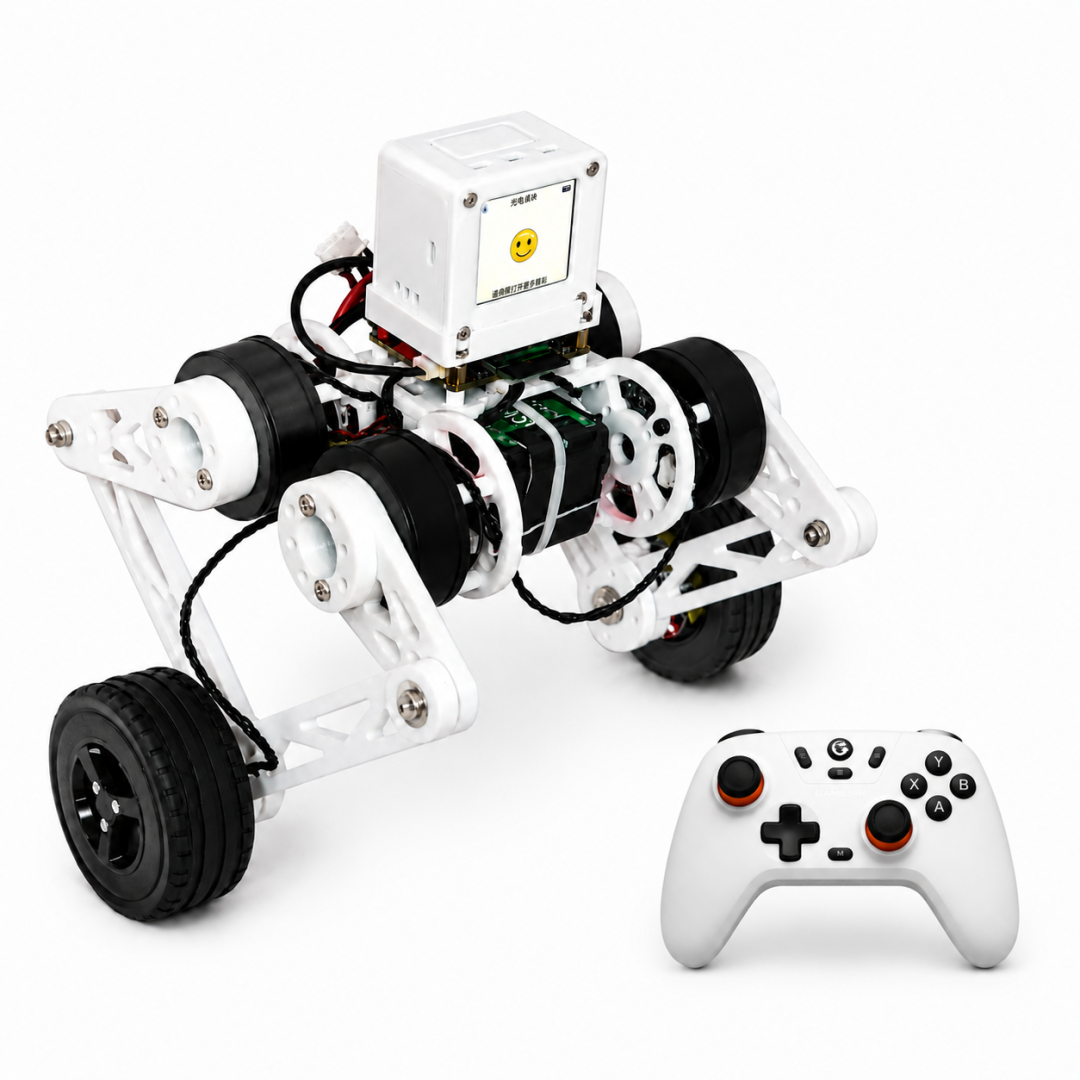
Shen Haoyu’s work — the wheel-legged self-balancing robot
Struggles and Progress: 996 Schedules and Circuit Pitfalls, Taken One at a Time
There are two biggest difficulties on the creative road.
The first is balancing a day job with making. “Early on I worked 996-schedule jobs in Binjiang District, Hangzhou. The company’s tasks were often intense and I had little spare time, but I didn’t want to give up my hobby — so I was constantly caught in a dilemma,” he said.
He later left the big company and joined a smaller firm with a more relaxed schedule. In between, he also tried founding his own startup, but the returns were poor — so today he is running his business on the side while holding a job.
The second is technical problems. “Mostly circuit issues. Since I specialize in software and structure, I would run into strange problems in electronics, and sometimes I had to stay up all night to solve them. After grinding through it for a while, I’ve built up more and more knowledge of electronic circuits — filtering, signal interference, and so on — and now I can handle these problems with ease,” he said.
And now that the AI era has arrived, combined with his previous development frameworks, AI can directly help him implement most of the features he wants.
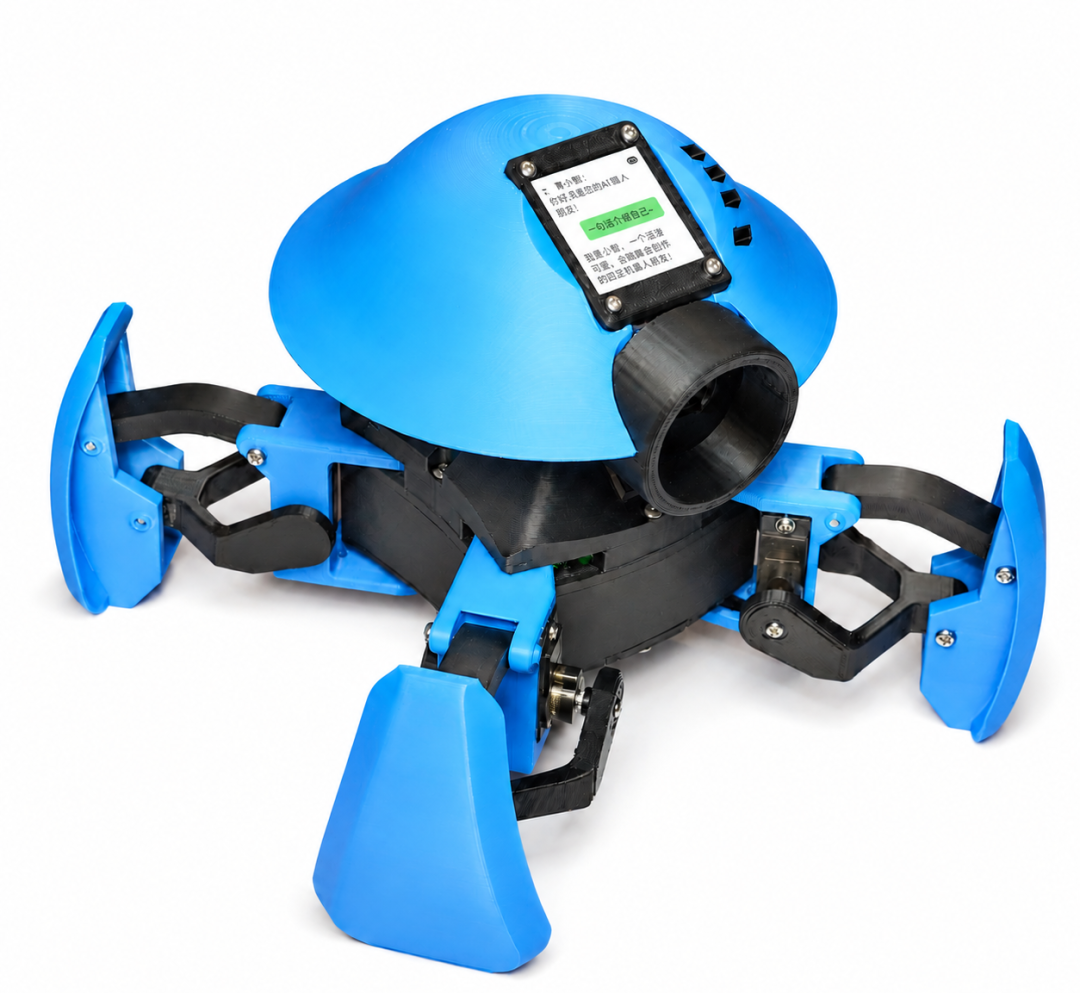
Shen Haoyu’s work — the quadruped robot
Compared with last year, Shen Haoyu says he has made clear progress in three areas this year.
The first is product durability. Last year’s products would often drain their batteries completely after sitting unused for a while. Some designs were also less than ideal — after extended use and prolonged load, structural fractures could appear. There were also some charging issues.
This year he switched to charging directly with a phone charger and added battery protection that cuts power at low voltage, preventing batteries from being damaged by self-discharge after long periods of storage. Product durability and longevity have both improved significantly.
The second is open-source documentation. His open-source materials and technical support documentation are now very complete, and the repository is continuously maintained and updated. Once this work was done, product sales grew by roughly 200% compared with last year.
The third is that component selection and cost control have also become more mature.
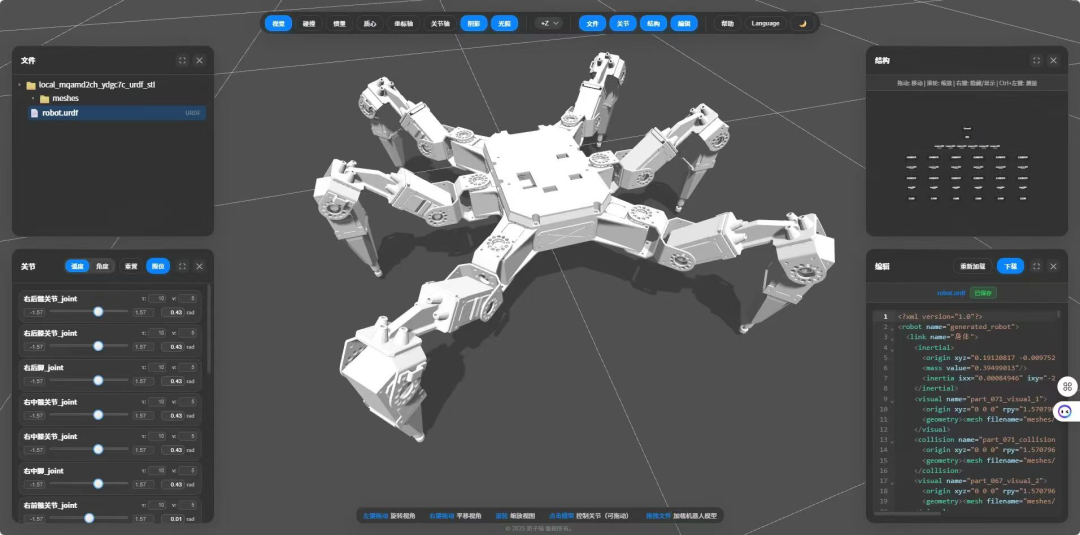
Now Using Reinforcement Learning to Give Hexapod Robots True Embodied Intelligence
Today, Shen Haoyu (Guangdian Conglin Robot) has around 20,000 followers across social platforms.
He attended Maker Faire Shenzhen 2024.
“That was the first time I decided to make real maker products. At the time I posted an open-source sharing video of my hexapod robot on social media, and the MFSZ team found me and invited me to the summit. I brought my earliest hexapod and quadruped robots with me,” he said.
This year he plans to come back to the venue with several hexapod robots and one quadruped robot, and says he looks forward to seeing more interesting projects and designs — and to exchanging ideas and learning with fellow makers.
If you would like to share your OPC ideas and experiences at China’s largest maker innovation celebration—and demonstrate how AI can truly become part of our work and everyday lives while solving real-world problems—this is your opportunity.
Let your project be seen by more peers, developers, partners, and potential customers, and allow new ideas to meet and grow here.
Scan the QR code below or click “Read the Original Article” at the end of the post to apply. Together, let us step into the era of OPC creators and unlock the infinite possibilities of the future!

Greater Bay Area International Maker Summit & Maker Faire Shenzhen 2026
Global Call for Makers Now Open
Application period: June 30–October 30, 2026
Event dates: December 12–13, 2026
P.S. Companies that reserved a booth last year do not need to submit another application. More participation opportunities will be announced soon—stay tuned!

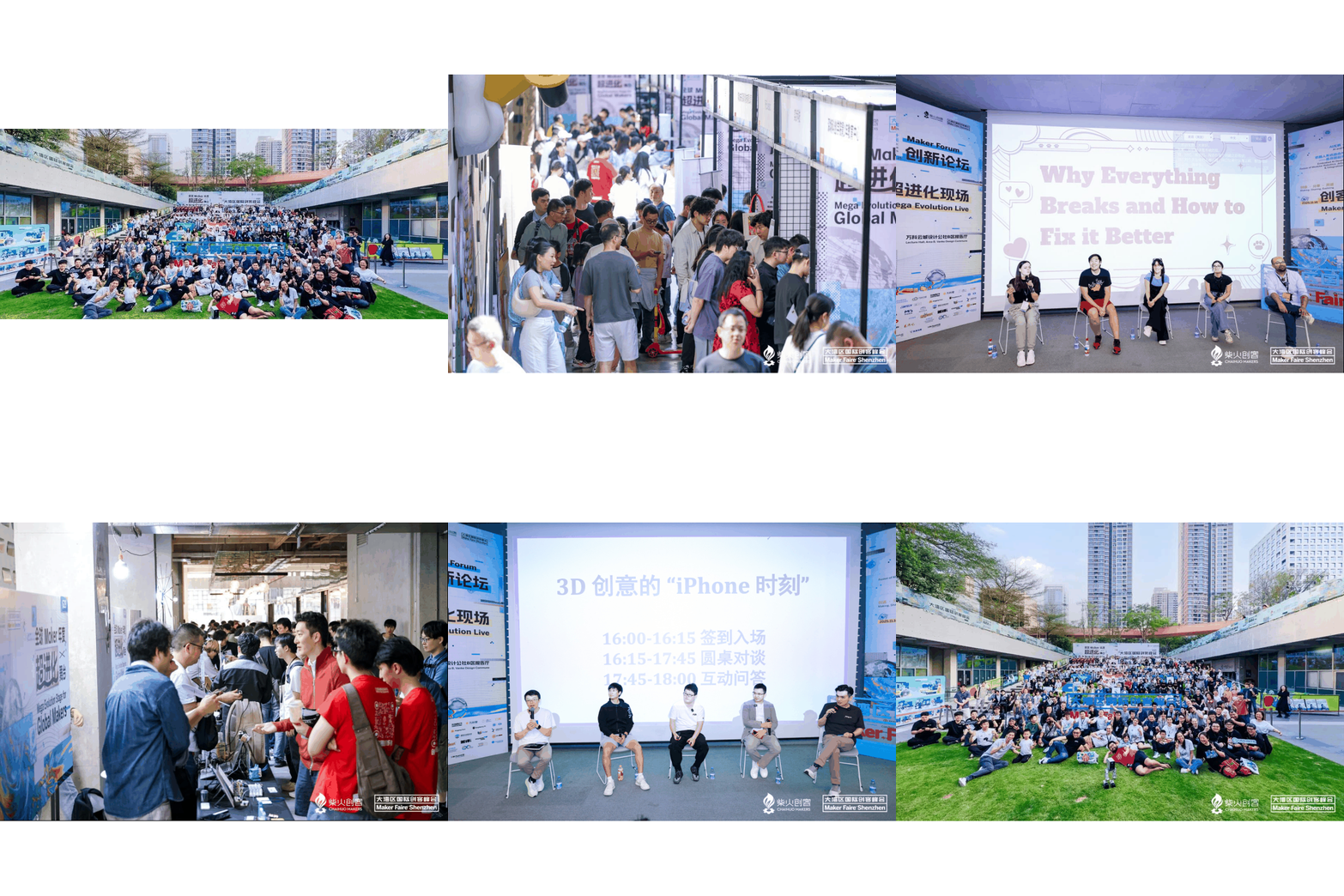
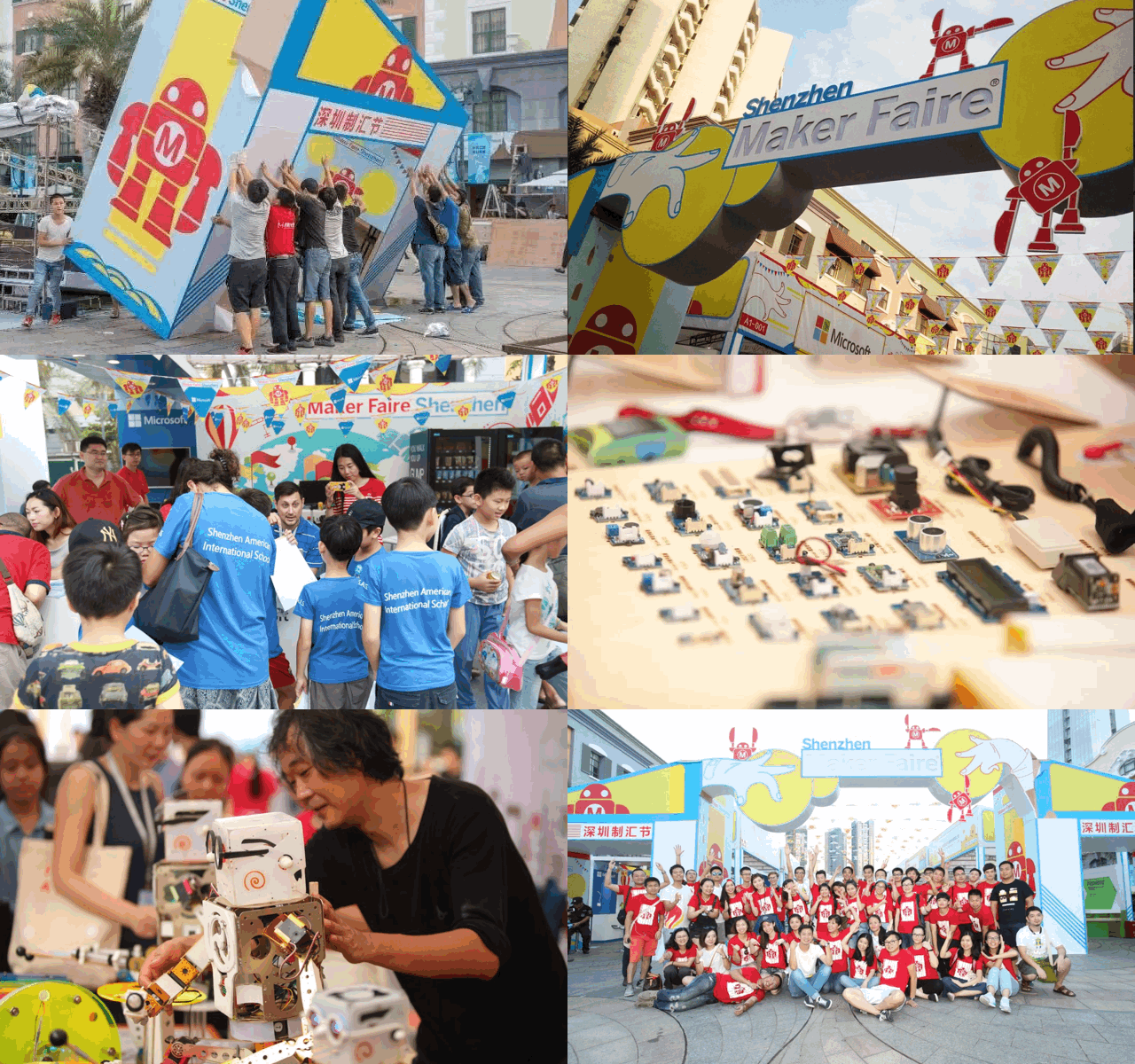
Over the past 13 years, the development trajectory of Maker Faire Shenzhen can be seen as a microcosm of the development of maker culture in China.
- 2012: “Gathering Small Wisdom, Journeying through the Great Future” – This was the first Mini Maker Faire in China, with less than 1000 attendees, and was more like a gathering within a small circle. But we saw the infinite possibilities emerging from the maker community.
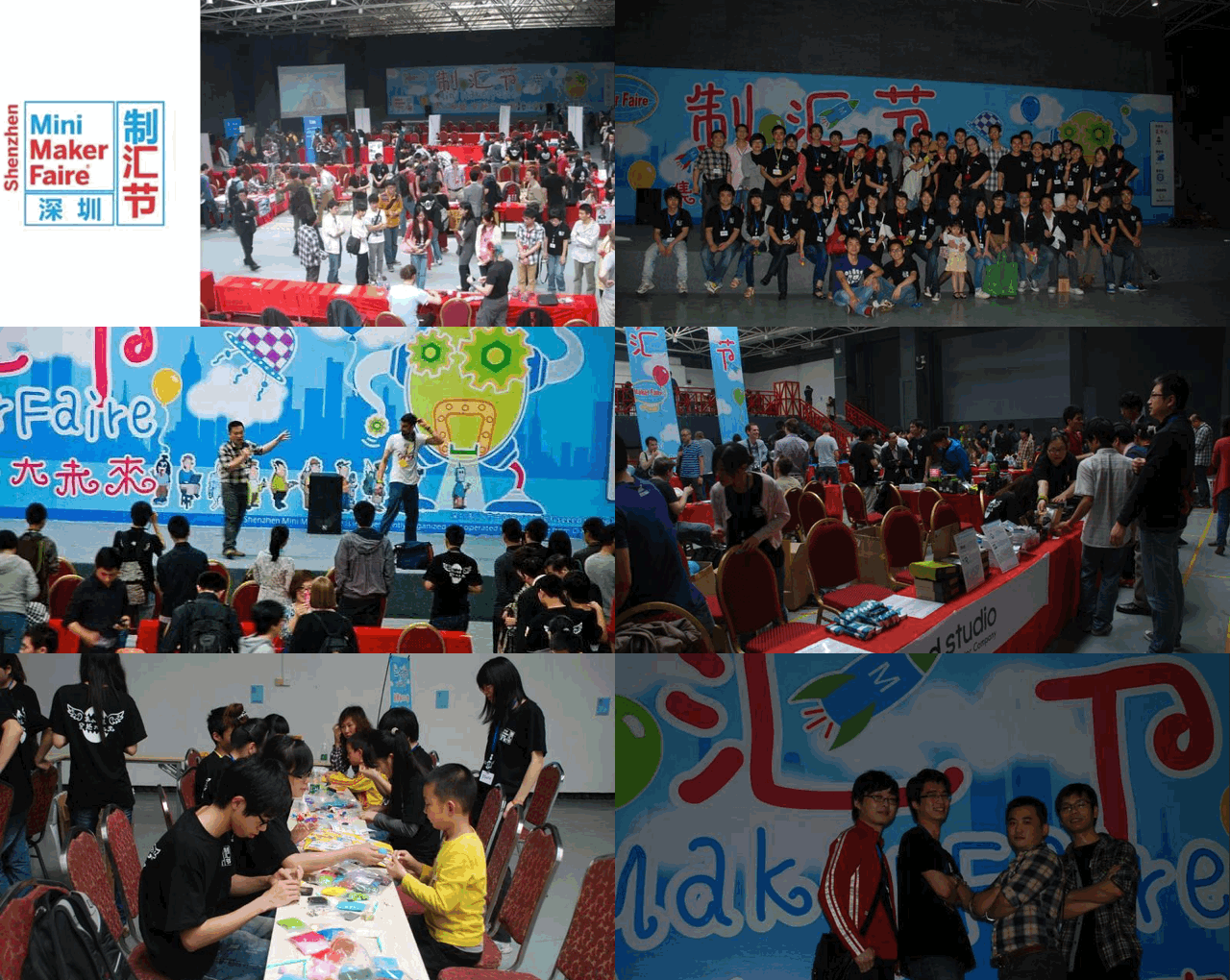
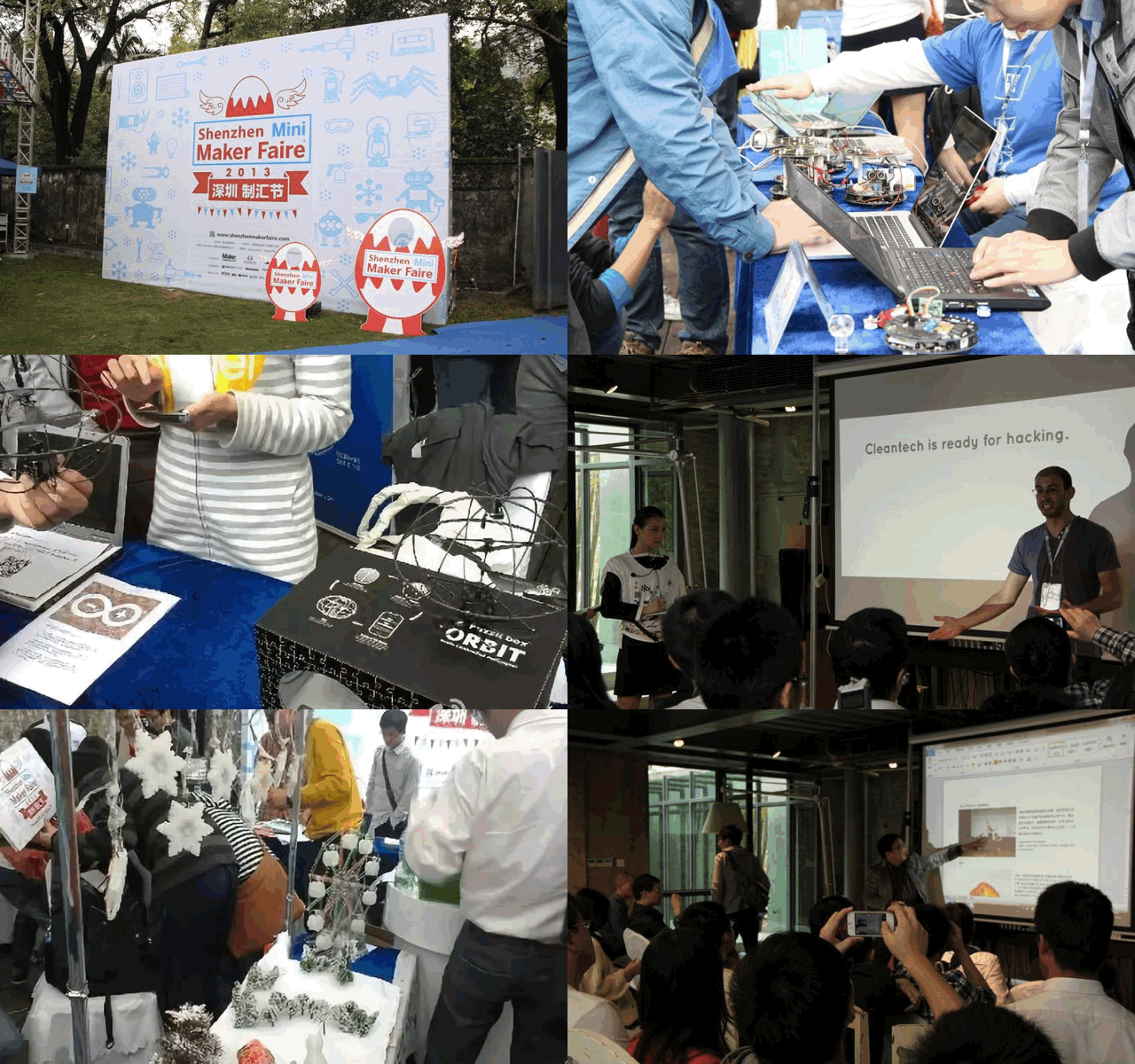
- 2013: The slogan was absent, and the maker community was still small. – In the OCT Creative Park, there were cross-disciplinary exchanges among different creative communities, silently laying the foundation for cultural output.
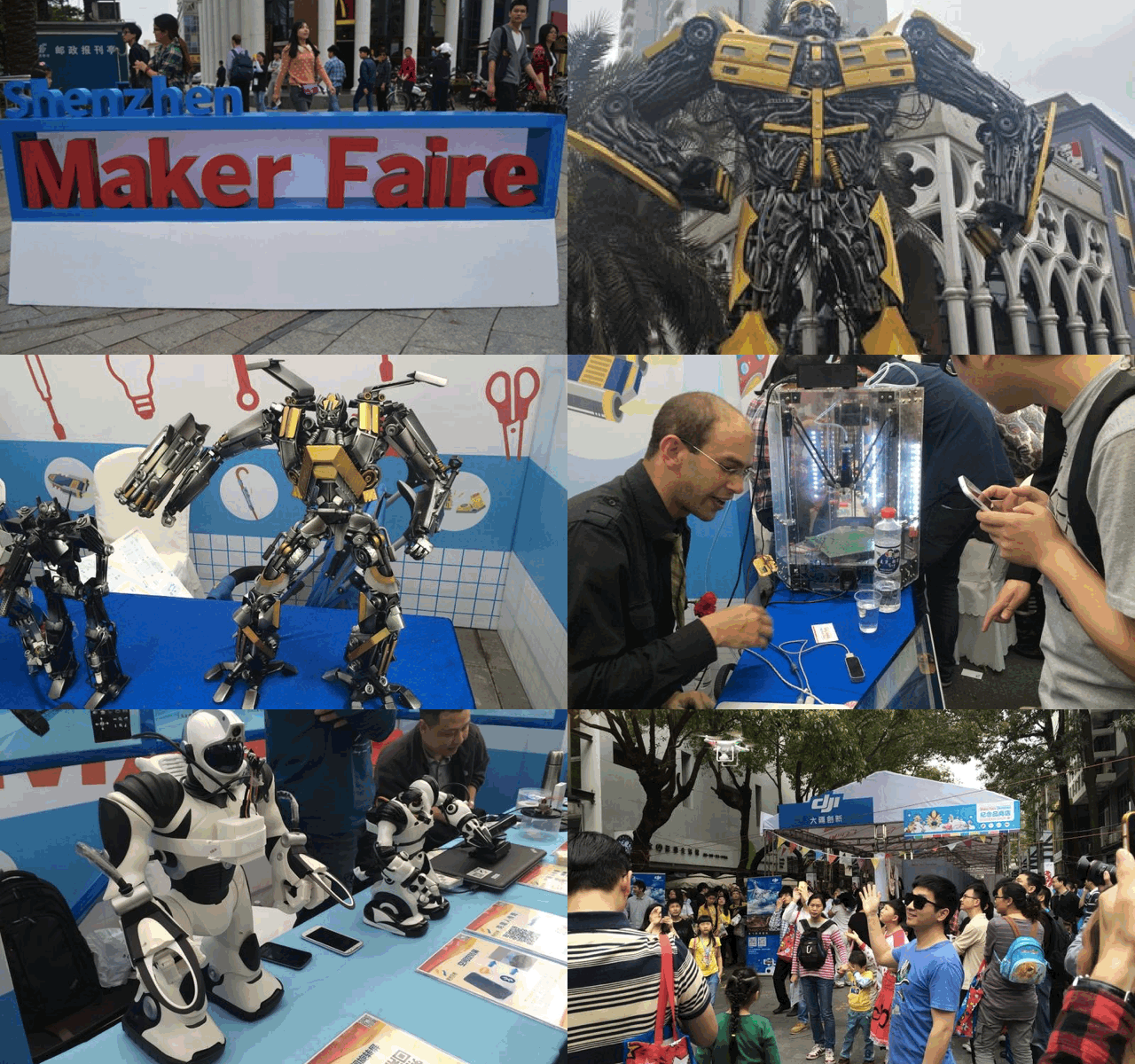
- 2014: “Innovate with China” – the event was upgraded to the Featured level for the first time, with a significant increase in scale compared to previous years, and the beginning of professional independent forums. This year, makers began to enter the public’s view.
- 2015: “Everyone is a Maker, what are you waiting for?” – This year’s Shenzhen International Maker Week became one of the largest Maker Faires in the world. This year, the concept of “maker” was elevated to a national level, and the trend of “mass innovation, mass entrepreneurship” swept across the country.
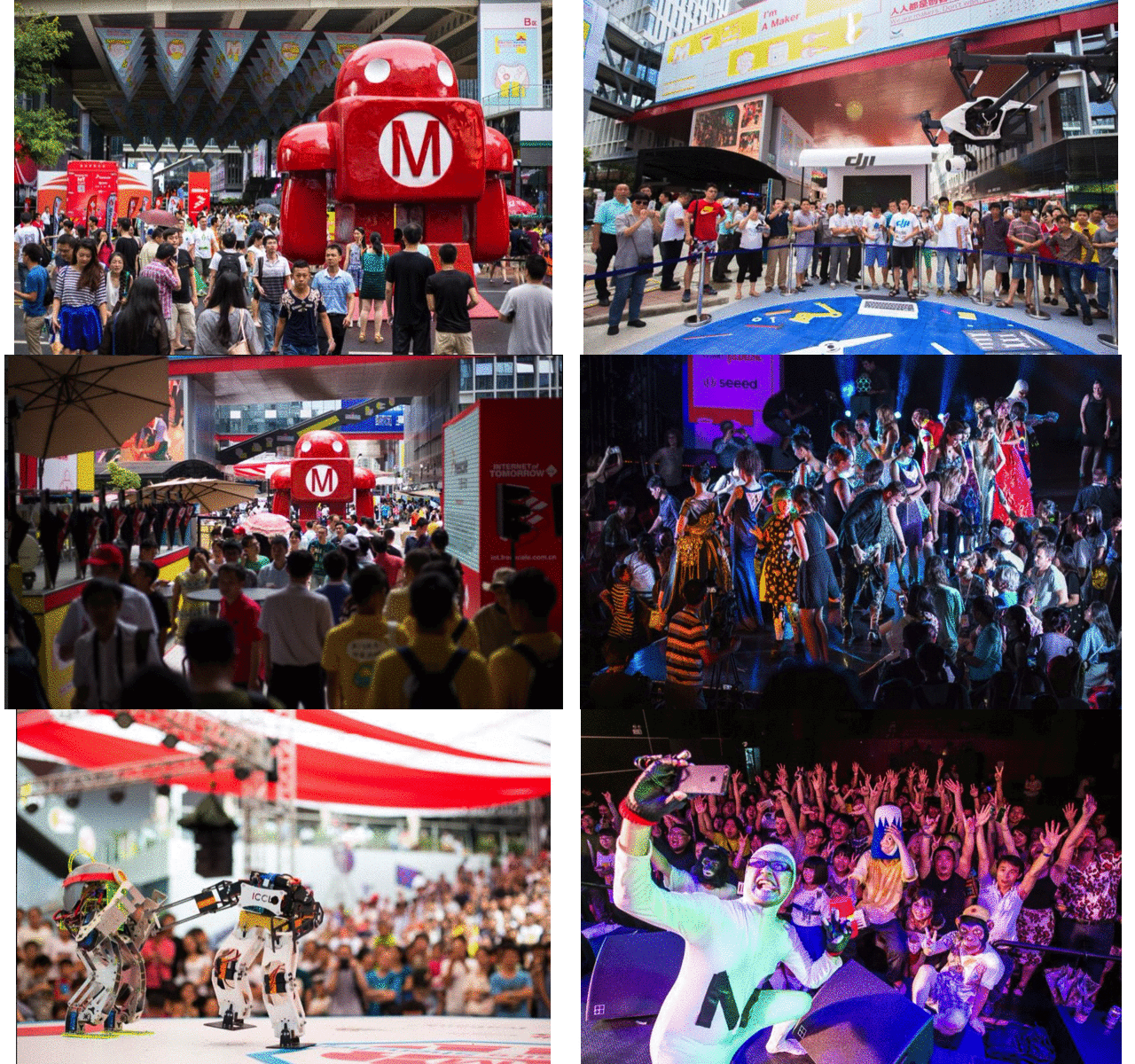
- 2016: “My World, My Creation” – As the sub-venue of the National Innovation and Entrepreneurship Week, the event was held for the first time in the commercial center area, experiencing unpredictable weather from typhoons to scorching heat. Many makers succeeded in your entrepreneurial endeavors this year, but it seemed like there were even more failures. The hype around entrepreneurship shifted towards rationality.
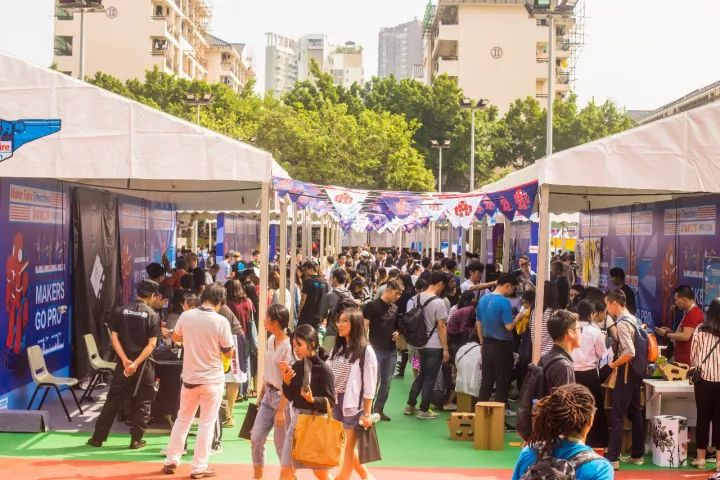
- 2017: “Makers, Go Pro” – The event took place at the university campus for the first time, focusing on Maker Pros and providing a platform for diverse innovators and makers to showcase themselves, presenting more possibilities for the growth path of makers to the entire community.
- 2018: “Co-making in the City” – The main venue of Shenzhen International Maker Week, where individuals and groups with shared visions and values gathered to showcase stories, projects, and explorations of collaboration among different communities and people.
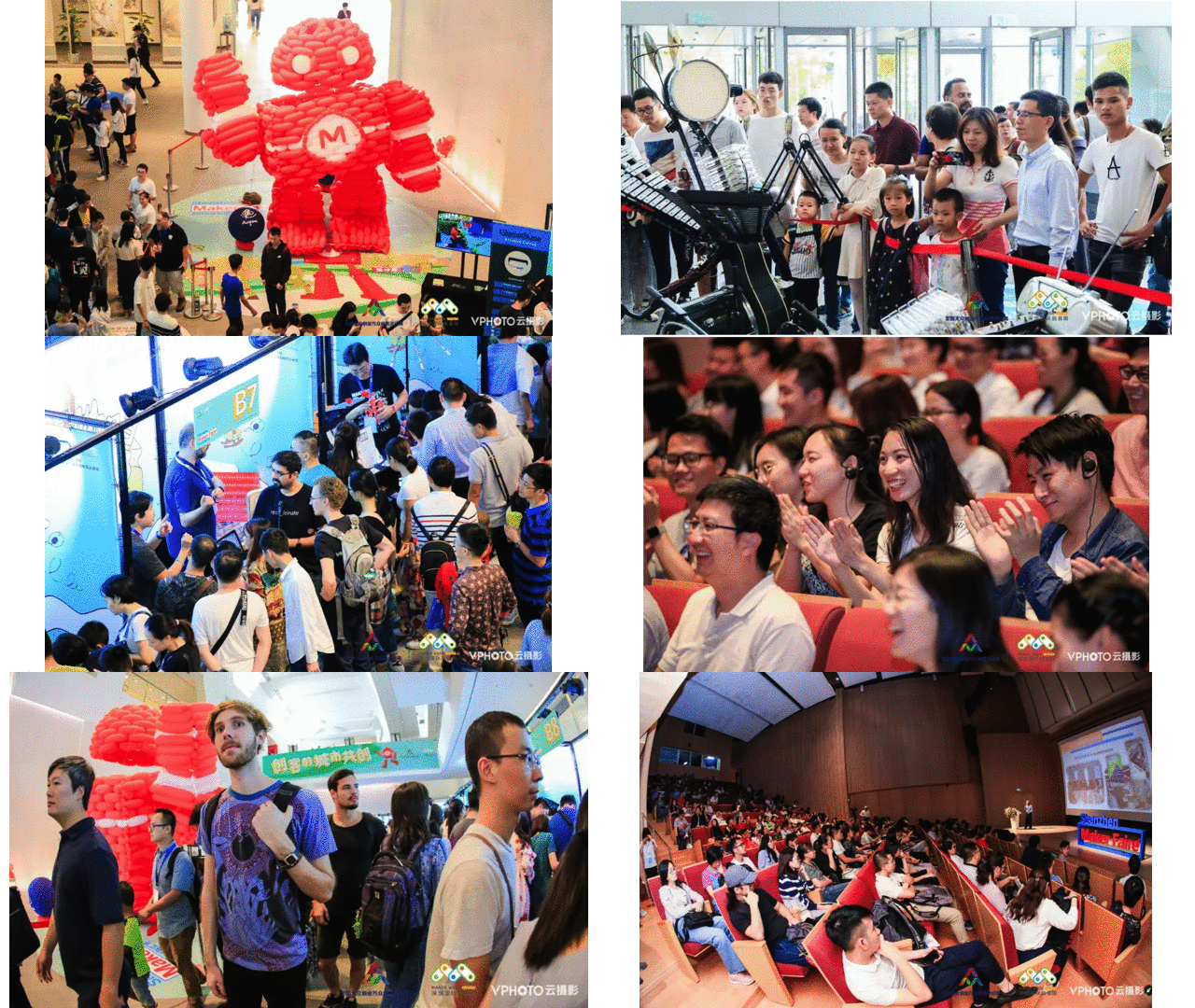
- 2019: ” To the Heart of Community, To the Cluster of Industry” – The event was upgraded to the Maker Faire Shenzhen, attempting to attract professional audiences and focusing on pragmatic aspects such as solving the needs of industrial upgrading and co-developin. It aims to build a platform for innovation and industry dialogue and collaboration.

- 2023: “Where Are The Makers?”– Starting from our own mission and values, we aim to explore the future direction of makers and theapossibilities for commercialization. Though this question does not have a definitive answer, we do hope that through this event, we can communicate and share with every one of you, finding more ideas and directions together.

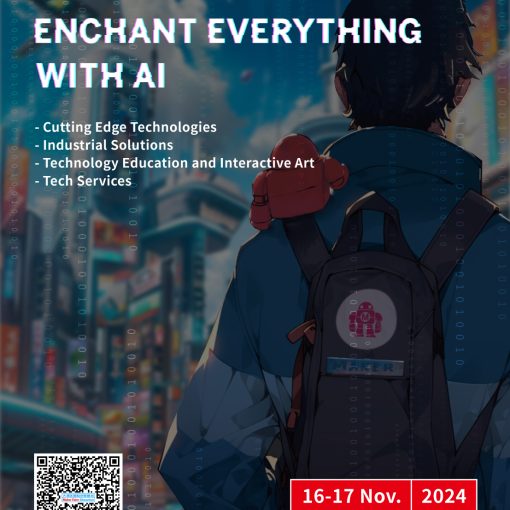
- 2024: “Everything is AI” – This year, we brought together over 120 exhibitors from around the world, attracting nearly 1,500 professional attendees from nearly 20 countries and over 20 provinces across China. The exhibition showcased a wide range of AI application projects and hosted 10 AI hardware-themed satellite events, alongside various workshops.
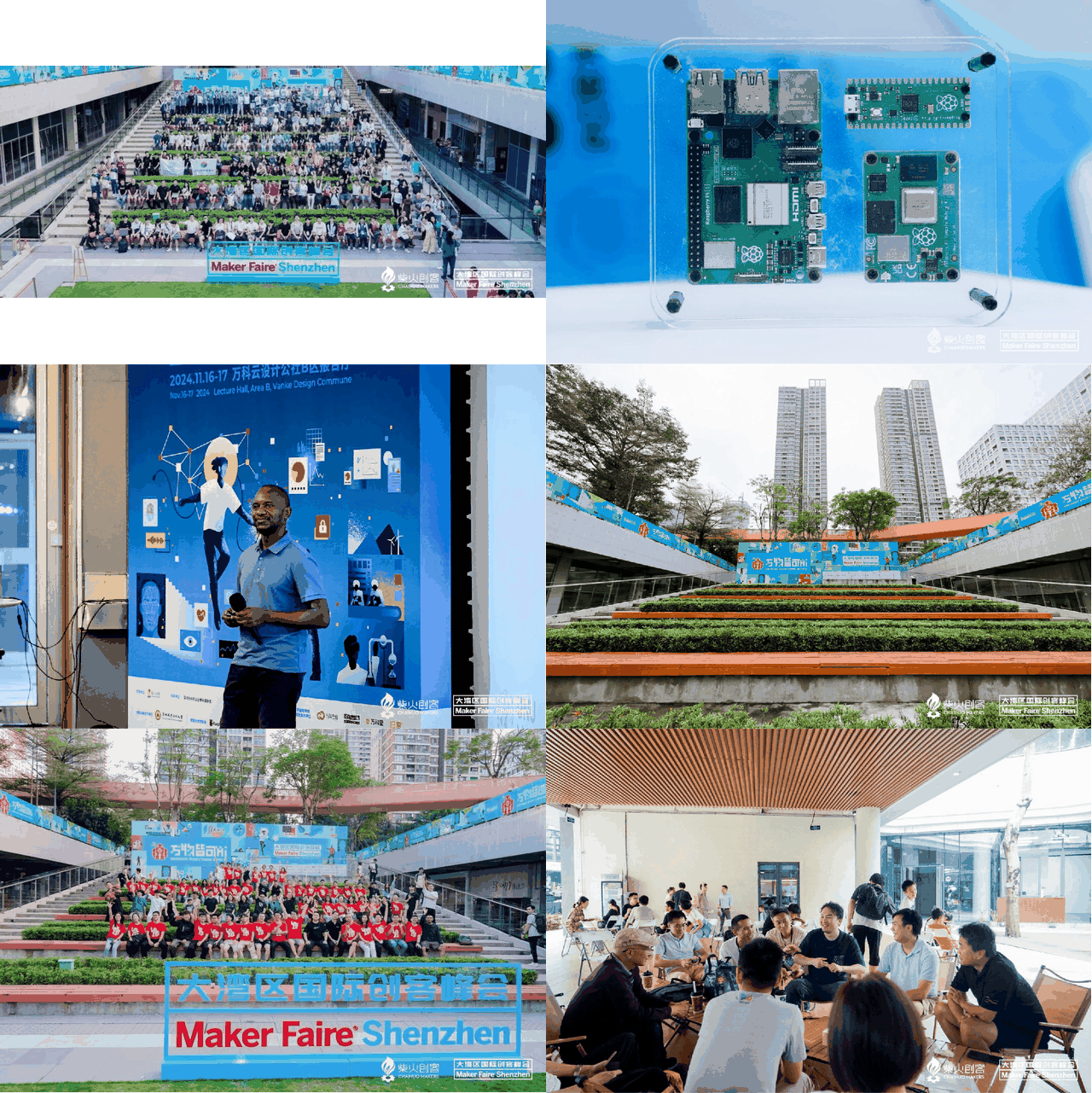
- 2025: “AI Without Boundaries, Everything Reimagined”The summit brought together nearly 100 international innovation ambassadors and showcased almost 1,000 AI hardware projects.Technology leaders, pioneering makers, industry experts, and university teams from more than 30 countries gathered to create an international innovation event combining frontier thinking, technical exchange, and cross-disciplinary collaboration.