Preface
The 2026 Greater Bay Area International Maker Summit & Maker Faire Shenzhen is rallying around OPC, creating an annual stage for Makers worldwide to push the boundaries of what one person can build.
Makers are no longer just hobbyists. They are becoming super individuals who fuse AI, hardware, and real-world scenarios into working systems.
That is why we launched OPC Pioneer Stories, a series spotlighting the people at the heart of this year’s stage of hyper-evolution and capturing the defining moments when one person becomes a team.
We are not just telling stories about making things. We are documenting the hardcore journeys of those who are literally and figuratively soldering technology into reality.
The call for OPCs has sounded, and the stories of the pioneers are already unfolding.
If you have an OPC moment worth documenting and sharing, we invite you to submit your story.

Scan the QR code and tell us about your journey.
Now, without further ado, meet this edition’s OPC pioneers:

One team. Just a few people. Pulling AI out of the screen, soldering it into hardware, and throwing it into the real world.
Makers are no longer just hobbyists. They are becoming super individuals who must solve one messy problem after another in the physical world.
Du Chuan and Chris know exactly what that feels like.
Their core team consists of just three people. Du Chuan, born in the 1990s, comes from an information engineering background. He previously worked on interactive new-media installations before joining Yuece Tennis. Chris, born in 2002, is a senior at South China University of Technology with a background in robotics competitions.
Together, they are developing an AI-powered tennis robot.
Their first-generation demo is already complete, and the second generation is now under development. Their journey reveals an often-overlooked truth:
AI has made it easier to hand-build a demo. But the complexity of the physical world has not decreased at all.

From a “Remote-Controlled Car” to an 8 kg Robot
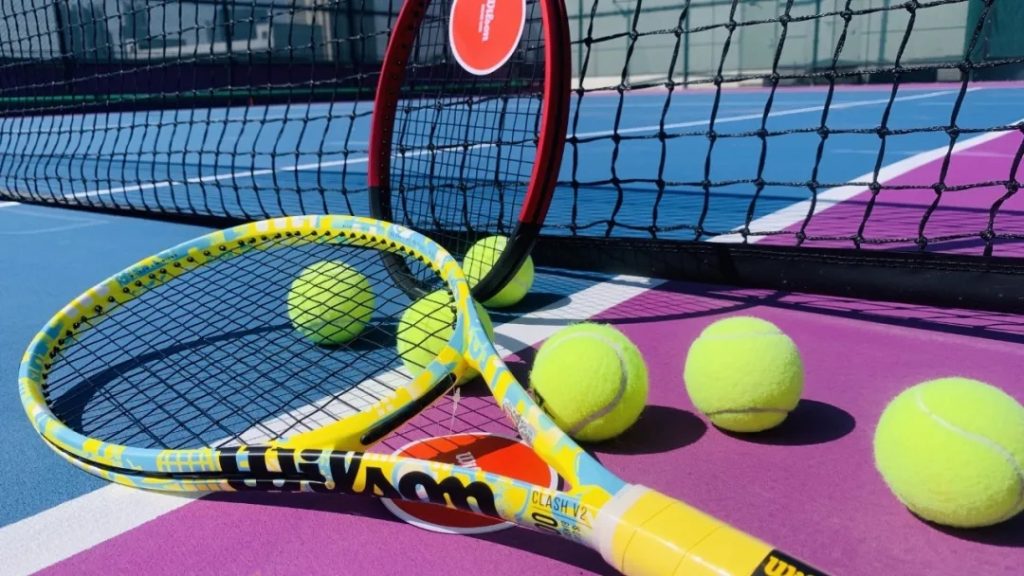
Image source: Internet
The project began with a real problem observed at a tennis facility: beginners can spend nearly half their time picking up balls, while receiving little real-time feedback on their movements.
The team first used a remote-controlled car as a makeshift “remote coach” to test whether users would accept the concept.
Once the idea was validated, they officially launched the project: building a robot capable of collecting tennis balls across the entire court while tracking players’ movements and recording footage for playback and review.
The current second-generation prototype is an 8 kg four-wheel platform, still without its final enclosure.
It uses dual cameras for path planning and dynamic obstacle avoidance, while a depth camera detects tennis balls from up to 10 meters away with an error margin of less than 3 centimeters.
For safety, the robot automatically triggers an emergency stop whenever a person is detected within 50 centimeters.
The entire machine currently costs around RMB 6,000, with the depth camera and development board accounting for roughly 70% of the total cost.
Through further iteration, the team hopes to bring that figure down to RMB 2,000–3,000 and move toward pilot production—even though they know that manufacturing at scale may require them to rethink much of the current demo from scratch.
When AI Finishes the Code, the Real Trouble Begins
Image source: Internet
For the team, AI has undoubtedly improved efficiency.
They use it to develop software sub-functions, generate daily reports, conduct industry research, and even use tools like OpenClaw to aggregate emails and chat histories—asking AI first, then turning to people when necessary.
For individual functional modules, AI can genuinely save hours, sometimes even days, of development time.
But once AI leaves the screen and enters the tennis court, its limitations quickly become apparent.
The first challenge is system integration.
Getting individual modules to work independently is relatively easy. But once they are merged into the main system, errors begin piling up: insufficient memory, unsynchronized timestamps, communication latency, and mismatched operating frequencies.
“We spent two months working backward from the main task architecture to redesign the sub-modules and synchronize latency and frequency. That was what finally took the system from ‘the functions work’ to ‘the whole thing actually runs,’” Du Chuan said.
The second challenge is perception calibration.
The orange-yellow court surface and the yellow-green tennis balls are extremely similar in color. During high-speed movement, dropped or delayed camera frames can even make a tennis ball appear as an elongated streak in the image.
“We had no choice but to manually label the data and adjust the thresholds again and again,” Chris said.
Recognition logic generated with AI still has to face real-world lighting conditions and subtle color differences. Ultimately, human eyes and manual parameter tuning are needed to make it work reliably.
The final challenge is transitioning from prototype to production.
At the demo stage, few people think about surface finishing for structural components or negotiating prices with original manufacturers. Factories may not understand AI-generated code, while an individual OPC naturally has far less bargaining power when dealing with the supply chain.
“AI has made it easier to hand-build a demo, but it hasn’t lowered the barrier to mass production,” Du Chuan concluded.
The OPC Moment: Three People Can Still Operate Like a Full Team

Image source: Internet
The team has experienced a striking mismatch in timescales:
AI saves hours and days. Hardware development is measured in years.
Chris puts it this way:
“In the AI era, the barrier to using hardware is getting lower—but hardware itself is becoming even more important.”
AI can help solve many software-level problems. But hardware brings a different set of questions:
Is the emergency-stop logic reliable?
Will the weight of the chassis affect the court surface?
Can the structural components withstand the factory’s finishing processes?
AI cannot experience the physical world—or absorb its consequences—for you.
This is exactly the kind of OPC spirit that Maker Faire Shenzhen 2026 aims to highlight.
Hyper-evolution does not happen simply because AI can generate code. It happens when people enter the physical world and solve, one by one, the problems AI cannot—soldering those solutions into circuit boards and engineering them into mechanical structures.
As an OPC team, these three people operate with an exceptionally high level of cognitive density.
They need to understand technology and supply chains—and even finance and legal issues—all at the same time.
This idea of “one person becoming a team” is not simply a freer form of independent work. It is a form of entrepreneurship that demands greater cognitive breadth, faster learning, and the ability to operate under intense pressure.
The problem they chose to solve—collecting tennis balls and correcting players’ movements—is exactly the kind of fragmented, niche demand that large companies often overlook.
Yet it is precisely these overlooked needs that force small teams to push their technology deeper, refine it further, and make it truly work.
Within Shenzhen’s hardware ecosystem, they find community among like-minded builders, reducing the isolation of building alone while learning from and reusing one another’s experience.
Their team may be tiny, but what they are doing captures the OPC spirit perfectly:
pulling AI out of the screen and soldering it into an 8 kg tennis robot that knows when to stop 50 centimeters away from a person.
Du Chuan and Chris’s story comes with no headline-grabbing funding rounds and no dazzling large-model benchmarks.
But it offers an unusually honest picture of what it means to be an OPC in 2026:
- AI is a tool, not the answer. Once the code is written, the real work of calibration, integration, and mass production has only just begun.
- The physical world is the ultimate proving ground. An orange-yellow court, yellow-green tennis balls, a 50-centimeter emergency-stop threshold—these are the kinds of constraints AI will not proactively tell you about.
- Becoming a team of one means operating at extraordinary cognitive density. Three people have to take on the functions of an entire organization, searching for opportunities to hyper-evolve within fragmented, overlooked scenarios.
Hyper-evolution does not always happen under the spotlight.
Sometimes, it happens beside the baseline of a tennis court.
It happens in the moment Du Chuan stares at the camera feed and says, “The ball has turned into a streak again.”
It happens when Chris adjusts the threshold one more time—and the robot finally learns to tell the difference between the court and the tennis ball.
Sometimes, that is what hyper-evolution really looks like.

So, what are the key focuses of this year’s Call for Makers?
As the interface and bridge between technological innovation and real-world applications, Maker Faire Shenzhen continues, as in previous years, to focus on four types of projects: New Technology Solutions; Industry Application Solutions; Tech Education & Interactive Art; Technology Services.
We warmly invite OPC creators to take the stage—not only to showcase your work, but to demonstrate how it enters real scenarios and solves real problems. From an idea, to a development board, to a deployable product or a sustainable business, let more people see the true value of AI and hardware innovation.
If you want to showcase your innovative ideas and the impact they have on industry innovation, meet like-minded makers, and explore the specific applications of cutting-edge technologies in various industries at one of the largest maker innovation events in the world, we invite you to sign up by scanning the QR code below or clicking here. We look forward to seeing you there and sharing your journey of continuous innovation!
Call for Makers
Scan to Register

Registration Period: June 30th, 2026 – October 30th, 2026
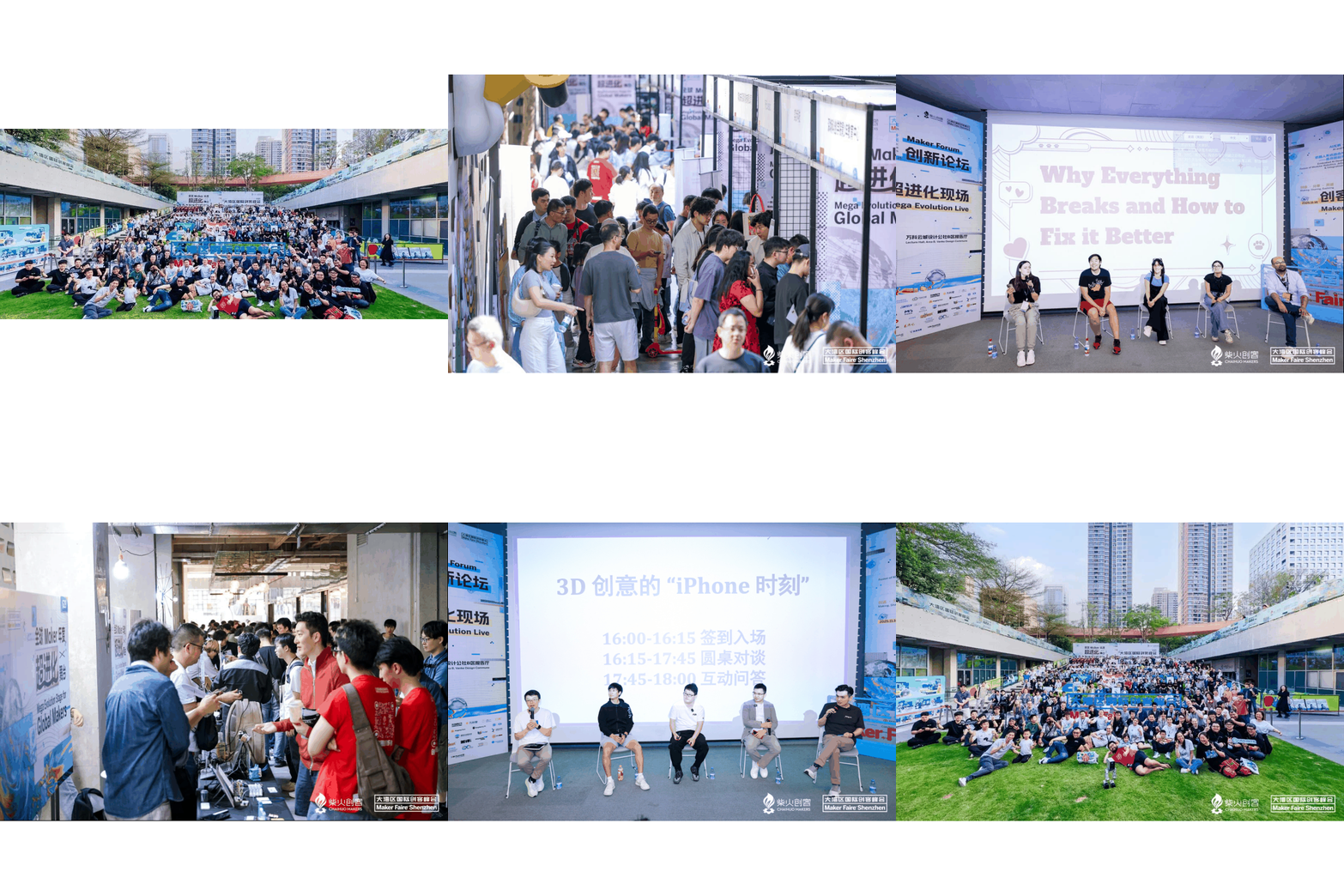
Over the past 12 years, the development trajectory of Maker Faire Shenzhen can be seen as a microcosm of the development of maker culture in China.
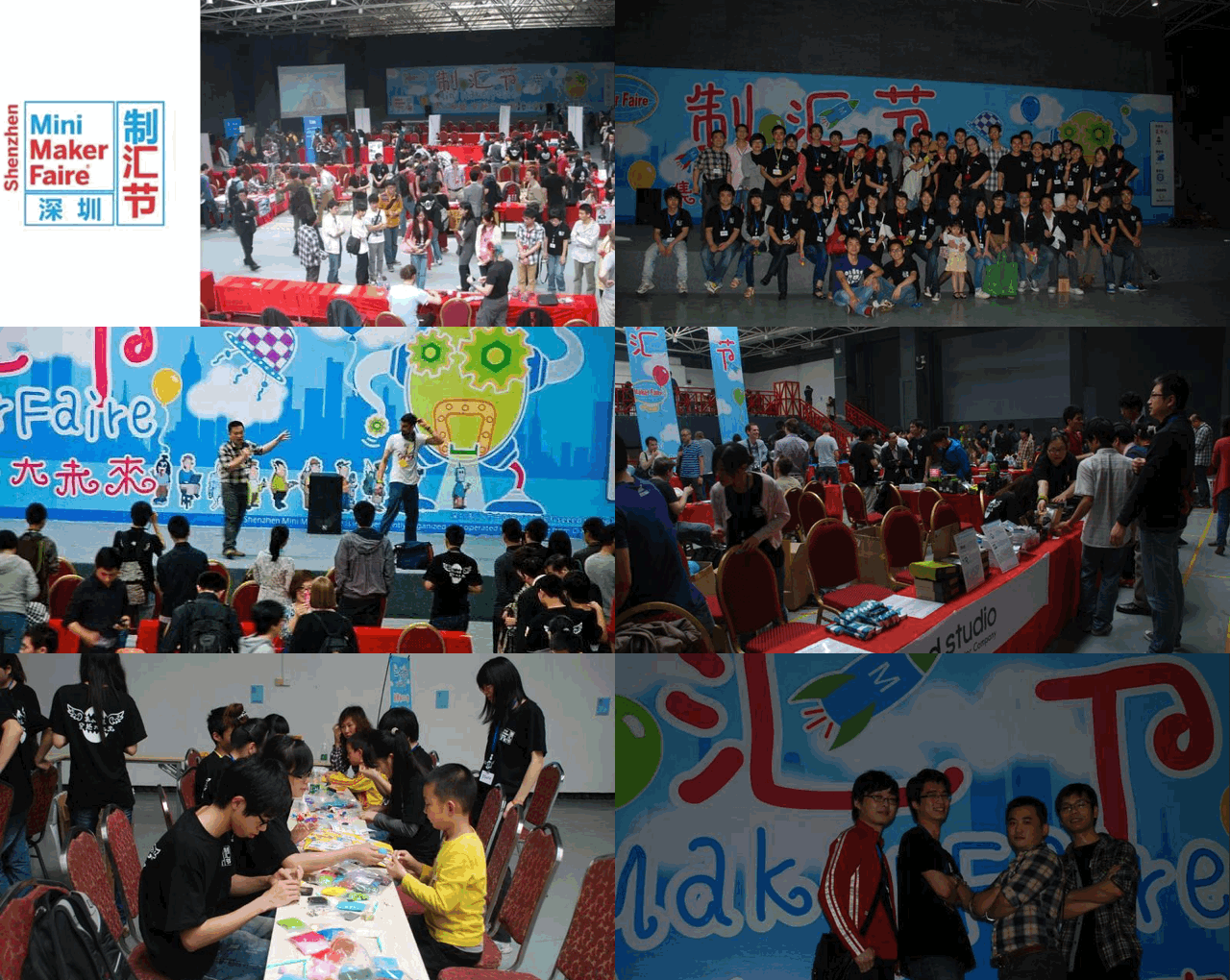
- 2012: “Gathering Small Wisdom, Journeying through the Great Future” – This was the first Mini Maker Faire in China, with less than 1000 attendees, and was more like a gathering within a small circle. But we saw the infinite possibilities emerging from the maker community.
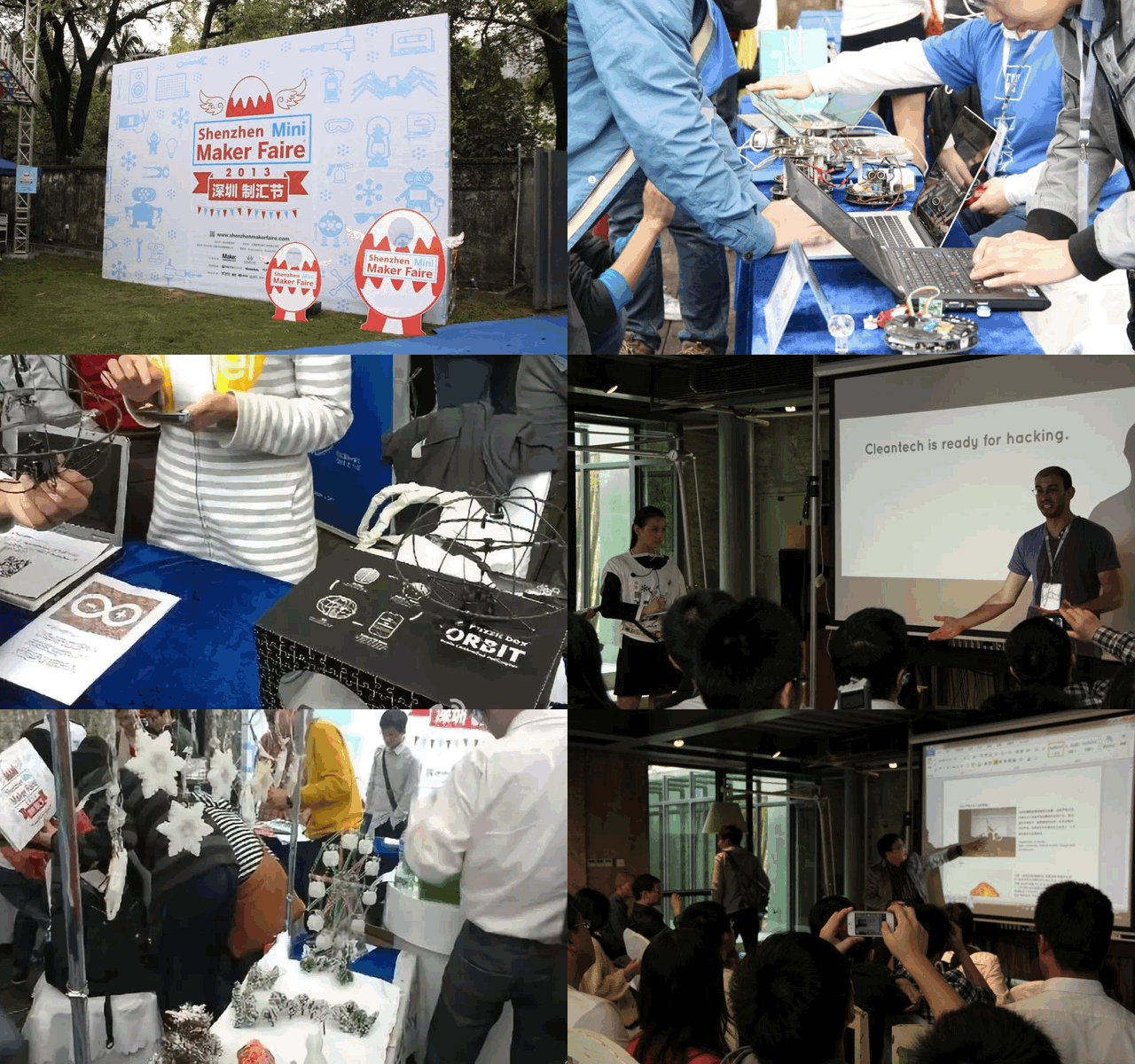
- 2013: The slogan was absent, and the maker community was still small. In the OCT Creative Park, there were cross-disciplinary exchanges among different creative communities, silently laying the foundation for cultural output.
- 2014: “Innovate with China” – the event was upgraded to the Featured level for the first time, with a significant increase in scale compared to previous years, and the beginning of professional independent forums. This year, makers began to enter the public’s view.
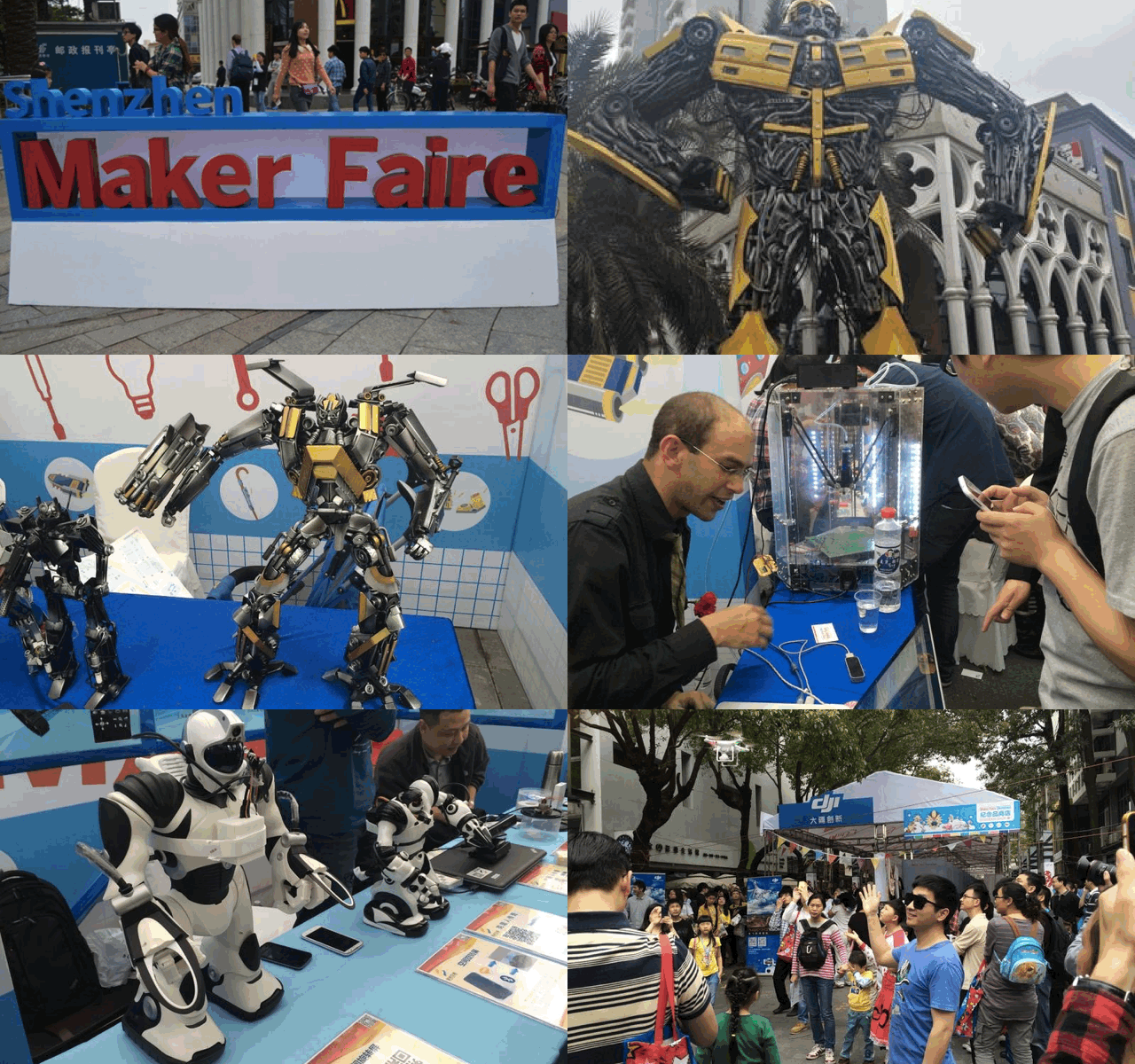
- 2015: “Everyone is a Maker, what are you waiting for?” – This year’s Shenzhen International Maker Week became one of the largest Maker Faires in the world. This year, the concept of “maker” was elevated to a national level, and the trend of “mass innovation, mass entrepreneurship” swept across the country.
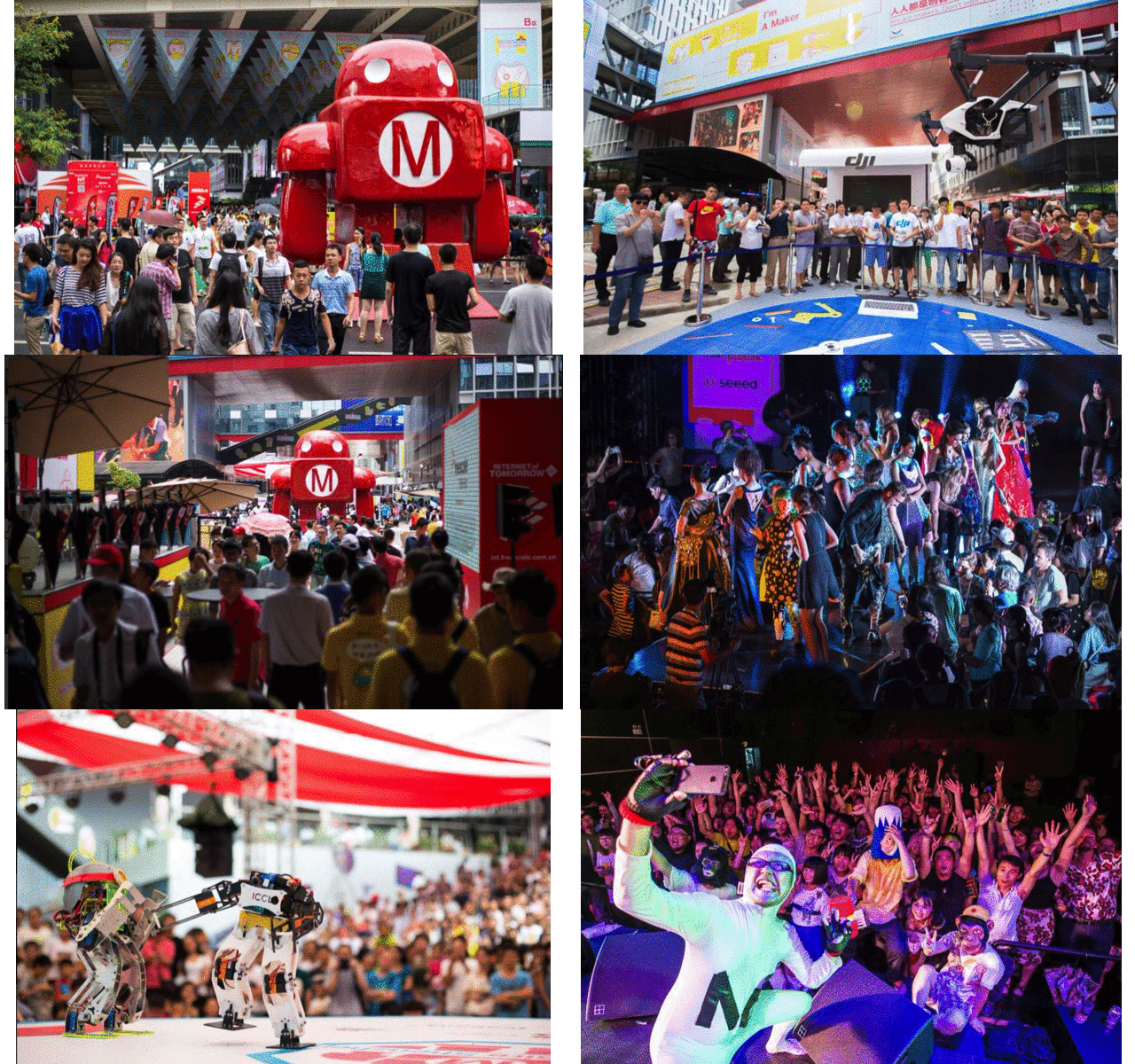
- 2016: “My World, My Creation” – As the sub-venue of the National Innovation and Entrepreneurship Week, the event was held for the first time in the commercial center area, experiencing unpredictable weather from typhoons to scorching heat. Many makers succeeded in your entrepreneurial endeavors this year, but it seemed like there were even more failures. The hype around entrepreneurship shifted towards rationality.
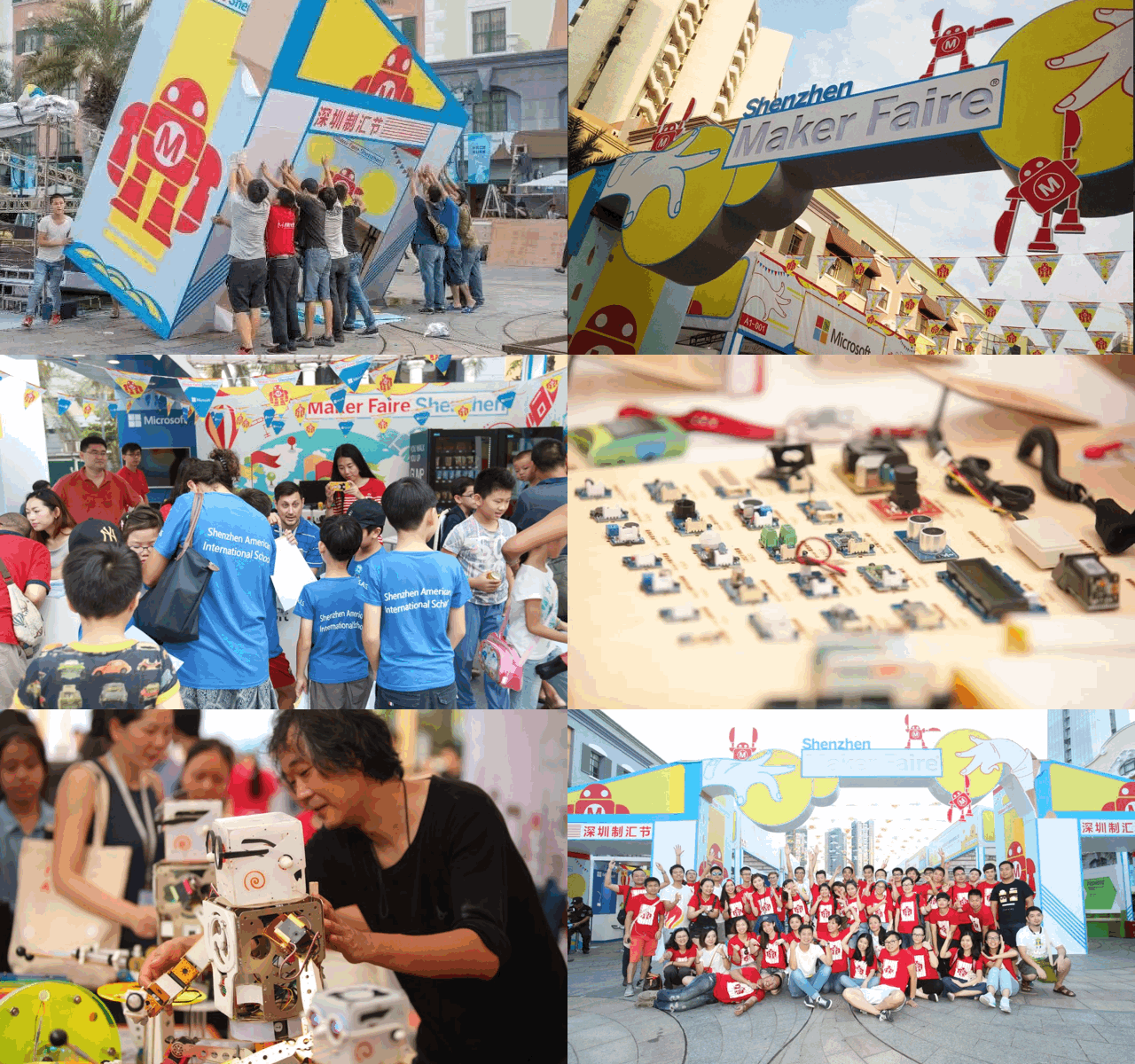
- 2017: “Makers, Go Pro” – The event took place at the university campus for the first time, focusing on Maker Pros and providing a platform for diverse innovators and makers to showcase themselves, presenting more possibilities for the growth path of makers to the entire community.
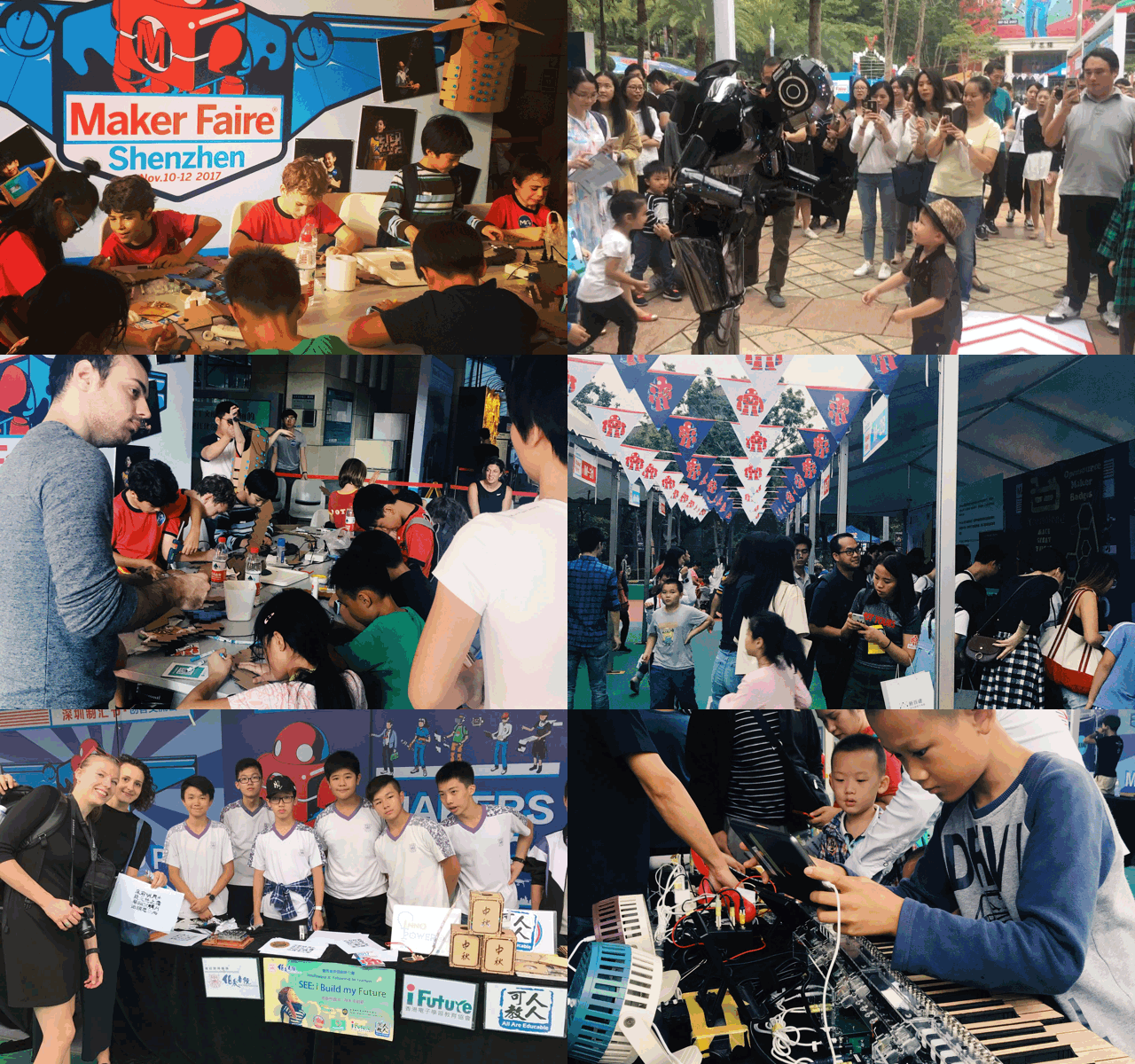
- 2018: “Co-making in the City” – The main venue of Shenzhen International Maker Week, where individuals and groups with shared visions and values gathered to showcase stories, projects, and explorations of collaboration among different communities and people.
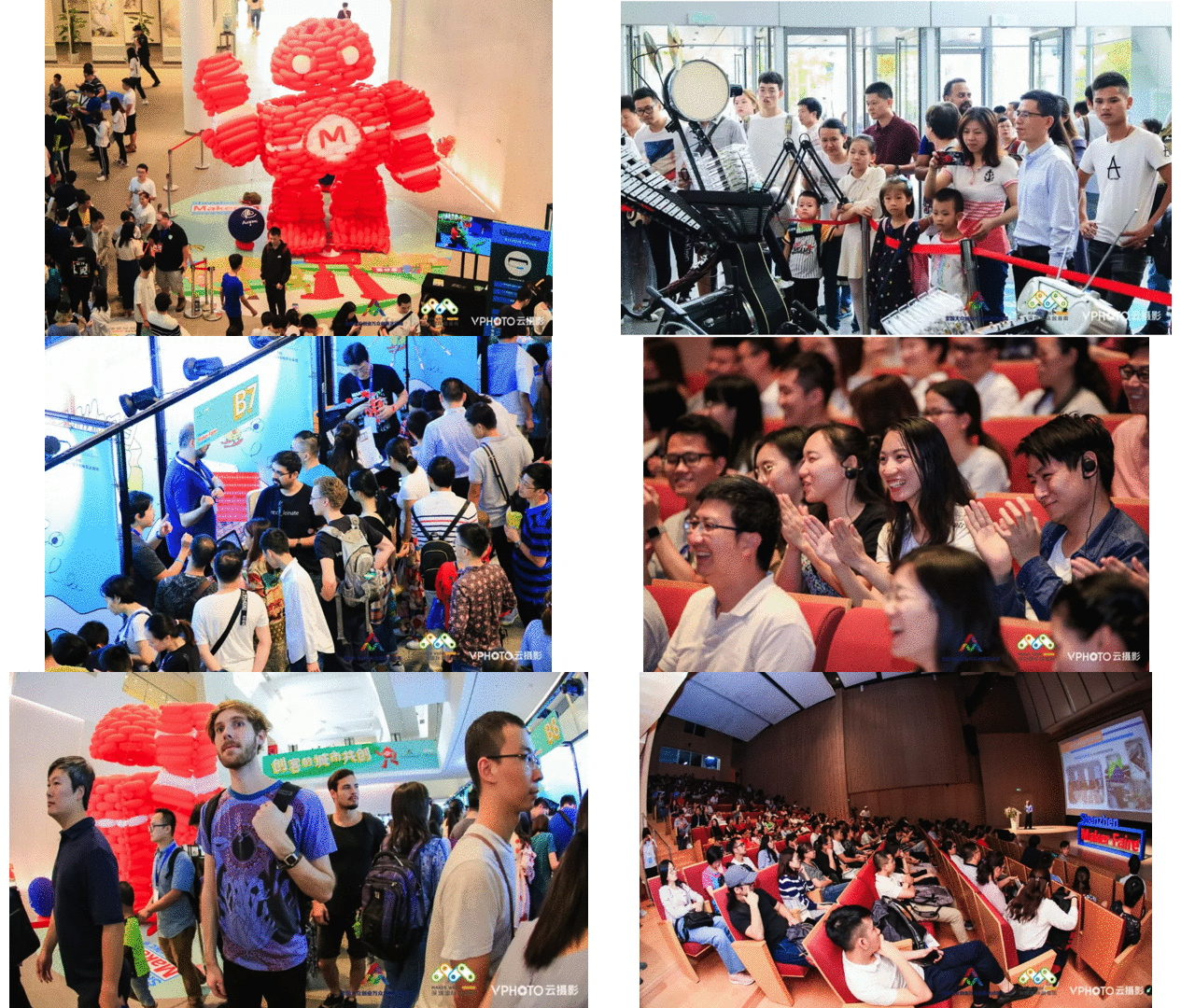
- 2019: ” To the Heart of Community, To the Cluster of Industry” – The event was upgraded to the Maker Faire Shenzhen, attempting to attract professional audiences and focusing on pragmatic aspects such as solving the needs of industrial upgrading and co-developin. It aims to build a platform for innovation and industry dialogue and collaboration.
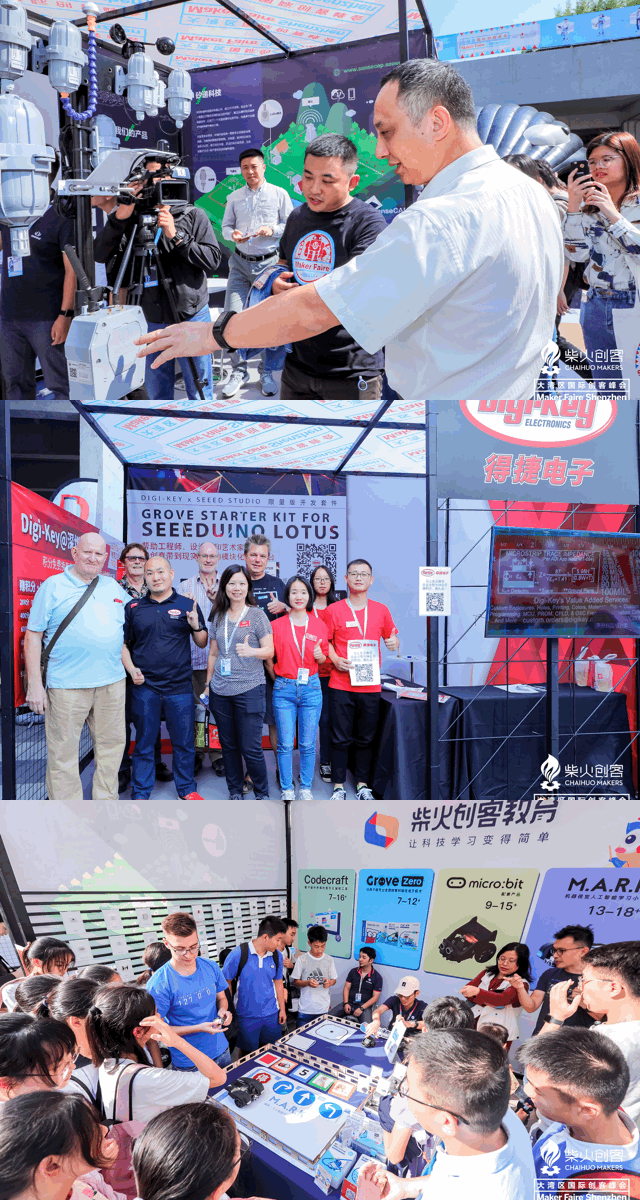
- 2023: “Where Are The Makers?”Starting from our own mission and values, we aim to explore the future direction of makers and the possibilities for commercialization. Though this question does not have a definitive answer, we do hope that through this event, we can communicate and share with every one of you, finding more ideas and directions together.
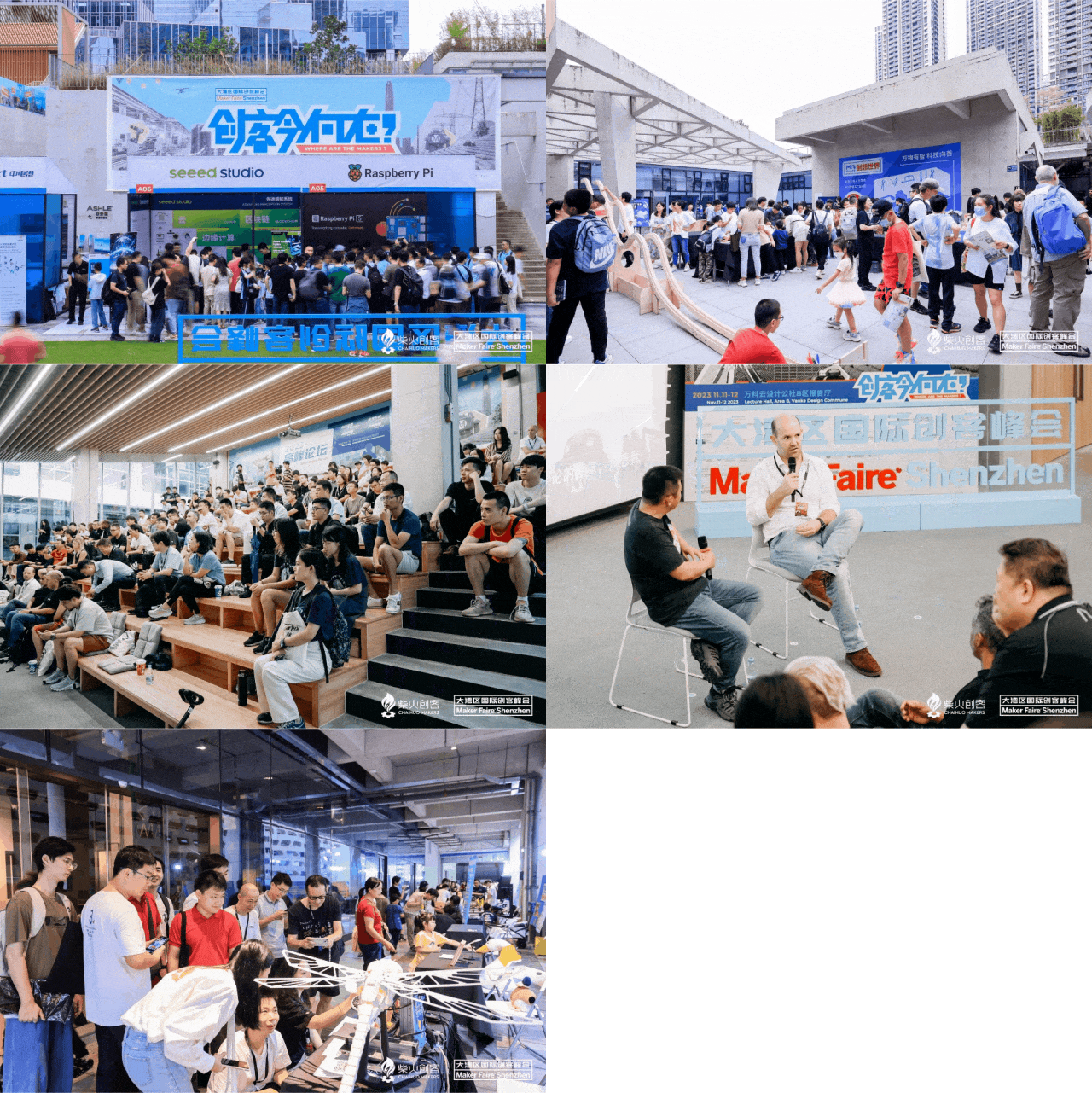
- 2024 —:“Everything Can Be AI” The summit brought together over 120 exhibitors from China and abroad, drawing over 1,500 professional visitors from nearly 20 countries and more than 20 Chinese provinces. The exhibition showcased numerous AI application projects and hosted 10 AI hardware events and workshops.
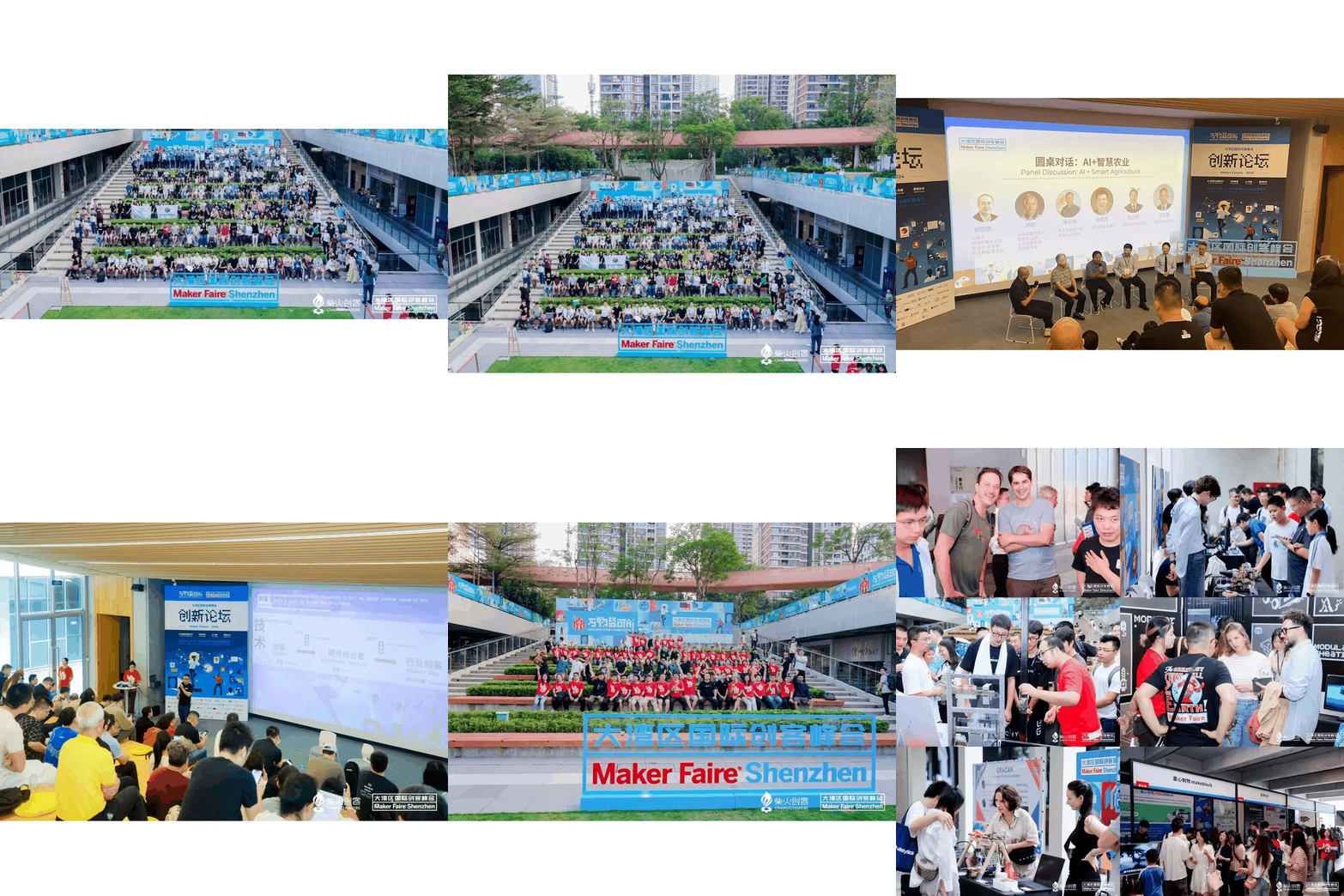
- 2025 — “AI and more things” The summit gathered nearly 100 international innovation ambassadors and showcased nearly 1,000 AI hardware projects. Participants included technology leaders, makers, industry experts, and university teams from over 30 countries, forming a global innovation platform integrating cutting-edge ideas, technical exchange, and cross-disciplinary collaboration.