Tetsuji Katsuta · Music Laboratory · Kyoto, Japan · Technology Education and Interactive Art · Makers and Teams (free booth)
If previous editions of Maker Faire Shenzhen were testing grounds where inspiration sparked, this year we will see how creative ideas take root and become reality. This year’s event is officially scheduled for December 12–13, 2026, in Nanshan District, Shenzhen — and this time we are putting OPC creators and full-industry-chain service providers center stage, working together to build a “Mega Evolution Stage for Global Makers.”
In today’s “Meet the Maker”, we introduce one of this year’s international exhibitors: Tetsuji Katsuta, a software and hardware engineer from Kyoto, Japan who creates under the name Music Laboratory.
Tetsuji Katsuta is a software and hardware engineer from Kyoto, Japan, who turns musical structure into things you can watch. He develops music-related software as his day job, collaborates on art production projects with renowned contemporary artists, and builds his own works — media art pieces centered on music and its structure, robots that play instruments, and original musical instruments of his own design. For Maker Faire Shenzhen 2026 he will join as a “Makers and Teams” exhibitor, offering a show-and-tell experience built around one question: what does a song look like when you can see it?
Play a note. Move a train. Watch music become visible.
Project Spotlight: Music Train
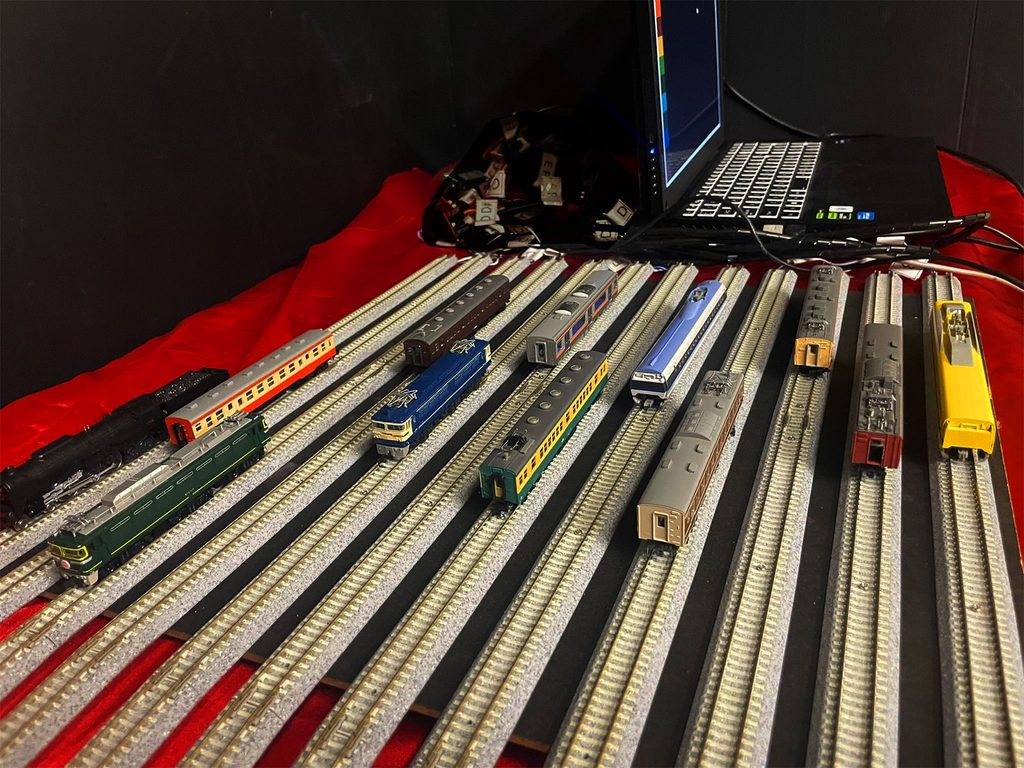
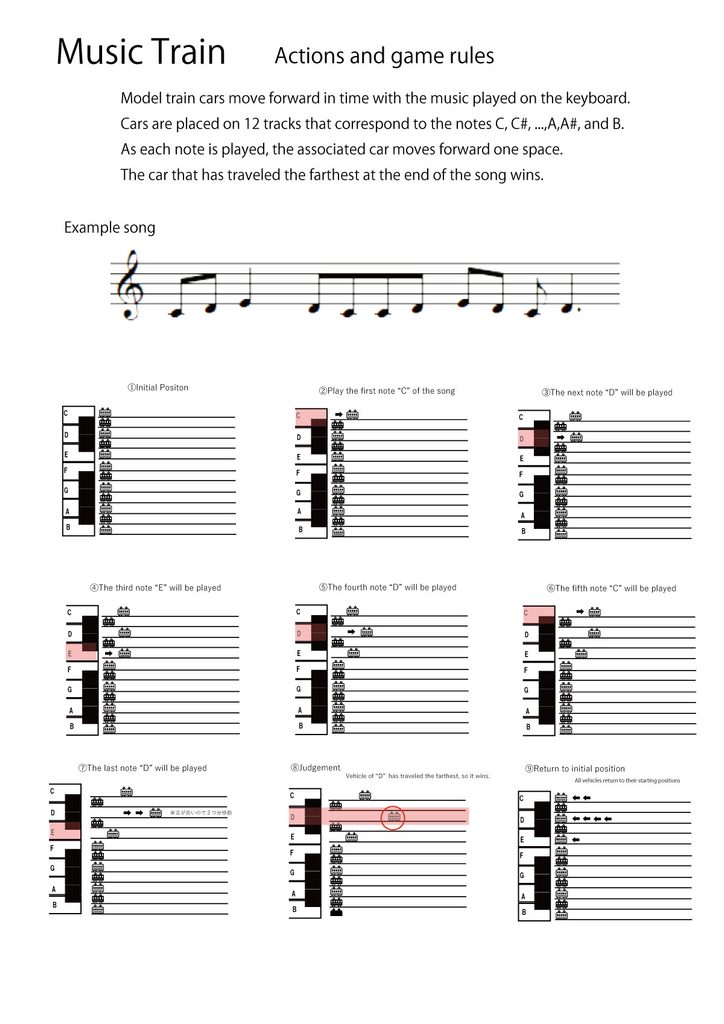
Music Train is Tetsuji Katsuta’s media art installation that visualizes the composition of a piece of music. Play the electronic keyboard, and the model trains start to move.
The installation has twelve rails, mapped to the twelve notes of the chromatic scale — the seven basic notes Do, Re, Mi, Fa, Sol, La, Si, plus the five sharps and flats in between. Play Do, and the train on the Do rail rolls forward. Play Re, and the Re train follows. Stop playing for a while, and every train automatically returns to its starting line.
The result: the position of each train reflects how often that note has been played. The more a song leans on a particular note, the further its train has travelled. Music, which we normally only hear, becomes something you can actually see — a score written in rolling stock.
And crucially, this is not an exhibit behind glass. At the fair, anyone can sit down at the keyboard and set the trains running.
Why it works so well as a teaching tool
Music Train sits at the intersection of music theory, electronics and hands-on play — and that is exactly where its value as an educational object comes from.
Notes become positions. Intervals, scales and key changes stop being abstractions and turn into distances along a track.
Music becomes visible. Learners can see at a glance which notes a song leans on, and how a melody is put together.
No barrier to entry. No musical training required — a visitor presses one key and the feedback is immediate.
It crosses languages. Because the piece is built around music rather than words, it works across nationalities, languages and ages, and is especially popular with children.
This is also why Tetsuji Katsuta selected SDG 4: Quality Education when applying — the one Sustainable Development Goal he chose for the project.
More Projects by Tetsuji Katsuta
“Music Derby” — robots or model trains race to show the frequency of notes in a song. Play any song on an electronic instrument, and the machines compete according to the frequency of Do-Re-Mi.
“Music Plant” — by using mathematical processing to rearrange the pitch of any song and play it back, a new song can be generated that still inherits certain characteristics of the original.
Original instruments — he devised a circular acoustic instrument that can be transposed with ease, demonstrating the potential of treating music mathematically.
Robot musicians — humanoid robots that automatically play musical bells and electronic drums, and sing using voice synthesis. These have been used in recreational settings such as kindergartens and elderly care facilities.
About Tetsuji Katsuta
Tetsuji Katsuta plays guitar and piano and has a broad knowledge of music theory. His central interest is visualizing musical structure — the role that scales and chord intervals play in music — and that interest runs through almost everything he makes.
On the hardware side he runs his own laser cutter, CNC machine and 3D printers, and outsources PCB production. On the software side he works primarily in C++.
He holds a Master’s degree in Computer Science from the American University in Washington, D.C., and a Master’s degree in Social Sciences from Waseda University in Tokyo. His works have been invited to exhibitions and university events not only in Japan, but also in Korea, China, Taiwan (China), Singapore, Malaysia, Indonesia and India — and beyond Asia, in Italy and the United States.
Experience Technology and Creativity First-Hand
At Maker Faire Shenzhen 2026, Tetsuji Katsuta will be in the Makers and Teams zone demonstrating Music Train. Flagged as a highlight project offering onsite performance, Music Train will genuinely be running and playable during the fair — not merely displayed.
Here is what you can do at his booth:
Take the keyboard yourself and send the trains moving
Watch a familiar melody turn into a row of train positions
Talk with Tetsuji Katsuta about music theory, robotics, and what happens when an instrument behaves like a machine
We sincerely invite you to visit the Makers and Teams zone during the event, press a key yourself, and see a song travel down the rails.
If you would like to share your OPC ideas and experiences at China’s largest maker innovation celebration—and demonstrate how AI can truly become part of our work and everyday lives while solving real-world problems—this is your opportunity.
Let your project be seen by more peers, developers, partners, and potential customers, and allow new ideas to meet and grow here.
Scan the QR code below or click “Read the Original Article” at the end of the post to apply. Together, let us step into the era of OPC creators and unlock the infinite possibilities of the future!
Greater Bay Area International Maker Summit & Maker Faire Shenzhen 2026
Global Call for Makers Now Open
Application period: June 30–October 30, 2026
Event dates: December 12–13, 2026
P.S. Companies that reserved a booth last year do not need to submit another application. More participation opportunities will be announced soon—stay tuned!
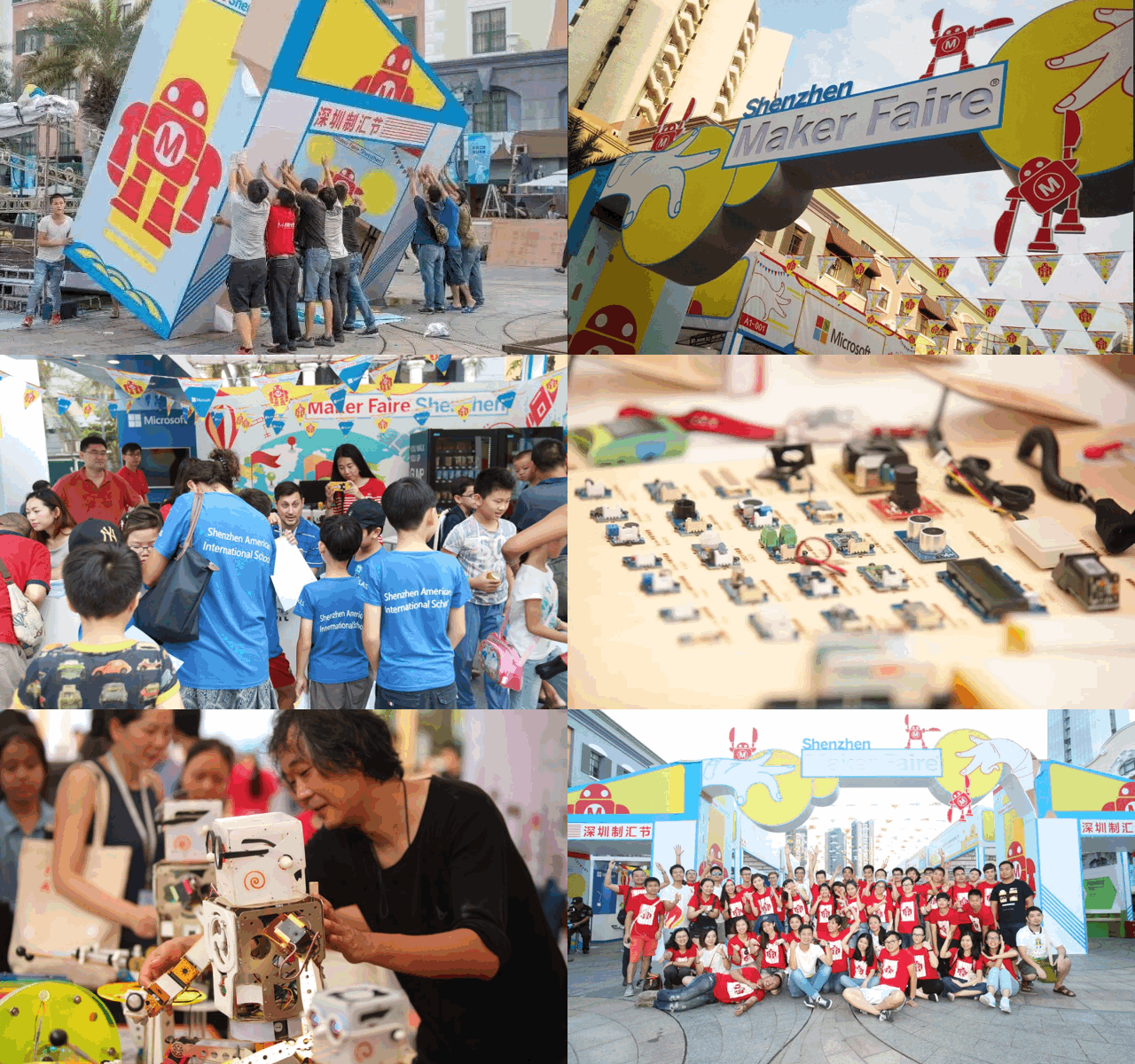
Over the past 13 years, the development trajectory of Maker Faire Shenzhen can be seen as a microcosm of the development of maker culture in China.
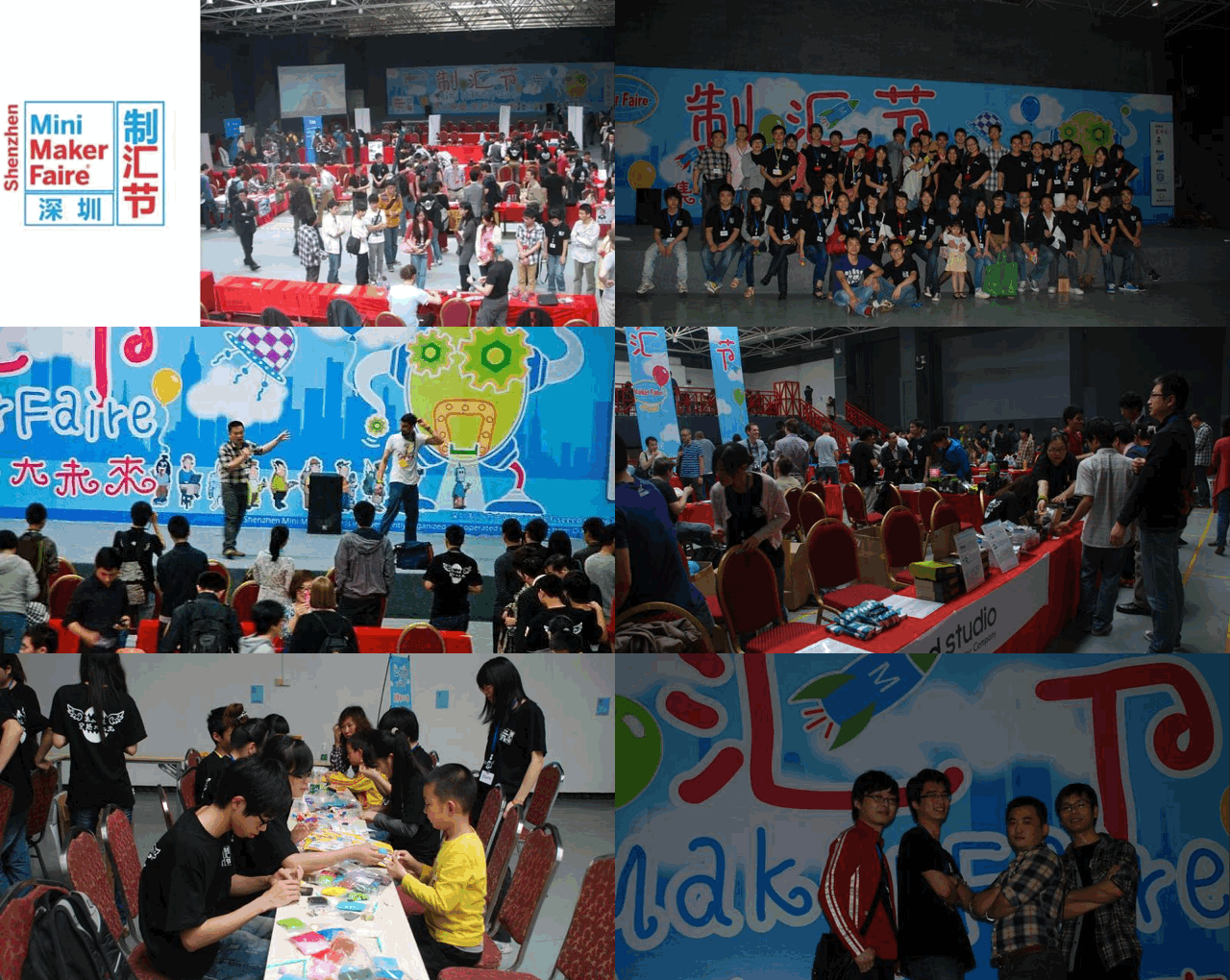
2012: “Gathering Small Wisdom, Journeying through the Great Future” – This was the first Mini Maker Faire in China, with less than 1000 attendees, and was more like a gathering within a small circle. But we saw the infinite possibilities emerging from the maker community.
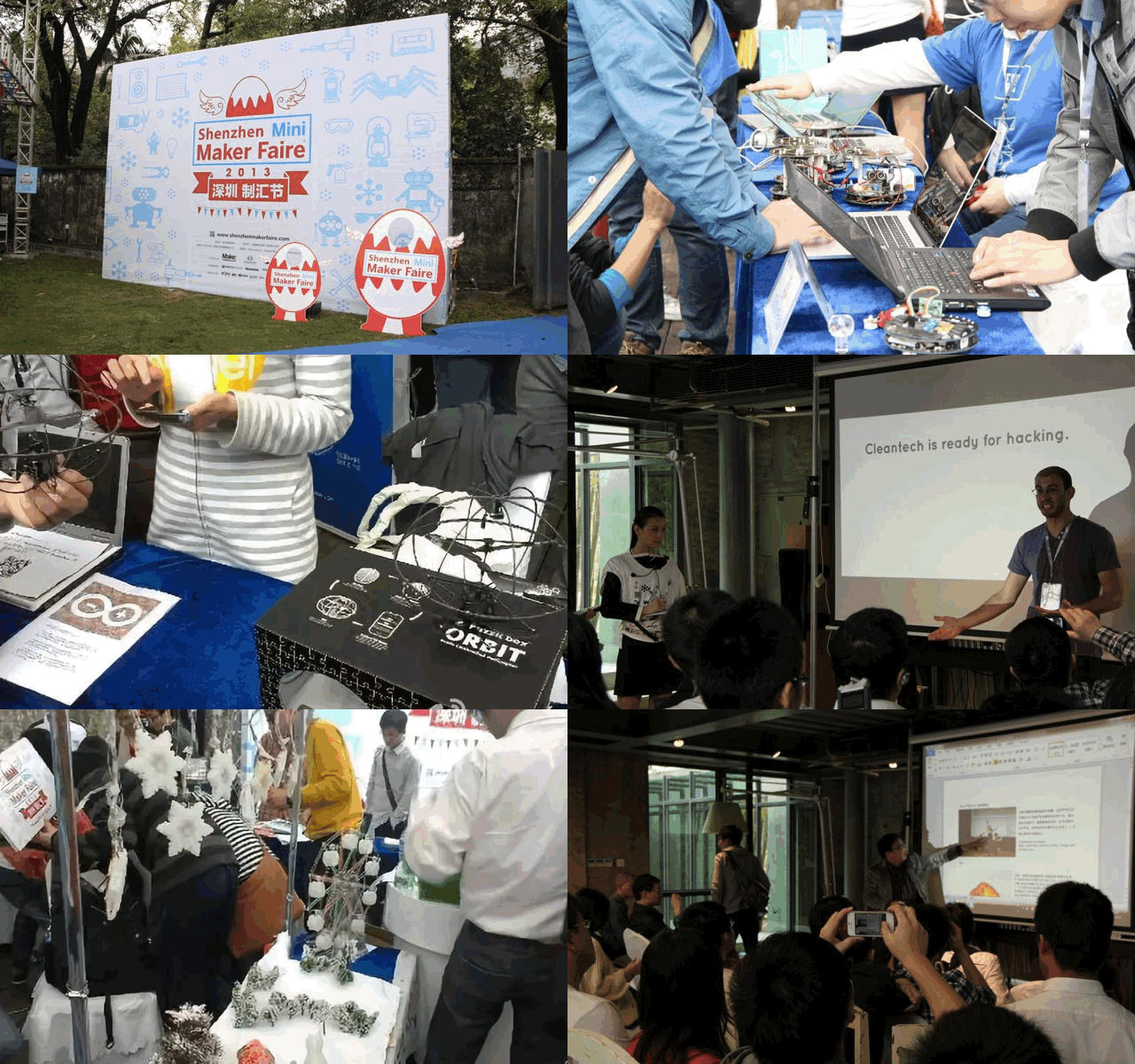
2013: The slogan was absent, and the maker community was still small. – In the OCT Creative Park, there were cross-disciplinary exchanges among different creative communities, silently laying the foundation for cultural output.
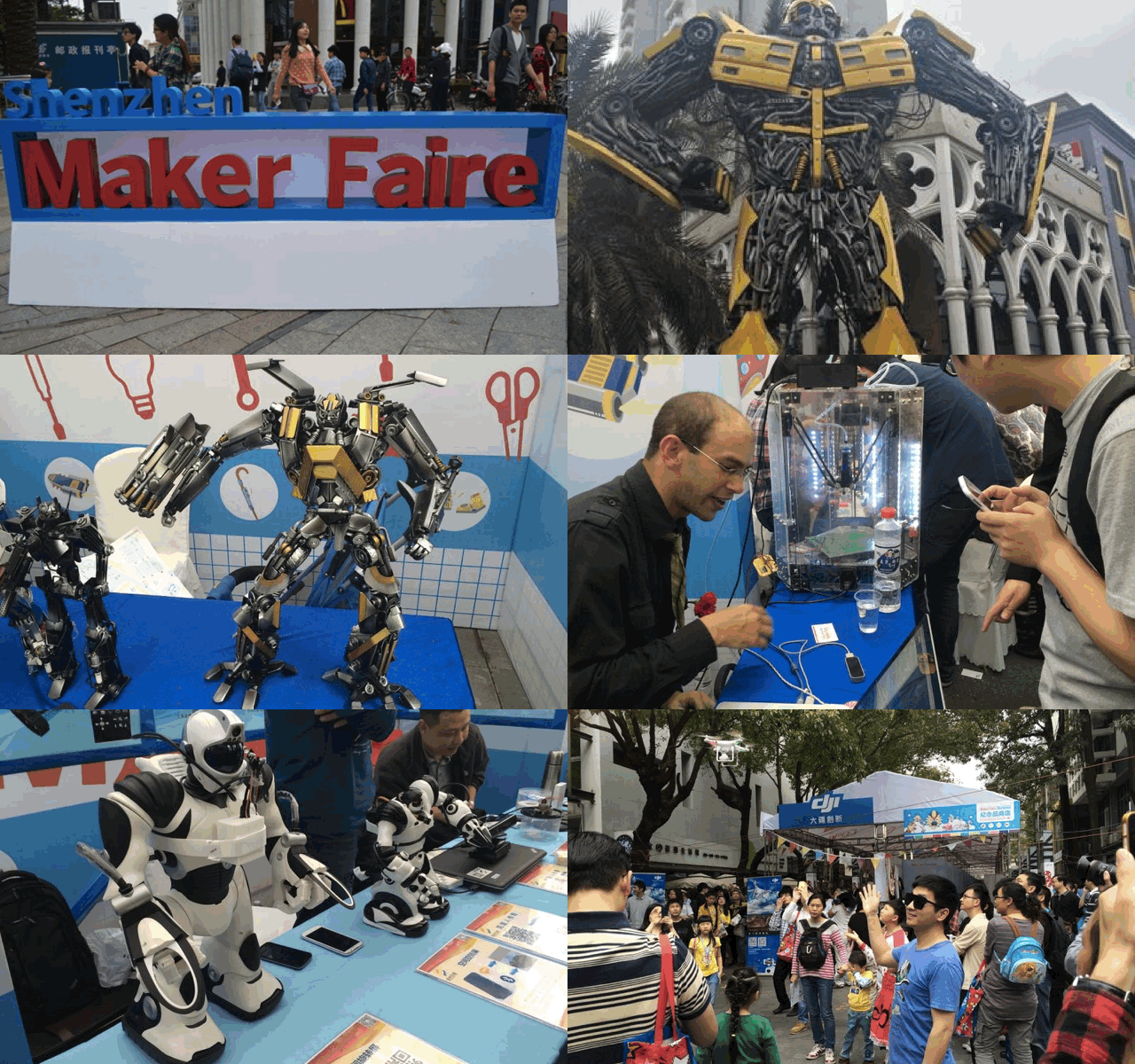
2014: “Innovate with China” – the event was upgraded to the Featured level for the first time, with a significant increase in scale compared to previous years, and the beginning of professional independent forums. This year, makers began to enter the public’s view.
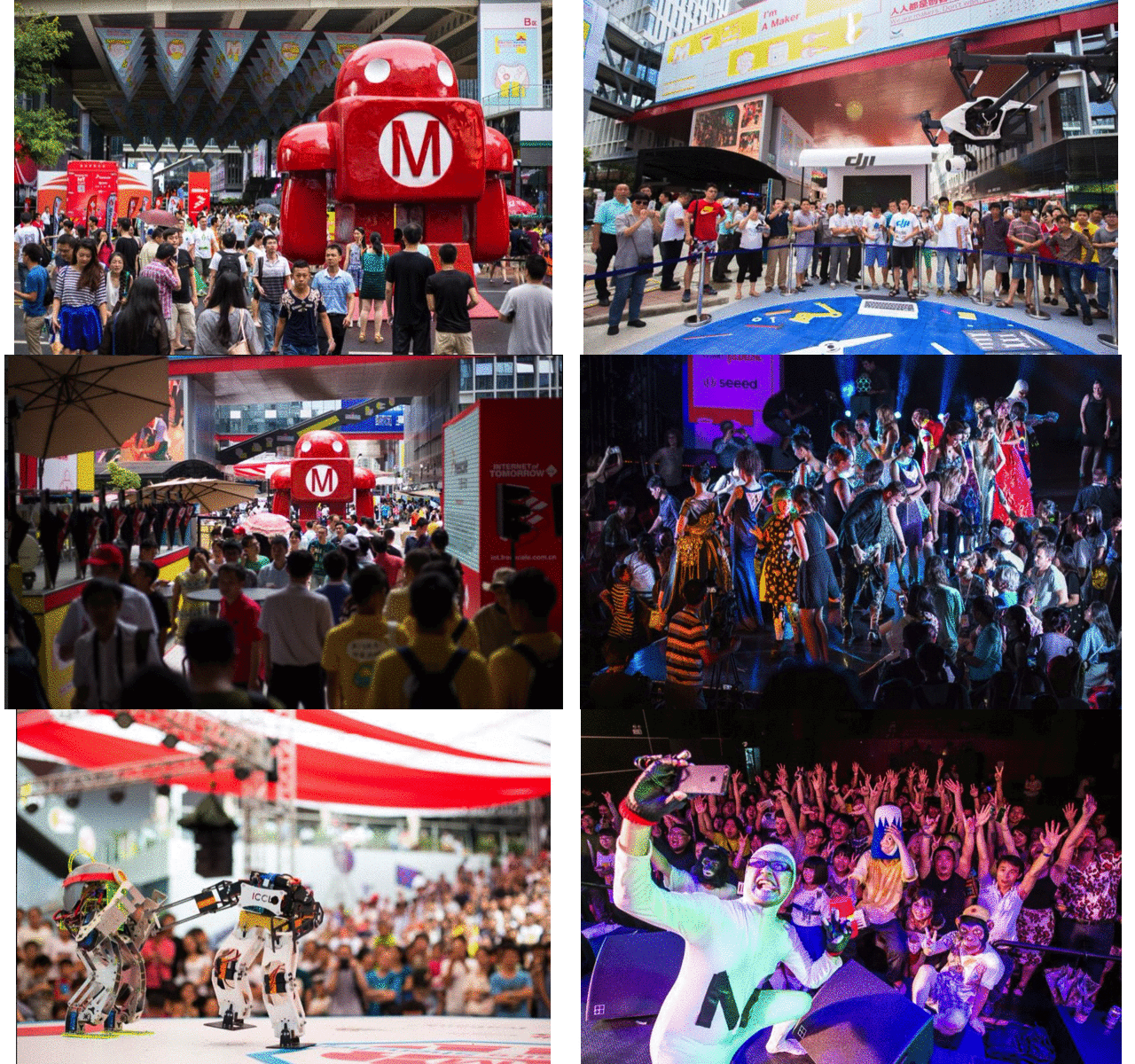
2015: “Everyone is a Maker, what are you waiting for?” – This year’s Shenzhen International Maker Week became one of the largest Maker Faires in the world. This year, the concept of “maker” was elevated to a national level, and the trend of “mass innovation, mass entrepreneurship” swept across the country.
2016: “My World, My Creation” – As the sub-venue of the National Innovation and Entrepreneurship Week, the event was held for the first time in the commercial center area, experiencing unpredictable weather from typhoons to scorching heat. Many makers succeeded in your entrepreneurial endeavors this year, but it seemed like there were even more failures. The hype around entrepreneurship shifted towards rationality.
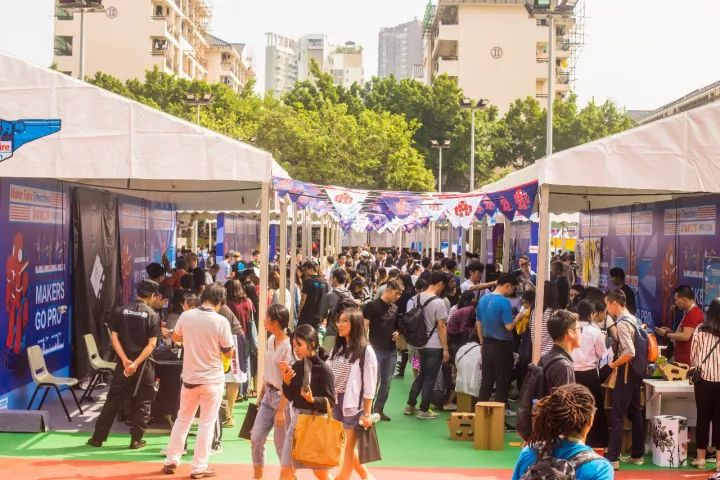
2017: “Makers, Go Pro” – The event took place at the university campus for the first time, focusing on Maker Pros and providing a platform for diverse innovators and makers to showcase themselves, presenting more possibilities for the growth path of makers to the entire community.
2018: “Co-making in the City” – The main venue of Shenzhen International Maker Week, where individuals and groups with shared visions and values gathered to showcase stories, projects, and explorations of collaboration among different communities and people.
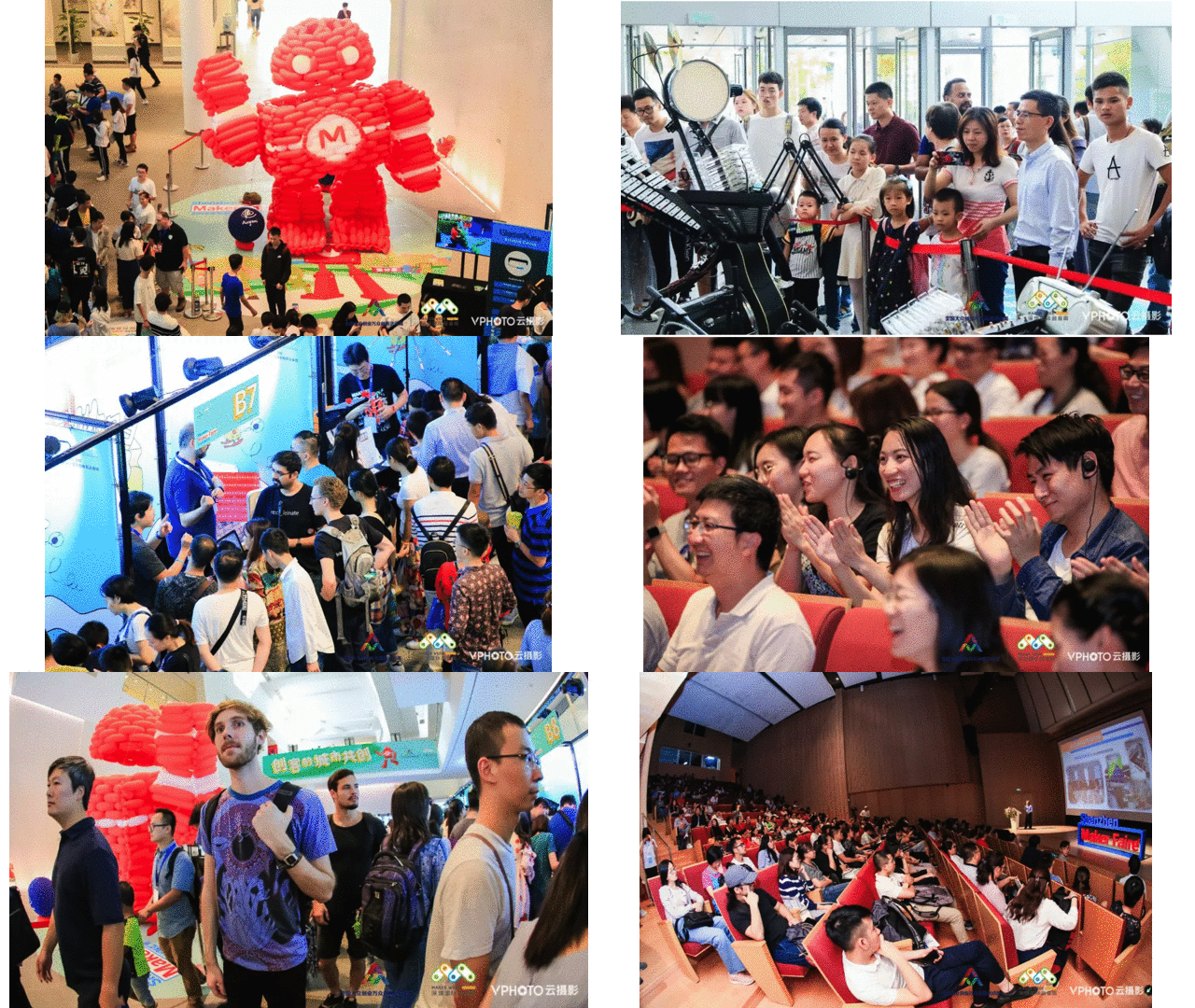
2019: ” To the Heart of Community, To the Cluster of Industry” – The event was upgraded to the Maker Faire Shenzhen, attempting to attract professional audiences and focusing on pragmatic aspects such as solving the needs of industrial upgrading and co-developin. It aims to build a platform for innovation and industry dialogue and collaboration.
2023: “Where Are The Makers?”– Starting from our own mission and values, we aim to explore the future direction of makers and theapossibilities for commercialization. Though this question does not have a definitive answer, we do hope that through this event, we can communicate and share with every one of you, finding more ideas and directions together.
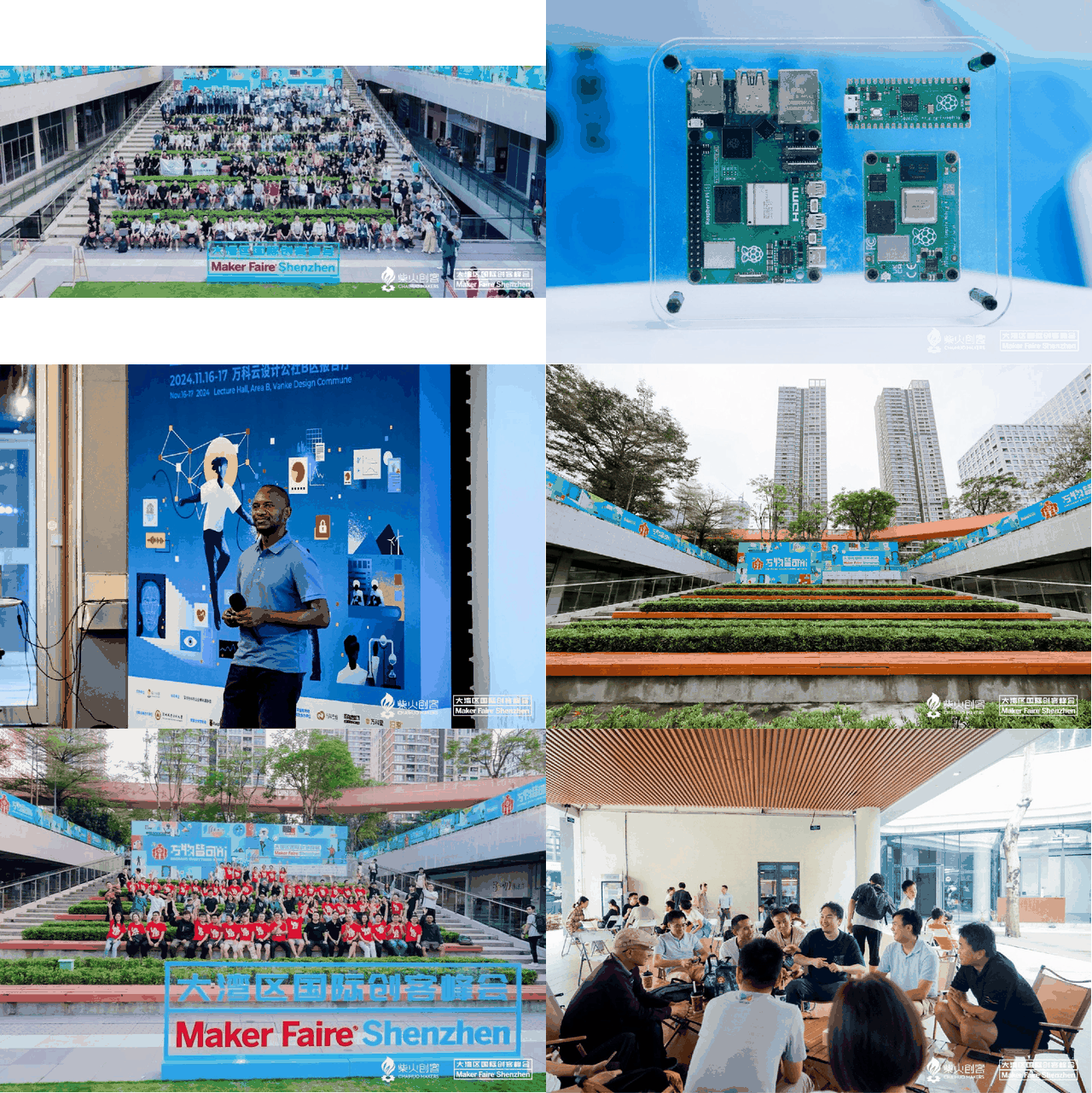
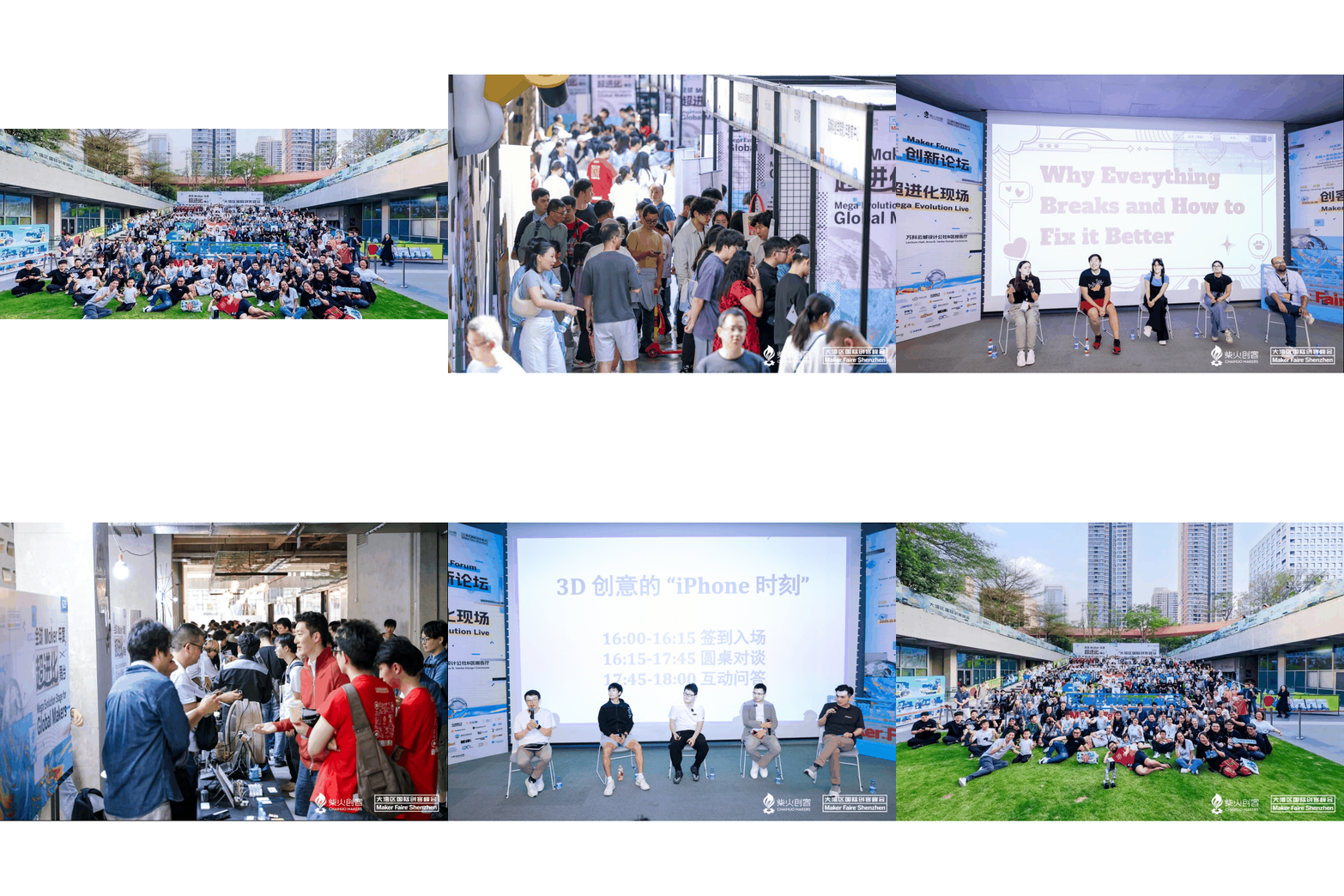
2024: “Everything is AI” – This year, we brought together over 120 exhibitors from around the world, attracting nearly 1,500 professional attendees from nearly 20 countries and over 20 provinces across China. The exhibition showcased a wide range of AI application projects and hosted 10 AI hardware-themed satellite events, alongside various workshops.
2025: “AI Without Boundaries, Everything Reimagined”The summit brought together nearly 100 international innovation ambassadors and showcased almost 1,000 AI hardware projects.Technology leaders, pioneering makers, industry experts, and university teams from more than 30 countries gathered to create an international innovation event combining frontier thinking, technical exchange, and cross-disciplinary collaboration.