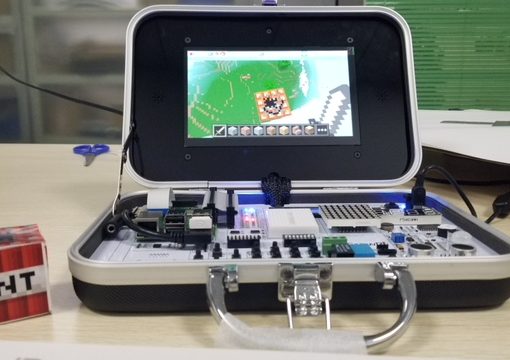
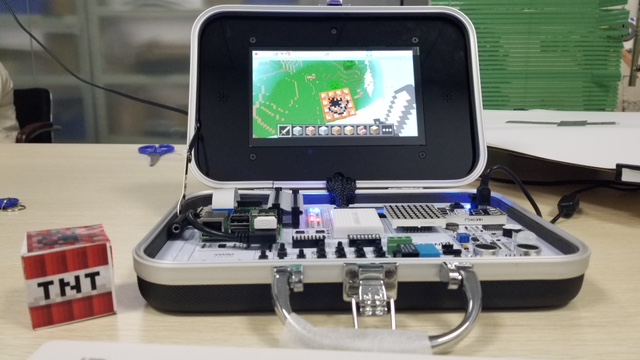
In Bijie, Guizhou, makers are rare, and Maker Mo (Zhu Pan) is one of the exceptions. He has built a small workshop at home, with desks covered in development boards, sensors, and various components.
Every day, he studies various open-source hardware knowledge here and transforms traditional objects to make them more practical. For example, using open-source hardware to modify his home’s iron gate to enable remote viewing, notifications, and remote unlocking; or creating various interesting smart night lights and creative clocks, giving traditional objects an AI soul.
From a teenager who loved taking things apart to a maker focused on AI creation, Zhu Pan has made the name “Maker Mo” increasingly visible in the maker community through self-learning and sharing. For makers growing up outside central hubs, what may need more cultivation than resources is the patience for long-term self-learning, the resilience for constant trial and error, and a love for creation itself.
1.The Maker Journey That Started with Auditing Classes
In 1994, Maker Mo was born in Hezhang County, Bijie, Guizhou, known as the “Ancient Land of Yelang,” a mountain city far from the electronics industry.
As a child, Maker Mo was interested in electronic mechanics. He loved watching animations like “Transformers” and “Mini 4WD,” which ignited his dreams of mechanics and electronics. To satisfy this interest, he often took apart household appliances like fans, rice cookers, and flashlights, leaving them in pieces.
“I was extremely interested in electronic products, found them fascinating, and was curious about their internal structure and working principles. I only knew how to take things apart—many times I broke them and couldn’t put them back together,” Maker Mo recalls. “My parents scolded me quite a bit back then.”
This “impulse to tinker” became Maker Mo’s early maker enlightenment.
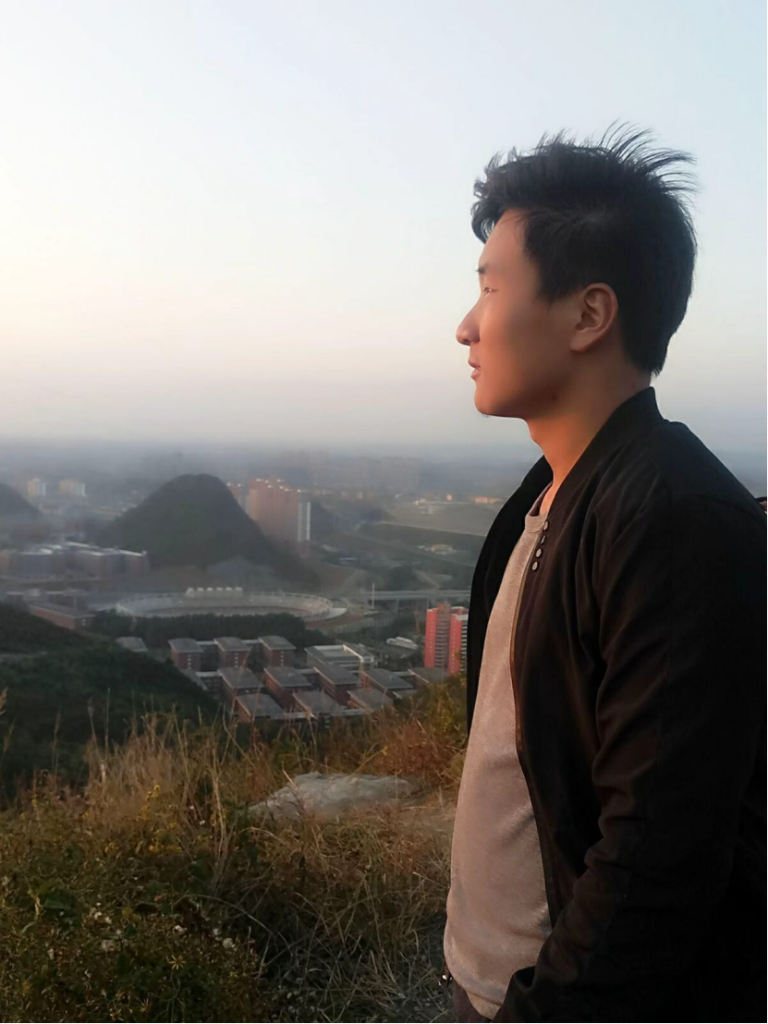
In 2015, Maker Mo was admitted to Guizhou Normal University, choosing the “impressive-sounding” major of Electrical Engineering and Automation. In his junior year, a chance experimental class changed his life trajectory.
In the computer lab, a classmate was asking the teacher questions about Arduino open-source hardware. They discussed a visual development tool called OpenBlock. Maker Mo, standing nearby, listened intently to the entire conversation. “I was shocked—I realized programming could be as simple as building with blocks.” Through this, Maker Mo learned about the Arduino open-source hardware platform and subsequently encountered the “maker” community, opening the door to the world of open-source hardware.
Maker Mo mainly taught himself through various open-source hardware and blog tutorials. He often spent time on forums and video websites watching teaching videos from overseas bloggers. Due to gaps in his professional knowledge, he had to look up some obscure content sentence by sentence to understand it.
The scarcity of early teaching materials and tutorials caused Maker Mo to stumble quite a bit. For example, not knowing how to choose appropriate components and sensors, he bought a bunch of useless or unused components and sensors with a “better to buy wrong than miss out” mentality, which ended up gathering dust.
The turning point came from an online course called “Internet of Things, So Easy!” The course author was Qiu Jiongtao, a well-known maker educator from Hangzhou. At that time, Maker Mo was self-learning related content through foreign blogs. After accidentally encountering this course, he proactively shared many improvement suggestions with Teacher Qiu Jiongtao—which became the starting point of their friendship.
“Teacher Qiu accomplished what I always wanted to do but never achieved: systematizing maker education,” Maker Mo said.
For him, Qiu Jiongtao was both mentor and friend: not only inviting him to refine courses together, allowing him to earn his “first pot of gold” in his maker career, but also introducing him to participate in the maintenance work of Professor Fu Qian’s team at Beijing Normal University on the Mixly graphical tool, helping him meet many excellent maker peers and connect with abundant industry resources.
Influenced by this, Maker Mo later embarked on his own path of systematizing maker education. He led students to participate in a competition, sweeping the top rankings. “That feeling was like suddenly becoming a ‘gold medal coach,'” he said. Even with modest achievements, his family still didn’t understand. “For several years, they had no idea what I was busy with every day. They just thought I was playing on my phone and computer at home,” Maker Mo said helplessly.
Once, Maker Mo received maker training business from a school in Guangzhou. He joyfully shared this good news with his parents, but unexpectedly it triggered a misunderstanding—his parents actually thought he had gotten involved in a pyramid scheme and repeatedly urged him to work honestly and not go astray.
This lack of understanding continued until Maker Mo’s career gradually improved, and his parents slowly let go of their concerns and began to take seriously what they once considered an “unorthodox profession” of “not doing proper work.”
2.Giving Objects an “AI Soul”
Maker Mo positions himself as “60% maker + 40% blogger”: the drive to create comes from his love for the maker cause deep in his heart. As for persisting in sharing, it’s because he empathizes with his previous predicament of “having no way to learn” and hopes to pave the way for those who come after.
In early 2025, the open-source AI hardware project “Xiao Zhi AI” rapidly went viral due to its low barrier to entry and strong appeal, once topping GitHub’s global trending list and attracting thousands of developers to participate.
Maker Mo was one of the makers attracted by this popularity. He took advantage of the momentum to launch a series of teaching tutorials and creative practice videos related to “Xiao Zhi AI” on multiple platforms including Video Account, Bilibili, Douyin, and Xiaohongshu. Unexpectedly, this content was widely praised, and his follower count soared from over 4,000 to over 40,000, increasing more than tenfold.
He said, “Not only ordinary makers, but even many entrepreneurs and product managers watch my videos—I explain complex technology in an easy-to-understand way, and they can find product ideas and clarify implementation approaches from it!”
He has also gradually formed his own creative style: giving traditional objects an AI soul.
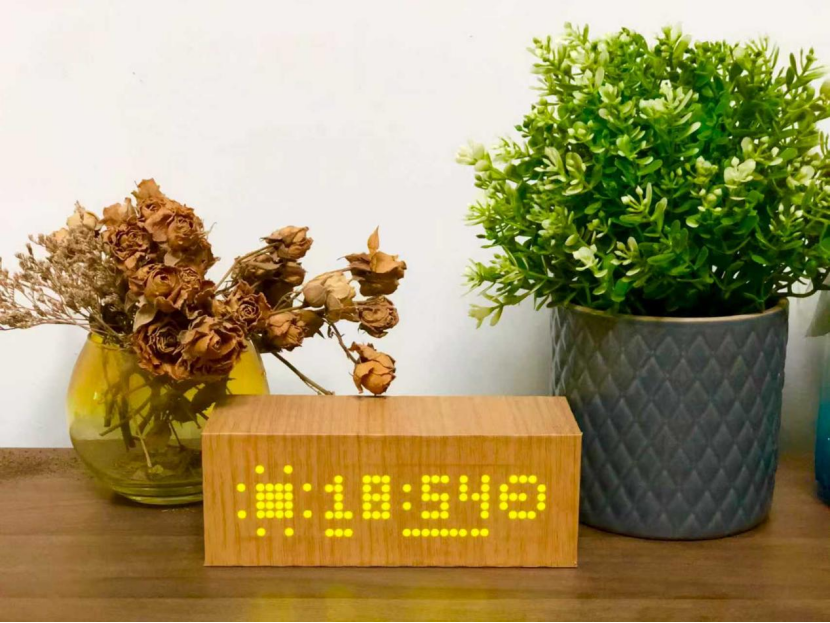
For example, his first work submitted to “Radio” magazine was a creative dot matrix clock. Besides accurately displaying time, this alarm clock has rich animation effects, like time lines and running puppy animations. At different times of day, the clock displays sun and moon icons to distinguish day and night. Later, Zhu Pan added Xiao Zhi AI to it, enabling the clock to chat with people for entertainment and provide rich pixel expressions.
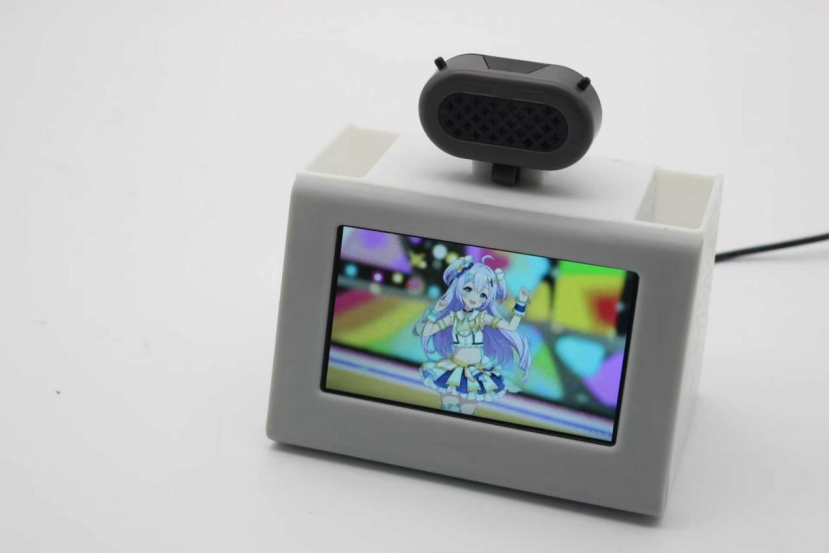
There’s also an AI pen holder that can chat, check weather, and play music. Users can also display their favorite images on the pen holder’s screen.
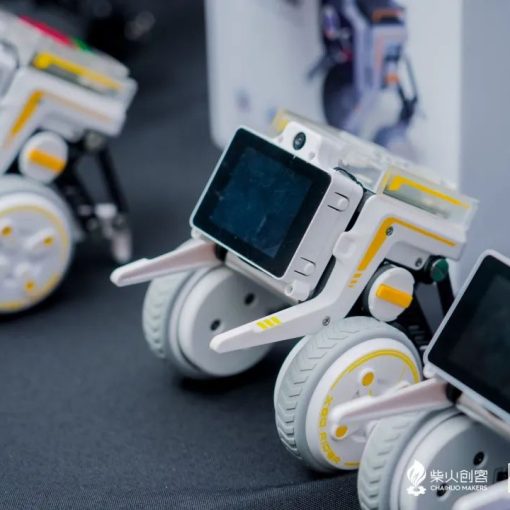
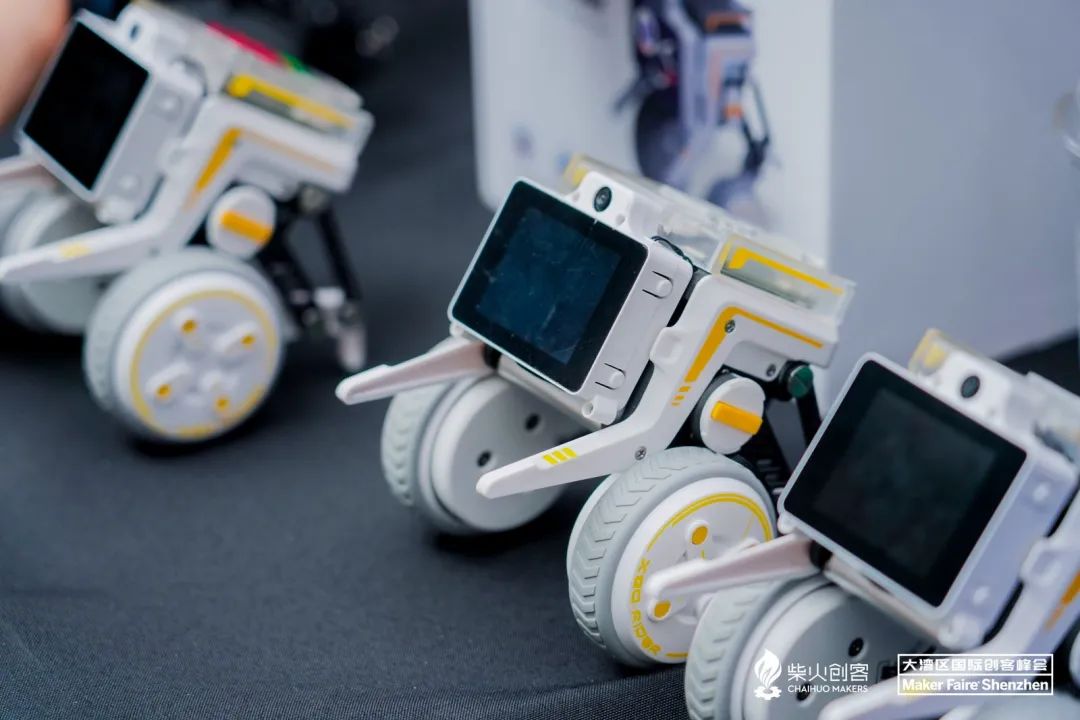
What makes Maker Mo most proud is that he integrated Xiao Zhi AI into a well-known humanoid robot, enabling the robot to conduct natural language communication outdoors.
These seemingly imaginative ideas and concepts have earned his creations increasing recognition from enterprises. In September this year, after Maker Mo finished training at a school in Guangzhou, multiple local companies and netizens invited him to visit their enterprises and engage in offline exchanges and learning.
“They shared valuable experience and practical advice from their entrepreneurial journeys without reservation, and took me to closely understand their company’s product technology, exquisite craftsmanship, and production processes, which greatly broadened my horizons,” Maker Mo recalled.
3.Finding the Meaning of Creation Between “Useful” and “Interesting”
Maker Mo hopes to talk less and do more, creating silently. Over the years, he’s either working on projects or learning from others’ excellent creative ideas. “It’s no exaggeration to describe the projects I’ve encountered as numbering in the thousands or tens of thousands,” he introduces himself this way.
In 2024, Maker Mo participated in Maker Faire Shenzhen for the first time, which left a deep impression on him. “I had never seen so many like-minded makers and so many interesting open-source hardware projects gathered together.”
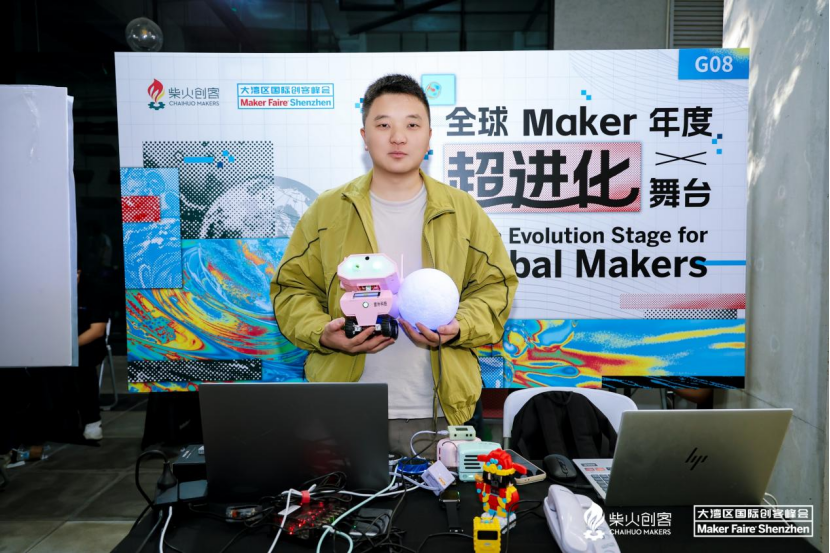
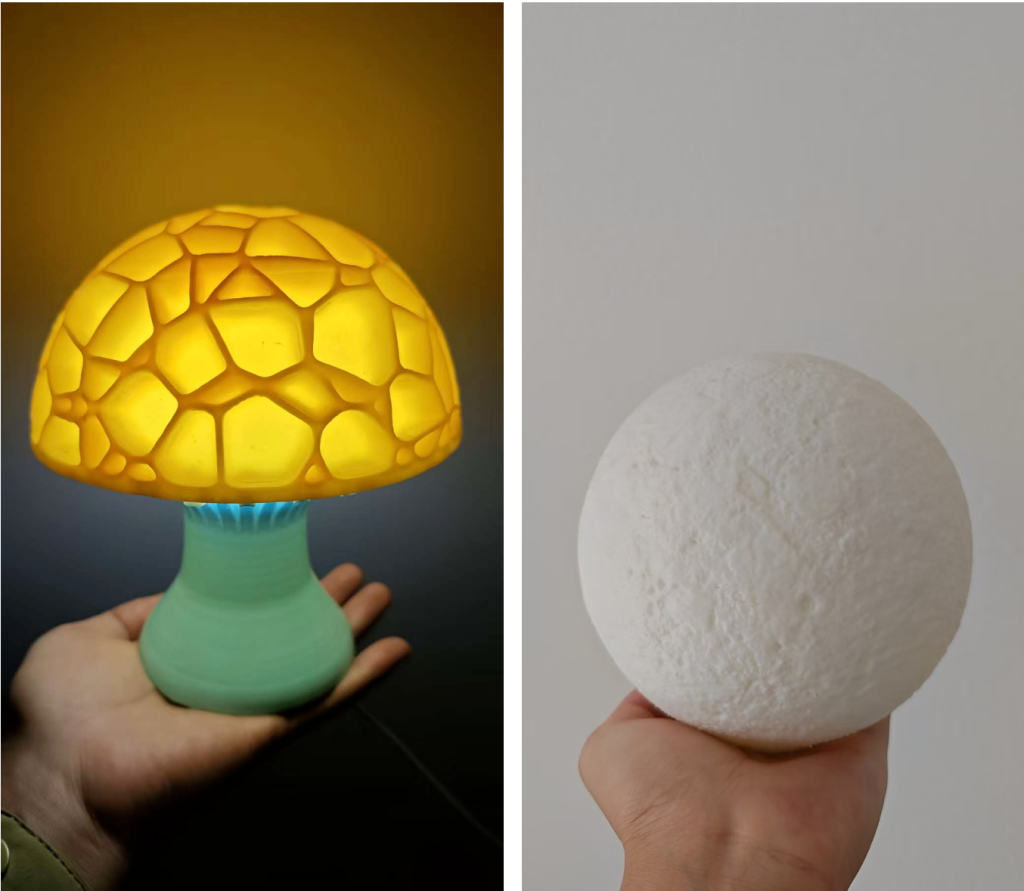
In 2025, he returned as an exhibitor. He highlighted the application and exploration of Xiao Zhi AI in STEAM education, as well as AI hardware like AI night lights and AI nostalgic phones. For example, the AI night light can adjust brightness and color temperature through voice commands, tell stories, and play music, and users can DIY the appearance themselves.
The AI nostalgic phone has a retro design, inspired by Maker Mo’s communication with a nursing home. The nursing home staff mentioned that elderly people were quite lonely and always wanted someone to chat with, but caregivers didn’t have that much time to listen. This gave Maker Mo the idea of transforming an old-style telephone into a Xiao Zhi chat phone.
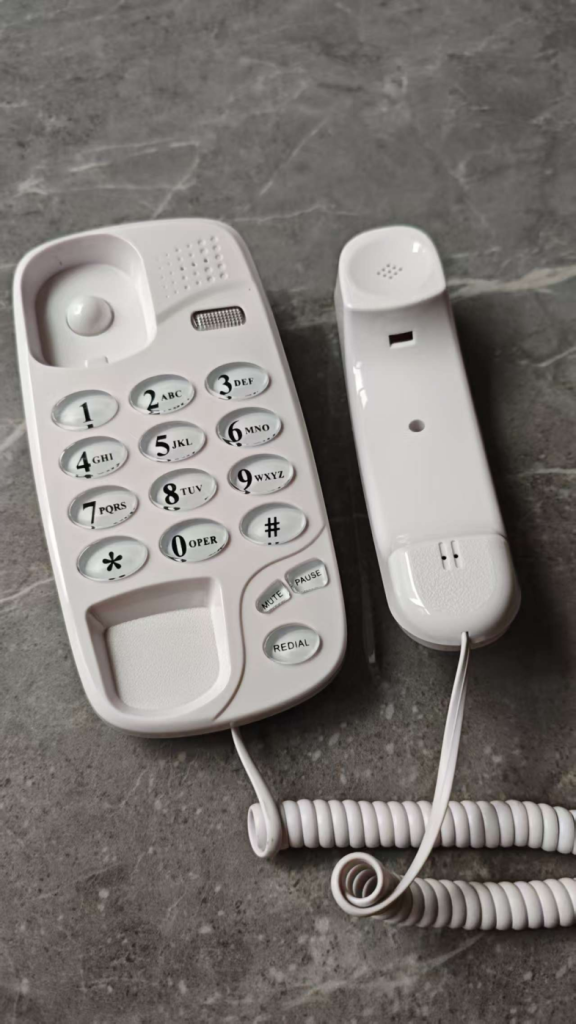
n his view, this design solved three pain points: first, the handset pickup ensured privacy in communication; second, it eliminated interference from external sound pickup; third, different buttons could connect to different AI agents for chatting, alleviating the elderly’s loneliness.
Additionally, at the summit, Zhu Pan not only met bloggers who had influenced his learning journey as he had hoped, but also made many like-minded friends. He discovered that everyone had created some cool works with AI, but no one had “combined Xiao Zhi with STEAM education” like him. This strengthened Maker Mo’s determination to create customized Xiao Zhi educational hardware. “Xiao Zhi AI is not just a chat device, but a practical tool for learning AI.”
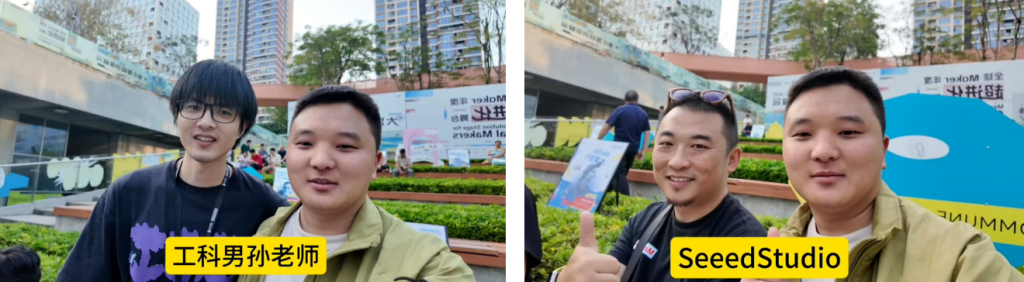
Before the conference, the session Maker Mo most looked forward to was: what are overseas makers actually doing?
This summit gathered makers from over 30 countries and regions, showcasing various innovative applications. But unexpectedly, the works of overseas makers didn’t seem that “cool.” “Their works didn’t use various complex technologies or AI technology enhancements, and didn’t even look very practical. But judging from the expressions on their faces, they were definitely the most passionate,” Maker Mo said.
This made Maker Mo reflect: Are we overly enthusiastic about making useful and cool things, while neglecting the joy of creation itself? He recalled that when leading students in competitions in the past, he would sometimes reject students’ ideas in order to win rankings. “We imposed our ideas on them—can they still truly enjoy the pleasure of creation this way?”
The answer is clearly no.
Maker Mo said: “Every child’s current idea is the best. We should respect their creations rather than decide for them what is useful.” Being useful is certainly important, but being interesting often allows people to go further. Maker Mo, situated outside the central hub, has actually proven through his own experience that curiosity is more critical than resources, and persistence is more important than location.
If you accidentally missed this year’s excitement
Welcome to scan the code to enter this year’s event photo live page

As the organizer of Maker Faire Shenzhen, Chaihuo Makerspace has been committed to creating a continuously active innovation community for hard tech and maker culture. Beyond the annual summit, we plan and host various maker workshops, tech sharing sessions, hackathons and other events every week, exchanging ideas and sparking inspiration together with makers, engineers, designers and tech enthusiasts from around the world.
We welcome all who love hard tech and innovation to follow and join us in exploring future possibilities together!